The Impact of Inflation on Savings and Investments
Learn how inflation erodes savings, affects investments, and practical steps you can take to protect your long-term financial goals.

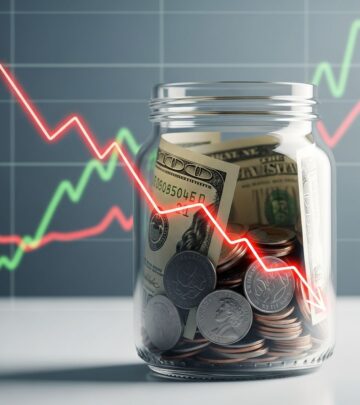
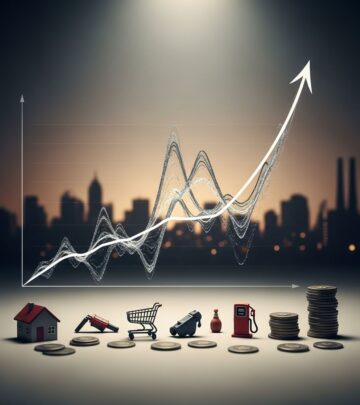
Inflation is one of the most important forces shaping your financial life. When prices rise across the economy, every dollar you hold buys less than it did before, which directly affects your savings, investments, and long-term goals. Understanding how inflation works and planning for it can help you protect your financial future instead of being caught off guard.
What is inflation and why does it matter?
Inflation is the general increase in prices of goods and services over time, which results in a decline in the purchasing power of money. In other words, the same amount of money buys fewer items as years pass. Central banks, like the U.S. Federal Reserve, typically aim for a moderate inflation rate (around 2% annually in the U.S.) because very low or very high inflation can be harmful to the economy.
For example, if the inflation rate is 3% over a year, and your income stays the same, you effectively become 3% poorer in terms of what your money can buy. Even if you do nothing differently, inflation is quietly working in the background, changing the value of your savings and investments.
Where does inflation come from?
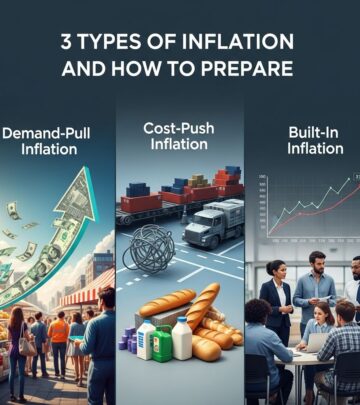
Inflation can be caused by several factors, but two major types are:
- Demand-pull inflation: Happens when demand for goods and services exceeds supply. Consumers and businesses are willing to spend more, which pushes prices up.
- Cost-push inflation: Occurs when the cost of production rises (for example, wages or raw materials), and businesses pass these higher costs on to consumers in the form of higher prices.
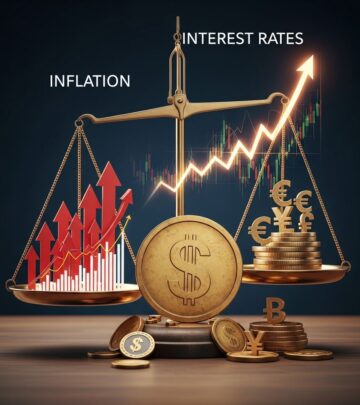
Other contributors include supply chain disruptions, changes in commodity prices (like oil), and shifts in monetary policy or interest rates. During certain periods, global events, energy shocks, or policy responses can all interact to create elevated inflation for months or years.
How inflation affects the value of money
When inflation rises, nominal amounts (the dollar figure you see) can stay the same while their real value (what they can buy) falls. For example, if you keep $1,000 in cash for 10 years while inflation averages 3% annually, the future purchasing power of that $1,000 will be significantly lower, even though the number in your wallet or account has not changed.
| Year | Approximate Purchasing Power |
|---|---|
| Today | $1,000 |
| 5 years | About $863 |
| 10 years | About $744 |
| 20 years | About $553 |
This erosion of purchasing power is why inflation matters so much for savers and investors. A plan that ignores inflation will almost always underestimate how much you need for future goals like retirement, education, or buying a home.
Example: How rising prices strain a household budget
To see inflation in action, imagine a simple monthly budget. Consider someone who earns $3,000 per month after tax:
- Mortgage and insurance: $2,000
- Debt payments: $300
- Groceries, fuel, and other basic expenses: $500
- Left for savings and extra debt payments: $200
Now suppose inflation increases the cost of groceries, gas, and everyday items so that these variable costs go from $500 to $650. Fixed expenses like a mortgage or some loans may stay the same for a while, but variable costs respond quickly to rising prices.
- Mortgage and insurance: $2,000
- Debt payments: $300
- Groceries, fuel, and other expenses: $650 (up from $500)
- Left for savings and extra debt payments: $50
Even though this person’s income has not changed, the amount available for saving and investing has dropped from $200 to $50. Over time, this limits how quickly they can pay off debt, build an emergency fund, or invest for retirement.
How does inflation affect savings accounts?
Inflation has a particularly strong impact on cash savings, especially in traditional savings accounts that pay low interest. Many standard savings accounts historically offer interest rates that are far below the rate of inflation, especially when central banks keep policy rates low. When your savings rate is less than inflation, your real return is negative.
Impact of inflation on savings: a simple example
Imagine you keep $1,000 in a savings account earning 1% annual interest. After one year, the account grows to $1,010. If inflation is 1%, that $10 of interest roughly maintains your purchasing power. But if inflation is 3% while your account earns only 1%, your money has lost purchasing power even though the balance is higher in dollar terms.
| Scenario | Account Interest | Inflation Rate | Real Effect |
|---|---|---|---|
| Interest matches inflation | 1% | 1% | Purchasing power roughly preserved |
| Inflation higher than interest | 1% | 3% | Purchasing power declines |
Even if you never withdraw a cent, rising prices can quietly erode the real value of your savings. This is why financial institutions and policymakers often emphasize the importance of interest rates that at least approach inflation, especially for long-term savings.
High-yield savings accounts and inflation
High-yield savings accounts (HYSAs), often offered by online banks, typically pay higher interest rates than traditional brick-and-mortar savings accounts because they have lower operating costs. When inflation rises, interest rates on these accounts often increase as central banks tighten monetary policy by raising benchmark interest rates.
However, even high-yield accounts may not always fully match or exceed inflation. For example:
- If inflation is 6% and your savings account pays 4% annual percentage yield (APY), your savings are still losing about 2% of purchasing power per year.
- If inflation falls closer to 2% and your account still pays 4%, your real return is positive and your purchasing power rises.
Because inflation fluctuates, it is important to regularly review where you keep your cash and whether your current savings options remain competitive.
How inflation affects fixed-income investments
Fixed-income products like certificates of deposit (CDs) and traditional bonds offer predictable interest payments, but these fixed returns can become less attractive when inflation increases. If the interest you earn is below the inflation rate, the real value of both the principal and interest declines.
- Certificates of deposit (CDs): If you lock in a CD at a 2% rate and inflation later rises to 5%, the real return on that CD becomes negative. You are guaranteed the nominal return, but not the purchasing power.
- Traditional bonds: A bond paying a fixed coupon faces a similar problem. Rising inflation is often accompanied by rising interest rates, which can push down the market price of existing bonds and reduce their real yield.
Treasury Inflation-Protected Securities (TIPS)
Treasury Inflation-Protected Securities (TIPS) are U.S. government bonds specifically designed to help protect investors from inflation. The principal value of TIPS is adjusted periodically based on changes in the Consumer Price Index (CPI). When CPI rises, the principal of the bond increases; when CPI falls, the principal can decrease.
- Interest is paid at a fixed rate, but because the principal is adjusted for inflation, the dollar amount of interest payments can rise when inflation increases.
- At maturity, investors receive the greater of the inflation-adjusted principal or the original principal, which adds a layer of protection against deflation.
These features make TIPS one of the more direct tools for hedging inflation within a fixed-income portfolio, especially for long-term savers who are worried about the cumulative effects of rising prices.
How to plan for the impact of inflation on savings and investments
Although you cannot control inflation, you can control how prepared you are for it. A thoughtful plan can help reduce the damage inflation does to your money and may even allow you to benefit from it over time. Below are key strategies to consider.
1. Diversify your portfolio
Relying on a single type of asset—such as only cash or only bonds—can leave you vulnerable when inflation spikes. A diversified portfolio typically includes a mix of:
- Stocks (equities)
- Bonds and other fixed-income securities
- Cash and cash equivalents
- Possibly real assets, such as real estate investment trusts (REITs) or commodities
Historically, stocks have tended to outpace inflation over long periods, although they can be volatile in the short term. Real assets like real estate can also benefit from rising prices, as rents and property values may increase in inflationary environments. Diversification does not guarantee a profit or protect against loss, but it tends to spread risk across different parts of the economy.
2. Choose inflation-resistant stocks and sectors
Within the stock market, some companies and sectors have historically been more resilient during inflationary periods. While past performance cannot predict future results, it is worth researching how businesses handled previous episodes of high inflation.
Factors that may support resilience include:
- Pricing power: Companies that can raise prices without losing many customers (for example, strong brands or essential services).
- Exposure to real assets: Businesses in sectors like energy, utilities, consumer staples, or real estate, where revenue may move with inflation.
- Healthy balance sheets: Firms with manageable debt may be better positioned if interest rates rise along with inflation.
Investors can analyze historical performance or use sector funds and ETFs that focus on areas often seen as inflation hedges, while keeping overall diversification in mind.
3. Maintain an emergency fund
When inflation rises, it can be tempting to move all available cash into investments in search of higher returns. But keeping an emergency fund remains critical. Unexpected expenses—such as medical emergencies, car repairs, or job loss—still happen during periods of high inflation.
- Aim for at least 3–6 months of essential expenses in an accessible account, such as a high-yield savings account.
- Prioritize safety and liquidity rather than maximum return for this money.
- Review the size of your emergency fund periodically, especially if inflation has significantly raised your cost of living.
An emergency fund prevents you from being forced to sell long-term investments at a bad time and gives you room to adapt if inflation leads to higher bills or income disruptions.
4. Review your debt and interest rates
Inflation interacts with debt in complex ways. For borrowers with fixed-rate debt, moderate inflation can make existing loans cheaper in real terms because you are repaying with dollars that are worth less over time. However, new borrowing during high inflation often comes with higher interest rates.
To manage this effectively:
- Consider paying down high-interest variable-rate debt that might get more expensive as rates rise.
- Evaluate whether refinancing into fixed-rate loans is beneficial when rates are still relatively low.
- Avoid taking on unnecessary new debt during periods of rising rates unless it serves a clear, strategic purpose.
5. Continuously adjust your financial plan
Inflation is not static, and neither should your plan be. It is important to revisit your budget, savings targets, and investment strategy periodically, especially after periods of significant price changes.
- Update your budget to reflect higher costs for essentials like housing, food, and transportation.
- Review your retirement projections to ensure you are still on track when inflation assumptions change.
- Rebalance your investment portfolio as needed to maintain your target asset allocation.
By treating inflation as an ongoing factor rather than a one-time event, you can respond proactively instead of reactively.
Frequently Asked Questions (FAQs)
Q: How does inflation reduce my purchasing power?
Inflation reduces purchasing power because it raises the general price level of goods and services. If your income and the interest you earn on savings do not keep up with inflation, the same amount of money buys fewer items over time.
Q: Can a savings account protect me from inflation?
A savings account offers safety and liquidity, but it only protects you from inflation if its interest rate at least matches the inflation rate. Traditional savings accounts often pay less than inflation, while high-yield savings accounts may come closer, especially when interest rates rise.
Q: Are bonds a good investment during inflation?
Regular fixed-rate bonds can struggle during high inflation because their interest payments are fixed and their real value declines as prices rise. However, inflation-linked bonds like Treasury Inflation-Protected Securities (TIPS) adjust their principal based on inflation and are specifically designed to help protect investors from rising prices.
Q: How much should I keep in cash versus investments?
The right balance depends on your risk tolerance, goals, and time horizon. Many financial planners suggest keeping 3–6 months of essential expenses in an emergency fund and investing longer-term money so it has a chance to grow faster than inflation over time.
Q: What is the best way to protect my long-term savings from inflation?
No single strategy is best for everyone, but combining a diversified investment portfolio, inflation-aware fixed-income products like TIPS, a solid emergency fund, and regular reviews of your budget and goals can significantly reduce the long-term impact of inflation on your savings.
Plan ahead for the impact of inflation
Inflation will continue to rise and fall over time, but it will never stop influencing your savings and investments. By understanding how it works, monitoring its effects on your budget, and using strategies like diversification, inflation-protected investments, and adequate emergency savings, you can stay in control of your financial future.
Instead of viewing inflation as something that simply happens to you, treat it as a factor you can plan for. Regularly reviewing your financial situation and making thoughtful adjustments will help you keep your money working for you—even as prices change.
References
- Measuring Price Change in the CPI: Inflation and Prices — U.S. Bureau of Labor Statistics. 2024-01-15. https://www.bls.gov/cpi/questions-and-answers.htm
- Why does the Federal Reserve aim for inflation of 2 percent over the longer run? — Board of Governors of the Federal Reserve System. 2023-10-19. https://www.federalreserve.gov/faqs/economy_14400.htm
- World Economic Outlook: Inflation Dynamics — International Monetary Fund. 2024-04-16. https://www.imf.org/en/Publications/WEO
- What is a high-yield savings account? — Consumer Financial Protection Bureau. 2023-06-12. https://www.consumerfinance.gov/ask-cfpb/what-is-a-high-yield-savings-account-en-2143/
- Treasury Inflation-Protected Securities (TIPS) — U.S. Department of the Treasury. 2023-11-01. https://www.treasurydirect.gov/marketable-securities/tips/
- Long-Term Asset Returns — Federal Reserve Bank of San Francisco Economic Letter. 2021-08-30. https://www.frbsf.org/economic-research/publications/economic-letter/2021/august/long-term-asset-returns/
Similar Articles








Read full bio of medha deb