Impact of Closed Accounts on Credit Scores
Discover why closed accounts might lower your credit score and learn strategies to protect your financial health effectively.
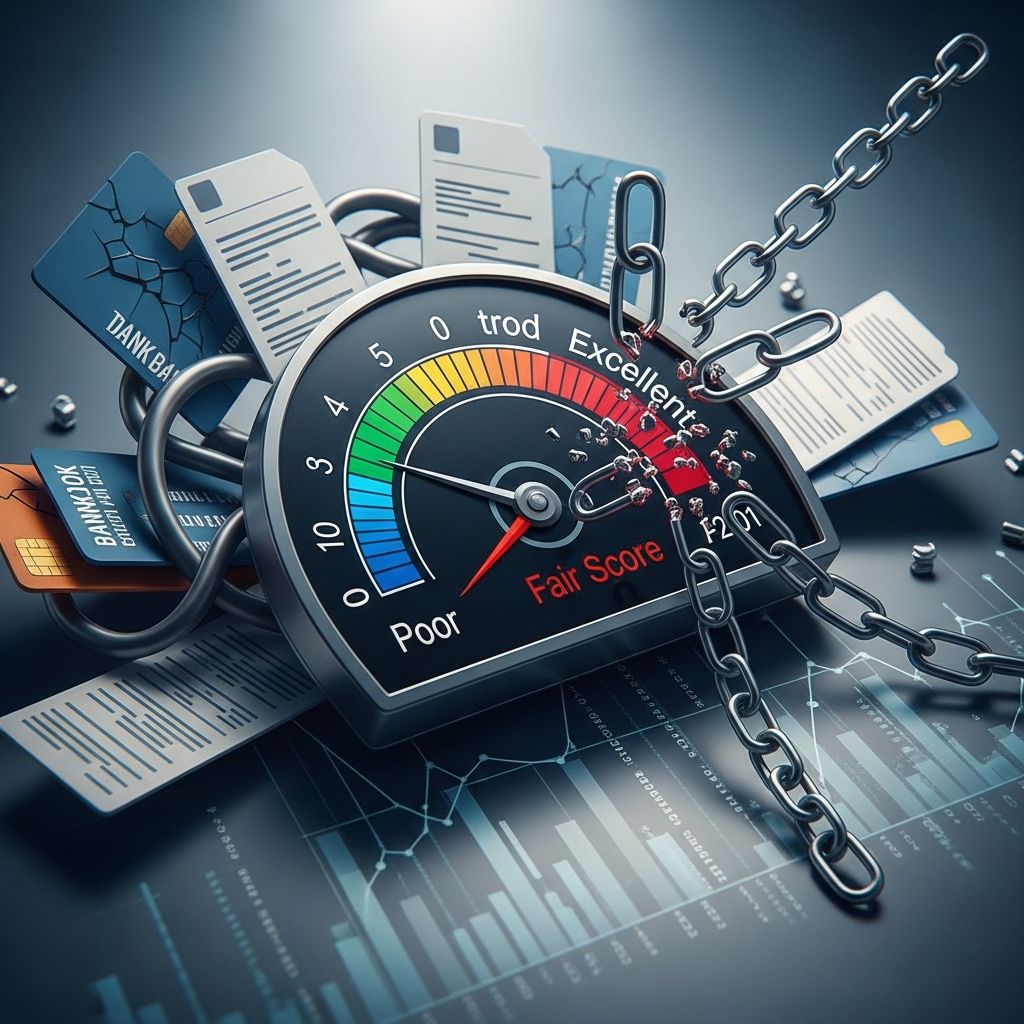
Closed accounts appear on credit reports and can either support or undermine credit scores depending on their history and your overall credit profile. Positive accounts may enhance scores for up to a decade, while negative ones can harm them for seven years.
Understanding Closed Accounts in Credit Profiles
A closed account indicates it is no longer active for transactions, whether closed by the consumer or the creditor. These entries remain visible to lenders, providing a record of past financial behavior that influences scoring models like FICO, where payment history weighs 35%.
Credit reports from Equifax, TransUnion, and Experian maintain these records to offer a comprehensive view of borrowing patterns. Accounts closed in good standing contribute positively by demonstrating reliability, whereas those with delinquencies signal risk.
Key Ways Closed Accounts Influence Scores
Closed accounts affect scores indirectly through several FICO factors. Here’s a breakdown:
- Payment History (35%): On-time payments on closed positive accounts bolster scores for 10 years; late payments linger for 7 years.
- Credit Utilization (30%): Closing reduces total credit limits, potentially raising utilization if balances exist elsewhere. Aim for under 30%.
- Length of Credit History (15%): Older closed accounts extend average age; their removal shortens it, possibly lowering scores.
- Credit Mix (10%): Losing revolving credit disrupts mix if installment loans dominate.
- New Credit (10%): Rarely direct, but related actions like new applications can impact.
| Factor | FICO Weight | Closed Account Effect |
|---|---|---|
| Payment History | 35% | Positive: Helps up to 10 yrs; Negative: Hurts 7 yrs |
| Utilization | 30% | Loss of limit increases ratio |
| History Length | 15% | Shortens average age |
| Credit Mix | 10% | May unbalance types |
| New Credit | 10% | Indirect via actions |
Positive vs. Negative Closed Accounts
Accounts closed responsibly, with perfect payments, remain beneficial. They extend history and show discipline, often slightly boosting scores. For instance, a decade-old card with no lates supports long-term stability.
Conversely, creditor-closed accounts due to nonpayment or collections harm scores persistently. Even closure doesn’t erase negatives; they fade gradually.
Why Utilization Spikes Hurt Most
Revolving accounts like cards contribute limits to utilization calculations. Example: $3,000 balances across $10,000 limits yield 30%. Closing a $4,000-limit card drops total to $6,000, pushing utilization to 50%, which dings scores.
Pay balances first or keep low-utilization cards open to mitigate. Experts advise under 10-30% for optimal scores.
Longevity of Closed Accounts on Reports
- Positive closures: Up to 10 years from closure date.
- Negative info: 7 years from first delinquency.
Bureaus retain data for lender assessment. After timelines, accounts drop off naturally.
Should You Remove Closed Accounts?
Positive ones? No—retain for history and utilization benefits. Negative? Removal unlikely without errors; goodwill letters to creditors sometimes work, but success varies.
Dispute inaccuracies via bureaus; valid negatives stay. Closing to hide history fails—records persist.
Strategies to Minimize Negative Impacts
- Assess Before Closing: Calculate new utilization; keep high-limit, low-use cards.
- Maintain Low Balances: Zero out before closure.
- Diversify Credit: Balance revolving and installment.
- Monitor Reports: Free weekly via AnnualCreditReport.com.
- Build History Elsewhere: New responsible accounts offset losses gradually.
Common Myths About Closed Accounts
- Myth: Closure erases history. Fact: Payment records endure.
- Myth: All closures hurt equally. Fact: Depends on standing.
- Myth: Creditor closures always negative. Fact: Can be neutral if paid.
Real-World Scenarios
Scenario 1: Long-held card, no balances, closed. Minor history dip, but positive record helps.
Scenario 2: High-limit card closed with balances elsewhere. Utilization jumps, score drops 20-50 points temporarily.
Scenario 3: Delinquent account closed by creditor. 7-year drag until aging off.
Frequently Asked Questions
Do closed accounts always lower scores?
No, positive ones often help via history and payments.
How long until impacts fade?
Positive: 10 years; negative: 7 years.
Can I remove them early?
Dispute errors or request goodwill; otherwise, wait.
Does closing paid-off cards help?
Not usually—increases utilization risk.
What if utilization exceeds 30% post-closure?
Pay down debts or request limit increases.
Proactive Credit Management Tips
Regularly review reports, keep utilization low, avoid unnecessary closures, and use tools like credit monitoring. Responsible habits ensure closed accounts support rather than hinder profiles.
References
- Can closed accounts be removed from your credit report? — Bankrate. 2023-10-15. https://www.bankrate.com/personal-finance/credit/can-close-accounts-be-removed-from-credit-report/
- What Does “Closed Account” Mean on Your Credit Report? — Experian. 2024-05-20. https://www.experian.com/blogs/ask-experian/what-does-closed-account-mean-credit-report/
- How Do Closed Accounts Affect Your Credit Score? — Chase. 2024-02-10. https://www.chase.com/personal/credit-cards/education/build-credit/closed-accounts-on-credit-report
- Why Are Closed Accounts Hurting My Credit? — Experian. 2024-03-05. https://www.experian.com/blogs/ask-experian/why-are-closed-accounts-hurting-credit/
- Should Closed Accounts on Credit Report Drop Off? — InCharge Debt Solutions. 2023-11-28. https://www.incharge.org/debt-relief/credit-counseling/credit-score-and-credit-report/closed-account-on-credit-report/
- How Long Do Closed Accounts Stay on Your Credit Report? — Discover. 2024-01-12. https://www.discover.com/credit-cards/card-smarts/how-long-closed-accounts-stay-on-your-credit-report/
Similar Articles








Read full bio of medha deb