Ideal GDP Growth Rate: Why 2-3% Is Best For 2025
Discover the optimal GDP growth rate for economic health and stability.

Understanding GDP and Economic Growth
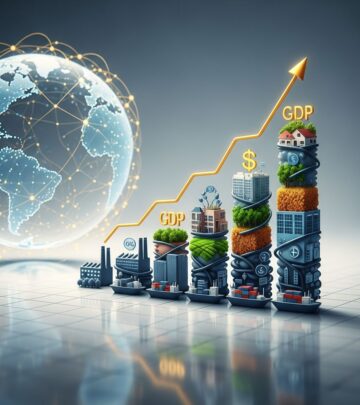
The gross domestic product (GDP) represents a country’s annual market value of all products and services produced within its borders. Economists measure U.S. GDP growth by the rate at which the economy’s quarterly production increases or decreases. This fundamental metric serves as a barometer for the overall health and trajectory of the nation’s economy. Understanding GDP growth is essential for policymakers, investors, and citizens who want to grasp how well their economy is performing and what economic conditions lie ahead.
When GDP grows at a positive rate, it typically signals that the economy is expanding. This expansion often translates into increased business activity, higher employment levels, and growing personal incomes for workers. Conversely, negative GDP growth indicates economic contraction, which can lead to reduced business investment, job losses, and lower consumer spending power.
The Ideal GDP Growth Rate: Finding the Sweet Spot
The ideal GDP growth rate falls between 2% and 3% annually. This range is often referred to as the “Goldilocks range” because it represents a balanced state—not too fast and not too slow. Within this optimal range, economic expansion occurs at a sustainable pace that supports job creation, maintains moderate inflation, and promotes overall economic stability without triggering destabilizing forces.
Why is this 2-3% range so special? A Stanford University study confirms that GDP growth within these ideal bounds promotes economic balance where development, employment, and inflation exist in harmony. When an economy grows at this moderate pace, the demand for goods and services can be met without causing prices to rise too quickly. This measured expansion allows businesses to invest in growth confidently while consumers enjoy stable purchasing power.
Why Growth Must Stay Within Bounds
Growth outside the ideal range creates problems. Economists recognize that faster is not always better when it comes to economic expansion. If GDP growth consistently exceeds 3% for extended periods, rapidly growing sectors can develop asset bubbles—situations where assets like housing, stocks, or commodities experience rapid price increases unrelated to their intrinsic value. The housing market bubble that preceded the 2008 financial crisis exemplifies this danger. When these bubbles eventually burst, the resulting contraction can plunge the economy into recession.
On the flip side, growth that is too slow—or worse, negative growth—signals economic problems. When GDP growth slows significantly or turns negative, businesses typically postpone investments and hiring. Without employment opportunities, consumers have less disposable income to spend on goods and services, creating a self-reinforcing downturn that exacerbates the economic decline.
The Consequences of Excessive Growth
When an economy grows too rapidly, it enters a state of overheating. Demands from consumers, businesses, and government rise to levels that the economy cannot sustainably meet. This excessive demand pulls on available resources, straining production capacity and pushing prices upward. As inflation accelerates beyond the Federal Reserve’s target of 2%, the central bank must intervene to cool the economy.
The Federal Reserve responds to overheating by raising the federal funds rate, increasing borrowing costs throughout the economy. Higher interest rates make loans more expensive for businesses and consumers, which dampens spending and investment. If these measures successfully slow growth back toward the ideal range, the adjustment process may be relatively smooth. However, if the Fed acts too aggressively or if growth was already unsustainable, the economy can slip into recession.
Asset Bubbles and Economic Instability
When growth rates spike above 4% for many consecutive years, particular sectors can generate asset bubbles similar to the housing market bubble that emerged before 2008. These bubbles create illusory wealth as asset prices soar disconnected from fundamental values. Investors and consumers make decisions based on these inflated prices, overextending themselves financially. When bubbles eventually burst—as all bubbles do—assets plummet in value, destroying wealth and forcing a painful economic adjustment.
The Dangers of Insufficient Growth
An economy that grows too slowly or contracts creates its own set of problems. Sluggish growth means fewer job opportunities, slower income growth, and reduced consumer confidence. Businesses facing weak demand hesitate to expand operations or hire workers, creating a vicious cycle of low growth and limited opportunities.
Negative GDP growth rates occur when the economy actually contracts. This typically happens after asset bubbles burst or following external shocks that disrupt economic activity. During recessions, unemployment rises significantly as businesses cut costs by reducing their workforce. This surge in joblessness means fewer consumers have income to spend, which further weakens demand and prolongs the downturn. Negative growth tends to persist until the economy reaches a trough—the lowest point of the business cycle—after which recovery gradually begins.
Defining Recession
Economists define a recession as two consecutive quarters of falling real GDP. This technical definition captures the idea that the economy has shifted from expansion to contraction for a sustained period. Recessions can vary widely in severity and duration, from mild slowdowns lasting a few months to severe downturns lasting years, as occurred during the Great Depression and Great Recession.
Why a Healthy GDP Growth Rate Matters
Political leaders often assume that faster economic growth is always preferable. However, growth becomes genuinely beneficial only when it falls within the optimal range. Outside this range, growth becomes problematic rather than positive. The relationship between growth and economic health is not linear; it has an inverted-U shape where too little and too much growth both produce negative outcomes.
Within the 2-3% range, the economy achieves a sustainable rhythm that supports multiple positive outcomes simultaneously. Job creation proceeds at a steady pace, providing employment opportunities without wage-push inflation. Businesses expand operations in response to growing demand, investing in new facilities and technology. Consumer confidence remains stable, encouraging spending and investment. Government revenues grow with the expanding tax base, while spending pressures remain manageable.
The Balance of Key Economic Indicators
The ideal GDP growth rate maintains harmony among three critical economic indicators: employment, inflation, and growth itself. When growth is too slow, unemployment rises and inflation falls—potentially deflation. When growth is too fast, unemployment falls too far below the natural rate and inflation accelerates. Only within the 2-3% range do these indicators reach their optimal balance.
Natural unemployment—the rate of joblessness that exists even in a healthy economy due to job transitions and frictional factors—typically hovers around 3.5-4.5% in the United States. When growth is robust enough to push unemployment significantly below this natural rate, employers compete aggressively for workers, driving wages up faster than productivity. This wage growth translates into higher business costs, which get passed on to consumers as price increases, generating inflation.
Growth Outside the Ideal Range: Consequences
Understanding what happens when growth deviates from the ideal range provides crucial context for why economists emphasize the 2-3% target.
Growth Below 2%
When GDP growth falls below 2%, several concerning trends emerge. First, growth may not outpace population growth—which stood at 0.7% in 2017—meaning per capita income growth stagnates. Second, weak growth fails to absorb workers entering the labor force, leading to rising unemployment. Third, business confidence deteriorates, leading to reduced investment spending, which further weakens future growth prospects.
Growth Above 3%
Conversely, when growth consistently exceeds 3%, inflationary pressures build. Economists become nervous when growth rates stay above 4% for sustained periods. This rapid expansion depletes economic slack—underutilized labor and capital—pushing factor prices higher. The economy eventually hits capacity constraints where increasing demand cannot be met with increased production, so prices rise instead.
Historical Perspective: The 2008 Financial Crisis
The period surrounding the 2008 financial crisis demonstrates the real-world consequences of unsustainable growth and subsequent contraction. In 2008, the U.S. economy experienced severe GDP volatility:
| Quarter | GDP Growth Rate | Economic Status |
|---|---|---|
| Q1 2008 | -1.6% | Contraction |
| Q2 2008 | 2.3% | Brief Recovery |
| Q3 2008 | -2.1% | Contraction |
| Q4 2008 | -8.5% | Severe Contraction |
This dramatic swing from positive to severely negative territory illustrates how quickly an economy can deteriorate once a bubble bursts. The housing bubble, which had inflated for years as growth rates exceeded sustainable levels, finally collapsed in 2007-2008, triggering the worst recession since the Great Depression.
Recovery from the 2008 Crisis
Recovery from this crisis proved slow and challenging. The American Recovery and Reinvestment Act (ARRA), enacted in March 2009, began the process of stabilizing the economy. However, the rebound was gradual. Economic growth remained negative through the first two quarters of 2009 before finally turning positive in the third and fourth quarters. This extended recovery underscored how difficult it is to resurrect an economy from severe contraction and demonstrated the long-term costs of allowing the economy to overheat in the first place.
Monetary Policy and Growth Management
The Federal Reserve plays a crucial role in managing GDP growth to keep it within the ideal range. When the economy grows too rapidly, risking overheating and inflation, the Fed boosts interest rates by increasing the federal funds rate. These higher rates make borrowing more expensive for businesses and consumers, which dampens spending and investment, thereby cooling growth. Conversely, when the economy contracts, the Fed reduces rates to encourage borrowing and spending, stimulating growth.
The Fed’s dual mandate includes promoting maximum employment and maintaining price stability, which translates into targeting 2% inflation over the long term. This inflation target reflects the recognition that some inflation is healthy and necessary for an expanding economy, but sustained high inflation erodes purchasing power and creates economic uncertainty.
Global Perspective on GDP Growth
While the 2-3% range applies particularly to developed, high-income economies like the United States, the ideal growth rate varies by development level. Generally, economists expect that poorer countries will grow faster than wealthy countries. Once a country catches up with the frontier developed economies, achieving rapid growth becomes considerably more difficult. For high-income countries already operating near the technological frontier, 2-3% represents reasonable steady growth based on recent historical experience.
The United States has averaged approximately 2.2% real GDP growth over the past five years, with the exception of a significant dip in 2020 when the COVID-19 pandemic disrupted economic activity. This average reflects the economy oscillating around the ideal range, which is typical for mature economies.
Frequently Asked Questions
Q: Why is 2-3% growth considered ideal?
A: The 2-3% range represents a Goldilocks scenario where economic expansion occurs at a sustainable pace. This range supports steady job creation, keeps inflation moderate and stable, and allows businesses to expand confidently without creating unsustainable asset bubbles or capacity constraints.
Q: What happens if GDP growth exceeds 4%?
A: Growth above 4% for sustained periods can lead to overheating. Rapid expansion depletes economic slack, pushing up wages and prices. Asset bubbles may develop in sectors experiencing rapid price appreciation. When these bubbles eventually burst, the economy can slip into recession with significant negative growth and rising unemployment.
Q: Is negative GDP growth always bad?
A: Yes, negative GDP growth indicates economic contraction. Businesses reduce investment and hiring, unemployment rises, consumer spending falls, and the decline tends to persist until the economy reaches a trough. Two consecutive quarters of negative growth defines a recession.
Q: How does the Federal Reserve manage growth?
A: When growth is too rapid, the Fed raises interest rates to cool the economy. When growth is too slow or negative, the Fed lowers rates to stimulate borrowing and spending. The Fed targets 2% inflation over the long term to support stable, sustainable growth.
Q: Why can’t we just aim for maximum growth?
A: Maximum growth is unsustainable because it creates imbalances. Too-rapid expansion leads to inflation, asset bubbles, and eventually recession. The ideal range balances growth with stability, employment, and reasonable price levels—producing better long-term outcomes than boom-and-bust cycles.
References
- What Is the Ideal GDP Growth Rate? — Kimberly Amadeo. 2024. https://kimberlyamadeo.com/blog/what-is-the-ideal-gdp-growth-rate
- What Is A Good GDP Growth Rate? — Learn About Economics. April 27, 2025. https://www.youtube.com/watch?v=fBIJ8hYPsSU
- GDP Growth Rate — Fiveable. 2025. https://fiveable.me/key-terms/international-economics/gdp-growth-rate
- 5 Things to Know About GDP — Marketplace. January 30, 2019. https://www.marketplace.org/story/2019/01/30/5-things-know-about-gdp
- US GDP Growth Rate: Definition and Examples — StoneX. 2025. https://www.stonex.com/en/financial-glossary/us-gpd-growth/
Similar Articles








Read full bio of Sneha Tete