Ideal Credit Score for Loan Cosigners
Discover the credit profiles, income levels, and qualifications that make someone an effective cosigner for loans and credit products.

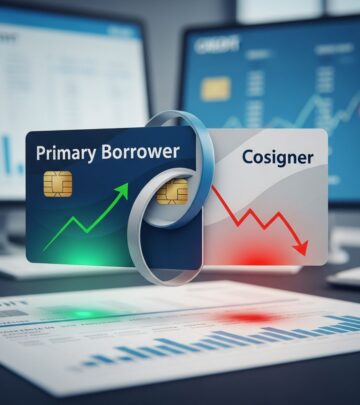
Securing a loan often becomes challenging for individuals with limited or poor credit histories. In such scenarios, enlisting a cosigner can significantly boost approval odds and secure more favorable terms. A cosigner acts as a guarantor, promising to repay the debt if the primary borrower defaults. Lenders scrutinize the cosigner’s financial standing closely, prioritizing those with robust credit profiles typically in the good to excellent range, starting from 670 on major scoring models like FICO.
Understanding the Role of a Cosigner in Lending
A cosigner provides additional assurance to lenders by sharing legal responsibility for the loan. This arrangement is common for auto financing, personal loans, student debt, and sometimes mortgages. The cosigner’s creditworthiness can offset weaknesses in the primary applicant’s profile, potentially lowering interest rates and expanding borrowing options.
However, cosigning is not a casual commitment. Both parties’ credit reports undergo review, and the account appears on both profiles. Positive payment history benefits everyone involved, but delinquencies harm all parties equally.
Optimal Credit Profiles for Effective Cosigning
Lenders generally seek cosigners with scores of 670 or higher to qualify as strong backstops. This threshold aligns with ‘good’ credit on FICO scales (670-739), enabling access to prime lending rates. Scores above 740 enter ‘excellent’ territory, often yielding the best terms.
| Credit Score Range | FICO Category | Typical Lender Preference for Cosigners |
|---|---|---|
| 800-850 | Exceptional | Highly preferred; best rates |
| 740-799 | Very Good | Strongly favored |
| 670-739 | Good | Minimum for most approvals |
| Below 670 | Fair/Poor | Rarely accepted without offsets |
Variations exist by loan type. For instance, auto lenders may accept scores around 620-680 for near-prime deals, especially with substantial down payments or low loan-to-value ratios. Private student loans often demand 680+ for competitive rates, while personal loan providers might flex lower for fintech options at higher costs.
Income Stability: A Core Qualification Factor
Credit scores alone do not suffice; lenders demand proof of sufficient income to cover potential repayments. Cosigners must demonstrate they could assume the full loan burden without strain.
The debt-to-income (DTI) ratio serves as a key metric, calculated as monthly debts divided by pretax income. Ideal DTIs fall under 36-40%, including the prospective loan payment. For example, if a cosigner’s monthly debts total $2,000 and income is $6,000, their baseline DTI is 33%. Adding a $500 loan payment pushes it to 41%, which may disqualify them unless offset by reserves.
- Stable Employment: At least 12 months in current role preferred.
- Verifiable Income: Pay stubs, tax returns, W-2s required.
- Reserves: Savings cushions enhance applications.
Documentation Essentials for Cosigner Approval
Preparation streamlines the process. Prospective cosigners should review their credit reports beforehand via free weekly access at AnnualCreditReport.com or services like Experian.
Required paperwork typically includes:
- Government-issued ID (driver’s license, passport).
- Social Security card or number.
- Proof of income (recent pay stubs, tax documents).
- Asset statements (bank, retirement accounts).
- Debt listings (mortgages, cards, other loans).
Signing may occur in-person, electronically, or notarized, depending on lender policies.
Loan-Specific Cosigner Expectations
Automotive Financing
Car loans frequently utilize cosigners. A score of 680+ unlocks prime rates, though subprime options exist down to 600 with higher APRs. Strong income and down payments can mitigate lower scores.
Private Student Lending
Cosigners bolster student loan applications, especially for those without established credit. Lenders favor 680-700+ scores, with prequalification tools available to gauge fit.
Unsecured Personal Borrowing
Personal loans demand cosigners with 660-700+ profiles for mainstream approval. Fintechs may accommodate lower scores but at elevated rates. DTI under 30% ideal.
Mortgage Considerations
Home loans impose stricter overlays, often requiring 620+ minimums. Program-specific rules apply for VA or USDA.
Risks and Responsibilities of Cosigning
Cosigning elevates lender confidence but exposes guarantors to substantial risks. Missed payments damage the cosigner’s score, potentially hindering their future borrowing.
- Credit Impact: Inquiries and new accounts temporarily dip scores; delinquencies cause lasting harm.
- Legal Obligation: Full repayment liability if primary defaults.
- Relationship Strain: Financial disputes common.
Primary borrowers should prioritize on-time payments. Cosigners must assess if they can afford the debt independently.
Strategies to Strengthen Cosigner Applications
Even borderline profiles can succeed with enhancements:
- Larger down payments reduce lender exposure.
- Co-borrower status (sharing proceeds) sometimes preferable.
- Shopping multiple lenders reveals flexible policies, like credit unions.
- Alternative data (rent, utilities) aids thin-file cosigners.
Pre-approval discussions clarify requirements upfront.
Alternatives to Traditional Cosigning
Not all situations necessitate cosigners. Secured loans using collateral, credit-builder products, or improving personal credit via secured cards offer paths forward. Joint applications, where both parties use funds, distribute risk differently.
Frequently Asked Questions
Can Someone Without a Credit Score Cosign?
Possible for some auto, personal, or student lenders if income stability, low DTI, and alternative credit data (e.g., rent payments) are strong. Mortgages rarely allow this.
Whose Score Determines Loan Pricing?
Varies: some use the lower score, others the primary’s. Clarify with lenders.
Does Cosigning Build My Credit?
Yes, if payments stay current, as it adds positive history.
How to Exit Cosigner Role?
Refinancing into primary’s name or loan payoff required; no unilateral release.
Is a 600 Score Viable for Cosigning?
For subprime auto loans possibly, but expect higher rates. Aim higher for advantages.
Steps to Prepare for Cosigning
- Review all parties’ credit reports and scores.
- Calculate combined DTIs including new payment.
- Gather documentation early.
- Compare lender terms via prequalifications.
- Discuss repayment contingency plans.
Thorough preparation maximizes success while minimizing surprises.
References
- What Credit Score Does a Cosigner Need? — Experian. 2023. https://www.experian.com/blogs/ask-experian/what-credit-score-does-a-cosigner-need/
- What Credit Score Does a Cosigner Need With No Credit? — The Credit People. 2024. https://www.thecreditpeople.com/credit/cosigner-credit-score-needed-for-borrower-with-no-credit
- Whose Credit Score Is Used When Buying a Car with a Co-Signer? — Farris Motor. 2023. https://farrismotor.com/blog/whose-credit-score-is-used
- Whose Credit Score Is Used When Buying a Car With a Co-Signer? — IMCU. 2024. https://www.imcu.com/blog/whose-credit-score-is-used-when-buying-a-car-with-a-co-signer
- What are the credit requirements for a Student Loan cosigner? — College Ave. 2022-04-30. https://help.collegeave.com/hc/en-us/articles/5327755784599-What-are-the-credit-requirements-for-a-Student-Loan-cosigner
Similar Articles








Read full bio of medha deb