Auto Loan Rates: 5 Steps To Secure Lower Rates
Discover what defines a strong auto loan rate, key influences, and strategies to secure the best financing for your next vehicle purchase.

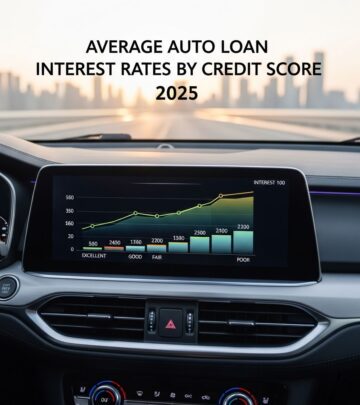
Securing a favorable interest rate on an auto loan can significantly reduce the total cost of your vehicle purchase. Rates typically range from around 5% for top-tier credit profiles to over 20% for lower scores, influenced by personal finances, market conditions, and loan specifics.
Core Elements Shaping Auto Loan Rates
Lenders evaluate multiple borrower and loan characteristics to set rates. Primary among these is creditworthiness, which signals repayment reliability.
- Credit Profile Assessment: Scores above 780 often yield rates near 5.38% for new cars, while scores below 500 face 15.62% or higher.
- Debt-to-Income Ratio: High existing debts relative to income raise perceived risk, prompting higher rates.
- Loan Amount and Duration: Larger sums or extended terms (beyond 60 months) increase rates due to prolonged exposure.
Vehicle details also play a role; new models generally attract lower rates than used ones because of better resale value and lower default risk.
Benchmarks for Strong Rates by Credit Tier
A “good” rate aligns below national averages for your credit band. As of recent data, here’s a breakdown:
| Credit Score Range | New Car APR (Avg) | Used Car APR (Avg) |
|---|---|---|
| 781-850 | 5.38% | 6.80% |
| 661-780 | 6.50%-8.00% | 7.50%-9.50% |
| 601-660 | 8.50%-11.00% | 10.00%-13.00% |
| 501-600 | 12.00%-15.00% | 15.00%-18.00% |
| 300-500 | 15.62%+ | 21.57%+ |
These figures draw from aggregated lender data and reflect 2024-2026 trends amid Federal Reserve adjustments. Rates below these benchmarks qualify as excellent; aim for at least 1-2% under average through negotiation or optimization.
Vehicle and Loan Structure Influences
Beyond credit, structural elements affect pricing. The loan-to-value (LTV) ratio measures borrowed amount against vehicle worth; lower LTV (e.g., 80% or less via larger down payments) secures better rates by reducing lender risk.
Loan terms vary from 24 to 84 months. Shorter durations (36-48 months) often carry 1-2% lower rates but elevate monthly outflows. For a $30,000 loan at 6% over 60 months with $10,000 down, payments hit about $387 monthly, saving versus longer terms.
New versus used cars diverge notably: used vehicles command higher rates (e.g., 2-5% premium) due to depreciation and condition uncertainties. Luxury or high-performance models may incur surcharges.
Market Dynamics and Economic Shifts
Broader economics drive baseline rates. Federal Reserve hikes from 2022-2024 elevated auto APRs to combat inflation, but anticipated cuts in late 2024 and 2025 could ease them. Shop during low-rate windows or post-Fed announcements for advantages.
Lender type matters: credit unions often undercut banks by 0.5-1.5%, online platforms by flexibility. Dealer financing might inflate rates via markups, negotiable with preapprovals.
Steps to Achieve Optimal Rates
Proactive measures position borrowers for prime offers.
- Review and Boost Credit: Pull free reports from major bureaus; dispute errors. Payment history (35% of score) and utilization (30%) offer quickest gains.
- Minimize LTV: Target 20%+ down payments or trade-ins to cap borrowing.
- Compare Extensively: Evaluate APRs, fees, terms across 3-5 lenders using checklists.
- Opt Short Terms: If budget permits, select 36-60 months for rate discounts.
- Preapprove First: Locks rates, strengthens dealer haggling.
Additional perks like autopay discounts (0.25-0.50%) or loyalty programs further trim costs.
Hidden Costs Beyond Base Rates
Focus on APR, encompassing interest plus fees (origination, prepayment penalties). Tables clarify comparisons:
| Fee Type | Potential Impact | Avoidance Tip |
|---|---|---|
| Origination | 1-2% of loan | Seek no-fee lenders |
| Prepayment Penalty | 1-3% early payoff | Confirm absence |
| Processing | $100-$500 | Online applications |
Taxes and registration fold into some APRs; verify inclusions.
Negotiation and Refinancing Tactics
Dealerships markup lender rates for profit; counter with external quotes. Post-purchase refinancing suits rate drops or credit improvements, potentially slashing payments 2-4%. Travis Credit Union exemplifies with prequalification and deferrals.
Common Pitfalls to Sidestep
- Overlooking total ownership costs: Factor insurance, maintenance atop payments.
- Extending terms for affordability: Accumulates interest despite lower monthlies.
- Ignoring variable vs. fixed: Fixed dominates U.S. auto loans for stability.
Frequently Asked Questions
What rate should I target?
Aim below averages for your score: <6% for excellent credit, <10% for fair.
Can I haggle rates?
Yes, especially at dealers; preapprovals provide leverage.
New or used: rate differences?
New cars average 2-5% lower due to collateral strength.
Impact of down payment size?
Larger reduces LTV, dropping rates 0.5-1.5% typically.
When to refinance?
If rates fall 1%+ or credit rises significantly.
Planning for Long-Term Savings
Holistic budgeting integrates loans with insurance, fuel, repairs. Tools like prequalification reveal personalized scenarios sans credit dings. Patience amid rate cycles maximizes value; delaying purchase if scores lag pays dividends.
Empower decisions with data: superior rates not only cut costs but preserve financial flexibility for future goals.
References
- How does a lender decide what interest rate to offer me on an auto loan? — Consumer Financial Protection Bureau. 2023. https://www.consumerfinance.gov/ask-cfpb/how-does-a-lender-decide-what-interest-rate-to-offer-me-on-an-auto-loan-en-765/
- Checklist: How to Compare Auto Loans — 1st Advantage Federal Credit Union. 2024. https://www.1stadvantage.org/blog/checklist-how-to-compare-auto-loans/
- Car Loan Interest Rates by Credit Score — Travis Credit Union. 2024-08. https://www.traviscu.org/my-life/blogs/financial-wellness/august-2024/car-loan-interest-rates-by-credit-score
- What is a Good Interest Rate on a Car Loan? Know the Factors — Riser Lincoln. 2025. https://www.riserlincoln.com/car-loan-interest-rates.htm
- 3 Key Factors That Affect Auto Loan Rates — Community First Credit Union of Florida. 2024. https://www.communityfirstfl.org/resources/blog/3-factors-that-affect-auto-loan-rates
- How to Get the Best Auto Loan Rate — Experian. 2025. https://www.experian.com/blogs/ask-experian/how-to-get-best-auto-loan-rates/
Similar Articles








Read full bio of Sneha Tete