Cash Strategy for Retirement: Why HYSAs Matter
Discover how high-yield savings accounts protect and stabilize your retirement income

Retirement represents one of life’s most significant financial transitions, requiring a fundamental shift in how you manage money. While investment portfolios and pension plans dominate retirement conversations, an often-overlooked tool plays a critical supporting role: the high-yield savings account (HYSA). Understanding how to leverage this financial vehicle can meaningfully impact your retirement security and peace of mind.
The Evolving Importance of Cash Positioning Across Life Stages
Financial priorities undergo dramatic transformations as you progress through different life phases. During your working years, your primary focus centers on wealth accumulation and growth. Once retirement approaches, the objective shifts fundamentally—preservation and reliable income generation become paramount.
In your pre-retirement years, a high-yield savings account typically functions as a temporary holding area for funds awaiting deployment into longer-term investments or as a buffer against unexpected expenses. The emphasis remains on accessibility and safety, with interest earnings viewed as a secondary benefit.
However, as you transition into retirement, the strategic value of maintaining cash reserves in high-yielding accounts increases substantially. This shift reflects the changing nature of your financial obligations and opportunities.
Why Retirees Face Unique Cash Management Challenges
Retirees encounter financial circumstances distinctly different from working professionals. Fixed or semi-fixed income sources replace regular paychecks. Healthcare expenses become less predictable and potentially more substantial. Market downturns create psychological pressure and practical complications when you can no longer offset losses through employment income.
Additionally, retirees must navigate complex tax situations involving multiple income streams—Social Security, pension distributions, investment income, and potentially continued employment. Each income source carries different tax implications, and strategic cash positioning can help optimize your overall tax burden.
The timing of cash needs becomes less uniform in retirement. Rather than receiving a steady paycheck, you may need to coordinate withdrawals across multiple accounts, wait for investment distributions, or manage irregular expenses such as home repairs or medical procedures.
Creating a Liquidity Foundation for Unexpected Circumstances
One fundamental principle of sound retirement planning involves maintaining accessible cash reserves. A high-yield savings account serves as an ideal repository for this liquidity cushion because it combines safety, accessibility, and returns that exceed traditional savings vehicles.
Healthcare represents a particularly significant source of unexpected retirement expenses. Deductibles on Medicare supplemental insurance, dental work not covered by Medicare, vision care, and hearing aids frequently create surprises in retirement budgets. More substantially, long-term care costs—whether in-home assistance or facility-based care—can rapidly deplete inadequately positioned finances.
By maintaining a dedicated cash reserve in a high-yield savings account, you create a buffer that allows you to address these unexpected costs without triggering poorly-timed withdrawals from investment accounts. This flexibility proves especially valuable during market downturns, when drawing from investments locks in losses and disrupts your long-term investment strategy.
The recommended size of this liquidity reserve varies based on individual circumstances, but many financial advisors suggest maintaining 6-12 months of essential living expenses in accessible cash accounts. High-yield savings accounts make this recommendation more achievable because the interest earnings help offset inflation’s erosive effects on your cash reserves.
Bridging Cash Flow Gaps and Coordinating Income Streams
Retirement income typically arrives on irregular schedules. Social Security deposits may arrive on specific dates, pension payments follow established schedules, and investment distributions might occur quarterly or irregularly. Meanwhile, your monthly bills and living expenses remain relatively consistent.
A high-yield savings account effectively bridges these timing gaps. You can allow distributions to accumulate in the HYSA until sufficient funds are available to cover upcoming expenses, eliminating the need to sell investments prematurely or incur unnecessary transaction costs.
This cash-flow coordination function becomes increasingly important if you maintain substantial investment portfolios. Rather than constantly selling securities to cover monthly expenses—an approach that creates transaction costs, potential tax complications, and disrupts your asset allocation—you can systematically fund your high-yield savings account and draw from it for regular needs.
This approach also provides psychological benefits. Many retirees find comfort in viewing their HYSA as their immediate spending account while their investment portfolios remain positioned for long-term growth, even though you may not live for several decades in retirement.
Tax Planning and Quarterly Estimated Payment Management
Retirees with substantial investment income, self-employment income, or other non-employment earnings often face quarterly estimated tax payment obligations. These payments typically occur on March 15, June 15, September 15, and December 31.
Rather than keeping these tax funds in a low-interest checking account where they earn minimal returns, positioning estimated tax payments in a high-yield savings account allows you to earn additional interest on funds needed for tax obligations. This strategy proves particularly valuable if you maintain substantial quarterly payments, as the accumulated interest can be meaningful across multiple years of retirement.
Additionally, the accessibility of funds in a HYSA makes it straightforward to make tax payments through electronic funds transfer or check writing, ensuring you never miss a payment deadline due to account access restrictions.
Evaluating Interest Rate Benefits in Current Economic Conditions
The advantage of maintaining cash in a high-yield savings account versus traditional savings accounts has expanded significantly in recent years. While the national average APY on standard savings accounts remains extremely low—approximately 0.33% according to Federal Deposit Insurance Corporation (FDIC) data—high-yield savings accounts offer rates exceeding 3.5%, and some institutions provide yields approaching 5.25%.
This differential creates meaningful wealth preservation benefits over time. Consider that a $100,000 cash reserve earning 0.33% annually generates only $330 in interest, while the same amount in a high-yield account earning 4% produces $4,000 annually—a $3,670 difference per year that compounds across multiple years of retirement.
For a retiree with $500,000 in total retirement savings, maintaining $100,000 to $150,000 in a high-yield savings account represents a prudent allocation that balances growth needs with safety and accessibility. The interest earnings on this portion can represent meaningful supplemental income, particularly as you advance through later retirement when other income sources may decline.
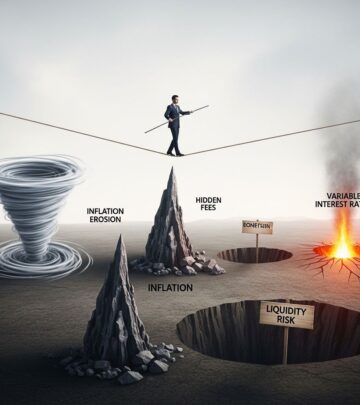
It’s important to understand that high-yield savings accounts offer variable rates, meaning the yield can fluctuate based on broader interest rate environments. However, even if rates decline from current levels, HYSAs will likely continue providing superior returns to traditional savings accounts.
Security and Insurance Protection Through FDIC Coverage
A primary concern for retirees involves capital preservation and safety. High-yield savings accounts address this concern through FDIC insurance, which protects deposits up to $250,000 per account holder per bank.
This FDIC protection provides meaningful security benefits that investment accounts cannot match. Unlike stocks, bonds, or mutual funds—which fluctuate in value and carry market risk—FDIC-insured deposits are protected against bank failure and default. Your principal remains completely safe regardless of economic conditions or market performance.
For retirees on fixed incomes with limited capacity to recover from losses, this safety characteristic becomes increasingly valuable. You can maintain a portion of your retirement savings in instruments providing guaranteed protection and consistent returns, creating a psychological and financial foundation that allows your remaining investments to pursue more aggressive growth strategies.
To maximize insurance coverage for substantial cash reserves, you can distribute funds across multiple banks, each providing $250,000 in FDIC coverage. While managing multiple accounts requires additional coordination, the enhanced safety may justify the administrative complexity for some retirees.
Online Banks and Modern HYSA Advantages
The emergence of online banking has democratized access to high-yield savings accounts. Online institutions maintain significantly lower overhead costs than traditional brick-and-mortar banks, allowing them to pass savings to customers through higher interest rates and lower fees.
Online banks typically charge no monthly maintenance fees, impose no minimum balance requirements, and provide full FDIC insurance protection identical to traditional banks. The primary trade-off involves forgoing physical branch access and accepting that account management occurs entirely through digital channels.
For retirees comfortable with technology, online banks represent an excellent option for high-yield savings accounts. The convenience of 24/7 account access, electronic fund transfers, and mobile app management often outweighs the absence of physical branches. Additionally, online banks typically provide competitive customer service through phone and digital support channels.
Understanding the Limitations of High-Yield Savings Accounts
While high-yield savings accounts offer significant advantages for retirement cash management, they carry important limitations that prevent them from serving as complete retirement solutions.
Inflation Erosion: Although current HYSA rates provide modest real returns above inflation, these accounts cannot serve as long-term growth engines. If inflation averages 2-3% annually and your HYSA earns 4%, you achieve only 1-2% real return. Over decades of retirement, this insufficient growth rate fails to preserve purchasing power for funds needed far in the future.
Tax Treatment: Unlike retirement accounts such as IRAs and 401(k)s, high-yield savings accounts offer no tax-deferred or tax-free growth benefits. Interest earnings face ordinary income taxation in the year earned, creating a tax drag that reduces effective returns. For high-income retirees, this tax treatment becomes particularly disadvantageous.
Income Generation Limitations: High-yield savings accounts cannot serve as the primary income source for retirement. The interest earnings, while meaningful for supplementary purposes, cannot replace pension income, Social Security benefits, or investment returns needed to fund essential retirement expenses. You must maintain diversified income sources beyond cash accounts.
Strategic Integration With Comprehensive Retirement Planning
High-yield savings accounts function optimally when integrated into comprehensive retirement plans that address multiple financial objectives simultaneously. Your retirement strategy should allocate funds across multiple categories: guaranteed income sources (Social Security, pensions, annuities), growth investments (stocks, diversified funds), stable value accounts (bonds, bond funds), and liquid reserves (high-yield savings accounts).
The specific allocation across these categories depends on your age, health status, family circumstances, income needs, and risk tolerance. However, most well-constructed retirement plans reserve 10-20% of total assets for accessible liquid funds, with high-yield savings accounts serving as the primary vehicle for this allocation.
This approach provides several advantages. Your liquid reserves remain accessible for emergencies and opportunities without disrupting long-term investments. Your investment portfolio can maintain appropriate allocations without excessive cash drag. Your tax situation benefits from optimization across multiple account types. And your overall financial security reflects a comprehensive strategy addressing multiple objectives rather than relying on single solutions.
Frequently Asked Questions About Retirement HYSA Strategies
How much should I keep in a high-yield savings account during retirement?
Financial advisors generally recommend maintaining 6-12 months of essential living expenses in accessible cash reserves. For someone with $60,000 annual expenses, this suggests $30,000-$60,000 in liquid accounts. However, your specific situation may warrant more or less based on factors such as pension income stability, portfolio size, and health status.
Should I move all my emergency funds to a high-yield savings account?
Yes, moving emergency funds from traditional savings accounts to high-yield accounts represents a straightforward improvement. The identical safety and accessibility combine with substantially higher returns. If you maintain funds in a checking account earning virtually no interest, transferring to a HYSA is appropriate.
Will high-yield savings account rates remain elevated?
Interest rates fluctuate based on Federal Reserve policy and economic conditions. Current elevated rates may decline over time. However, high-yield accounts will likely continue providing superior returns to traditional savings accounts regardless of future rate environments.
Can I use a HYSA as my primary retirement investment?
No. While HYSAs provide excellent cash management functions, their returns cannot sustain retirement for decades. You need diversified investments addressing growth objectives. Use HYSAs specifically for liquidity and cash flow management, not as your primary retirement strategy.
Are high-yield savings accounts appropriate for large sums?
FDIC insurance covers up to $250,000 per account holder per bank. For larger sums, distribute funds across multiple banks to maintain full insurance coverage. This approach preserves safety while allowing you to maintain all funds in high-yield accounts.
References
- The Role of a High-Yield Savings Account in Retirement — Elysium Wealth Management. Accessed March 2026. https://elysiumwealthmanagement.com/the-role-of-a-high-yield-savings-account-in-retirement/
- The Importance of High-Yield vs. Traditional Savings Accounts — National Council on Aging (NCOA). Accessed March 2026. https://www.ncoa.org/article/the-importance-of-high-yield-vs-traditional-savings-accounts/
- Why a 401(k) & High-Yield Savings Account May Not Be Enough — Chase Bank. Accessed March 2026. https://www.chase.com/personal/investments/learning-and-insights/article/why-401k-and-high-yield-savings-account-may-not-be-enough
- Top 3 High Interest Saving Accounts For A Better Retirement — The Institute of Financial Wellness. Accessed March 2026. https://www.the-ifw.com/blog/savings-strategies/high-interest-saving-accounts-retirement/
- Federal Deposit Insurance Corporation (FDIC) Official Website — FDIC. Accessed March 2026. https://www.fdic.gov/
Similar Articles








Read full bio of medha deb