Understanding HYSA Rate Fluctuations and Timing
Discover what drives high-yield savings account rate changes and how to maximize earnings
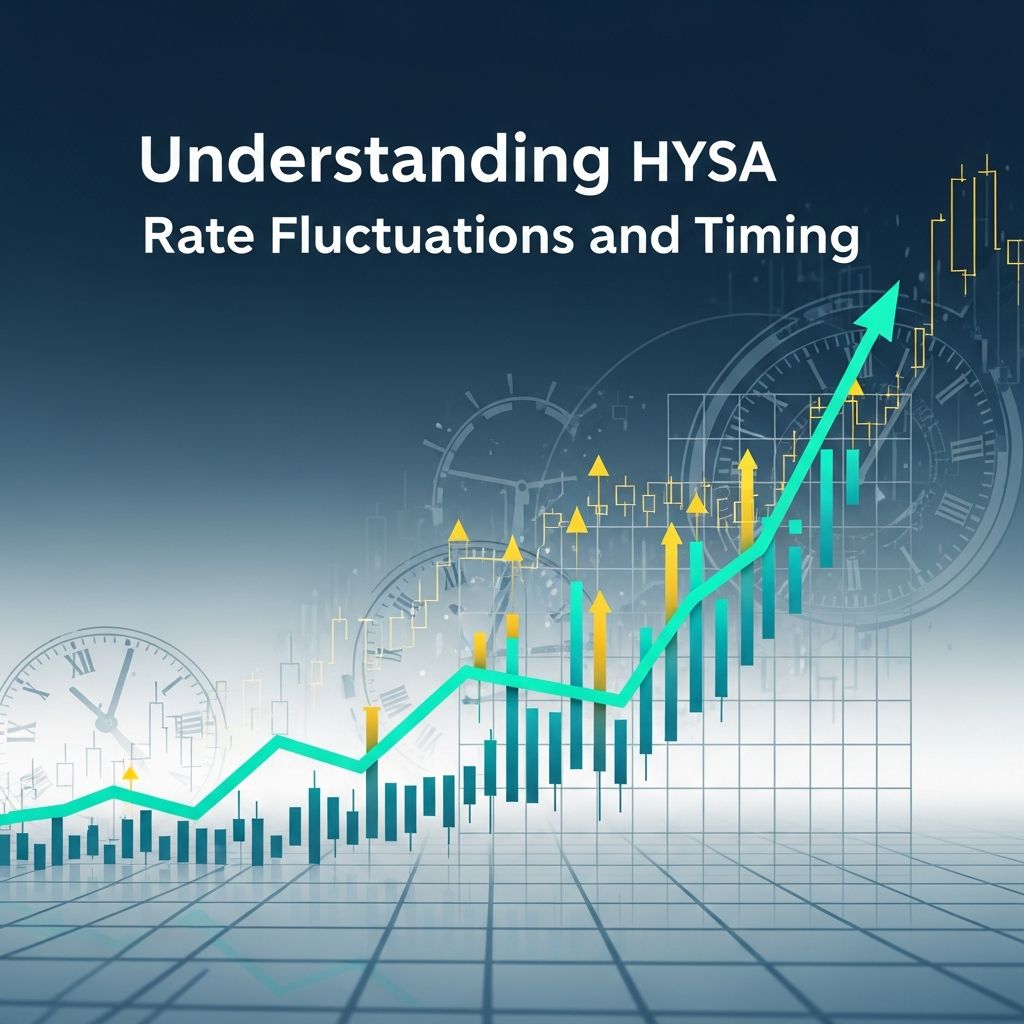
High-yield savings accounts (HYSAs) have become increasingly popular among consumers seeking to grow their money at a faster pace than traditional savings vehicles offer. The primary appeal lies in the competitive interest rates these accounts provide, which significantly outpace the minimal returns found in conventional savings accounts. However, one critical aspect that often confuses savers is the variable nature of these rates and the unpredictable timing of adjustments. Understanding the mechanics behind rate changes can help you make more informed decisions about where to place your savings.
The Nature of Variable Interest Rates
One of the most important characteristics to understand about high-yield savings accounts is that they operate with variable interest rates, meaning the annual percentage yield (APY) you earn today may not be the same six months from now, or even next month. This flexibility distinguishes HYSAs from fixed-rate products like certificates of deposit (CDs), where your rate remains locked in for a predetermined period.
Banks and financial institutions reserve the right to adjust savings account rates at any time without providing advance notice. While this may sound concerning, it’s important to recognize that significant rate cuts rarely occur on a whim. The vast majority of rate adjustments follow predictable patterns tied to broader economic factors and policy decisions made by regulatory bodies.
The variable nature of HYSA rates means you should view your current earnings potential as a snapshot rather than a permanent fixture. This reality underscores the importance of regularly reviewing your account’s performance and remaining aware of economic trends that might influence future adjustments.
The Federal Reserve’s Central Role
To comprehend when and why HYSA rates change, you must first understand the Federal Reserve’s influence on the broader financial system. The Federal Reserve, the central banking authority in the United States, establishes a benchmark interest rate known as the federal funds rate. This rate serves as the foundation for virtually all other interest rates in the economy, including those offered by savings accounts.
The Federal Open Market Committee (FOMC) meets eight times annually to evaluate economic conditions and determine whether adjustments to the federal funds rate are warranted. During these meetings, policymakers assess inflation trends, employment levels, and overall economic health to decide whether rates should rise, fall, or remain stable.
Banks typically respond to changes in the federal funds rate by adjusting their own lending rates and deposit rates accordingly. When the Federal Reserve raises its benchmark rate, banks generally increase the APY on savings accounts as well. Conversely, when the Fed lowers rates, most financial institutions reduce their savings account yields. This correlation between the federal funds rate and HYSA rates means that monitoring Federal Reserve policy announcements can provide valuable insight into potential changes to your savings rate.
Why Banks Adjust Rates Beyond Fed Decisions
While the federal funds rate serves as the primary driver of HYSA rate changes, it’s not the only factor influencing banks’ decisions. Financial institutions maintain flexibility in setting their deposit rates, and several considerations may prompt rate adjustments independent of Federal Reserve actions.
Deposit Demand and Competitive Pressures
Banks may strategically raise savings account rates when they need to attract additional customer deposits. This situation commonly occurs at newer financial institutions or online-only banks that lack the established customer base of traditional brick-and-mortar banks. Newer entrants into the market often use higher yields as a competitive tool to draw customers from larger, more established institutions, which typically offer minimal returns on savings accounts.
During periods when banks have ample deposits or reduced lending demand, they may lower rates to reduce the cost of maintaining those accounts. Conversely, when economic activity picks up and banks need more capital to fund loans and investments, they become more aggressive in competing for deposits by offering enhanced rates.
Macroeconomic Conditions
Beyond the federal funds rate itself, broader economic conditions influence banking decisions regarding deposit rates. Banks monitor inflation trends, economic growth projections, and market liquidity to inform their rate-setting strategies. During periods of significant economic uncertainty, banks may adjust rates to optimize their balance sheets and position themselves for potential future scenarios.
Historical Rate Movements and Recent Trends
Examining recent rate history provides valuable context for understanding current conditions. The Federal Reserve has implemented significant rate adjustments over the past several years in response to changing economic circumstances. In 2024 and 2025, the Fed made multiple rate reductions, lowering its benchmark rate three times in each year. As of March 2026, the federal funds rate target range sits at 3.5% to 3.75%, having stabilized after the earlier adjustment period.
In response to these Federal Reserve actions, many banks have lowered their HYSA APYs accordingly. This pattern illustrates how Fed policy directly influences what savers earn on their deposits. The timing between Fed announcements and corresponding bank rate changes typically ranges from immediate adjustments to changes implemented within several weeks, depending on individual institutions’ operational procedures.
Predictability and Frequency of Changes
A common misconception about HYSAs is that rates change constantly and unpredictably. In reality, significant rate fluctuations tend to cluster around Federal Reserve announcements and broader economic shifts rather than occurring randomly throughout the year. Banks may maintain consistent rates for extended periods, sometimes for many months at a time, particularly when broader economic conditions remain stable and the Fed maintains an unchanged policy stance.
The frequency of rate changes reflects government interest rate policies and the broader economic environment rather than arbitrary banking decisions. This means you can anticipate potential rate adjustments by monitoring Federal Reserve communications and economic news, even though you cannot predict exact timing with complete precision.
How This Affects Your Savings Strategy
Understanding the mechanics of HYSA rate changes empowers you to make more strategic savings decisions. Rather than viewing rate fluctuations as random events beyond your control, you can recognize them as part of a predictable pattern tied to economic and policy developments.
Consider these practical implications:
- Monitor Federal Reserve announcements: By tracking FOMC meeting schedules and press releases, you can anticipate periods when rate changes are most likely to occur.
- Compare accounts regularly: Since banks adjust rates at different times and to different degrees, comparing multiple HYSA options helps ensure you’re earning competitive returns.
- Maintain flexibility: Keeping your emergency fund or short-term savings in an HYSA provides growth potential while preserving liquidity, even if rates fluctuate over time.
- Understand the trade-off: HYSAs sacrifice rate certainty for higher potential earnings compared to traditional savings accounts. Evaluate whether this trade-off aligns with your financial goals.
The Relationship Between Rate Increases and Economic Policy
The Federal Reserve uses interest rate adjustments as a tool to influence economic activity. When inflation rises above target levels, the Fed typically raises rates to cool spending and borrowing, thereby reducing inflationary pressure. These rate hikes increase the cost of borrowing money for consumers and businesses, which can help moderate inflation but also affects savings rates positively, allowing savers to earn more on their deposits.
Conversely, during periods of weak economic growth or recession, the Fed may lower rates to encourage borrowing and spending. While this helps stimulate economic activity, it also reduces HYSA yields, resulting in lower earnings for savers. Understanding this dynamic helps you contextualize rate changes within the broader economic picture.
Comparing HYSAs to Alternative Savings Products
HYSAs represent just one option in the savings landscape. Understanding how HYSA rate behavior compares to other products can inform your overall strategy:
| Product Type | Rate Type | Flexibility | Typical APY Range |
|---|---|---|---|
| High-Yield Savings Account | Variable | Access funds anytime | Competitive, changes with market |
| Certificate of Deposit (CD) | Fixed | Limited until maturity | Fixed for term length |
| Money Market Account | Variable | Limited transactions | Moderate to competitive |
| Traditional Savings Account | Variable | Access funds anytime | Very low (0.01% or less) |
Each product offers distinct advantages depending on your time horizon and priorities. HYSAs excel for building emergency funds and short-term savings because they combine competitive yields with immediate access to your money.
Frequently Asked Questions
How quickly do banks typically respond to Federal Reserve rate changes?
While some banks adjust rates immediately following Fed announcements, others may take several weeks to implement changes. The timing depends on each institution’s operational procedures and competitive positioning.
Can I lose money in a high-yield savings account?
No. HYSAs are FDIC-insured (up to $250,000 per depositor per institution), protecting your principal. Rate fluctuations affect earnings, not your deposit itself. You cannot lose your original investment due to interest rate changes.
Should I move my money if rates drop?
Before switching accounts, compare current offerings across multiple institutions. Sometimes smaller rate differences don’t justify the time and effort of transferring funds. However, if a competitor offers significantly higher yields, switching may be worthwhile.
What’s the best time to open an HYSA?
The ideal timing depends on rate environment expectations. However, since you can benefit from rates at any level and HYSAs offer flexibility to move funds later, opening an account sooner typically provides better results than waiting for a potentially “perfect” time.
How often should I check my HYSA rate?
Quarterly reviews align well with the FOMC’s meeting schedule and allow you to stay informed about rate changes without obsessive monitoring. This frequency balances awareness with practicality.
Maximizing Your HYSA Performance
To optimize your earnings through high-yield savings accounts, adopt a proactive approach. First, understand that while you cannot control rate changes, you can control where you place your deposits. Different banks offer different rates, and these differences compound significantly over time.
Second, recognize that HYSAs serve specific financial purposes best. They work excellently for emergency funds, short-term savings goals, and funds you might need to access quickly. For longer-term savings with a fixed time horizon, CDs might better suit your needs by locking in current rates.
Third, maintain awareness of the broader economic environment. By understanding that rate changes follow predictable patterns tied to Federal Reserve policy and economic conditions, you can avoid surprise and frustration when adjustments occur. Instead, you’ll recognize them as normal parts of how the financial system operates.
Looking Forward
The landscape of high-yield savings accounts continues to evolve as financial institutions compete for deposits and respond to regulatory and economic changes. Your ability to navigate this environment effectively depends on understanding the fundamental drivers behind rate fluctuations: the Federal Reserve’s policy decisions, banks’ competitive positioning, and broader macroeconomic factors.
By staying informed about these elements and regularly reviewing your account choices, you position yourself to make intelligent decisions that align with your financial goals. While you cannot control HYSA rate changes, you can control how you respond to them, ensuring your savings strategy remains effective regardless of the rate environment.
References
- How Often Do High-Yield Savings Rates Change? — Experian. 2024. https://www.experian.com/blogs/ask-experian/how-often-do-high-yield-savings-rates-change/
- What the Fed Rate Announcement Means for Savings Accounts — NerdWallet. 2024. https://www.nerdwallet.com/banking/news/what-the-fed-rate-announcement-means-for-savings-accounts
- Why Do High-Yield Savings Account Rates Fluctuate? — Bankrate. 2025. https://www.bankrate.com/banking/savings/why-high-yield-savings-rates-fluctuate/
- How Do High Yield Savings Accounts Work? — Openbank. 2024. https://www.openbank.us/resources/high-yield-savings/how-do-high-yield-savings-accounts-work
- High-Yield Savings Account Rates & Interest Explained — Vanguard. 2025. https://investor.vanguard.com/investor-resources-education/article/how-to-calculate-your-savings-rate
- Basics of High-Yield Savings Accounts — First Fed. 2024. https://www.ourfirstfed.com/support/financial-education/basics-of-high-yield-savings-accounts
Similar Articles








Read full bio of medha deb