Hybrid Vs Electric Cars: Which Is Right For You In 2025
Compare hybrids and electric vehicles to find the best eco-friendly car for your budget, lifestyle and long-term savings.
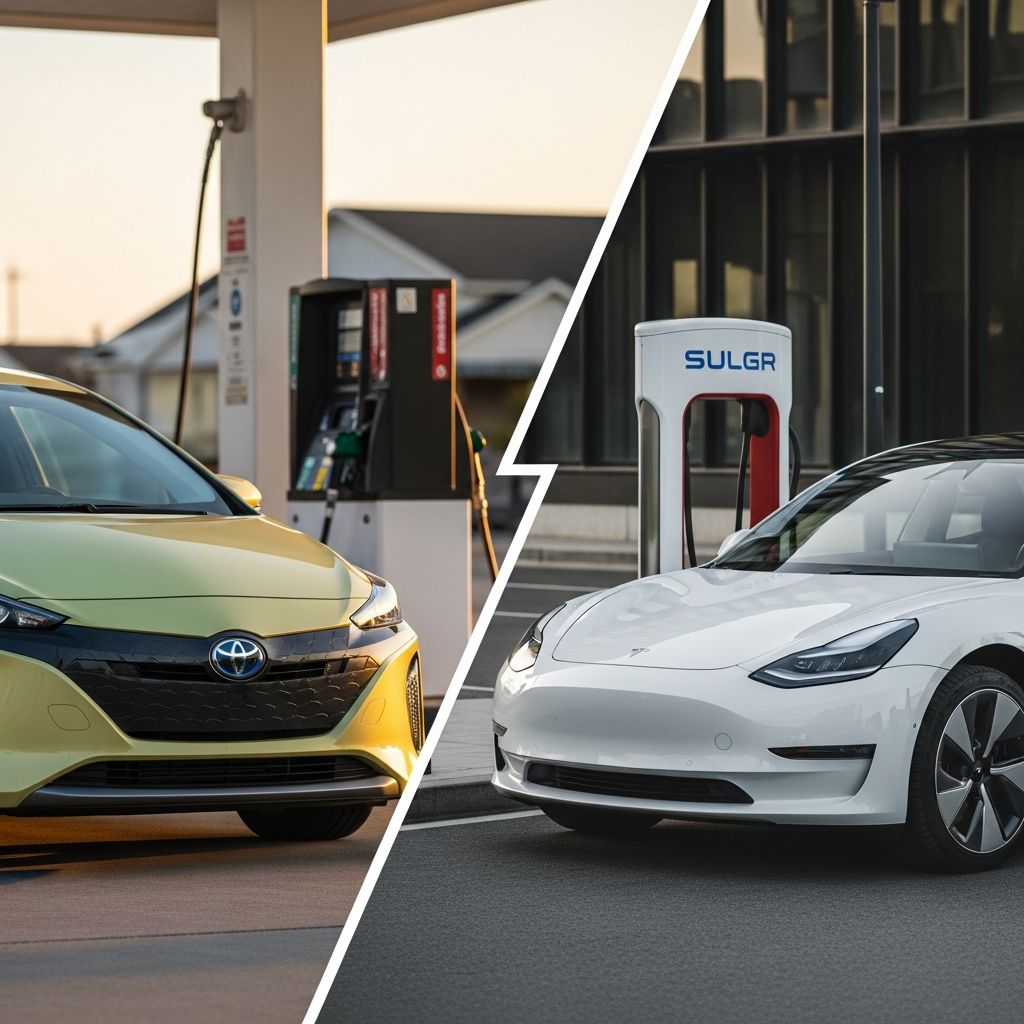
With gas prices fluctuating and environmental concerns on the rise, more drivers are considering hybrid and electric vehicles (EVs) as smarter alternatives to traditional gas cars. Hybrids combine a gas engine with an electric motor for better fuel economy, while fully electric cars run solely on battery power. But which is right for you? This guide compares costs, performance, maintenance and real-world ownership to help you save money while going green.
In 2024, EV sales hit 1.2 million and hybrid sales reached 1.6 million in the U.S., up dramatically from 2020 figures, reflecting growing popularity due to lower operating costs and incentives. However, as adoption rises, states face declining gas tax revenue, leading to new fees for EV and hybrid owners.
What Is a Hybrid Car?
Hybrid cars, or hybrid electric vehicles (HEVs), integrate a conventional gasoline engine with one or more electric motors powered by a rechargeable battery. Unlike plug-in hybrids (PHEVs), standard hybrids recharge their batteries through regenerative braking and the gas engine—no plugging in required.
Hybrids excel in city driving, where frequent stops allow the electric motor to assist, boosting efficiency. Popular models like the Toyota Prius or Honda Civic Hybrid achieve up to 49 mpg combined. They offer seamless transitions between gas and electric power, providing the familiarity of a gas car with improved economy.
- Self-charging system: No need for external plugs; batteries recharge on the go.
- Fuel economy: Typically 40-50 mpg, reducing gas costs significantly.
- Range: Over 500 miles per tank, ideal for long trips without planning.
What Is an Electric Car?
Electric vehicles (EVs), or battery electric vehicles (BEVs), rely entirely on electricity stored in large lithium-ion batteries to power electric motors. No gas engine means zero tailpipe emissions and drastically lower fuel costs—charging at home can cost pennies per mile.
EVs like the Hyundai Ioniq 5 or Tesla Model 3 offer instant torque for quick acceleration and quiet rides. However, they require access to charging and face range limitations affected by weather and speed. Nationwide, 21% of new car sales in recent years have been EVs, hybrids or plug-in hybrids.
- Zero emissions: Better for the environment, especially with renewable energy.
- Low operating costs: Electricity is cheaper than gas; savings of $1,000+ annually possible.
- Performance: Smooth, responsive acceleration without gear shifts.
Hybrid vs. Electric: Upfront Costs
Hybrids generally have lower starting prices than EVs. A base hybrid like the 2026 Honda Civic Hybrid starts around $28,000, while comparable EVs often exceed $40,000 before incentives. Hybrids avoid the high cost of large batteries, making them more accessible for budget-conscious buyers.
EVs carry a premium due to battery packs, but federal tax credits up to $7,500 (if eligible) and state rebates can close the gap. For example, a $50,000 EV like the 2024 Hyundai Ioniq 5 could net effective costs near $42,500 after credits. However, eligibility depends on income, battery sourcing and price caps.
| Vehicle Type | Avg. Starting Price (2026) | After Federal Credit |
|---|---|---|
| Hybrid (e.g., Civic Hybrid) | $28,000 | $28,000 (no credit) |
| Plug-in Hybrid | $35,000 | $27,500 |
| Fully Electric (e.g., Ioniq 5) | $42,000 | $34,500 |
Note: Prices vary by model and location; check IRS guidelines for credits.
Fuel and Operating Costs: Hybrids Win Short-Term?
Hybrids shine in fuel savings without lifestyle changes. At 45 mpg vs. 25 mpg for gas cars, owners save $800-1,200 yearly on fuel (assuming 12,000 miles driven and $3.50/gallon). No charging infrastructure needed.
EVs crush operating costs long-term: Home charging costs ~$0.04/mile vs. $0.13/mile for hybrids. Over 5 years, EV owners can save $4,000+ on “fuel,” but public charging adds up if home setup isn’t feasible (install: $500-$2,000).
- Hybrids: Gas + electricity hybrid use; reliable for all drives.
- EVs: Cheapest per mile but requires planning.
Maintenance and Reliability
Both types reduce maintenance vs. gas cars. Hybrids have fewer brake replacements thanks to regenerative braking and simpler transmissions. EVs eliminate oil changes, spark plugs and exhaust systems, potentially saving $1,000/year.
Battery warranties cover 8-10 years/100,000 miles. Hybrids’ smaller batteries last longer; EV batteries degrade 1-2% yearly but hold 70-80% capacity after 200,000 miles.
Range and Charging: EV’s Biggest Hurdle
Hybrids offer 500+ mile range per tank—no range anxiety. EVs average 250-300 miles per charge, dropping in cold (10-40% loss) or at highway speeds. Public chargers are growing but unreliable; home Level 2 chargers add 20-30 miles/hour.
Plug-in hybrids bridge the gap with 30-50 mile electric range plus gas backup.
Incentives and Fees: The Hidden Costs
Federal EV credits provide up to $7,500; hybrids qualify only if plug-ins. States offer rebates, but rising EV fees offset savings—39 states charge $50-$400 extra registration for EVs/hybrids to replace gas taxes. Michigan’s EV fee is now the nation’s highest. California predicts 64% gas tax loss by 2040.
Environmental Impact
EVs produce fewer lifetime emissions than hybrids or gas cars, per UCLA study, even accounting for battery production. Hybrids cut emissions 30-50% vs. gas but still rely on fossil fuels. Grid cleanliness matters—renewables amplify EV benefits.
Which Should You Buy? Hybrid or Electric?
Choose hybrid if: You drive long distances, lack home charging, want lower upfront costs or prefer no major changes.
Choose EV if: You commute short distances, have charging access, prioritize max savings/emissions cuts and qualify for incentives.
Test drive both. Hybrids suit most today; EVs for committed green drivers.
Frequently Asked Questions (FAQs)
Are hybrids cheaper to own than EVs?
Hybrids often have lower total ownership costs short-term due to price and no charging needs, but EVs win long-term on fuel/maintenance.
Do EVs really save money on gas?
Yes—electricity costs 1/3 of gas per mile, but factor in fees and home setup.
How do cold weather affect EV range?
Cold reduces range 10-40% via battery efficiency and heating; precondition the battery.
Are there extra fees for hybrids and EVs?
Yes, 39 states add $50-$400 annual fees to fund roads as gas taxes drop.
Which has better resale value?
EVs depreciate faster currently due to tech advances, but hybrids hold steady.
References
- Pros and cons to buying hybrid vehicle or plug-in hybrid — MyJournalCourier.com. 2024. https://www.myjournalcourier.com/news/article/pros-cons-hybrid-buying-19656975.php
- Study: Hybrids a better bet than electric cars in emission battle — ExpressNews.com. 2024. https://www.expressnews.com/business/energy/article/study-hybrids-a-better-bet-than-electric-cars-in-4719149.php
- More electric vehicles means less gas tax revenue — KION546.com (Stacker/CheapInsurance.com). 2026-01-10. https://kioncentralcoast.com/stacker-california/2026/01/10/more-electric-vehicles-means-less-gas-tax-revenue-how-this-impacts-californias-budget/
- 4 Things I Wish I Knew Before Buying an Electric Car — ThePennyHoarder.com. 2024. https://www.thepennyhoarder.com/save-money/know-before-buying-an-ev/
- Michigan EV fees spike under road funding deal — MichiganThumb.com. 2024. https://www.michigansthumb.com/news/article/michigan-ev-fees-spike-under-road-funding-deal-21284512.php
Similar Articles








Read full bio of medha deb