Hybrid Securities: 5 Key Types, Risks, And Strategies
Discover the unique blend of debt and equity in hybrid securities, their benefits, risks, and key types for modern portfolios.
Hybrid securities represent a distinctive category of financial instruments that fuse characteristics of both debt and equity investments, offering investors a balanced approach to risk and reward. These versatile assets appeal to those seeking income stability alongside growth opportunities, positioning them between traditional bonds and stocks in terms of volatility and returns.
Defining Hybrid Securities in Modern Markets
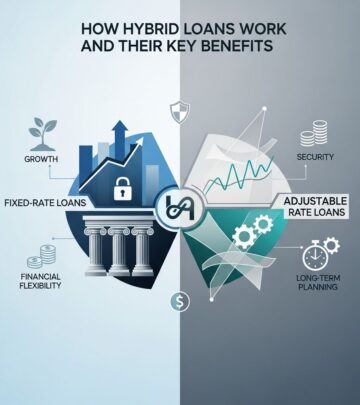
At their core, hybrid securities are financial products that incorporate elements from multiple asset classes, most commonly debt and equity. Unlike pure bonds, which provide fixed interest payments and principal repayment, or stocks, which offer ownership stakes with variable dividends, hybrids deliver a mix. This combination allows issuers to access capital more flexibly while giving investors predictable income with upside potential.
The structure typically includes a fixed-income component, such as coupon payments, and an equity-like feature, like conversion options or dividend priorities. This duality makes them complex, often suited for experienced investors who understand the nuances of valuation and market influences.
Primary Categories of Hybrid Instruments
Hybrid securities encompass several main types, each tailored to specific investor needs and issuer goals. Understanding these categories helps in portfolio construction.
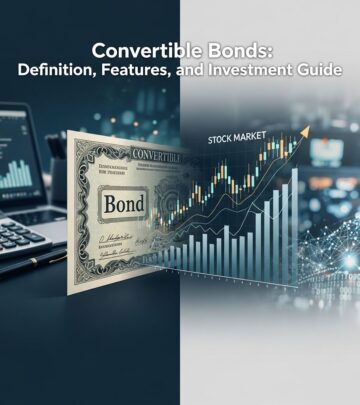
- Convertible Bonds: These are debt instruments with an embedded option to exchange for equity shares, blending bond reliability with stock appreciation potential.
- Preferred Shares: Equity securities with bond-like fixed dividends and priority over common stock, though without voting rights.
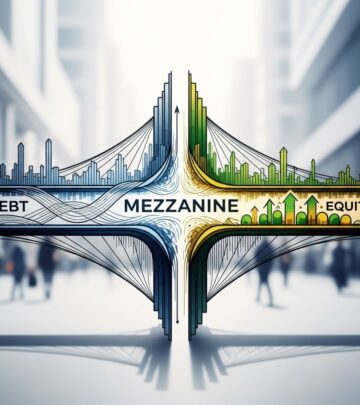
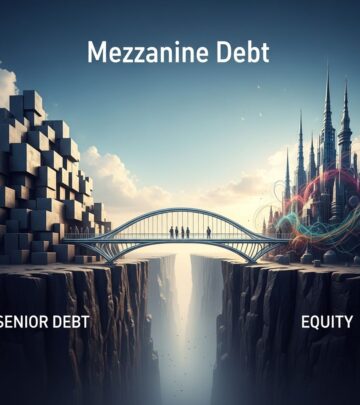
- Capital Notes and Subordinated Debt: High-yield notes that rank below senior debt but above equity in bankruptcy, often used by banks for regulatory capital.
- Exchange-Traded Notes (ETNs): Unsecured debt tracking an index, maturing to principal adjusted by performance, without ownership of underlying assets.
- Toggle Notes: Flexible debt allowing issuers to switch between interest payments in cash or additional securities.
Convertible Bonds: A Closer Look
Convertible bonds stand out as the quintessential hybrid, functioning primarily as corporate debt with periodic interest payments and a maturity date. Their defining feature is the conversion ratio, determining how many shares the bondholder receives upon exercise.
Consider a scenario where a company issues a $1,000 convertible bond convertible at $25 per share. This yields 40 shares upon conversion. If the stock price rises above $25, conversion becomes attractive; otherwise, the bondholder retains interest and principal. Holder-option convertibles empower investors to decide, often commanding lower yields due to this flexibility, while issuer-callable versions allow companies to force conversion under favorable conditions.
| Feature | Holder-Option | Issuer-Option |
|---|---|---|
| Decision Maker | Investor | Issuer |
| Typical Yield | Lower | Higher |
| Risk Profile | Balanced | Issuer-Favorable |
This table illustrates key differences, highlighting how option structure impacts yield and control.
Preferred Stock: Income with Priority
Preferred stock offers fixed or floating dividends ahead of common shareholders, mimicking bond coupons while classifying as equity for tax purposes. Convertible preferred shares add flexibility, allowing transformation into common stock or cash equivalents.
These securities often feature cumulative dividends, accruing if skipped, enhancing investor protection. However, they lack maturity dates, exposing holders to perpetual risk unless callable by the issuer.
Capital Notes and Other Bank Hybrids
Banks frequently issue capital notes, or hybrids, to meet regulatory capital requirements. These subordinated instruments absorb losses before equity, paying non-cumulative interest that can be deferred during stress.
In Australia, for instance, hybrids like these promise step-up coupons if not converted or redeemed, balancing attractiveness with capital preservation mandates.
Advantages of Incorporating Hybrids
Hybrid securities provide several compelling benefits:
- Diversification: They bridge fixed income and equities, reducing overall portfolio volatility.
- Enhanced Yields: Often higher than straight bonds due to equity exposure, without full stock risk.
- Downside Protection: Principal repayment or priority claims offer cushions in downturns.
- Tax Efficiency: Dividend treatment can optimize after-tax returns for certain holders.
- Flexibility for Issuers: Cheaper capital raising compared to pure equity.
Risks and Drawbacks to Consider
Despite attractions, hybrids carry notable risks:
- Complexity: Valuation depends on intertwined factors like interest rates, stock prices, and credit quality.
- Call Risk: Issuers may redeem early when rates fall or stocks rise, capping upside.
- Subordination: Lower priority in bankruptcy, increasing loss potential.
- Interest Rate Sensitivity: Bond-like behavior amplifies duration risk.
- Liquidity Issues: Less traded than stocks or bonds, potentially widening bid-ask spreads.
Valuation Challenges in Hybrid Markets
Pricing hybrids requires models blending fixed-income discounting with option pricing, such as Black-Scholes for convertibles. Factors include volatility, time to maturity, and credit spreads. Investors should monitor delta (equity sensitivity) and gamma (delta changes) for dynamic hedging.
Investment Strategies for Hybrids
To integrate hybrids effectively:
- Assess Risk Tolerance: Allocate 5-15% for moderate portfolios, higher for aggressive ones.
- Diversify Issuers: Spread across sectors to mitigate company-specific risks.
- Monitor Triggers: Watch for conversion, call, or dividend stop events.
- Use ETFs: Gain broad exposure via hybrid-focused funds for liquidity.
- Pair with Advisor: Leverage expertise for complex analysis.
Historical Performance Insights
Hybrids have historically delivered mid-single-digit returns with lower volatility than equities. During the 2008 crisis, many suffered from credit fears, underscoring subordination risks, yet recovered strongly post-regulatory reforms.
Regulatory Landscape and Future Outlook
Post-crisis rules like Basel III classify hybrids as Tier 1 or 2 capital, with stricter loss-absorption features. Innovations continue, blending ESG factors or linking to crypto indices, expanding appeal amid low-yield environments.
Frequently Asked Questions (FAQs)
What makes a security ‘hybrid’?
It combines debt-like fixed payments with equity-like growth or conversion options.
Are hybrids suitable for beginners?
Generally no, due to complexity; experienced investors or advisors are recommended.
How do hybrids perform in rising rate environments?
They may decline like bonds but equity components can offset losses.
Can hybrids be traded like stocks?
Yes, many list on exchanges, though liquidity varies.
What is the main risk of convertible bonds?
Opportunity cost if stock underperforms conversion price.
Building a Portfolio with Hybrids
For optimal use, hybrids complement core holdings. A sample allocation: 60% stocks, 30% bonds, 10% hybrids yields diversification. Rebalance annually, focusing on yield-to-call metrics.
References
- Hybrid Securities: Definition and Examples — SmartAsset. 2023. https://smartasset.com/financial-advisor/hybrid-security
- Hybrid securities — Societe Generale Wholesale Banking. 2024. https://wholesale.banking.societegenerale.com/en/news-insights/glossary/hybrid-securities/
- Hybrid Securities: Definition & Examples — Study.com. 2023. https://study.com/academy/lesson/hybrid-securities-definition-examples.html
- Hybrid Securities – Overview, Examples — Corporate Finance Institute. 2024. https://corporatefinanceinstitute.com/resources/fixed-income/hybrid-securities/
- Types of hybrids — ASX. 2024. https://www.asx.com.au/investors/learn-about-our-investment-solutions/hybrids/types
Similar Articles








Read full bio of medha deb