Husson University: Rankings, Academics & Campus Life 2024
Comprehensive guide to Husson University's rankings, academics, student life, and admission details.
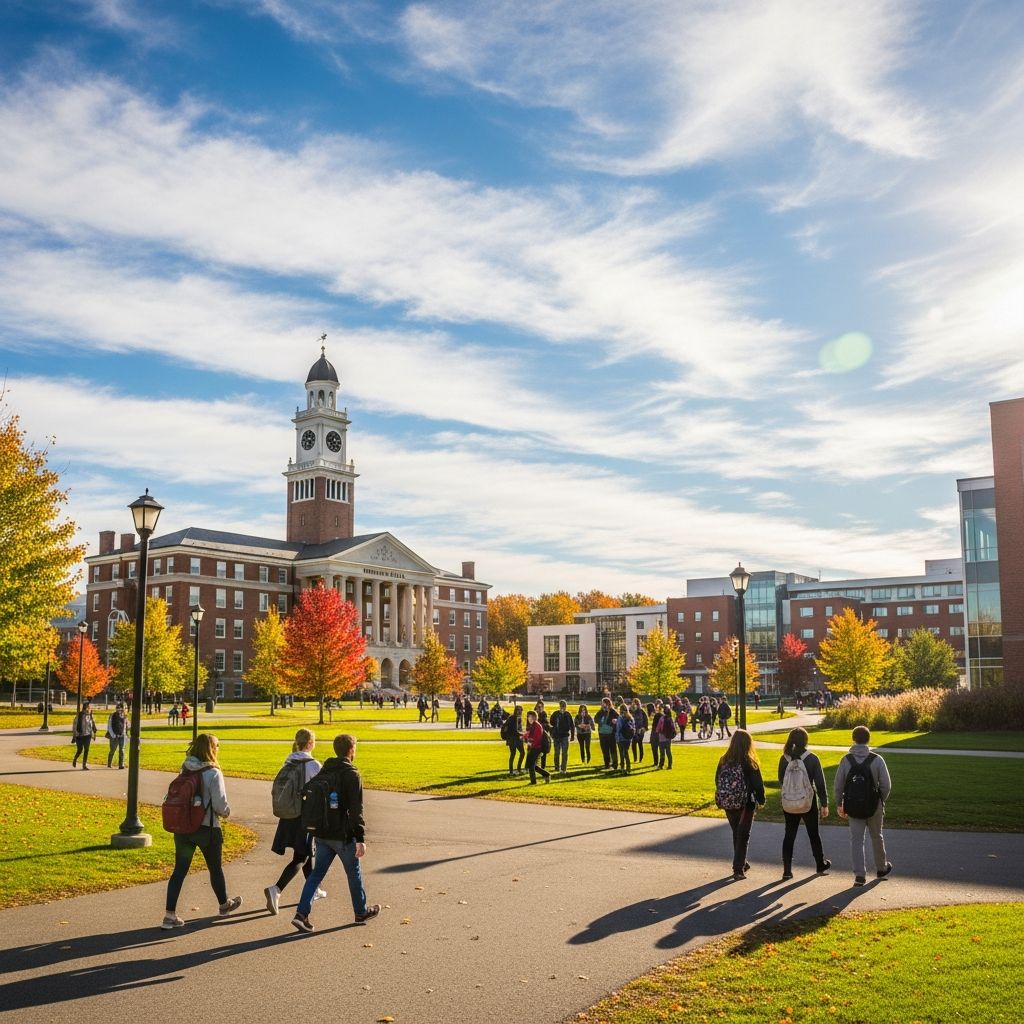
Husson University: A Comprehensive Profile for 2024
Husson University, located in Bangor, Maine, has established itself as a notable institution in American higher education. As a private university committed to academic excellence and student success, Husson continues to attract students from across the country and internationally. This comprehensive profile provides prospective students and their families with detailed information about rankings, academic programs, student life, and admission statistics.
University Rankings and Recognition
Husson University maintains a solid position among American universities according to multiple ranking organizations. The institution is recognized for its commitment to quality education and student outcomes, reflected in its performance across various ranking systems.
National and Global Rankings
According to US News & World Report 2024, Husson University ranks at #299 in the National University Ranking category. The Shiksha Popularity Ranking places the university at #332 nationally in 2025, demonstrating consistent recognition within the higher education landscape. For global rankings, Husson achieved a position of #361 out of 435 globally and #76 out of 413 in the USA according to US News 2024 metrics.
EduRank’s comprehensive assessment ranked Husson University at #1061 in the United States and #4062 globally in 2025. The university’s research output shows 550 academic publications and over 11,660 citations attributed to institutional scholars. These rankings reflect Husson’s growing academic reputation and research contributions across multiple disciplines.
Subject-Specific Academic Rankings
Husson University demonstrates particular strength in several academic disciplines. The institution ranks #1377 for Liberal Arts & Social Sciences in the United States and #5990 globally. Within specific fields, the university shows notable performance in engineering, mathematics, and environmental science research areas.
Institutional Overview and History
Husson University operates as a comprehensive institution serving a diverse student population. The university has been recognized as one of America’s Best Colleges by Money Magazine, with this recognition published in June 2024. This distinction reflects the institution’s commitment to providing excellent educational value and student outcomes.
The university’s strategic location in Bangor, Maine, provides students with access to both New England’s cultural resources and Maine’s natural environment. The campus serves as a hub for academic and community engagement, fostering connections between students, faculty, and the broader Bangor region.
Student Demographics and Enrollment
Husson University serves a diverse student body with varied backgrounds and educational goals. Understanding the student population helps prospective students envision their potential campus community.
Student Population Composition
The university enrolls 3,526 students, with 67% attending on a full-time basis. This significant enrollment size creates a vibrant campus community while maintaining relatively small class sizes and close faculty-student relationships.
The student body composition reflects diversity across multiple dimensions:
- In-state students comprise 66% of the population
- Out-of-state students represent 31% of enrollment
- International students account for 1% of the student body
- 91% of students are 24 years old or younger
- 10% of students are 25 years old or older
Racial and Ethnic Diversity
The student population includes representation from multiple racial and ethnic backgrounds. Black students comprise 6% of the student body, while Asian students represent 1% of enrollment. This diversity enhances the educational environment through varied perspectives and cultural exchange.
Minority enrollment at Husson stands at 18% of the total student body, which is below the state average of 22%. However, the university continues working to expand diversity initiatives and create an inclusive campus environment for all students.
Academic Programs and Disciplines
Husson University offers diverse academic pathways across multiple colleges and schools. The institution’s curriculum spans professional programs, liberal arts, sciences, and specialized fields designed to meet market demands and student interests.
Program Strengths
The university maintains particular strength in several areas. Business programs attract significant enrollment, preparing students for careers in management, accounting, and entrepreneurship. Healthcare-related programs, including nursing and health sciences, reflect growing demand in the medical field and provide hands-on clinical training opportunities.
Engineering and computer science programs equip students with technical skills for the technology industry. Business analytics and information systems programs prepare graduates for data-driven careers in an increasingly digital economy. Education programs prepare future teachers for Maine schools and beyond, while criminal justice programs address workforce needs in law enforcement and security sectors.
Campus Resources and Student Facilities
Husson University invests in campus resources and facilities designed to support student learning and personal development. The institution recognizes that a comprehensive educational experience extends beyond the classroom into residential and recreational spaces.
Student-to-Teacher Ratio and Academic Support
The university maintains a student-to-teacher ratio of 7:1, significantly lower than Maine’s state community college average of 17:1. This favorable ratio enables personalized attention, accessible faculty office hours, and collaborative learning opportunities. The intimate class sizes facilitate discussion-based learning, research opportunities, and mentoring relationships between students and faculty.
Housing and Residential Life
Husson University provides on-campus housing options supporting student community development. The residential experience creates opportunities for peer learning, leadership development, and social connection. The institution’s college dorms ranking of #83 out of 1,369 nationally on Niche reflects the quality of residential facilities and housing management.
Campus Amenities and Services
The Husson campus offers comprehensive facilities supporting academic and social engagement. Campus amenities include dining facilities, recreational centers, and outdoor spaces. The university’s campus ranking of #126 out of 1,369 in Best College Campuses in America indicates the attractive and functional design of the physical environment. Food services receive notable recognition, with Husson ranking #75 of 1,367 institutions for best college food in America.
Admission Statistics and Requirements
Understanding Husson University’s admission landscape helps prospective students assess their fit and prepare strong applications.
Acceptance Rate and Application Trends
Husson University maintains an 86% acceptance rate, making the institution accessible to qualified applicants while maintaining academic standards. This acceptance rate reflects the university’s commitment to admitting motivated students capable of succeeding in rigorous academic programs.
Standardized Test Performance
Admitted students demonstrate solid academic preparation. The middle 50% of admitted students score 525 on SAT Reading and 525 on SAT Math. ACT composite scores for admitted students average 22, with English at 20 and Math at 21. These scores reflect the academic preparation typical of Husson’s student body and suggest the institution’s admissions standards.
Financial Considerations
Understanding the financial investment required for a Husson University education helps families make informed decisions about affordability and student loan obligations.
Tuition and Costs
Private tuition at Husson University stands at $16,847, positioning the institution as a relatively affordable private university option. When combined with room, board, and other fees, total cost of attendance varies based on individual circumstances and housing arrangements.
Financial Aid and Student Support
Ninety-eight percent of Husson students receive some form of financial aid, indicating the university’s commitment to making education accessible. This high rate of aid distribution reflects institutional scholarships, grants, and support for federal and state financial aid programs.
Student Debt and Loan Outcomes
Graduates of Husson University leave with median debt of $27,000. While student loan obligations represent a significant consideration, this debt level remains manageable when compared to average earnings and career outcomes. Students who do not complete their degrees incur median debt of $12,000, reflecting reduced borrowing for non-completing students.
Graduate Outcomes and Career Success
Long-term success of Husson graduates provides important indicators of educational quality and career preparation. Average graduate earnings ten years after enrollment reach $30,600, suggesting solid career development and professional advancement in the decade following graduation.
Graduation rates demonstrate strong student persistence and completion. Sixty percent of students graduate within four years or longer, indicating that most students who enroll complete their degree requirements. These outcomes reflect effective academic support, career services, and student engagement initiatives.
Comparative Analysis
| Metric | Husson University | Maine State Average |
|---|---|---|
| Student-to-Teacher Ratio | 7:1 | 17:1 |
| Minority Enrollment | 18% | 22% |
| Total Enrollment | 3,526 students | Varies |
| Diversity Score | 0.30 | 0.38 |
| Acceptance Rate | 86% | 86% |
| Median Debt for Graduates | $27,000 | $12,000 |
Student Experience and Campus Culture
Beyond academics and rankings, Husson University cultivates a distinctive campus culture characterized by community engagement, student support, and collaborative learning. Student reviews on Niche provide insight into the lived experience on campus, with an overall rating of 3.6 out of 5 stars based on 1,028 reviews.
Current students praise the institution’s friendly staff, responsive communication channels, and diverse degree options. The university’s flexible funding options accommodate various financial circumstances, enabling more students to afford quality education. Online students particularly appreciate the Canvas app platform and the accessibility of faculty willing to provide academic support and guidance.
Enrollment Trends and Institutional Development
Understanding enrollment trends provides context for institutional planning and future growth. The student population at Husson University has experienced a 5% decline over the five-year period, a trend reflecting broader demographic shifts in higher education and competition for enrollment.
Despite enrollment fluctuations, the university maintains its commitment to academic quality and student outcomes. The stable student-to-teacher ratio of 7:1 over five years indicates institutional dedication to personalized education and faculty-student engagement. Institutional diversity metrics have remained relatively flat over the five-year period, suggesting consistent diversity composition while the institution works to expand enrollment from underrepresented populations.
Frequently Asked Questions
Q: What is Husson University’s current national ranking?
A: Husson University ranks at #299 in the US News & World Report National University Ranking for 2024, and #332 nationally according to Shiksha Popularity Ranking for 2025. The institution also ranks #361 globally and #76 in the USA according to US News 2024 metrics.
Q: What is the student-to-teacher ratio at Husson University?
A: Husson maintains a 7:1 student-to-teacher ratio, which is significantly lower than the state average of 17:1, providing students with more personalized attention and faculty accessibility.
Q: What is the acceptance rate at Husson University?
A: Husson University has an 86% acceptance rate, making it accessible to qualified applicants who meet academic standards.
Q: How much does it cost to attend Husson University?
A: Private tuition at Husson is $16,847. Total cost of attendance varies based on room, board, and individual circumstances. Ninety-eight percent of students receive financial aid.
Q: What percentage of students receive financial aid?
A: Ninety-eight percent of Husson students receive some form of financial aid, reflecting the university’s commitment to accessibility and support.
Q: What is the median debt for Husson graduates?
A: The median debt for Husson graduates is $27,000, while students who do not complete their degrees have median debt of $12,000.
Q: How many students attend Husson University?
A: Husson University serves 3,526 students, with 67% attending on a full-time basis.
Q: What is the graduation rate at Husson University?
A: Sixty percent of students graduate within four years or longer, demonstrating strong student persistence and completion rates.
References
- Husson University: Rankings, Courses & Fees — Shiksha. Accessed November 2025. https://www.shiksha.com/studyabroad/usa/universities/husson-university
- Husson University [2025 Rankings by topic] — EduRank. Accessed November 2025. https://edurank.org/uni/husson-university/rankings/
- Husson University, Bangor Ranking 2025 from QS, THE & US NEWS — CollegeDunia. Accessed November 2025. https://collegedunia.com/usa/university/968-husson-university-bangor/ranking
- Husson University (Top Ranked Community College for 2025-26) — Community College Review. Accessed November 2025. https://www.communitycollegereview.com/husson-university-profile
- Husson University – Niche — Niche. Accessed November 2025. https://www.niche.com/colleges/husson-university/
- Husson University, Maine – Complete Profile, Rankings and Data — Money Magazine. Published June 12, 2024. https://money.com/best-colleges-2024/profile/husson-university/
Similar Articles








Read full bio of medha deb