HSA vs FSA: Key Differences Explained
Discover how Health Savings Accounts and Flexible Spending Accounts differ in ownership, flexibility, and tax benefits to optimize your healthcare savings strategy.
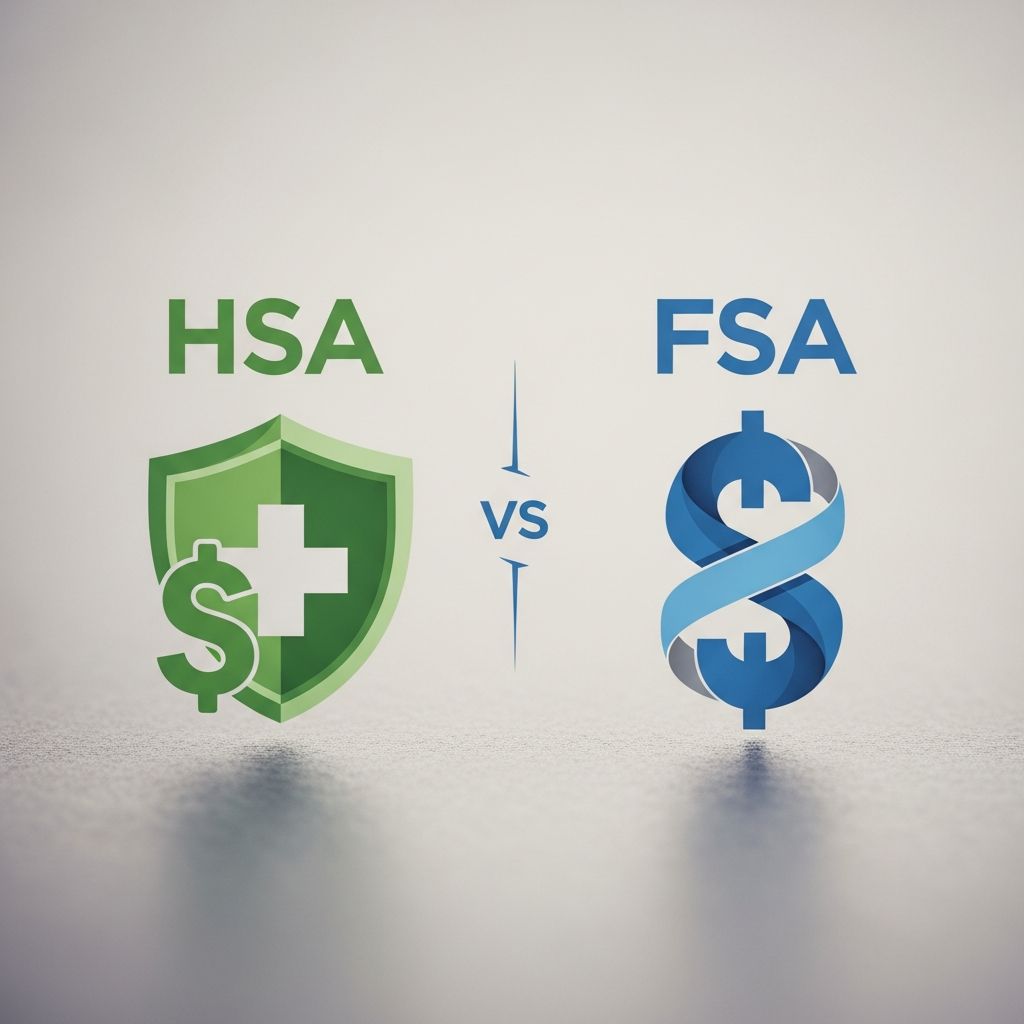
Health Savings Accounts (HSAs) and Flexible Spending Accounts (FSAs) are tax-advantaged tools designed to help individuals cover qualified medical expenses more affordably. Both allow pre-tax contributions, tax-free growth, and tax-free withdrawals for eligible costs, but they differ significantly in eligibility requirements, fund management, and long-term usability.
Core Features of Flexible Spending Accounts
A Flexible Spending Account (FSA) enables employees to allocate a portion of their paycheck before taxes into a dedicated fund for healthcare or dependent care needs. This setup reduces taxable income, effectively increasing disposable income for medical bills like copays, deductibles, and prescriptions. Employers sponsor FSAs as part of benefits packages, making them unavailable to self-employed individuals or those without offering workplaces.
FSAs come in variants: healthcare FSAs for broad medical expenses, limited-purpose FSAs for dental and vision (useful alongside HSAs), and dependent care FSAs for childcare. Contributions are capped annually by IRS rules, typically around $3,200 for healthcare in recent years, though limits adjust yearly. A standout feature is immediate access to the full elected amount at the plan year’s start, providing liquidity for early-year emergencies.
Core Features of Health Savings Accounts
Health Savings Accounts (HSAs) pair exclusively with High-Deductible Health Plans (HDHPs), defined by IRS as plans with minimum deductibles (e.g., $1,600 individual/$3,200 family in 2025) and out-of-pocket maximums. Individuals own and control HSAs independently of employers, allowing portability across jobs and even into retirement.
Contributions receive triple tax benefits: pre-tax payroll deductions, tax-deductible personal deposits, and tax-free earnings if invested. Annual limits exceed FSAs, reaching $4,300 for individuals and $8,550 for families in 2025, plus catch-up amounts for those 55+. Unused funds roll over indefinitely, and many providers offer investment options like mutual funds for potential growth.
Eligibility and Enrollment Rules
FSAs require only employer sponsorship; no specific health plan is needed, broadening access. Enrollment occurs during open periods, with elections locked for the year unless qualifying life events like marriage or job loss trigger changes.
HSAs demand HDHP enrollment without other disqualifying coverage (e.g., general FSAs, Medicare). Anyone eligible—including family members—can contribute, but dual use with full healthcare FSAs is prohibited. Limited-purpose FSAs complement HSAs for targeted expenses. Employer contributions to HSAs count toward limits but enhance benefits.
Financial Mechanics: Contributions and Access
Both accounts fund via payroll deductions, shielding money from federal income, Social Security, and Medicare taxes. For example, $1,000 contributed at a 20% tax rate saves $200 immediately.
| Aspect | FSA | HSA |
|---|---|---|
| Contribution Timing | Pre-tax payroll; full annual amount available Day 1 | Pre-tax payroll or post-tax (deductible); prorated access |
| Annual Limits (2025 est.) | $3,200 healthcare; $5,000 dependent care | $4,300 self/$8,550 family + $1,000 catch-up |
| Employer Contributions | Rare | Common; counts toward limit |
FSAs’ uniform access aids urgent needs, while HSAs build gradually but support ongoing accumulation.
Use-It-or-Lose-It vs. Permanent Savings
Traditional FSAs enforce “use it or lose it,” forfeiting unspent funds at year-end. Recent IRS rules permit $660 carryover (2025) or 20% grace period rollover, at employer discretion. Dependent care FSAs lack carryover.
HSAs eliminate this risk: balances persist indefinitely, ideal for future costs like retirement healthcare. Post-65 withdrawals for non-medical uses incur income tax (no penalty), mimicking traditional IRAs.
Qualified Expenses and Reimbursement
- Common to Both: Doctor visits, prescriptions, dental cleanings, vision exams, copays, deductibles, bandages, therapy.
- FSA-Specific: Dependent care (e.g., daycare up to $5,000).
- HSA-Enhanced: Over-the-counter items (with receipts), long-term care premiums, COBRA premiums.
Non-qualified withdrawals trigger taxes plus 20% HSA penalty (pre-65). Submit claims or use debit cards for reimbursement.
Portability and Ownership Control
FSAs tie to employment; funds vanish upon termination unless COBRA extends briefly. HSAs travel with you, owned personally for lifelong access. This makes HSAs superior for job-hoppers or retirees.
Investment Potential and Growth
FSAs hold cash without interest. HSAs often include investment accounts; once reaching $1,000-$2,000, excess can grow tax-free, potentially yielding thousands over decades. Fidelity notes this as a retirement booster.
Choosing Between HSA and FSA
Opt for FSA if:
- Predictable high expenses (e.g., orthodontics).
- No HDHP available.
- Need full upfront access.
Opt for HSA if:
- On HDHP with lower premiums.
- Seek portability and growth.
- Plan for long-term savings.
Many pair limited FSA with HSA. Review annually as health/life changes.
Frequently Asked Questions
Can I have both HSA and FSA?
Yes, with limited-purpose FSA for dental/vision or dependent care FSA.
What happens if I leave my job?
FSA funds are lost (minus grace/carryover); HSA remains yours.
Are contributions reversible?
No, locked for the year barring life events.
Do HSAs earn interest?
Potentially via investments, unlike FSAs.
2026 Limit Changes?
IRS announces annually; check IRS.gov for updates.
Strategic Tips for Maximum Benefits
Estimate expenses accurately for FSAs to avoid forfeiture. Maximize HSA contributions early for compounding. Track receipts meticulously. Consult tax pros for personalized advice. These accounts can save hundreds yearly while securing health finances.
References
- What Is the Difference Between an FSA and HSA? — PDCenterLV. 2023. https://www.pdcenterlv.com/blog/difference-between-fsa-and-hsa/
- FSA and HSA: What’s the Difference? — Pinellas County Government. 2025. https://pinellas.gov/fsa-hsa-comparison/
- HSA vs FSA: Which is right for you? — Fidelity Investments. 2025. https://www.fidelity.com/learning-center/smart-money/hsa-vs-fsa
- What’s the Difference between an HSA and an FSA? — Pinnacle Financial Partners. 2024. https://pnfp.com/learning-center/personal-finance/health-and-benefits/what-s-the-difference-between-an-hsa-and-an-fsa/
- Differences Between FSA and HSA — MetLife. 2024. https://www.metlife.com/stories/benefits/whats-the-difference-between-an-FSA-and-an-HSA/
- HSA vs. FSA vs. HRA: What is the Difference? — Aetna. 2025. https://www.aetna.com/health-guide/hsa-vs-fsa.html
Similar Articles








Read full bio of Sneha Tete