HSA Retirement Planning Pitfalls to Sidestep
Navigate common HSA mistakes and maximize tax-free retirement healthcare savings
Health savings accounts (HSAs) represent one of the most powerful yet underutilized retirement planning tools available to American workers. Unlike traditional healthcare spending vehicles, HSAs offer a unique combination of tax benefits that few other accounts can match. However, many people fail to recognize the true potential of these accounts, treating them merely as pass-through vehicles for immediate medical expenses rather than as sophisticated long-term wealth-building instruments. This oversight can cost retirees substantial sums in foregone tax-free growth and retirement security.
The average 65-year-old individual may need approximately $172,500 in after-tax savings to cover health care expenses throughout retirement, according to recent projections. Yet most workers who have access to HSAs fail to leverage them strategically for retirement planning. Understanding the common pitfalls that derail HSA optimization is essential for anyone seeking to build a comprehensive retirement strategy that addresses both financial security and healthcare preparedness.
The Triple Tax Advantage That Many Overlook
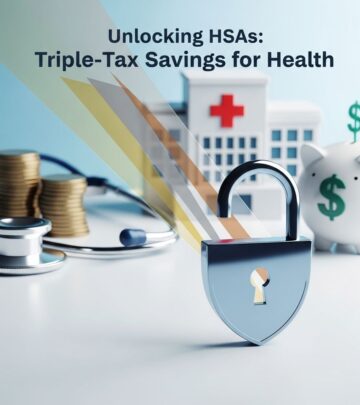
HSAs function under a unique tax framework that distinguishes them from virtually every other savings and investment vehicle. Contributions are made with pre-tax dollars, reducing your current taxable income. The funds accumulate and grow within the account without generating any tax liability on earnings. Finally, qualified withdrawals for eligible medical expenses occur completely tax-free. This three-pronged tax advantage creates an opportunity for exponential wealth accumulation that many account holders simply ignore.
One of the most prevalent mistakes occurs when workers fail to maximize their annual contributions. The IRS sets specific limits each year, and contributions that are not made cannot be recovered. By not contributing the full allowable amount, you forfeit valuable tax deductions and miss critical compounding opportunities. For families in 2025, the maximum contribution reaches $8,300 annually, yet many eligible individuals contribute far less or nothing at all.
Additionally, workers often fail to recognize that HSAs differ fundamentally from Flexible Spending Accounts (FSAs). Unlike FSA funds that disappear at year-end if unused, HSA balances carry forward indefinitely. This perpetual nature creates an exceptional opportunity for long-term growth that transforms the account from a temporary healthcare funding mechanism into a genuine retirement asset.
Spending HSA Funds Too Quickly: The Growth Prevention Error
Perhaps the single most costly mistake HSA holders make is withdrawing funds to pay current medical expenses when other resources are available. This approach dramatically undermines the account’s retirement potential. When you use HSA money immediately for today’s medical bills, you forgo decades of tax-free compound growth on those dollars.
A sophisticated strategy involves paying current medical expenses from non-HSA funds while preserving HSA balances for future retirement healthcare costs. As long as you maintain receipts for qualifying medical expenses, you may reimburse yourself at any future date—even decades later. This delayed reimbursement approach allows your HSA to function as a true investment account, accumulating value without interruption.
Consider a practical example: A 40-year-old worker with the discipline to cover their current $3,000 annual medical expenses from regular income instead of their HSA could accumulate substantial wealth by retirement. Those preserved HSA dollars, invested conservatively, could grow to six figures by age 65 through tax-free compounding alone. In contrast, the worker who depletes their HSA each year leaves retirement healthcare funding to chance.
The mistake becomes particularly pronounced when workers have adequate emergency savings or disposable income. If your financial situation allows, preserving HSA funds should take precedence over maximizing other savings vehicles, given the account’s superior tax treatment.
Inadequate Investment Strategy: The Cash Account Trap
Many HSA holders fail to transition their accounts from simple cash repositories to invested portfolios. While some individuals use the delayed reimbursement strategy, they often hold their HSA balances in low-yield savings accounts earning minimal returns. This represents a significant opportunity cost.
Most HSAs allow contributors to invest their balances in mutual funds, exchange-traded funds (ETFs), and other securities once the account reaches a certain threshold. Workers in their peak earning years—particularly those aged 35 to 55—can harness decades of market growth to build substantial tax-free healthcare reserves. By investing HSA contributions rather than leaving them idle in cash, you position yourself to capture meaningful long-term appreciation.
A balanced approach involves maintaining adequate cash reserves for near-term medical expenses while investing the remainder for growth. This hybrid strategy reduces the temptation to raid the account for immediate needs while ensuring liquidity when necessary. As you approach retirement, you can gradually shift toward more conservative investments to reduce market risk exposure.
The mistake stems from either ignorance about investment options or excessive caution about market exposure. Both lead workers to leave money on the table in terms of forgone growth and compounding benefits.
Failure to Plan for Medicare and Long-Term Care Integration
Another critical planning error involves not strategizing how HSA funds coordinate with Medicare and other retirement healthcare coverage. Workers often lack clarity about which healthcare costs qualify for HSA coverage in retirement and which do not, leading to inefficient fund deployment.
HSA funds provide exceptional flexibility in retirement. You may use them to pay certain Medicare premiums, including Part A (where applicable), Part B, and Part D prescription drug coverage. You can also apply HSA funds toward Medicare Advantage plans. However, supplemental Medigap insurance premiums generally cannot be paid with HSA dollars—a distinction many retirees discover too late.
For workers who retire before age 65 and face the gap before Medicare eligibility, HSA funds offer critical bridge coverage options. You can use HSA money to pay for health insurance obtained through employer-sponsored COBRA plans or during periods of unemployment. These qualifying exceptions provide essential flexibility for early retirees that other accounts cannot match.
Long-term care insurance represents another sophisticated use of HSA funds. Tax-qualified long-term care policies can be partially funded through HSA distributions, with contribution limits that increase with age. Workers who fail to plan for these integrated uses miss opportunities to optimize their overall healthcare financing strategy.
Neglecting Tax Bracket Considerations
A subtle but important planning mistake involves failing to coordinate HSA withdrawals with other income sources to manage your tax bracket position. Once you reach age 65, you gain significant flexibility in how you use HSA funds, but this flexibility comes with tax implications if not managed carefully.
After age 65, HSA withdrawals for non-qualified expenses become taxable as ordinary income—functioning similarly to traditional IRA distributions. While you avoid the 20% penalty that applies before age 65, you still pay income tax on these distributions. This creates an opportunity for sophisticated tax planning: by carefully timing your HSA withdrawals alongside other retirement income sources, you can minimize overall tax liability.
For example, using tax-free HSA distributions instead of taxable account distributions for qualified medical expenses can prevent you from crossing into higher tax brackets. This benefit extends beyond federal income tax; managing your taxable income through strategic HSA withdrawal timing can also help you avoid triggering higher Medicare Part B and Part D premiums, which are income-tested.
Workers who simply withdraw HSA funds without considering the broader tax picture fail to optimize this valuable feature of the account.
Underestimating Healthcare Costs in Retirement
Many workers develop HSA savings strategies based on underestimated healthcare cost projections. Healthcare expenses often represent one of the top five spending categories in retirement, yet numerous workers allocate insufficient HSA contributions to address this reality.
When planning your HSA strategy, consider not just Medicare premiums but also deductibles, copayments, coinsurance amounts, prescription medication costs, dental care, vision services, hearing aids, and potential long-term care needs. These costs accumulate substantially over a 25+ year retirement period. Workers who contribute conservatively to their HSAs based on current medical expenses often find themselves underfunded when facing the full spectrum of retirement healthcare needs.
A prudent approach involves earmarking specific HSA balances for anticipated healthcare costs throughout retirement. This intentional allocation transforms your HSA from a general-purpose account into a targeted healthcare funding mechanism aligned with your actual projected needs.
Missing Catch-Up Contribution Opportunities
Workers aged 55 and older qualify for additional HSA catch-up contributions beyond the standard annual limit, yet many remain unaware of this feature. These catch-up contributions provide an exceptional final push toward adequate healthcare retirement funding during peak earning years.
For workers in their late career stages, maximizing standard contributions plus catch-up contributions creates a concentrated window to build substantial HSA balances. Combined with the investment growth these funds can generate and the delayed reimbursement strategy, catch-up contributions can meaningfully improve retirement healthcare security. The mistake occurs when workers approach age 55 without recognizing this opportunity or without deliberately planning to use it.
Incorrectly Managing HSA Funds After Job Changes
Some workers mistakenly believe they lose their HSA when changing employers or switching health plans. This fundamental misunderstanding leads them to prematurely withdraw or spend their HSA balances unnecessarily. In reality, HSA funds remain under your complete control regardless of employment changes, provided you maintain eligibility by enrolling in a qualified high-deductible health plan.
The portability of HSA accounts is one of their greatest features. You can consolidate multiple HSAs from previous employers into a single account, streamlining management and potentially improving investment options. Workers who fail to maintain their HSA continuity through job transitions miss critical opportunities to preserve their account’s tax-advantaged status.
Overlooking the Age 65 Transition Strategy
Reaching age 65 represents a pivotal moment in HSA planning that many workers fail to prepare for adequately. After age 65, the account transforms from a healthcare-specific savings vehicle into something resembling a traditional IRA for non-medical expenses—but without the Required Minimum Distribution (RMD) penalties that apply to other accounts.
Workers should develop an intentional transition strategy as they approach 65. This involves deciding which healthcare expenses will be covered by HSA funds, which will be covered by Medicare, and how HSA funds will supplement other retirement income if needed. Without such a strategy, many workers either leave HSA funds unnecessarily untouched or deploy them inefficiently.
Creating a Comprehensive HSA Retirement Plan
Effective HSA planning requires integrating the account into your broader retirement strategy alongside 401(k)s, IRAs, and taxable investments. Rather than viewing the HSA as a standalone healthcare account, treat it as part of your comprehensive retirement income and healthcare plan.
Key components of an effective HSA retirement strategy include:
- Maximizing annual contributions consistently throughout your working years
- Investing HSA funds rather than holding them in cash once sufficient liquid reserves are established
- Adopting the delayed reimbursement strategy to maximize tax-free growth
- Maintaining detailed records of qualified medical expenses and receipts
- Planning for specific healthcare needs including Medicare premiums, long-term care, and out-of-pocket medical costs
- Coordinating HSA withdrawals with overall tax planning to minimize tax liability
- Utilizing catch-up contributions after age 55 to accelerate funding
- Understanding the unique features available after age 65 for both qualified and non-qualified expenses
Frequently Asked Questions About HSA Retirement Planning
Q: Can I use my HSA to pay for any healthcare expense in retirement?
A: HSAs may be used to pay for qualified medical expenses, including Medicare premiums, deductibles, copayments, and coinsurance. Dental, vision, and hearing services qualify as well. After age 65, you may use HSA funds for non-qualified expenses, though you’ll pay income tax on those distributions.
Q: What happens to my HSA when I reach Medicare eligibility?
A: Your HSA remains available for use, and you don’t forfeit funds at any age. At 65, you can use HSA money to pay certain Medicare premiums and qualified medical expenses, or withdraw funds for any purpose (though non-qualified withdrawals become taxable).
Q: Can I invest my HSA funds?
A: Yes, most HSAs allow investment in mutual funds and ETFs once your balance reaches a threshold (commonly $1,000-$2,000 depending on your HSA provider). Investing HSA funds enables tax-free compound growth over decades.
Q: Is there a deadline for reimbursing myself for old medical expenses?
A: There is no statute of limitations for HSA reimbursements. You may reimburse yourself for any qualifying expense incurred after the HSA was established, even decades later, as long as you maintain documentation.
Q: What’s the difference between an HSA and an FSA?
A: HSAs carry balances forward indefinitely and remain with you through job changes, while FSAs operate on a use-it-or-lose-it basis and revert to your employer if you leave. HSAs offer superior long-term accumulation potential.
Taking Action on Your HSA Strategy
The mistakes outlined above represent common planning failures that substantially diminish the retirement value of health savings accounts. By recognizing these pitfalls and implementing intentional strategies to avoid them, you can transform your HSA from a basic healthcare spending account into a powerful retirement planning asset.
The most critical action is treating your HSA as a legitimate retirement savings vehicle deserving the same strategic attention you devote to 401(k)s and IRAs. Maximize contributions, invest the funds, preserve balances for long-term growth, and coordinate HSA withdrawals with your comprehensive retirement and tax plan. With disciplined execution of these principles, your HSA can provide meaningful security for healthcare expenses throughout retirement while generating substantial tax-free wealth accumulation.
References
- 5 ways HSAs can help with your retirement — Fidelity Investments. 2025. https://www.fidelity.com/viewpoints/wealth-management/hsas-and-your-retirement
- Health Savings Accounts: Getting the most out of your HSA — T. Rowe Price. https://www.troweprice.com/personal-investing/resources/insights/health-savings-accounts-getting-the-most-out-your-hsa.html
- How To Maximize the Benefits of Your Health Savings Account (HSA) — Focus Partners. https://www.focuspartners.com/resources/insurance-and-protection/how-to-maximize-the-benefits-of-your-health-savings-account-hsa
- How to Use Your Health Savings Account in Retirement — Kiplinger. https://www.kiplinger.com/personal-finance/health-savings-accounts/how-to-use-your-health-savings-account-in-retirement
- HSAs: An Overlooked Retirement Savings Vehicle — Morgan Stanley. https://www.morganstanley.com/atwork/employees/learning-center/articles/hsa-retirement-savings
- Health Savings Accounts as a Retirement Strategy — Duncan Group. https://duncangrp.com/health-savings-accounts-as-a-retirement-strategy/
- How an HSA can enhance your retirement nest egg — Voya Financial. https://www.voya.com/individuals/learn/how-hsa-can-enhance-your-retirement-nest-egg
Similar Articles








Read full bio of Sneha Tete