Why Google Glass Failed: 6 Key Lessons For Product Teams
Exploring the rise and fall of Google Glass: Lessons from tech's most hyped failure.
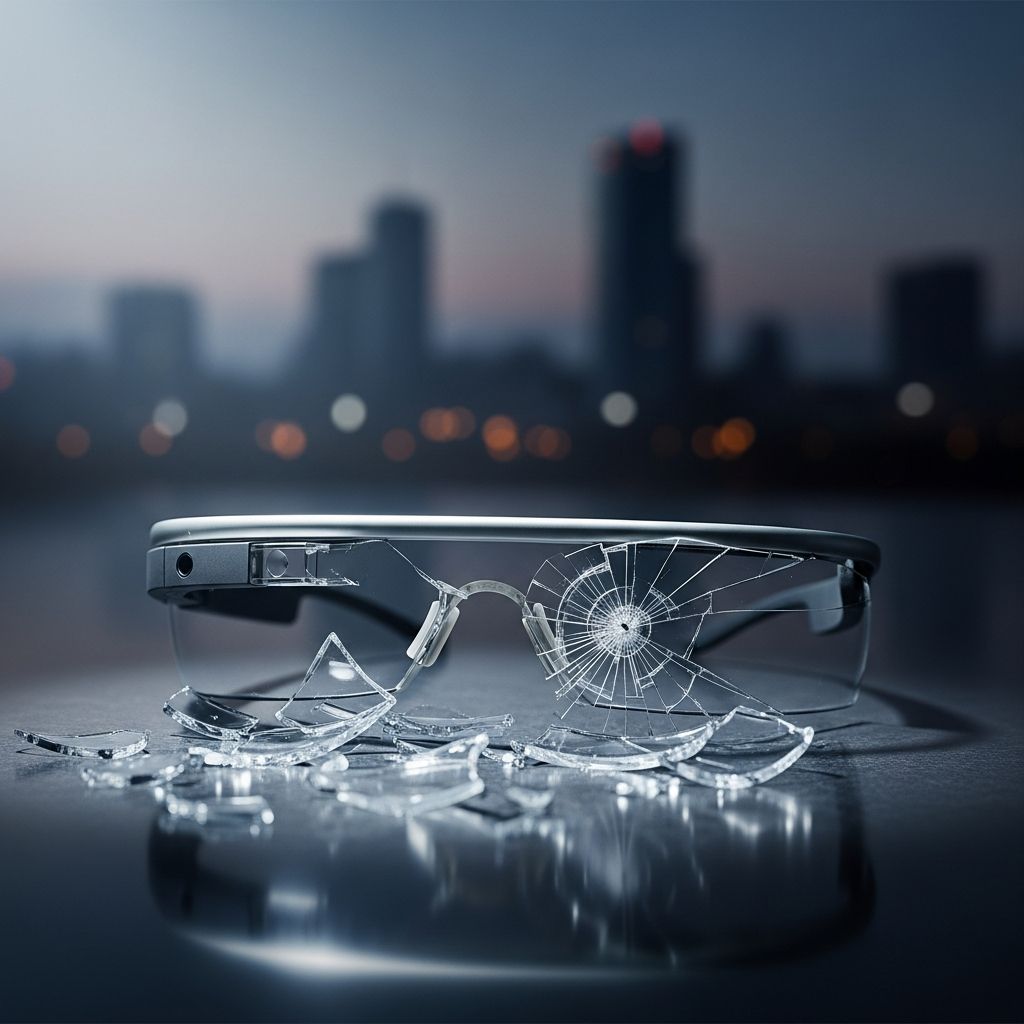
How and Why Google Glass Failed: A Comprehensive Analysis of Tech’s Greatest Disappointment
When Google announced Google Glass in 2012, it was hailed as the future of wearable technology. The augmented reality eyewear promised to revolutionize how people interacted with information, capturing moments hands-free and delivering real-time data directly to users’ eyes. Despite the revolutionary promise and extensive media coverage, Google Glass became one of the most notable product failures in technology history. The Explorer program officially ended on January 19, 2015, marking the premature end of what many believed would be a transformative device. Understanding why Google Glass failed provides crucial insights into product development, market dynamics, and the gap between technological innovation and consumer readiness.
The Promise and Initial Hype
Google Glass emerged during a period of intense excitement about wearable technology and augmented reality. The device was designed as a pair of smart eyeglasses with a miniature display that users could control through voice commands, head movements, and touch gestures. The vision was compelling: imagine having instant access to information, navigation, and communication without ever looking down at a phone. Google invested significant resources into marketing and promoting Glass as the future of human-computer interaction, generating enormous consumer interest and media attention.
The company initially positioned Glass as an Explorer program, providing early access to developers, journalists, and select consumers who would help shape the technology’s future. This beta approach seemed reasonable in theory, allowing Google to gather feedback from tech-savvy users before a broader rollout. However, the massive publicity surrounding the product set unrealistic expectations that the unfinished device could never meet.
The Fatal Pricing Strategy
One of the most significant barriers to Google Glass adoption was its astronomical price tag. When initially released to consumers through the Explorer program, Google Glass cost $1,500, placing it far beyond the reach of typical consumers. For those requiring prescription glasses, the situation became even worse. Google offered no integrated solution for prescription lens wearers, and custom prescription versions required an additional $1,200, bringing the total cost to $2,700 for some users.
This pricing strategy fundamentally undermined market penetration. At $1,500, Google Glass was significantly more expensive than smartphones that offered vastly greater functionality. The high price limited the addressable market to wealthy early adopters and created a perception of exclusivity that alienated mainstream consumers. For a device that hadn’t yet proven its value proposition, the premium pricing was a critical miscalculation. The expensive entry point meant that only a small segment of the population could afford to experiment with the technology, severely limiting the developer ecosystem and reducing the incentive for creating compelling applications.
Building a Solution Before Identifying the Problem
Perhaps the most fundamental flaw in Google Glass’s conception was that the company developed the technology without first identifying a clear problem it solved. According to Mark Frydenberg, senior lecturer in computer information systems at Bentley University, “Glass showed that there were a variety of solutions that this technology could provide, but Google (intentionally?) didn’t identify the problem beforehand. They wanted to see what people could do with it.”
This backward approach meant Google had created an impressive technological achievement without a clear practical application. The device could take pictures, search the internet, and display notifications, but it wasn’t meaningfully better at these tasks than existing devices. Without a compelling reason to use Glass instead of a smartphone, consumers saw no value proposition. The lack of a defined, practical use case meant the technology remained a novelty rather than becoming an essential tool in users’ daily lives.
Technical Limitations and Hardware Deficiencies
Beyond conceptual flaws, Google Glass suffered from significant technical shortcomings that made it impractical for real-world use. The device was plagued by numerous hardware issues that frustrated users and damaged its reputation.
Battery Life Issues: The most severe technical limitation was abysmal battery performance. Google Glass offered less than one hour of battery life in actual use, with some reports claiming it shut down after just 30 minutes of recording video. Users couldn’t rely on the device for extended periods, and extended use—such as recording for more than 30 seconds—would completely drain the battery. Additionally, the device would discharge unexpectedly without warning, leaving users unable to use their glasses until a full recharge was completed.
Overheating Problems: The device frequently overheated during use and would shut itself down as a thermal protection measure. This wasn’t a minor inconvenience but a fundamental usability problem that made the device unreliable for professional or personal use.
Poor User Interface: The interaction methods—including tapping, swiping, blinking, head gestures, and voice commands—were not always responsive or intuitive. Voice recognition required users to say “Ok Glass” followed by a command, but the system wasn’t consistently reliable. The multimodal interface was overly complicated and not smooth enough for seamless daily use.
Language and Localization Barriers: Google Glass only worked effectively with native English speakers from the United States or the United Kingdom. The voice recognition system couldn’t accurately process commands in other languages or accents, severely limiting its global appeal and functionality for non-English speakers.
Privacy and Security Concerns
One of the most damaging aspects of Google Glass was the privacy controversy surrounding the built-in camera and recording capabilities. The device could record video and audio without the knowledge or consent of people being filmed, raising serious ethical and legal concerns.
Users became worried about Glass being used for stalking, harassment, unauthorized recording in private spaces, and general invasions of privacy. The term “Glassholes”—slang for Google Glass wearers—became a pejorative label reflecting public disapproval of the device and those using it. Businesses, particularly casinos and movie theaters, expressed concerns that Glass users would record content that should remain private or protected by copyright. Healthcare facilities worried about patient privacy violations when Glass was worn in clinical settings.
These privacy concerns weren’t merely theoretical—they reflected genuine public anxiety about surveillance technology and the erosion of privacy norms. Google failed to adequately address these concerns or establish clear ethical guidelines for Glass use, allowing the privacy narrative to dominate public perception of the device.
Poor Industrial Design and Aesthetic Failures
Despite boasting innovative technology, Google Glass was undeniably ugly and uncomfortable. The device was bulky, unwieldy, and looked awkward when worn in public. Industrial design plays a crucial role in consumer adoption, particularly for wearable devices that users must wear visibly on their faces. While functionality matters, people also want their technology to be aesthetically acceptable or even attractive.
Google Glass failed on both counts. It looked strange, felt uncomfortable during extended wear, and didn’t integrate gracefully into people’s daily lives or personal style. The design sent a signal that this was a prototype or experimental device, not a finished consumer product ready for mainstream use. The aesthetic rejection contributed to the device becoming a cultural joke, with Saturday Night Live mocking its quirks and media outlets highlighting its awkward appearance.
Over-Hype and Unrealistic Expectations
Google’s aggressive marketing strategy created expectations that the product could never fulfill. The company promoted Glass as revolutionary, groundbreaking technology that would transform human-computer interaction and usher in the future of wearables. This overselling proved catastrophic when users discovered that the reality was far more limited than the hype suggested.
The marketing effort focused on the potential and possibility of Glass rather than demonstrated, practical applications. Journalists and early adopters received the device with high expectations, but when they encountered its limitations, battery problems, and unclear utility, the contrast between promise and reality was jarring. This expectation gap turned what might have been accepted as a promising beta product into a disappointing failure.
Limited Developer Ecosystem and App Availability
The success of any computing platform depends on creating a vibrant ecosystem of third-party developers building compelling applications. Google failed to establish this foundation for Glass. While some developers created demo applications, the limited functionality of the device and small user base meant there were few incentives to develop serious applications.
Developers found it difficult to create apps that meaningfully leveraged Glass’s capabilities. The platform was too restrictive, the audience too small, and the device too limited in processing power and functionality. Without a growing library of useful applications, Glass remained a technology looking for a purpose rather than a tool with clear value to users.
Healthcare Market Failure
One area where many expected Glass to find success was healthcare. Doctors and surgeons could theoretically benefit from hands-free access to patient data and the ability to view information without looking away from their work. However, Google Glass failed to gain traction in healthcare for multiple reasons.
Healthcare providers were deterred by the high cost, practical usability challenges in clinical settings, and significant privacy concerns regarding patient data. The device’s design wasn’t optimized for medical workflows, and the privacy implications of recording video in healthcare environments were legally and ethically problematic. Additionally, healthcare institutions were risk-averse and reluctant to adopt an unproven, expensive technology with known security vulnerabilities.
The Cultural Backlash
As Glass gained visibility, cultural sentiment turned decidedly negative. The “Glassholes” label reflected genuine public disapproval of users wearing the device in public spaces. People objected to being potentially recorded without consent, and social norms emerged against wearing Glass in social situations. This cultural rejection meant that even those who could afford Glass felt uncomfortable wearing it openly, further limiting adoption.
The backlash was so significant that it essentially made Glass a socially unacceptable device to wear. Technology adoption requires not just individual user acceptance but also social acceptance. Google Glass failed on the social dimension, becoming associated with surveillance, invasion of privacy, and technological arrogance.
Key Lessons from Google Glass Failure
The Google Glass story offers several critical lessons for technology companies and investors:
Identify the Problem First: Companies must clearly identify what problem their technology solves before engineering a solution. Google built an impressive device searching for a purpose, which proved insufficient for market success.
Price for Market Penetration: Pricing strategies must balance development costs with market accessibility. At $1,500, Glass was too expensive to attract a sufficient user base to build momentum or develop a robust app ecosystem.
Manage Expectations Through Iterative Development: Rather than massive media hype, companies should release products iteratively, managing expectations and incorporating user feedback progressively. Presenting Glass as a finished consumer product rather than an experimental platform set it up for disappointment.
Address Privacy and Ethics Proactively: When products raise privacy concerns, companies must address these transparently and establish clear ethical guidelines before widespread adoption attempts. Google allowed privacy narratives to develop without effective counter-messaging.
Industrial Design Matters for Wearables: For devices worn visibly on the body, aesthetic design is as important as functional design. Wearables must be socially acceptable to wear in public settings.
Invest in Developer Ecosystems: Platform success requires building a strong developer community early, with tools, incentives, and documentation that make it easy to create compelling applications.
Frequently Asked Questions
Q: When did Google Glass officially fail?
A: Google officially ended the Glass Explorer program on January 19, 2015. However, Google later revived Glass in a limited capacity for enterprise applications, so it wasn’t a complete discontinuation.
Q: How much money did Google lose on Glass?
A: Google lost approximately $895 million on the Google Glass project.
Q: Could Glass have succeeded if priced lower?
A: A lower price would have helped, but pricing was just one of multiple fundamental issues. Without solving the battery, usability, and value proposition problems, lower pricing alone wouldn’t have ensured success.
Q: Did Google Glass have any practical applications?
A: While intended for various uses including healthcare and translation, Glass ultimately found limited practical applications in consumer markets. It has seen some adoption in industrial and enterprise settings, but never achieved the mass-market success originally envisioned.
Q: What happened to Google Glass technology after 2015?
A: Google shifted focus to enterprise applications rather than consumer products. Glass evolved into specialized devices for industrial use in warehouses, factories, and other controlled environments where the privacy and social concerns were less relevant.
Conclusion
Google Glass represents a cautionary tale about the difference between technological innovation and commercial success. Despite impressive engineering and genuine innovation, the product failed because it solved no clear problem, arrived at an unjustifiable price point, suffered from significant technical limitations, raised unresolved privacy concerns, and failed to gain social acceptance. The aggressive over-hyping of the device set expectations that reality could never match, turning what might have been an interesting experimental platform into a disappointing failure. For investors and technology enthusiasts, Google Glass illustrates that creating advanced technology alone is insufficient—successful products must address real user needs, offer genuine value propositions, and navigate the complex social and cultural dimensions of technology adoption.
References
- The Case for Google Glass: Finding Success Through Failure — Bentley University. 2015. https://www.bentley.edu/news/case-google-glass-finding-success-through-failure
- Google Glass Failure: Why did it fail and why was it discontinued? — Failory. https://www.failory.com/google/glass
- Why did Google Glass fail in Healthcare and overall with consumers? — Healthcare.Digital. https://www.healthcare.digital/single-post/why-did-google-glass-fail-in-healthcare-and-overall-with-consumers
Similar Articles








Read full bio of medha deb