How WhatsApp Makes Money: Revenue Streams Explained
Discover WhatsApp's innovative revenue strategies beyond user subscriptions and advertising models.

WhatsApp stands as one of the world’s most popular messaging platforms, with billions of users communicating daily across the globe. Despite offering a completely free service to its users, WhatsApp generates substantial revenue through innovative and non-intrusive monetization strategies. Since Meta’s acquisition in 2014, the company has developed multiple revenue streams that allow it to maintain its core free service while generating significant income. Understanding how WhatsApp makes money reveals a sophisticated business model that prioritizes user privacy and experience while creating valuable opportunities for businesses.
The Evolution of WhatsApp’s Business Model
When WhatsApp launched, it operated on a simple subscription model, charging users a nominal annual fee. However, after Meta’s acquisition, the company shifted toward a business-focused monetization strategy. Rather than imposing subscriptions or inserting intrusive advertisements into the user feed, WhatsApp developed a comprehensive approach centered on serving businesses that want to reach WhatsApp’s massive user base. This strategic pivot transformed WhatsApp from a simple messaging app into a critical component of Meta’s revenue engine.
The company’s monetization philosophy emphasizes maintaining user trust and experience while creating premium value for businesses. By keeping the core messaging service completely free and ad-free for individual users, WhatsApp has preserved the simplicity and privacy that attracted billions of users in the first place. This user-centric approach creates the foundation for all of WhatsApp’s revenue-generating activities.
Primary Revenue Streams
WhatsApp Business API
The WhatsApp Business API represents the primary revenue driver for the platform. Launched in 2018, this API is specifically designed for medium to large enterprises that need to communicate with customers at scale. Rather than relying on traditional customer service channels, businesses use the WhatsApp Business API to send customer support messages, transactional notifications, and personalized communications directly through WhatsApp.
Businesses are charged based on the number of conversations they initiate with customers within a 24-hour period. This conversation-based pricing model ensures that businesses only pay for meaningful interactions, making it cost-effective for companies of all sizes. The API offers several valuable features that justify the investment:
- Automated messaging capabilities for handling routine inquiries
- Customer segmentation tools for targeted communication
- Seamless CRM system integration for workflow management
- Advanced analytics and reporting features
- Template-based messaging for consistent communication
The Business API creates a win-win scenario for WhatsApp and businesses. Companies gain direct access to customers through a trusted channel, while WhatsApp generates predictable, scalable revenue from enterprise clients. The transparency of the pricing model—based on actual conversations—has made it attractive to businesses seeking to optimize their customer service operations.
Click-to-WhatsApp Advertisements
Click-to-WhatsApp ads represent an innovative approach to advertising that doesn’t interrupt the user experience. Rather than placing traditional display ads within the WhatsApp app itself, these ads appear on Meta’s other platforms, including Facebook and Instagram. When users click on a Click-to-WhatsApp ad, they are directed to initiate a conversation with the advertising business directly within WhatsApp.
This advertising model operates on a pay-per-click basis, meaning businesses only pay when a user actually clicks on their advertisement. The click-to-WhatsApp format provides several advantages for advertisers:
- Direct engagement with interested customers
- Higher conversion rates compared to traditional social media ads
- Cost-effectiveness through performance-based pricing
- Ability to provide personalized customer support through messaging
- Lower friction compared to directing users to external websites
The genius of this approach lies in its non-intrusive nature. Individual WhatsApp users never see ads cluttering their conversations, yet businesses can still reach them through ads on platforms where they are already accustomed to seeing promotional content. WhatsApp maintains its privacy-focused reputation while generating significant advertising revenue.
WhatsApp Pay and Financial Services
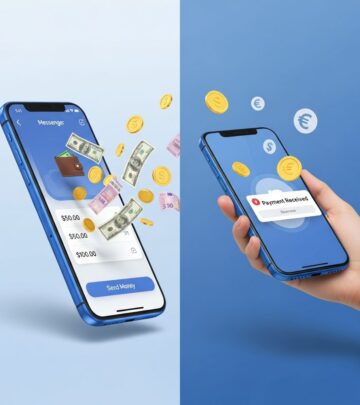
WhatsApp Pay enables users to send and receive money directly through the app, creating a new revenue stream through payment processing. Currently available in select markets including India and Brazil, WhatsApp Pay utilizes existing payment infrastructure such as India’s Unified Payments Interface and Facebook Pay in Brazil. This feature integrates financial services directly into the messaging experience.
While individual users can send money to each other for free, WhatsApp generates revenue by charging businesses a commission on transactions conducted through the platform. This creates a dual-revenue opportunity:
| User Type | Transaction Type | WhatsApp Revenue Model |
|---|---|---|
| Individual Users | Peer-to-peer transfers | Free for users; no revenue |
| Businesses | Customer payments | Commission per transaction |
| Merchants | Product purchases | Transaction fee percentage |
WhatsApp Pay transactions are protected by end-to-end encryption, maintaining the security and privacy standards users expect from the platform. As WhatsApp expands payment services to additional markets, this revenue stream is expected to grow significantly.
WhatsApp Business Verification and Meta Verified
Meta Verified represents another monetization strategy for WhatsApp Business accounts. Businesses can opt to subscribe to Meta Verified, which provides a verification badge and additional account security features. This subscription service generates recurring revenue while helping users identify authentic business accounts.
By paying for verification, businesses gain several benefits:
- A visible verification badge that builds customer trust
- Enhanced account security features
- Priority customer support from Meta
- Access to exclusive business tools and features
- Competitive advantage in their industry
This premium offering targets businesses that prioritize establishing legitimacy and credibility with their customers. The recurring subscription model provides WhatsApp with predictable revenue while the verification badge helps maintain platform integrity.
Catalog and Commerce Tools
WhatsApp has introduced catalog and commerce features that allow businesses to showcase products directly within the app. These tools enable businesses to create digital storefronts within WhatsApp, where customers can browse products, make inquiries, and complete purchases through direct messaging.
While WhatsApp doesn’t directly charge for these features in all cases, they create indirect revenue opportunities by increasing user engagement with business accounts, which drives additional Business API usage and advertising spend. As these commerce tools become more sophisticated, WhatsApp is exploring premium pricing models for advanced features.
Revenue Model Comparison
| Revenue Stream | Description | User Impact | Revenue Potential |
|---|---|---|---|
| Business API | Enterprise messaging platform | None (B2B) | High |
| Click-to-WhatsApp Ads | Pay-per-click advertising on Meta platforms | Minimal (ads on Facebook/Instagram) | Very High |
| WhatsApp Pay | Transaction fees from business payments | None for personal use | Medium-High |
| Meta Verified | Subscription for business verification | None (optional business feature) | Medium |
| Commerce Tools | Enhanced business storefronts | None (optional) | Medium (growing) |
Future Revenue Opportunities
WhatsApp continues to explore new monetization avenues to expand its revenue potential. One significant area of focus involves introducing advertisements in the Status section, similar to Instagram Stories. Status ads would provide a new advertising platform while maintaining separation from users’ main conversation threads.
Additionally, WhatsApp Pay is expected to expand to more markets globally, significantly increasing transaction-based revenue. The platform is also developing enhanced features for the WhatsApp Business API, including more sophisticated analytics, advanced automation capabilities, and deeper CRM integrations that could command premium pricing.
As artificial intelligence continues to develop, WhatsApp is positioned to introduce AI-powered business tools that automate customer service, personalize recommendations, and optimize marketing campaigns. These advanced features represent substantial revenue opportunities.
The Balance Between Monetization and User Experience
WhatsApp’s greatest challenge remains balancing aggressive monetization with maintaining the privacy and simplicity that users value. The platform has successfully avoided introducing intrusive advertising into the main user experience, instead focusing on business-to-business monetization and payment processing.
This approach demonstrates that technology companies need not choose between profitability and user satisfaction. By carefully implementing monetization strategies that serve business needs without cluttering the user interface, WhatsApp has created a sustainable business model that benefits all stakeholders.
The company’s commitment to end-to-end encryption ensures that even as WhatsApp expands its monetization efforts, user data remains private and protected. Advertisers cannot access user conversations or personal information, maintaining the trust that has been central to WhatsApp’s success.
Frequently Asked Questions
Q: Is WhatsApp truly free to use?
A: Yes, WhatsApp remains completely free for individual users. You can send unlimited messages, make calls, and share media without paying any subscription fee or seeing advertisements in your conversations.
Q: How much does the WhatsApp Business API cost?
A: WhatsApp Business API pricing varies based on the destination country and message type. Businesses are charged per conversation initiated within a 24-hour period, with rates adjusted for different regions and message categories. Exact pricing requires contacting WhatsApp business sales.
Q: Can I receive ads on WhatsApp?
A: Currently, WhatsApp does not display ads within the messaging app. Click-to-WhatsApp ads appear on Facebook and Instagram, not within WhatsApp itself. The company is exploring Status ads similar to Instagram Stories.
Q: Is WhatsApp Pay available in my country?
A: WhatsApp Pay is currently available in select markets including India and Brazil. The company plans to expand to additional countries, but availability varies by region and partnership with local financial institutions.
Q: How does WhatsApp protect my privacy while making money?
A: WhatsApp uses end-to-end encryption for all conversations, meaning only you and your recipient can read your messages. Advertisers cannot access your personal data, and WhatsApp does not sell user information to third parties.
Q: What is Meta Verified and why would I need it?
A: Meta Verified is a subscription service for businesses that provides a verification badge, enhanced security, and priority support. It helps customers identify authentic business accounts and gives businesses a competitive advantage.
Q: How much revenue does WhatsApp generate annually?
A: While Meta does not separately report WhatsApp’s revenue, analysts estimate it generates billions of dollars annually through its various monetization channels. The platform is expected to see strong double-digit revenue growth through 2026.
References
- Business Model of WhatsApp: Revenue & Founder Insights — Miracuves. 2025. https://miracuves.com/blog/business-model-whatsapp/
- How Does WhatsApp Make Money? – Business Model Analyst — Business Model Analyst. https://businessmodelanalyst.com/how-does-whatsapp-make-money/
- How Does WhatsApp Make Money? – Heavyweight Digital — Heavyweight Digital. https://heavyweightdigital.co.uk/how-does-whatsapp-make-money
- WhatsApp Revenue & Earnings 2025: User Growth, Monetization — Spocket. 2025. https://www.spocket.co/statistics/whatsapp-earnings-and-revenue
- Understanding How WhatsApp Generates Revenue — LimeChat. https://www.limechat.ai/blog/whatsapp-business-model-revenue
- WhatsApp Business Model — Strategyzer. https://www.strategyzer.com/library/whatsapp-business-model
Similar Articles








Read full bio of Sneha Tete