Resume Summary Statement: 3-Step Guide To Write A Strong Intro
Master the art of crafting a compelling resume summary that captures recruiter attention.

Understanding the Resume Summary Statement
A resume summary statement, also known as a professional summary or summary statement, is a brief introductory section placed at the top of your resume that highlights your most relevant skills, experiences, and professional qualifications. Typically spanning two to three sentences, this powerful section serves as your first impression to potential employers. The primary purpose of a resume summary is to immediately capture the attention of hiring managers by presenting your strongest assets in a concise, well-organized manner.
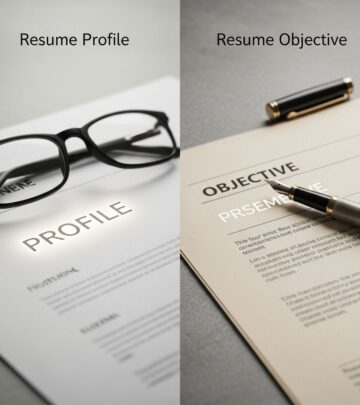
The resume summary differs from a resume objective statement, though many professionals confuse the two. While an objective focuses on what you want from an employer, a summary emphasizes what you bring to the table. A resume summary works best if you have substantial work history and various skills worth highlighting, whereas a resume objective is more suitable for recent graduates or those with limited professional experience.
Why Your Resume Needs a Summary Statement
Getting Noticed Faster by Employers
In today’s competitive job market, hiring managers often spend only a few seconds scanning each resume. A strong summary statement at the top of your resume increases the chances of capturing their attention immediately. By positioning your most valuable qualifications where employers look first—right below your contact information—you significantly improve your visibility. This strategic placement ensures that your relevant skills and experiences are impossible to miss, making your resume stand out from the hundreds of others competing for the same position.
Highlighting Key Skills and Experience Earlier
If you have extensive professional experience, your resume can become lengthy and complex. A well-crafted summary section serves as a filtering mechanism, condensing your most important qualifications into easily digestible information. Rather than forcing hiring managers to search through your entire resume to understand your value proposition, a summary brings your strongest points to the forefront. This approach is particularly beneficial for career changers who need to bridge their previous experience with their desired role, helping employers immediately understand how your background aligns with their needs.
Addressing Keywords from Job Postings
Modern recruitment often involves automated applicant tracking systems (ATS) that scan resumes for specific keywords from job descriptions. By incorporating relevant keywords and phrases from the job posting into your summary statement, you increase the likelihood of your resume passing through these digital filters. This practice not only helps your application get noticed by the system but also demonstrates to human reviewers that you’ve carefully considered the position and understand what the employer is seeking.
How to Write an Effective Resume Summary
Step 1: Identify Your Most Important Experiences and Skills
Begin your summary development process by reflecting on your professional background. Make a comprehensive list of your most significant accomplishments, skills, and experiences. This inventory should include technical skills relevant to your industry, soft skills like leadership or communication, certifications you’ve earned, awards you’ve received, and notable achievements that demonstrate your value. Consider your track record, successful projects you’ve led, and problems you’ve solved. This brainstorming phase is crucial because it provides the raw material from which you’ll extract your most compelling selling points.
Step 2: Research the Target Position and Company
Before finalizing your summary, carefully review the job description for positions you’re interested in pursuing. Identify the key requirements, desired qualifications, and specific skills the employer emphasizes. Look for overlapping areas between what the employer seeks and what you offer. Pay attention to the language used in the job posting—these words and phrases often appear in the job title, key responsibilities section, and qualifications list. Understanding what the employer values most allows you to customize your summary to directly address their priorities, making your application more compelling and relevant.
Step 3: Craft Your Two-to-Three Sentence Summary
With your skills inventory and job description analysis complete, you’re ready to write your summary. Follow this proven structure: begin with a strong adjective that describes you professionally, followed by your relevant experience or expertise. Use active voice and powerful action verbs to describe your accomplishments. Keep your statement concise—typically two to three sentences or around four lines maximum. Your summary should paint a clear picture of who you are professionally and why you’re an excellent fit for the role.
Key Elements of a Powerful Summary Statement
Professional Identity and Positioning
Your summary should clearly communicate your professional identity and positioning within your industry. Start with a job title or professional descriptor that immediately tells the reader who you are from a career perspective. Examples include “Product Marketing Manager,” “Senior Project Manager,” “Management Consultant,” or “Digital Marketing Strategist.” This positioning statement should be specific enough to distinguish you from others but broad enough to encompass the range of your expertise. Avoid vague titles or generic descriptions that fail to establish your professional credibility.
Specific Strengths and Transferable Skills
Highlight the strengths and skills that set you apart from other professionals in your field. Focus on transferable skills that are relevant to the position you’re pursuing, not necessarily where you’re coming from. If you’re changing careers, emphasize how your previous experience has developed skills that directly apply to your target role. Include both hard skills (technical abilities, software proficiency, certifications) and soft skills (leadership, communication, problem-solving) that align with the job requirements. Quantify your accomplishments whenever possible—specific numbers and percentages are far more compelling than vague claims.
Professional Expertise and Track Record
Include a subtle mention of your professional expertise and proven track record. Rather than simply listing skills, demonstrate how you’ve applied them successfully. For example, instead of saying “experienced in project management,” say “Delivered 15+ complex projects on time and under budget.” If you have specific industry experience or have worked with notable companies, this is an excellent place to mention those credentials. Employers want to know not just what you can do, but what you have done and with whom.
Writing Tips and Best Practices
Use Active Voice and Power Words
Never use passive constructions in your summary. Rather than writing “new sales strategies were developed,” write “developed new sales strategies.” Active voice places you as the protagonist of your professional story and creates a stronger impression. Incorporate power verbs that demonstrate action and achievement, such as “spearheaded,” “revolutionized,” “orchestrated,” “optimized,” “transformed,” or “accelerated.” These words convey confidence and capability, making your summary more impactful.
Include Quantifiable Results
Whenever possible, back up your claims with concrete numbers and metrics. Statements like “increased customer retention by 20%,” “boosted social media engagement by 35%,” or “reduced operational costs by $500,000 annually” provide tangible proof of your value. Quantifiable achievements are far more persuasive than qualitative statements because they demonstrate actual impact and measurable success. If you can attribute specific results to your efforts, you significantly strengthen your summary’s credibility.
Avoid First-Person Pronouns
Write your resume summary in present tense as if you’re the subject of the resume, but avoid using first-person pronouns like “I” or “me.” Instead of saying “I am a detail-oriented communications professional with 7+ years of experience,” write “Detail-oriented communications professional with 7+ years of experience.” This approach focuses attention on your accomplishments and qualities rather than on yourself as a person, which is more appropriate for professional documentation.
Customize for Each Application
Rather than using a generic summary for all job applications, customize your statement for each position. Reference specific job titles, industry terminology, or particular challenges mentioned in the job description. This customization demonstrates that you’ve carefully reviewed the position and understand what the employer values. It also increases your chances of passing through automated applicant tracking systems that scan for relevant keywords. While maintaining core elements of your professional identity, adjust your emphasis to align with each employer’s specific needs and priorities.
Keep It Concise and Powerful
Your summary statement must be concise yet impactful. Aim for four lines or three to four short sentences maximum. Anything longer risks losing the hiring manager’s attention and defeats the purpose of a quick, compelling introduction. Every word should count and contribute to your overall value proposition. Avoid filler language, redundancy, or information that doesn’t directly support your candidacy for the specific role.
What to Avoid in Your Summary
Irrelevant Information and Skills
Focus your summary on selling points that are directly relevant to the position you’re seeking. Just because you have a skill or achievement doesn’t mean it belongs in your summary. For instance, if you’re applying for a marketing position, your exceptional typing speed—while impressive—isn’t relevant and shouldn’t appear in your professional summary. Irrelevant information dilutes your message and wastes valuable space. Every element should either highlight why you’re perfect for this specific job or demonstrate a key qualification the employer values.
Misleading or Exaggerated Claims
While your summary should be your strongest professional presentation, it should never include exaggerated claims or misleading information. Everything stated in your summary should be verifiable and defensible during an interview. Overstating your experience or skills may get you past the initial screening, but you’ll struggle to back up your claims in person, damaging your credibility and potentially disqualifying you from consideration. Authenticity combined with strategic positioning is far more effective than embellishment.
Generic or Overused Language
Avoid tired clichés and generic phrases that have been used in thousands of resumes. Descriptions like “hardworking and dedicated” or “team player” are so common they’ve lost their meaning and impact. Instead, be specific about what makes you unique. Rather than saying you’re a “problem solver,” describe a specific problem you solved and the positive outcome. Originality and specificity make your summary memorable and differentiate you from other candidates using similar language.
Resume Summary Examples
Example 1: Experienced Professional
Creative Graphic Artist with five years of experience working with top brands including Nike, Mattel, and Williams Sonoma. Proven track record developing visually stunning digital and print campaigns that increased client engagement by 40% on average. Expert in Adobe Creative Suite and UI/UX design with strong ability to translate brand vision into compelling visual narratives.
Example 2: Career Changer
Project Manager transitioning into software development with strong foundation in agile methodologies and cross-functional team coordination. Skilled at managing complex workflows, meeting tight deadlines, and delivering results. Completed intensive coding bootcamp specializing in full-stack web development and demonstrated proficiency in JavaScript, React, and Python.
Example 3: Recent Graduate
Marketing Professional with internship experience in digital marketing and social media strategy. Strong analytical skills with proven ability to develop data-driven campaigns that improve brand awareness. Proficient in Google Analytics, Hootsuite, and Mailchimp with passion for creating engaging content that resonates with target audiences.
Common Mistakes to Avoid
Many professionals make preventable errors when crafting their resume summary. A primary mistake is making the summary too long or too focused on job responsibilities rather than achievements. Remember that hiring managers want to know your value, not simply list what you’ve done. Another common error is failing to customize the summary for each application, resulting in generic statements that don’t resonate with specific employers. Additionally, some professionals neglect to update their summary as their career evolves, using outdated language or outdated examples that no longer represent their current capabilities. Finally, many forget to proofread carefully, allowing typos or grammatical errors to damage their professional image right at the top of their resume.
Frequently Asked Questions
Q: Should I use a resume summary or a resume objective?
A: Use a resume summary if you have work experience and accomplishments to highlight. A resume objective is better suited for recent graduates or those with minimal professional experience. Summaries are more effective at showcasing your value to employers.
Q: How long should my resume summary be?
A: Keep your summary to two to three sentences or approximately four lines. It should be concise and immediately compelling, long enough to convey your value but short enough to maintain the hiring manager’s attention.
Q: Should I include specific achievements in my summary?
A: Yes, including quantifiable achievements and specific accomplishments makes your summary much more powerful. Numbers and percentages demonstrate your impact and set you apart from candidates using only generic language.
Q: Can I use the same summary for multiple job applications?
A: While you can maintain a core professional identity, customize your summary for each position. Tailor your emphasis to match the specific job description and incorporate relevant keywords from each posting.
Q: How do I know if my summary is effective?
A: Share your draft with trusted colleagues, mentors, or career professionals. A strong summary should create a sense of pride when you read it and quickly convey why you’re an excellent fit for your target role. If it doesn’t immediately capture attention, revise until it resonates.
Q: Where should the summary appear on my resume?
A: Place your summary at the very top of your resume, immediately below your contact information. This prime real estate ensures hiring managers see your strongest selling points first.
Final Thoughts
Your resume summary statement represents your professional elevator pitch—a concise yet powerful introduction that should immediately convince hiring managers that you’re worth their time. By following these guidelines, identifying your strongest qualifications, researching each target position, and crafting a compelling narrative, you’ll create a summary that opens doors and gets you noticed. Remember to customize your summary for each application, use active language and quantifiable results, and keep everything relevant to the position you’re seeking. With a well-crafted resume summary, you’ll significantly increase your chances of moving past the initial screening and landing interviews with your target employers.
References
- How To Write an Effective Resume Summary (With Examples) — Indeed Career Guide. Accessed November 2025. https://www.indeed.com/career-advice/resumes-cover-letters/writing-a-resume-summary-with-examples
- How to Write a Summary Statement — University of Houston Bauer College Career Center. https://www.bauer.uh.edu/career-center/docs/career-guides-resources/How-to-Write-a-Summary-Statement.pdf
- How to Write a Powerful Resume Summary Statement — Clark College Career Services. https://www.clark.edu/enroll/careers/SummaryofQualificatins.pdf
- How to Write an Attention-Grabbing Resume Summary — Robert Half. Accessed November 2025. https://www.roberthalf.com/us/en/insights/landing-job/how-to-write-a-resume-summary
- Create a Strong Resume — Harvard Mignone Center for Career Success. https://careerservices.fas.harvard.edu/resources/create-a-strong-resume/
Similar Articles








Read full bio of medha deb