Personal Loan Agreement: Complete Step-By-Step Guide
Master the essentials of creating a legally binding personal loan agreement with our comprehensive guide.
How to Write a Personal Loan Agreement: A Comprehensive Guide
Lending money to friends or family members can strain relationships if expectations aren’t clearly documented. A personal loan agreement serves as a legally binding contract that protects both the lender and borrower by establishing clear terms, payment schedules, and responsibilities. Whether you’re lending a substantial amount or a modest sum, having a written agreement in place is crucial for maintaining financial clarity and legal protection.
Why You Need a Personal Loan Agreement
Many people hesitate to formalize loans with loved ones, fearing it might seem impersonal or distrustful. However, a personal loan agreement is actually a sign of respect and professionalism in any financial relationship. Without a written document, misunderstandings about repayment terms, interest rates, and deadlines can lead to disputes, broken relationships, and potential legal complications.
A properly drafted personal loan agreement:
- Establishes clear repayment expectations and timelines
- Protects both parties legally in case of disputes
- Reduces the likelihood of misunderstandings or disagreements
- Creates a record for tax purposes and financial documentation
- Demonstrates professionalism and serious intent on both sides
Key Elements of a Personal Loan Agreement
A comprehensive personal loan agreement should include several essential components that define the loan’s terms and conditions. Each element serves a specific purpose in protecting both parties and ensuring clarity.
Identification of Parties
Begin your agreement by clearly identifying both the lender and the borrower. Include full legal names, addresses, phone numbers, and email addresses. This section establishes who is entering into the agreement and ensures there’s no confusion about the parties involved. If either party is married or operates under a different legal name, include that information as well.
Loan Amount
Clearly state the exact amount being lent. Write out both the numerical figure and the written form to avoid any misinterpretation. For example: “Five Thousand Dollars ($5,000.00).” Specify whether this is the principal amount or if any fees are included. This clarity prevents disputes about how much money actually changed hands.
Interest Rate
Define whether the loan will accrue interest and, if so, at what rate. You have several options:
- Interest-free loans (no interest charged)
- Fixed interest rates (predetermined percentage that doesn’t change)
- Variable interest rates (changes based on market conditions or other factors)
If interest is charged, specify how it will be calculated—whether it’s simple interest or compound interest, and how frequently it accrues. This section is critical for determining the total amount the borrower will ultimately repay.
Repayment Schedule
Establish a clear repayment timeline that specifies when payments are due. Include:
- Payment frequency (monthly, quarterly, annually)
- Due dates for each payment
- Payment amounts for each installment
- Final maturity date when the loan should be completely repaid
A well-defined repayment schedule eliminates confusion and helps both parties plan their finances accordingly. Consider whether payments should be equal installments or if they vary throughout the loan period.
Payment Methods
Specify how the borrower will make payments. Options include:
- Bank transfers or ACH payments
- Check payments
- Cash payments (though less recommended for documentation)
- Credit card payments
- Other agreed-upon methods
Including payment methods in the agreement ensures both parties understand how transactions will occur and creates a clear audit trail.
Consequences of Default
Clearly outline what happens if the borrower fails to make payments on time. This section should include:
- Late payment penalties or fees
- Increased interest rates for overdue payments
- Grace periods (if any) before penalties apply
- Actions the lender may take if the borrower defaults
While these provisions might feel uncomfortable to discuss with family or friends, they provide essential protection and motivation for timely repayment.
Prepayment Terms
Indicate whether the borrower can pay off the loan early without penalties. Some agreements include prepayment provisions that allow full or partial early repayment, while others may include penalties if the borrower wants to pay off the debt ahead of schedule. Being explicit about prepayment options prevents misunderstandings if the borrower’s financial situation improves.
Collateral (If Applicable)
If the loan is secured by collateral—such as a vehicle, property, or other valuable asset—clearly describe what collateral backs the loan. Include detailed descriptions of the asset, its estimated value, and what happens to the collateral if the borrower defaults on the loan.
Structuring Your Personal Loan Agreement
The format and structure of your agreement matter as much as its content. A well-organized document is easier to understand and more likely to be legally enforceable. Here’s a recommended structure:
Header Section
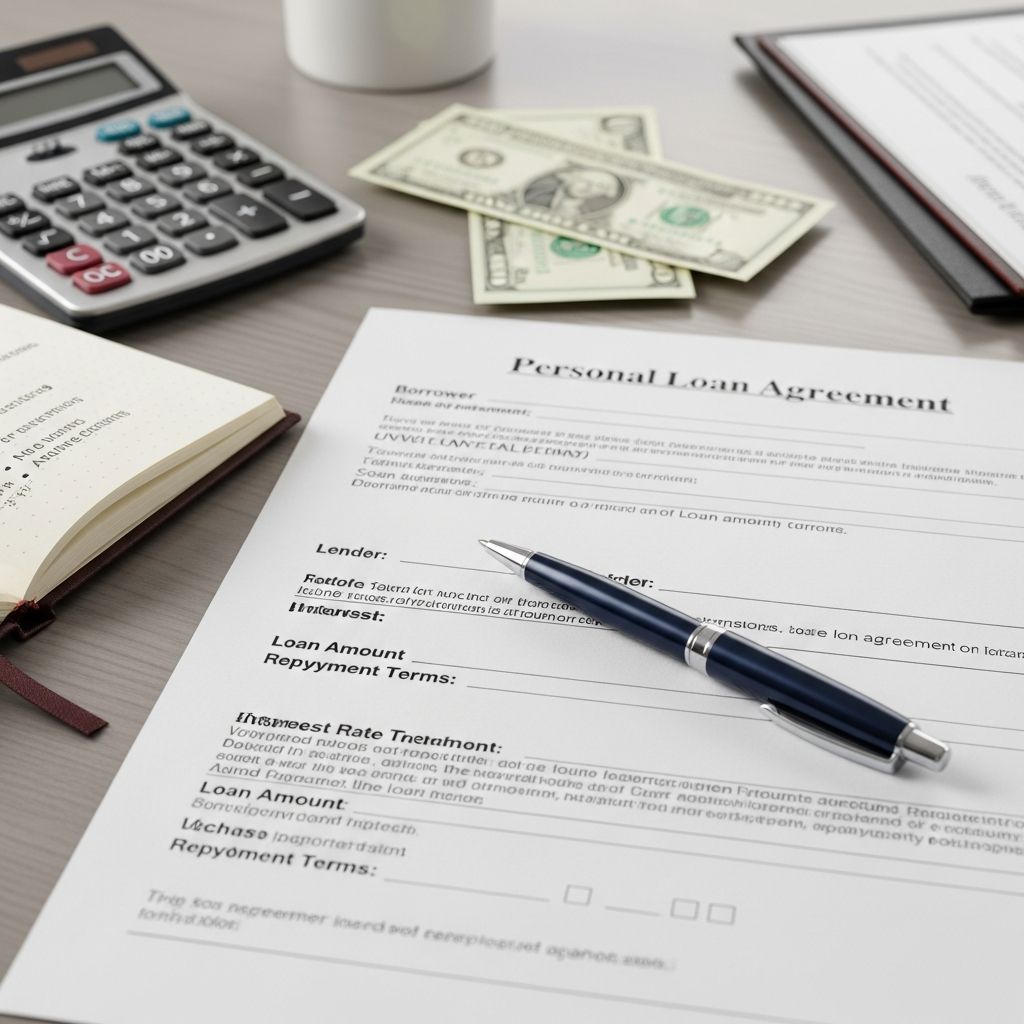
Start with a clear title: “Personal Loan Agreement” or “Promissory Note.” Include the date the agreement is executed and a unique agreement number for reference purposes.
Introductory Clause
Include an opening statement that identifies the parties and the general purpose of the agreement. For example: “This Personal Loan Agreement is entered into on [Date] between [Lender Name], the ‘Lender,’ and [Borrower Name], the ‘Borrower.'”
Terms and Conditions Section
Organize all loan terms in numbered or bulleted sections. This makes the document easier to reference and ensures no terms are overlooked. Group related terms together for logical flow.
Covenants and Representations
Include statements that both parties affirm as true, such as:
- The borrower has the legal capacity to enter into the agreement
- The borrower’s financial information provided is accurate
- The borrower will use the loan funds for stated purposes
- The lender has the authority to lend the funds
Dispute Resolution
Establish how disputes will be handled—through mediation, arbitration, or court proceedings. Specify which state’s laws will govern the agreement.
Signatures and Dates
End with signature lines for both parties, including dates. Consider having witnesses or a notary public sign as well, depending on the loan amount and local legal requirements.
Common Mistakes to Avoid
When drafting a personal loan agreement, be aware of common pitfalls that can undermine the document’s effectiveness:
Vague Terms
Avoid ambiguous language. Be specific about amounts, dates, and conditions. Phrases like “as soon as possible” or “reasonable time” can lead to disputes about what was actually agreed upon.
Incomplete Information
Ensure all parties’ information is accurate and complete. Missing details can make the agreement unenforceable or create confusion if disputes arise.
Inconsistent Calculations
Double-check all mathematical calculations, especially interest computations and payment amounts. Errors in these areas can create significant disputes later.
Missing Contingencies
Anticipate potential scenarios—what if the borrower loses their job? What if the lender needs the money back early? Addressing contingencies upfront prevents conflicts.
Failure to Document Amendments
If the original terms change, document those changes in writing with signatures from both parties. Verbal modifications are harder to prove and can create confusion.
Legal Considerations and Requirements
Personal loan agreements must comply with applicable laws, which vary by jurisdiction. Key legal considerations include:
Usury Laws
Many states have usury laws that cap the maximum interest rate lenders can charge. Verify your state’s limits to ensure your agreement doesn’t violate these laws. Exceeding usury limits can make the entire agreement unenforceable.
Statute of Limitations
Understand how long the lender has to enforce the agreement. This varies by state and loan type, typically ranging from three to six years for written contracts.
State-Specific Requirements
Some states require specific language or formatting in loan agreements. Research your state’s requirements to ensure compliance.
Tax Implications
If charging interest, be aware of potential tax implications. The lender may owe income tax on interest received, and the IRS has rules about minimum interest rates for loans.
Templates and Resources
Creating a personal loan agreement from scratch can be challenging. Consider these resources:
Online Templates
Many legal document websites offer customizable personal loan agreement templates. These provide a solid foundation and typically include all essential provisions.
Legal Professional Assistance
For significant loan amounts or complex situations, consulting an attorney ensures your agreement is legally sound and enforceable. The cost of legal review is often worth the protection it provides.
DIY Software
Legal document software allows you to answer questions about your loan and automatically generates a customized agreement.
Frequently Asked Questions
Q: Is a handwritten personal loan agreement legally binding?
A: In many jurisdictions, a handwritten agreement can be legally binding if it contains all essential terms, is signed by both parties, and shows clear intent to be bound. However, typed agreements are generally more enforceable and professional.
Q: Do I need to charge interest on a personal loan?
A: No, you can offer an interest-free loan. However, the IRS may have rules about imputed interest for significant loans, and clearly stating the interest rate (even if zero percent) prevents misunderstandings.
Q: What happens if the borrower can’t repay the loan?
A: Your agreement should specify remedies, which may include enforced payment plans, collateral seizure, or legal action. However, you may also choose to modify the terms compassionately if circumstances change.
Q: Should I have a personal loan agreement notarized?
A: Notarization isn’t required for enforceability but can strengthen your document’s credibility and is recommended for large loans or formal arrangements.
Q: Can I modify a personal loan agreement after it’s signed?
A: Yes, but both parties must agree in writing to any modifications. Document the amendment with new signatures and dates to ensure clarity and avoid disputes.
Q: What’s the difference between a personal loan agreement and a promissory note?
A: A promissory note is a simpler document where the borrower promises to repay a debt. A personal loan agreement is more comprehensive and includes additional terms and conditions.
Conclusion
A well-drafted personal loan agreement protects both lenders and borrowers by establishing clear expectations and legal protections. By including all essential elements, avoiding common mistakes, and ensuring compliance with applicable laws, you create a document that upholds the integrity of your financial arrangement. Whether you’re lending to family, friends, or business associates, taking the time to prepare a comprehensive agreement demonstrates professionalism and respect for all parties involved. Remember, the goal isn’t to create mistrust but to establish mutual understanding and protect the relationship itself.
References
- Personal Loan Agreement Guidelines — U.S. Small Business Administration. 2024. https://www.sba.gov/business-guide/manage-your-business/business-contracts-agreements
- Usury Laws by State — National Conference of State Legislatures. 2024. https://www.ncsl.org/financial-services-and-commerce/consumer-finance-laws-and-regulations
- Tax Implications of Personal Loans — Internal Revenue Service. 2024. https://www.irs.gov/publications/p936
- Statute of Limitations on Debt by State — National Consumer Law Center. 2024. https://www.nclc.org/
- Promissory Note Standards — American Bar Association. 2023. https://www.americanbar.org/
Similar Articles








Read full bio of Sneha Tete