How to Write an About Me Page: Examples & Tips
Master the art of crafting compelling About Me pages with proven strategies and real-world examples.
How to Write an About Me Page: A Comprehensive Guide with Examples and Templates
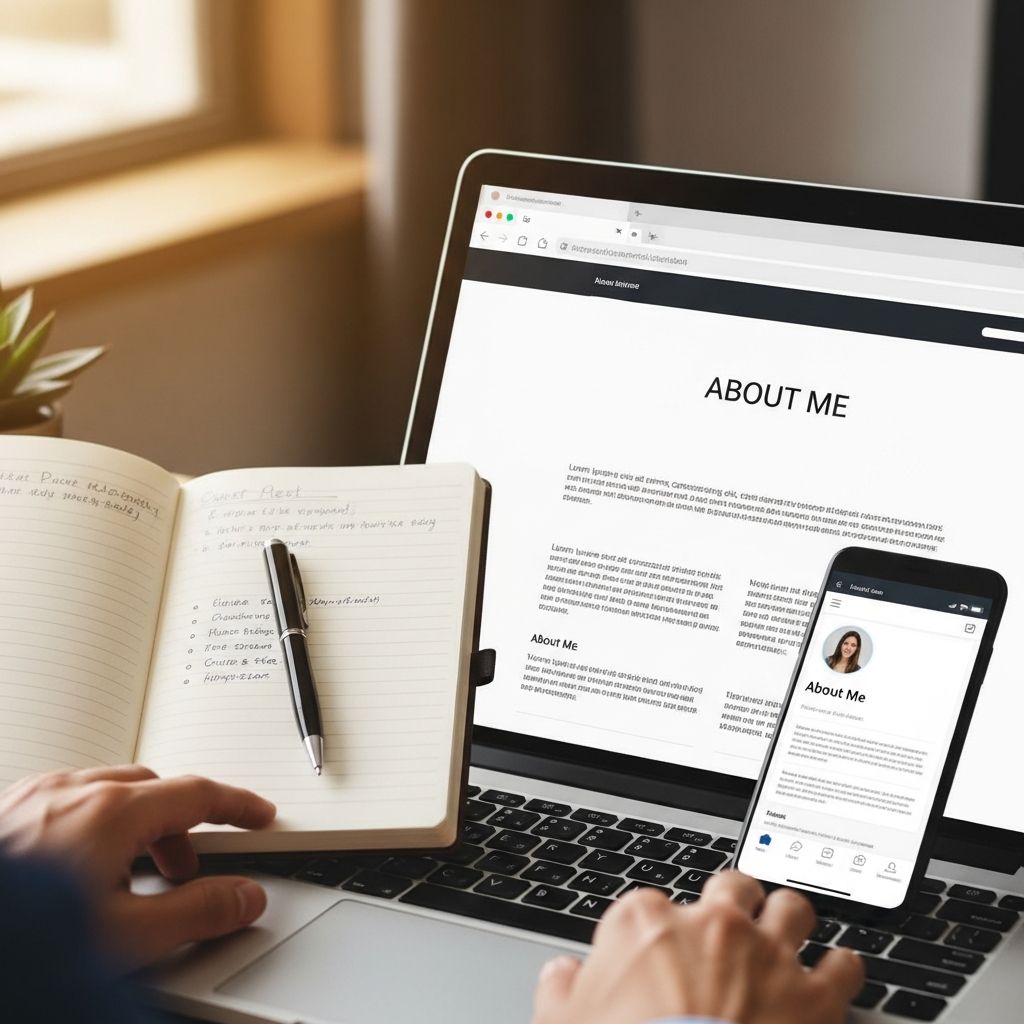
Your About Me page is one of the most important assets on your website or professional profile. It’s the place where potential customers, employers, collaborators, and audiences get to know who you are, what you do, and why they should care. Unlike other pages on your site that focus on specific products or services, your About Me page is your opportunity to make a personal connection and establish credibility. Whether you’re a freelancer, entrepreneur, artist, or job seeker, a well-crafted About Me page can be the difference between someone clicking away and becoming a loyal follower or client.
The challenge, however, is that there’s no one-size-fits-all formula for writing an About Me page. Your background, industry, goals, and audience are all unique, which means your About Me page should reflect those distinctions. In this comprehensive guide, we’ll walk you through the essential elements of a great About Me page, provide you with actionable tips, and showcase real-world examples to inspire your own creation.
Understanding the Purpose of Your About Me Page
Before diving into the mechanics of writing, it’s crucial to understand why your About Me page matters. This page serves multiple purposes: it builds trust with your audience, establishes your expertise, humanizes your brand, and provides context for everything else on your site. When visitors land on your About Me page, they’re essentially asking three key questions: Who are you? What do you do? Why should I trust you?
Your About Me page is where you answer these questions in a compelling, authentic way. It’s your chance to tell your story, showcase your personality, and explain your unique value proposition. The most effective About Me pages don’t just list credentials; they create an emotional connection with the reader.
Key Components of an Effective About Me Page
1. A Compelling Headline
Your headline is the first thing visitors see, so it needs to grab their attention. Rather than simply using “About Me” or “About Us,” create a headline that’s memorable, punchy, and personal. Your headline should immediately communicate who you are or what you stand for. Consider these approaches:
- Use a bold statement that defines your philosophy or approach
- Ask a thought-provoking question that resonates with your audience
- Create a tagline that summarizes your unique selling point
- Use humor or personality to stand out from competitors
For example, instead of “About Me,” you might use “The Creative Mind Behind [Your Brand]” or “Building Better Solutions, One Project at a Time.” The key is to make your headline reflect your personality and brand values.
2. A Compelling Introduction
Your introduction is crucial because most visitors will decide within seconds whether to continue reading or move on. Keep your introduction concise—two to three sentences should suffice—but make every word count. Your introduction should answer the fundamental question: Who are you?
Convey who you are, what your main qualifications are, and what you can bring to the table. Avoid jargon and corporate speak; instead, use language that’s clear, authentic, and relatable. Your introduction should hook readers immediately by establishing relevance to their needs or interests.
3. Your Personal Story
People connect with stories far more than they connect with lists of accomplishments. Use this section to provide deeper biographical information that showcases your personality, values, and what makes you unique. A common and effective approach is to explain what you did before and why you love what you do now.
Your story might include:
- Your professional journey and how you arrived at your current role
- A defining moment or experience that shaped your career
- The problem you solve and why it matters to you personally
- Your philosophy or approach to your work
- Personal details that make you relatable and human
The most compelling stories are vulnerable and authentic. Don’t be afraid to share challenges you’ve overcome or lessons you’ve learned. This humanizes you and builds trust with your audience.
4. Your Unique Value Proposition
This section is where you clearly articulate what makes you different from others in your field. Your unique value proposition (UVP) should answer the question: Why should someone choose you over the competition?
Your UVP should include:
- Your education and relevant qualifications
- Your previous experiences and the skills you’ve developed
- Your level of expertise in your field
- Any other relevant background information that establishes credibility
Be specific and clear. Rather than saying “I’m experienced,” specify exactly how many years of experience you have and in what areas. This clarity helps potential clients or employers immediately understand your value.
5. Social Proof and Accolades
Include evidence that backs up your claimed value proposition. This could include awards, recognitions, major milestones, client testimonials, media mentions, or impressive statistics. Keep this section concise—bullet points of a few sentences are sufficient.
Social proof is powerful because it comes from external validation. When potential customers see that others have benefited from your work or that industry experts recognize your expertise, they’re more likely to trust you. Be strategic about which accolades you include; focus on those most relevant to your target audience.
6. Professional Images
Include high-quality images of yourself throughout your About Me page. Professional headshots, candid photos that show you in your element, or lifestyle images that reflect your brand personality all help visitors connect with you on a personal level. Images break up text, make your page more visually appealing, and increase the likelihood that visitors will remember you.
7. A Clear Call-to-Action
End your About Me page with a call-to-action (CTA) that guides visitors on what to do next. This might be inviting them to explore your portfolio, contact you for a consultation, subscribe to your newsletter, check out your latest work, or explore your product pages. Your CTA should be clear, specific, and aligned with your business goals.
Different About Me Page Strategies Based on Your Industry
For Solo Entrepreneurs and Freelancers
Focus on sharing your unique journey and building trust through your experience. Highlight credentials, achievements, and your specific approach to working with clients. Emphasize what problems you solve and how you deliver results. Include testimonials from satisfied clients to provide social proof.
For Creators and Artists
Share your inspirations, influences, and evolution as a creative. Highlight any awards, exhibitions, or notable accomplishments. Describe your creative process and what drives your work. Use high-quality images or portfolios to showcase your best work. Help readers understand your artistic vision and what makes your work distinctive.
For Ecommerce and Small Businesses
Emphasize what problem your products solve and the quality of your offerings. Explain your sourcing philosophy and what sets your products apart. Consider highlighting positive reviews and customer testimonials. Tell the story of how your business started and what motivated you to create it.
For Service Providers
Focus on your approach to working with clients and what makes your services different from competitors. Highlight relevant training, certifications, or qualifications. Share client success stories and transformations. Demonstrate your expertise through detailed explanations of your process and methodology.
Formatting and Structure Tips
The way you format your About Me page significantly impacts readability and user engagement. Consider these formatting best practices:
- Use subheadings to break up large blocks of text and guide readers through your page
- Incorporate bullet points to highlight key information and make it easy to scan
- Keep paragraphs short and focused on a single idea
- Use bold text to emphasize important points or keywords
- Include adequate white space to avoid overwhelming your readers
- Use a readable font size and color that provides good contrast
- Organize content logically so it flows naturally from introduction to conclusion
Advanced Elements to Consider
Frequently Asked Questions (FAQs)
Adding an FAQ section at the bottom of your About Me page is an excellent way to address common questions readers might have. This section provides additional value while also improving your page’s SEO performance. Consider questions like: What makes you different? How do you work with clients? What qualifications do you have? How can someone work with you?
Your Core Values
Clearly articulate the values that guide your work. Whether it’s punctuality, responsibility, individuality, accuracy, or enthusiasm, explain how these qualities apply to what you do. This helps potential clients or employers understand not just what you do, but how you do it and what matters to you.
Testimonials and Reviews
Feature positive feedback from clients, customers, or colleagues. Testimonials add credibility and provide real-world validation of your skills and approach. Include the person’s name, title, and ideally a photo to make testimonials more trustworthy.
Visual Elements
Consider incorporating visual elements beyond just photos. Infographics showing your experience timeline, charts displaying your expertise areas, or even a personal tagline paired with relevant keywords can enhance your About Me page and make it more memorable.
Common Mistakes to Avoid
When writing your About Me page, avoid these common pitfalls:
- Being too formal or using excessive corporate jargon
- Making it all about you without connecting to your audience’s needs
- Listing accomplishments without explaining why they matter
- Using generic or unprofessional photos
- Making your page too long or overwhelming with information
- Forgetting to include a clear call-to-action
- Ignoring your unique personality or trying to be someone you’re not
- Failing to update your page as your career or business evolves
Frequently Asked Questions
Q: How long should my About Me page be?
A: Aim for 150-200 words for a brief version or 300-500 words for a comprehensive page. The length should match your audience’s expectations and your industry. Quality matters more than quantity—focus on making every sentence count rather than filling space.
Q: Should I include personal information on my About Me page?
A: Yes, but be strategic. Sharing relevant personal details like your location, interests, or life experiences makes you more relatable and human. However, avoid oversharing sensitive information or details that could compromise your privacy or professional reputation.
Q: How often should I update my About Me page?
A: Review and update your About Me page annually or whenever significant changes occur in your career or business. Add new accomplishments, updated photos, and refreshed language to keep it current and relevant.
Q: Can I use humor in my About Me page?
A: Absolutely. Humor can help you stand out and make your page more memorable. However, ensure it’s appropriate for your audience and industry. Avoid jokes that could be misunderstood or that might alienate potential clients or employers.
Q: What should I do if I’m just starting out in my career?
A: Focus on your education, relevant skills, enthusiasm, and willingness to learn. Highlight any projects, internships, or freelance work you’ve completed. Be honest about your experience level while demonstrating your passion and potential.
Q: Should my About Me page match the tone of the rest of my website?
A: Yes, your About Me page should be consistent with your overall brand voice and website design. However, it can be slightly more personal and informal than other pages, as this is where readers expect to learn more about you as a person.
Conclusion
Your About Me page is a powerful tool for building connections, establishing credibility, and differentiating yourself in a crowded marketplace. By combining a compelling headline, authentic story, clear value proposition, social proof, and professional presentation, you create a page that resonates with your audience and encourages them to take action.
Remember that your About Me page should evolve as you grow. Start with these foundational elements, make it genuinely represent who you are, and don’t be afraid to let your personality shine through. The most effective About Me pages are those that feel authentic and make visitors feel like they know and trust the person behind the page.
References
- 20 About Me Template Examples To Draw Inspiration From — Memberspace. https://www.memberspace.com/blog/about-me-template/
- How to Write an About Me Page — Mailchimp. https://mailchimp.com/resources/how-to-write-about-me-page/
- 31 “About Me” Examples To Help You Create Your Own — Indeed.com. https://www.indeed.com/career-advice/resumes-cover-letters/about-me-examples
- How to Write an About Us Page (Template and Examples) — Squarespace. https://www.squarespace.com/blog/how-to-write-about-us-page
- 9 Tips for Writing Your Portfolio’s Biography ‘About Me’ Page — Format. https://www.format.com/magazine/resources/photography/online-portfolio-about-page-step-by-step-guide
Similar Articles








Read full bio of medha deb