How To Write A Reference Letter: Complete Guide With Template
Master the art of writing compelling reference letters that help colleagues advance their careers.

How to Write a Reference Letter: A Complete Guide
Reference letters are crucial documents in today’s professional landscape. Whether you’re supporting a colleague’s job application, endorsing a student for an academic program, or recommending someone for a business opportunity, a well-written reference letter can significantly impact their success. Understanding how to craft a compelling and authentic reference letter is an essential skill that demonstrates your credibility and helps those you recommend move forward in their careers.
A reference letter serves as a formal endorsement of someone’s qualifications, character, and abilities. It provides third-party validation that carries considerable weight in hiring and admissions decisions. Unlike other professional documents, a reference letter is uniquely personal—it reflects your genuine experience with and assessment of the individual.
Understanding Different Types of Reference Letters
Reference letters come in various forms, each serving different purposes depending on the recipient’s needs and the context of the application.
Professional Reference Letters
Professional reference letters discuss an applicant’s workplace accomplishments, experience, and technical abilities. These letters are typically written by managers, supervisors, or colleagues who have directly observed the person’s work performance. They highlight specific projects contributed to, positions held, certifications earned, and specialized skill sets developed. Professional reference letters focus on job-related competencies and how the applicant’s contributions benefited their organization.
Academic Reference Letters
Academic reference letters emphasize an applicant’s scholarly abilities, intellectual contributions, and academic achievements. Instructors, department chairs, and academic leaders typically write these letters. They may reference specific courses completed, research projects participated in, academic honors received, and the applicant’s potential for advanced study or research work.
Personal Reference Letters
Personal reference letters speak to an individual’s character, reliability, and interpersonal qualities. These are often written by people outside the professional or academic sphere who can attest to someone’s trustworthiness and personal attributes.
Preparing to Write a Strong Reference Letter
Before you begin writing, take time to prepare thoroughly. This groundwork ensures your letter will be both authentic and compelling.
Ask Clarifying Questions
Different positions, schools, and opportunities have varying expectations. Before you write, ask the person requesting the reference what specific qualities, skills, or experiences they want highlighted. Understanding the target role or program allows you to tailor your letter appropriately. For example, if they’re applying for a leadership position, emphasize their problem-solving abilities and teamwork skills. If they’re seeking freelance opportunities, focus on their reliability and expertise. For student applicants, concentrate on academic achievements and future potential.
Review Your Relationship
Consider your professional or personal relationship with the individual. How long have you known them? In what capacity have you worked together? Make sure you’re genuinely qualified to provide a reference. If you haven’t had direct experience observing their work in relevant areas, you may not be the best person to write the letter.
Gather Specific Examples
Generic praise doesn’t carry weight. Instead, identify concrete moments when this person excelled or overcame challenges. Did they successfully lead a difficult project? Deliver outstanding results despite obstacles? Demonstrate innovation or exceptional problem-solving? A strong reference letter is always backed by real, measurable examples. For instance, instead of writing “They are a skilled designer,” a stronger approach would be “Their design work helped increase website conversions by 35% in three months.”
Outline Key Points
Before writing, jot down a quick outline of what you want to cover:
- How you know the person and for how long
- What their key strengths and accomplishments are
- Specific examples demonstrating these qualities
- A closing statement reinforcing your recommendation
Essential Components of a Reference Letter
A strong reference letter follows a clear, professional structure. Understanding what to include helps ensure your letter hits all the necessary points.
Professional Greeting
Start with a formal greeting. If you know the recipient’s name, use it. If not, keep it general but professional. Acceptable openings include “Dear Hiring Manager,” “Dear [Recipient’s Name],” “Dear Admissions Committee,” or “To Whom It May Concern” (only if there’s truly no specific recipient).
Strong Opening Statement
Your first sentence should clearly state why you’re writing and whom you’re recommending. Get to the point immediately. This sentence sets the tone and tells the reader they’re about to receive a genuine endorsement.
Your Relationship with the Person
Provide context about your connection. Explain in what capacity you know them and for how long. This information gives credibility to your assessment. The reader needs to understand that you’re qualified to speak about this person’s abilities and character. For example, “I worked with Sarah as her direct supervisor for three years in the marketing department” establishes clear credentials.
Key Strengths and Achievements
This is the heart of your letter. Highlight their relevant skills and provide real examples. Focus on measurable outcomes and concrete contributions rather than general comments. Describe how their work made a difference to their team, organization, or community. Whenever possible, support your points with metrics or specific improvements to strengthen your recommendation. For instance, rather than saying someone “worked hard on improving efficiency,” explain that they “implemented a new workflow process that reduced project completion time by 25%.”
Relevant Qualifications
Include specific skills, knowledge, and qualities that make them an excellent choice for the position or opportunity they’re pursuing. These might include both hard skills (technical abilities, certifications, specialized knowledge) and soft skills (communication, leadership, problem-solving, teamwork). Ensure the qualifications you emphasize align with what the recipient is looking for.
Strong Closing Statement
Wrap up with a confident endorsement. Reaffirm your recommendation and explicitly state that you believe this person is well-suited for the opportunity. Offer to answer any additional questions. This demonstrates your willingness to stand behind your recommendation and provides the recipient with a way to follow up if needed.
Contact Information
Don’t forget to include your name, title, and contact details—both email and phone number. This allows hiring managers or admissions officers to reach you if they need clarification or additional information. Make sure this information is easy to find within the letter, ideally in your signature block.
Reference Letter Format and Structure
Reference letters should follow a professional business letter format. Most are approximately one page long, consisting of 300 to 400 words organized into three to five paragraphs.
Recommended Structure
- Salutation: Include the date and a formal greeting addressing the recipient by name or title if you know it
- Introduction Paragraph: Provide context including your name, the applicant’s name, how you’re connected, and the specifics of your relationship
- Accomplishments Paragraph: Describe your experience with the applicant, including a specific anecdote highlighting a stellar achievement related to the position
- Qualifications Paragraph: Detail specific skills, knowledge, and qualities that make them excellent for the role
- Conclusion: Explicitly recommend the applicant with a final summary of why they’re a strong choice
- Signature: Close formally with your signature and complete contact information
Reference Letter Template
Use this template as your starting point, customizing it with specific details about your relationship and the applicant’s achievements:
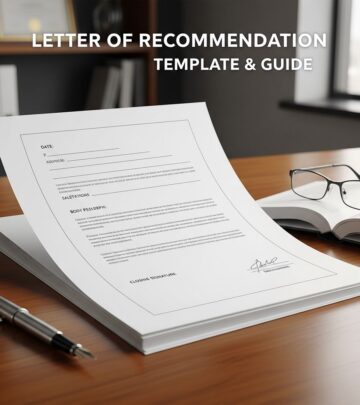
[Date]Dear [Recipient's Name or Title],I am pleased to recommend [Candidate's Name] for [Position/Program/Opportunity]. I have had the privilege of working with [him/her/them] at [Company/Organization Name] for [X years] in my role as [Your Job Title]. During this time, I have witnessed firsthand their exceptional abilities and contributions.[Candidate's Name] demonstrates remarkable [skill/quality] as evidenced by [specific example]. For instance, [describe concrete achievement with measurable results]. This accomplishment exemplifies their commitment to excellence and ability to [relevant skill].Beyond their technical abilities, [Candidate's Name] possesses [relevant soft skills]. They are an excellent communicator, a collaborative team member, and someone who consistently [positive attribute]. These qualities, combined with their expertise in [relevant area], make them an ideal candidate for [position/program].I am confident that [Candidate's Name] will excel in [position/opportunity] and make valuable contributions. I enthusiastically recommend them without reservation. Should you wish to discuss this recommendation further, I would be delighted to speak with you.Sincerely,[Your Name][Your Title][Company/Organization][Email Address][Phone Number]Best Practices for Writing Reference Letters
Following these guidelines helps ensure your reference letter is effective and professionally appropriate.
Be Specific and Authentic
Vague praise doesn’t help anyone. Use concrete examples that demonstrate the applicant’s abilities. Rather than generic statements, provide evidence of their competence through specific situations you’ve observed.
Tailor to the Opportunity
If you know what position or program the applicant is pursuing, highlight skills and experiences relevant to that opportunity. A letter for a leadership role differs from one for a technical position. Research the role requirements and ensure your examples align with those needs.
Keep It Factual and Documented
Only include information you can verify through personal knowledge or professional records. Don’t guess or speculate about personal characteristics you haven’t directly observed. Be able to document everything you include in your letter. This approach protects both your credibility and the applicant.
Maintain Professional Tone
Reference letters should be formal and professional in tone. Avoid overly casual language, humor, or personal anecdotes that don’t relate to professional or academic performance.
Keep It Concise
One page is typically sufficient. Aim for 300-400 words organized in 3-5 paragraphs. Hiring managers and admissions committees receive many reference letters; they appreciate brevity paired with substance.
Respond Promptly
When someone asks for a reference letter, try to provide it within a reasonable timeframe. Most applications have deadlines, and delays can jeopardize an applicant’s chances.
Common Mistakes to Avoid
Being Too Vague
Statements like “They are a great employee” lack impact. Always back claims with specific examples and measurable results.
Writing Generically
A reference letter shouldn’t sound like it could apply to anyone. Personalize it with details specific to this individual and opportunity.
Exceeding One Page
Lengthy letters may not be read in their entirety. Stick to the essential information and keep your letter focused.
Neglecting Contact Information
Always include multiple ways to reach you. This shows you stand behind your recommendation and are available for follow-up questions.
Making Unsubstantiated Claims
Only include information you can personally verify. Avoid speculation about aspects of someone’s character or abilities you haven’t directly observed.
Frequently Asked Questions
Q: How long should a reference letter be?
A: A reference letter should typically be no longer than one page, containing approximately 300 to 400 words organized in three to five paragraphs. This length allows you to provide substantive information without overwhelming the reader.
Q: Can I write a reference letter for someone I’ve only worked with briefly?
A: It’s possible, but ideally you should have meaningful professional or academic interaction with the person. If your experience is limited, be honest about the duration and nature of your relationship while focusing on what you have directly observed.
Q: Should I ask to see the job description before writing?
A: Yes, absolutely. Ask the applicant for details about the position or program they’re applying for so you can highlight relevant skills and experiences. This helps you tailor your letter to their specific needs.
Q: What if I don’t feel comfortable writing a reference letter?
A: It’s better to decline politely than to write an insincere letter. You might say something like, “I appreciate you thinking of me, but I don’t feel I have sufficient knowledge of your work to write a strong reference letter.” It’s important that reference letters be authentic.
Q: Can I use the same reference letter for multiple applications?
A: While you can use the same basic template, it’s stronger to customize each letter slightly to address the specific role or program. At minimum, ensure all details remain accurate for each application.
Q: Should I offer to update my contact information with the applicant?
A: Yes, providing current contact information in your letter ensures the recipient can reach you if needed. Consider sharing a scheduling link or direct contact methods to facilitate communication.
Conclusion
Writing a reference letter is an important responsibility that can genuinely impact someone’s career or academic trajectory. By following this guide—preparing thoroughly, understanding the necessary components, tailoring your letter to the specific opportunity, and backing your statements with concrete examples—you can craft a reference letter that truly supports your colleague or mentee. Remember that authenticity and specificity are your greatest tools. A well-written reference letter reflects positively on both the applicant and on you as someone whose professional judgment can be trusted.
References
- Example of a Reference Letter & How to Write One — YouCanBook.me. 2025. https://youcanbook.me/blog/example-of-a-reference-letter
- Writing a Reference Letter: Template and Example — Indeed Career Advice. June 9, 2025. https://www.indeed.com/career-advice/resumes-cover-letters/references-letter-template
- How to Write a Reference Letter, With Examples — Grammarly Blog. 2025. https://www.grammarly.com/blog/business-writing/reference-letter/
- How to Write a Reference Letter — NACE (National Association of Colleges and Employers). 2025. https://www.naceweb.org/public-policy-and-legal/legal-issues/how-to-write-a-reference-letter/
Similar Articles








Read full bio of medha deb