How to Use the Holidays to Teach Kids About Money
Turn holiday excitement into lifelong financial lessons by teaching kids budgeting, saving, and smart spending during festive times.

The holiday season bursts with excitement, gifts, and family traditions, creating the perfect backdrop for teaching children about money management. Rather than letting spending spiral, use this time to introduce concepts like budgeting, saving, needs versus wants, and the value of giving. These lessons, embedded in festive activities, help kids develop financial literacy early, setting them up for lifelong smart habits.
Financial education during holidays isn’t about restriction; it’s about empowerment. Kids learn through hands-on experiences like creating budgets or choosing gifts within limits, making abstract concepts tangible and fun. Parents model real-world decision-making, from comparing prices to prioritizing expenses, fostering confidence and responsibility.
1. Make a Holiday Budget Together
Start with the basics: involve kids in crafting a family holiday budget. Sit down before shopping begins and outline total spending for gifts, decorations, food, and activities. Break it into categories, assigning dollar amounts to each. For younger children, use visual aids like pie charts or jars labeled with categories.
This exercise teaches planning and trade-offs. If gifts exceed the allocation, discuss adjustments—perhaps fewer items or cheaper alternatives. Show receipts and totals to demonstrate how small decisions add up. According to financial educators, early budgeting exposure helps children grasp opportunity costs, where choosing one expense means forgoing another.
- List expenses: Gifts for family (e.g., $100), decorations ($30), baking supplies ($20).
- Track spending: Use a shared spreadsheet or app for real-time updates.
- Review post-holidays: Compare planned vs. actual to refine future budgets.
For teens, introduce spreadsheets or apps like Greenlight, which offer kid-friendly budgeting tools with parental controls.
2. Teach the Difference Between Wants and Needs
Holidays amplify desires, making it ideal to distinguish wants (toys, gadgets) from needs (essentials like food or clothing). During wish-list creation, categorize items: needs first, then wants. Explain why needs take priority, using holiday meal planning as an example—groceries are needs, extra desserts are wants.
Role-play shopping trips: Give a fixed amount and have kids choose between a ‘need’ like wrapping paper and a ‘want’ like candy. This builds decision-making skills. Research from financial institutions shows kids who learn this early avoid impulse buys in adulthood.
| Category | Examples | Why Prioritize? |
|---|---|---|
| Needs | Holiday meal ingredients, gift wrap | Essential for celebrations |
| Wants | Extra toys, fancy decorations | Nice-to-have, but cuttable |
3. Set Saving Goals With Holiday Money Jars
Receiving cash gifts? Teach allocation: divide into spend, save, and give jars (50/30/20 rule adapted for kids). Label clear jars for visibility—watching savings grow motivates. Set specific goals, like saving for a post-holiday toy or summer camp.
For example, with $20 from Grandma: $10 save, $6 spend on sibling gifts, $4 donate. Open a kid’s savings account to make it real; many credit unions offer no-fee options with growth tracking. This instills delayed gratification, a key to long-term financial health.
- Short-term goal: New bike by spring.
- Long-term goal: College fund starter.
- Fun twist: Match their savings like a holiday bonus.
4. Let Them Shop for Gifts With a Fixed Budget
Hand over a set amount (e.g., $25) for buying gifts for relatives. Research online or visit stores together, comparing prices and reading reviews. This teaches value assessment—why a $10 thoughtful item beats a $15 impulse buy.
Encourage creativity: homemade cards or baked goods count toward budget if materials fit. Post-shopping, discuss: Did it fit? Was the recipient happy? This hands-on approach makes money’s worth concrete.
5. Play Money Games Like Monopoly During Breaks
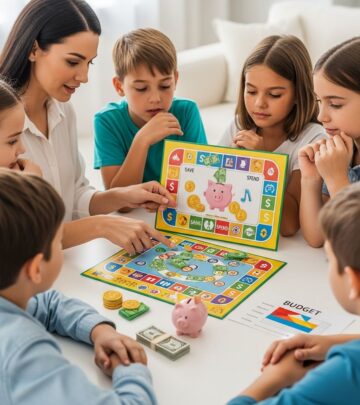
Board games turn learning into play. Monopoly teaches property investment, rents, and bankruptcy risks; The Game of Life covers careers, expenses, and family costs. Play holiday-themed versions, pausing to relate to real life: “Like budgeting for gifts!”
Apps and online simulators add modern flair. These games subtly reinforce budgeting, saving, and strategy without lectures.
6. Use Real-Life Shopping as Teachable Moments
Grocery runs become lessons: Compare generic vs. brand-name items, calculate unit prices, spot sales. Ask: “Is this a need or want? Can we skip it?” Use coupons or apps to show savings strategies.
For older kids, discuss credit card statements (anonymized) to reveal interest costs on holiday debt. Emphasize cash over debt for purchases.
7. Discuss Giving and Charity
Holidays embody generosity—teach by donating together. Allocate budget for charity; kids choose causes (e.g., toy drive, food bank). Explain impact: “Your $5 feeds a family dinner.”
Volunteer as a family, discussing how money enables community help. This fosters empathy alongside financial savvy.
8. Share Your Financial Stories and Mistakes
Be transparent: Share budgeting successes, like saving for vacations, and mistakes, such as overspending. Relate to holidays: “I once bought too many gifts and regretted it.” Kids see money management as human, not perfect.
Use age-appropriate details; for teens, introduce investing basics via holiday stock gifting discussions.
9. Create a Wish List and Prioritize
Have kids rank wishes by importance and cost. Cut the bottom to fit budget. This teaches prioritization—maybe skip three small toys for one big goal.
Visual lists with photos enhance engagement.
10. Review and Reflect After the Holidays
Post-holidays, review: What went well? Overspent areas? Celebrate sticking to budget with a family treat. This reflection solidifies lessons.
Frequently Asked Questions (FAQs)
What age is best to start teaching money during holidays?
Begin at 5-6 with simple jars; expand to budgets by 8-10. Tailor to maturity.
How much allowance for holiday gifting?
$20-50 based on age/family budget. Tie to chores for earning value.
What if kids overspend their budget?
Use as lesson: No bailouts, discuss adjustments. Builds accountability.
Are apps safe for kids’ money learning?
Yes, parent-controlled like Greenlight offer secure spending/saving practice.
How to handle questions about Santa and money?
Focus on magic of giving; transition to real budgeting as they age.
By weaving these strategies into holidays, parents gift enduring financial wisdom. Kids emerge savvy, confident, ready for life’s costs beyond tinsel.
References
- The Gift of Financial Literacy: Teaching Kids about Money During the Holidays — Firefighters Credit Union. 2023. https://myfirecu.org/the-gift-of-financial-literacy-teaching-kids-about-money-during-the-holidays/
- Fostering Financial Wisdom in Children During Holidays — Ohio Department of Commerce. 2023. https://com.ohio.gov/divisions-and-programs/financial-institutions/consumers/fostering-financial-wisdom-in-children-during-holidays
- Teaching Kids About What Things Cost During the Holidays — Credit Human. 2023. https://www.credithuman.com/building-slack/teaching-kids-what-things-cost-during-the-holidays
- Four Holiday Spending Tips for Kids: Teaching Smart Habits Early — Metro Credit Union. 2023. https://www.metrocu.org/blog/four-holiday-spending-tips-for-kids-teaching-smart-habits-early
- Teaching Kids Wise Budgeting Habits Just in Time for the Holidays — The First National Bank of Texas. 2023. https://www.tfnbtx.com/teaching-kids-wise-budgeting-habits-just-in-time-for-the-holidays/
Similar Articles








Read full bio of medha deb