Health Savings Account: 8 Smart Ways To Use Yours In 2025
Unlock the full potential of your HSA: Save taxes, invest wisely, and plan for healthcare costs with these proven strategies.

A Health Savings Account (HSA) is a powerful financial tool for individuals enrolled in high-deductible health plans (HDHPs), offering triple tax advantages: tax-deductible contributions, tax-free growth, and tax-free withdrawals for qualified medical expenses. Unlike flexible spending accounts (FSAs), HSA funds roll over year to year, allowing savings to accumulate and be invested for long-term growth.
This guide explores eligibility requirements, contribution rules, qualified uses, investment strategies, and advanced applications to help you maximize your HSA’s potential for current healthcare needs and future retirement planning.
What Is a Health Savings Account?
An HSA enables holders of HDHPs to save pre-tax dollars for medical costs. You can contribute up to IRS annual limits, with funds available for immediate use or investment. Earnings grow tax-free, and unused balances carry over indefinitely, making HSAs superior to use-it-or-lose-it FSAs.
Key benefits include covering deductibles, copays, prescriptions, dental, vision, and more. After age 65, non-medical withdrawals are penalty-free (taxed as income), positioning HSAs as a retirement supplement akin to a traditional IRA.
HSA Eligibility Requirements
To open and contribute to an HSA, you must meet strict IRS criteria:
- Enrolled in an HDHP: Minimum deductible of $1,650 (self-only) or $3,300 (family) for 2025, with out-of-pocket maximums not exceeding $8,300 (self) or $16,600 (family).
- No disqualifying coverage: Cannot have non-HDHP insurance, Medicare, TRICARE, or be claimed as a dependent. Permitted exceptions include dental, vision, disability, and long-term care insurance.
- Age considerations: No minimum age, but minors typically need parental setup. Age 55+ qualifies for $1,000 catch-up contributions.
Verify HDHP status via IRS Publication 969 or your plan documents. Losing eligibility (e.g., switching to non-HDHP) stops contributions but preserves existing funds.
HSA Contribution Limits and Rules
The IRS sets annual limits, prorated for partial-year eligibility:
| Year | Self-Only | Family | Catch-Up (55+) |
|---|---|---|---|
| 2024 | $4,150 | $8,300 | $1,000 |
| 2025 | $4,300 | $8,550 | $1,000 |
Contributions from you, employers, or family count toward the total. Payroll deductions offer seamless tax exclusion. Excess contributions incur 6% penalty unless withdrawn by tax deadline. Limits adjust for inflation; always check IRS.gov.
Qualified Medical Expenses
HSA funds cover IRS-approved expenses under Section 213(d), including:
- Doctor visits, hospital stays, surgeries.
- Prescriptions, insulin, certain OTC drugs (e.g., pain relievers, bandages).
- Dental (cleanings, orthodontics), vision (exams, glasses).
- Mental health therapy, acupuncture, chiropractic care.
- COBRA premiums, long-term care, Medicare premiums (Parts B/D post-65).
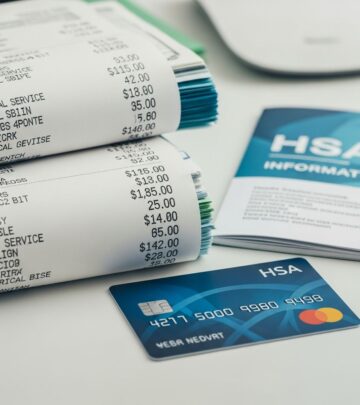
Non-qualified use before 65 triggers income tax + 20% penalty. Retain receipts for IRS audits (3-6 years). Publication 502 lists full details.
8 Ways to Use Your Health Savings Account
HSAs extend beyond basic medical reimbursements. Here are strategic applications:
- Pay Current Medical Bills: Reimburse deductibles, copays, prescriptions immediately or later.
- Build Emergency Fund: Rollover unused funds for unexpected health events.
- Increase Spending Power: Tax deductions effectively boost funds; pair with high-yield accounts.
- Invest for Growth: Once balance hits $1,000-$2,000 (per provider), invest in stocks, bonds, ETFs like a 401(k).
- Save for Retirement Healthcare: Medicare costs average $165,000 (individual) lifetime; HSAs cover gaps tax-free.
- Family Protection: Covers dependents’ expenses; employer contributions enhance family coverage.
- Post-65 Flexibility: Non-medical withdrawals penalty-free (taxed), mirroring traditional IRA.
- Estate Planning: Beneficiaries inherit tax-free for medical use; otherwise, taxed as income.
Investing Your HSA Funds
Many providers (e.g., Fidelity, HSA Bank) offer investment options post-cash threshold. Strategies include:
- Conservative: High-yield savings, CDs for liquidity.
- Balanced: Target-date funds auto-adjust risk.
- Aggressive: Index funds, stocks for long-term growth (historical 7-10% returns).
Avoid early withdrawals to maximize compounding. Rebalance annually; consider fees <0.5%. Example: $4,300 annual contribution at 7% over 30 years grows to ~$500,000.
HSA vs. Other Accounts
| Feature | HSA | FSA | IRA |
|---|---|---|---|
| Tax on Contributions | Deductible | Pre-tax | Deductible (traditional) |
| Tax on Growth | Free | Free | Deferred |
| Tax on Withdrawals (Qualified) | Free | Free | Taxed |
| Rollover | Yes | No (use-it-lose-it) | Yes |
| Investment Options | Yes | Limited | Extensive |
HSAs uniquely combine healthcare focus with retirement utility.
Common Mistakes to Avoid
- Contributing while Medicare-enrolled (stops eligibility).
- Non-qualified spending pre-65 (20% penalty).
- Ignoring investment thresholds, leaving cash uninvested.
- Forgetting receipts for reimbursements.
- Missing catch-up contributions if 55+.
Frequently Asked Questions
Can I use my HSA for non-medical expenses?
Before 65: No, incurs tax + 20% penalty. After 65: Yes, taxed as income, no penalty.
What happens if I change jobs or health plans?
HSA remains yours; new employer may contribute to it. Non-HDHP ends contributions but not access.
Can family members contribute to my HSA?
Yes, counts toward your limit.
Is there a required minimum balance to invest?
Varies by provider; typically $1,000-$2,000.
Can I roll over an FSA to an HSA?
Limited: Up to $640 if switching to HDHP.
References
- Health Savings Account (HSA) Rules and Requirements — SmartAsset. 2024. https://smartasset.com/checking-account/health-savings-account-requirements
- How to Qualify to Open a Health Savings Account (HSA) — SmartAsset. 2024. https://smartasset.com/financial-advisor/how-to-qualify-to-open-a-health-savings-account-hsa
- How to Open an HSA – Guide — SmartAsset. 2024. https://smartasset.com/insurance/how-to-open-an-hsa-guide
- What Is a Health Savings Account (HSA) and Who Should Get One? — SmartAsset. 2024. https://smartasset.com/checking-account/what-is-an-hsa
- 8 Ways to Use Your Health Savings Account — SmartAsset. 2024. https://smartasset.com/personal-finance/how-to-use-health-savings-account
Similar Articles








Read full bio of medha deb