How to Use Budgeting Skills to Improve Your Time Management
Discover how your money budgeting expertise can transform your chaotic schedule into a well-managed, stress-free day.
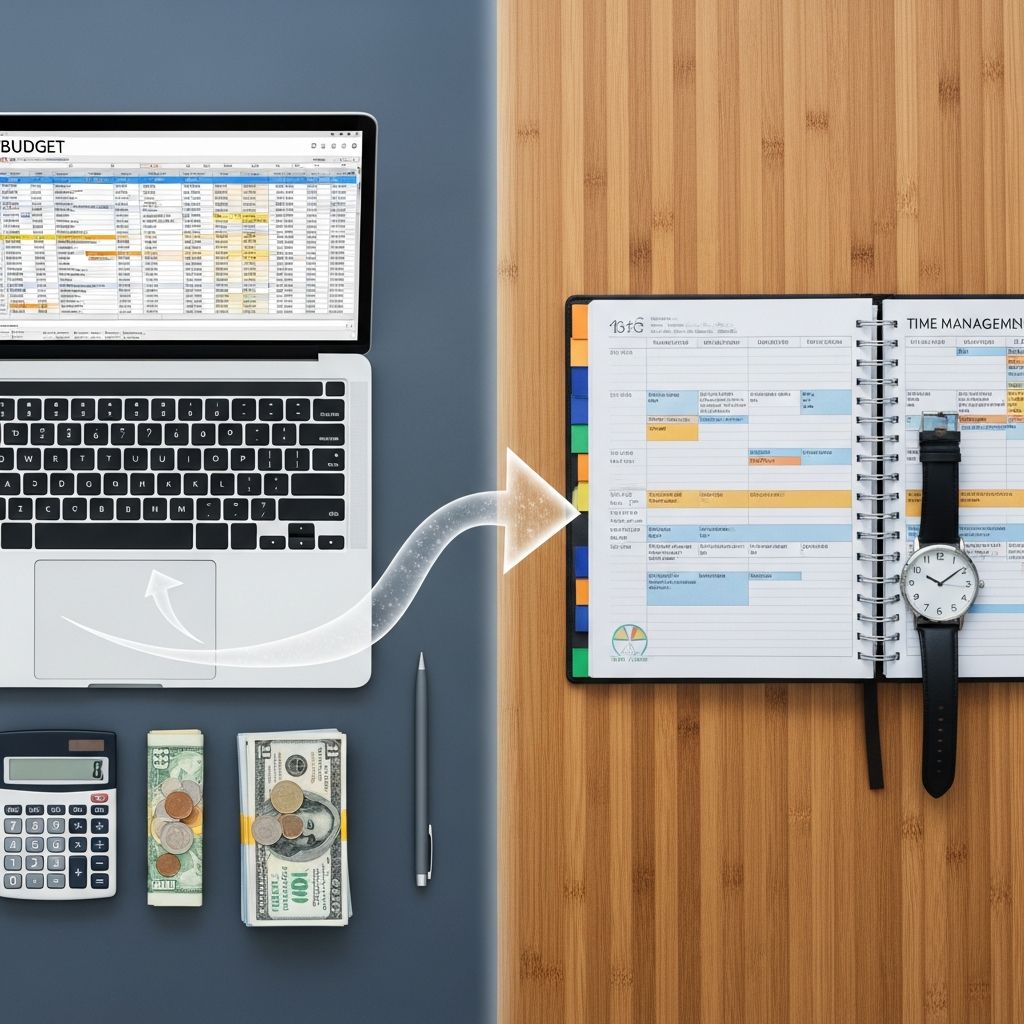
Mastering time management can feel as daunting as sticking to a tight budget, but if you’re already skilled at managing your finances, you possess the tools to conquer your schedule too. By treating time as a finite resource like money, you can eliminate procrastination, reduce stress from looming deadlines, and achieve a sense of control over your day.
Back when studying in college, many students faced the cycle of requesting deadline extensions, only to experience the same anxiety the next day. As a freelancer, this pattern becomes all too familiar: the temporary relief of delay followed by intensified dread. The key insight is that budgeting skills—tracking, prioritizing, and automating—directly translate to time management, helping you stay ahead of obligations and feel perpetually prepared.
Pay Yourself First
In personal finance, “pay yourself first” means allocating savings before spending on wants, ensuring long-term security. Applying this to time involves dedicating the first 15 minutes of your day to planning, reviewing your calendar, and prioritizing tasks before diving into urgent demands.
This practice might seem indulgent when emails pile up or meetings loom, but skipping it leaves you reactive, much like neglecting savings leads to financial surprises. Just as automatic transfers protect against emergencies, morning planning equips you for predictable events like recurring meetings or deadlines, preventing blindsides.
- Review your calendar: Scan for today’s commitments, tomorrow’s prep needs, and weekly overviews.
- Prioritize ruthlessly: Identify top three must-dos to focus energy effectively.
- Buffer for surprises: Allocate slots for unexpected interruptions, mirroring an emergency fund.
Commit to this ritual daily, even on hectic mornings. Over time, it builds momentum, reducing end-of-day scrambles and fostering proactive control.
Automate Recurring Tasks
Financial automation—bill pays, transfers, investments—frees mental energy and ensures consistency. Similarly, automating time tasks minimizes decision fatigue and guarantees execution without constant reminders.
Identify repetitive activities draining your bandwidth: email responses, report submissions, or weekly reviews. Tools like email templates, calendar recurring events, and app reminders turn these into background processes.
For example, if you frequently reply to similar client inquiries, craft templates with placeholders for personalization. Set calendar alerts for receipt submissions: one week out to gather, two days prior to organize, and due-date nudges. This mirrors auto-payments preventing late fees.
| Recurring Task | Automation Tool | Benefit |
|---|---|---|
| Email responses | Templates in Gmail/Outlook | Cuts response time by 70% |
| Receipt tracking | Calendar reminders + apps like Expensify | Eliminates reimbursement delays |
| Weekly reports | Recurring Google Calendar event | Builds habit without willpower |
| Backup files | Cloud sync (Dropbox/Google Drive) | Prevents data loss panics |
Automation creates effortless systems, allowing focus on high-value work. Review quarterly to refine, just as you audit financial automations.
Track Your Time
Without expense tracking, budgets fail because leaks go unnoticed. Time management demands the same: log activities to reveal true spenders like social media scrolls or unproductive meetings.
Many feel perpetually busy yet accomplish little, shocked to discover hours lost to distractions. Tracking provides clarity, enabling cuts to low-priority drains and reallocations to goals.
Options include apps like Toggl for precise timers or RescueTime for passive monitoring. Prefer paper? A simple journal entry every hour deters waste—the act of logging prompts better choices, akin to scrutinizing impulse buys.
- Log for one week: Note start/end times and activities without judgment.
- Categorize: Work, personal, leisure, distractions—calculate percentages.
- Analyze leaks: Identify top three thieves (e.g., Twitter, TV) and set limits.
- Adjust budget: Reallocate saved time to priorities like exercise or family.
Weekly reviews prevent drift. Tools like a time budget—adapting 50/30/20 rule (50% fixed obligations, 30% discretionary, 20% self-improvement)—optimize allocation.
Frequently Asked Questions (FAQs)
Q: How much time should I spend planning each morning?
A: Aim for 15 minutes—enough to review priorities without derailing your day. Consistency trumps duration.
Q: What if tracking feels overwhelming?
A: Start with paper or one app for a week. Focus on patterns, not perfection; the insight gained justifies the effort.
Q: Can I create a time budget like a money one?
A: Yes—log usage, categorize fixed (sleep, work) vs. discretionary, allocate via envelopes or percentages for balance.
Q: How do I handle unplanned interruptions?
A: Build buffers (10-20% of day) and triage: defer non-urgents, delegate where possible.
Q: What apps best support these skills?
A: Toggl/RescueTime for tracking, Google Calendar for automation, templates in email clients.
Building a Comprehensive Time Budget
Expand tracking into a full time budget: inventory a week, classify fixed (commutes, meals) vs. discretionary (social media, hobbies), then allocate. Use envelope method—assign daily hours per category on paper or spreadsheet.
Fixed time dominates: mornings routines (1 hour), work (8 hours), sleep (8 hours). Discretionary fills gaps—cap social scrolling at 30 minutes via bundled sessions. Adjust monthly for life changes, ensuring 20% for growth like learning or exercise.
Overcoming Common Pitfalls
Procrastination mirrors overspending—both yield short-term pleasure, long-term pain. Counter with micro-commitments: five-minute starts on tasks. Pair with accountability, like sharing goals with peers.
- Avoid multitasking: It reduces efficiency by 40%, per studies—focus single-threaded.
- Batch similar tasks: Emails thrice daily, not constantly.
- End days with reviews: What worked? Tomorrow’s prep?
Long-Term Benefits
Consistent application yields freedom: less stress, more achievement, balanced life. Financial discipline proves you can master scarcity; time is no different. Track progress monthly—celebrate wins like reclaimed hours for passions.
Staying vigilant prevents creep, just as budgets require upkeep. This synergy empowers thriving amid demands.
References
- How to Use Budgeting Skills to Improve Your Time Management — Wise Bread. 2015-approx. https://www.wisebread.com/how-to-use-budgeting-skills-to-improve-your-time-management
- Why You Need a Time Budget — and How to Create It — Wise Bread. 2015-approx. https://www.wisebread.com/why-you-need-a-time-budget-and-how-to-create-it
- Time Use Survey — U.S. Bureau of Labor Statistics (official .gov). 2024-10-01. https://www.bls.gov/tus/
- Productivity and Time Management — Harvard Business Review (peer-reviewed insights). 2023-05-15. https://hbr.org/topic/subject/productivity
- American Time Use Survey Summary — U.S. Bureau of Labor Statistics (.gov primary). 2025-06-24. https://www.bls.gov/news.release/atus.nr0.htm
Similar Articles








Read full bio of medha deb