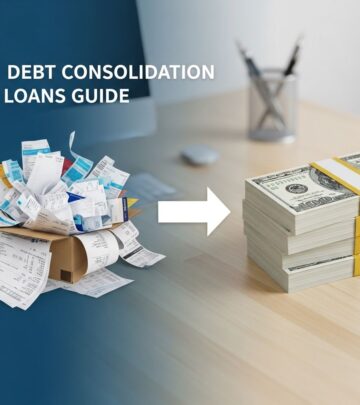
How to Use a Personal Loan for Debt Consolidation
Simplify payments and save on interest: Master debt consolidation with personal loans for financial freedom.

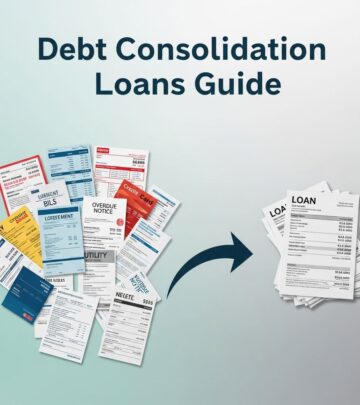
Debt consolidation with a personal loan combines multiple high-interest debts, such as credit cards, into a single loan with a lower interest rate and fixed monthly payment. This strategy simplifies budgeting, reduces total interest costs, and provides a clear path to becoming debt-free.
What Is Debt Consolidation?
Debt consolidation involves taking out a new loan to pay off existing debts, replacing several payments with one manageable installment. Personal loans are ideal for this because they offer fixed rates typically lower than credit card averages of 21% or more, often ranging from 6% to 36% based on creditworthiness.
Unlike balance transfers or debt management plans, personal loans provide a definitive repayment term, usually 2-5 years, eliminating revolving debt cycles. This approach works best for unsecured debts like credit cards, payday loans, or medical bills, not mortgages or auto loans with lower rates.
Benefits of Using a Personal Loan for Debt Consolidation
Personal loans for consolidation offer multiple advantages that accelerate financial recovery.
- Lower Interest Rates: Replace 20%+ credit card rates with personal loan APRs often under 12%, saving thousands in interest. For example, consolidating $20,000 at 21.7% average to 10.5% cut interest by $5,200 over three years.
- Single Payment: Streamline from multiple due dates to one, reducing late fees and stress. Maria consolidated four cards into one $396 monthly payment, fully paying principal faster.
- Fixed Terms: Know your payoff date upfront, unlike open-ended credit cards. Terms of 24-60 months provide predictability.
- Credit Score Improvement: Paying off revolving debt lowers utilization ratio, boosting scores. Closing old accounts after payoff prevents new charges.
- Debt-Free Timeline: Structured payments create momentum, with strategies like snowball or avalanche speeding results.
Drawbacks and Risks to Consider
While effective, debt consolidation isn’t risk-free. Extending terms can increase total interest despite lower rates, and qualifying requires good credit (typically 670+ FICO).
- Missing payments harms credit more than with multiple creditors.
- Temptation to rack up old cards post-payoff leads to worse debt.
- Fees like origination (1-8%) add costs.
- Not ideal for all debts; low-rate student loans (4%) shouldn’t consolidate into 9% loans.
Success demands discipline: Close paid accounts and build an emergency fund to avoid relapse.
Step-by-Step Guide: How to Consolidate Debt with a Personal Loan
Follow these proven steps to execute consolidation effectively.
Step 1: Assess Your Current Debt
List all debts in a spreadsheet: creditor, balance, interest rate, minimum payment, due date. Total balances determine loan amount; sum payments reveal affordable new installment.
| Debt | Balance | Rate | Min Payment |
|---|---|---|---|
| Visa Card | $5,000 | 22% | $150 |
| Mastercard | $3,000 | 19% | $90 |
| Store Card | $2,000 | 28% | $80 |
| Total | $10,000 | 22.3% | $320 |
This snapshot reveals $10,000 to borrow, targeting $320+ monthly affordability.
Step 2: Check Your Credit and Calculate Needs
Review free credit reports for errors. Good credit secures best rates; improve by paying down utilization first. Use calculators to model loans: $10,000 at 10% over 36 months = $332/month, saving vs. originals.
Step 3: Shop and Prequalify for Lenders
Compare 3-5 lenders: banks, credit unions, online (e.g., fixed-rate personal loans). Prequalify without hard inquiries to see rates. Prioritize direct-pay options where lenders disburse to creditors.
- Credit unions often offer lowest rates for members.
- Online lenders approve faster, up to $50,000.
Step 4: Apply and Get Funded
Submit docs: ID, income proof (pay stubs, tax returns), bank statements. Approval takes 1-7 days. Opt for direct payment; verify zero balances post-funding.
Step 5: Repay Strategically and Track Progress
Set autopay for first payment within 30 days. Create payoff plan.
Creating a Debt Payoff Plan After Consolidation
A structured plan maximizes savings and motivation.
Choose a Strategy
- Snowball: Smallest balance first for wins.
- Avalanche: Highest rate first to save most.
Set Up Tracking
Use apps, spreadsheets: Update balances monthly, celebrate milestones like $5,000 paid.
Real-Life Example: Maria’s Success Story
Maria had $12,000 across four cards at 21.7% average, paying minimums totaling $420/month with no end. She got a $12,000 personal loan at 10.5%, new payment $396 for 36 months.
- Simplified to one payment.
- Paid principal aggressively.
- Debt-free in 3 years, saving $5,200.
Alternatives to Personal Loan Consolidation
If ineligible, consider:
| Option | Pros | Cons | Best For |
|---|---|---|---|
| Balance Transfer Card | 0% intro APR | 3-5% fee, short promo | <$10k debt |
| Debt Management Plan | Negotiated rates | Fees, closes cards | Poor credit |
| Home Equity Loan | Low rates | Risks home | Homeowners |
Frequently Asked Questions (FAQs)
Can I consolidate just some debts?
Yes, target high-interest ones only; keep low-rate debts separate like 4% student loans.
How much can I borrow?
Typically $1,000-$50,000, based on income and credit.
Will consolidation hurt my credit?
Short-term dip from inquiry and utilization shift, but long-term gains from payoff.
What if I have bad credit?
Options exist at higher rates; improve score first or try credit unions.
Should I close old accounts?
Yes, after payoff to prevent reuse, but weigh credit age impact.
References
- How to Become Debt-Free Fast: 2026 Loan Consolidation Guide — PrimeWay FCU. 2026. https://www.primewayfcu.com/blog/loan-consolidation-guide
- How to Get a Debt Consolidation Loan in 5 Steps — NerdWallet. 2025-01-12. https://www.nerdwallet.com/personal-loans/learn/how-to-get-a-debt-consolidation-loan
- Consolidating Debt Using Personal Loans — Freedom CU. 2024. https://freedomcu.org/newsletter/consolidating-debt-with-personal-loans/
- How to Get a Debt Consolidation Loan — Experian. 2025. https://www.experian.com/blogs/ask-experian/how-to-get-a-debt-consolidation-loan/
- Debt Consolidation Guide: How It Works [January 2026] — Debt.org. 2026-01. https://www.debt.org/consolidation/
- Debt Consolidation Guide | Reduce Your Debt — Mid Penn Bank. 2025. https://midpennbank.com/resources/debt-consolidation/
Similar Articles








Read full bio of Sneha Tete