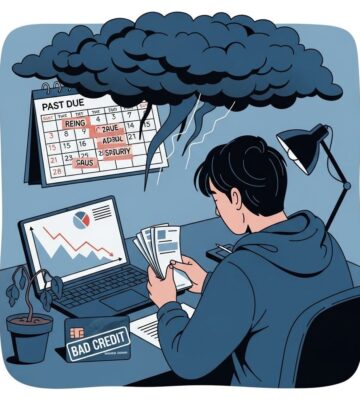
How to Use a Credit Card for an Emergency Without Drowning in Debt
Learn smart strategies to handle emergencies with credit cards while avoiding high-interest debt traps and building long-term financial security.

Financial emergencies like a sudden car repair, medical bill, or home appliance failure can strike without warning. While an
emergency fund
is the ideal solution, many people lack sufficient savings. In such cases, a credit card can serve as a temporary bridge, but its high interest rates—averaging around 16.7% as of recent data—can turn a one-time expense into long-term debt if not managed properly. This article outlines proven strategies to use credit cards for emergencies while minimizing costs and avoiding the debt spiral.Using credit for crises isn’t inherently bad if repaid swiftly. The key is preparation, smart card selection, rapid payoff plans, and preventive measures like building savings. By following these steps, you can leverage credit’s convenience without the drowning debt.
Pay Back That Emergency Spending ASAP
The golden rule of emergency credit use:
pay off the balance immediately
to dodge compounding interest. Credit card debt grows rapidly; even a $1,000 emergency charge at 16.7% APR could add over $167 in interest annually if unpaid.- Act before the bill cycles: If the emergency resolves quickly (e.g., a freelance gig covers it), charge knowing you’ll clear it by due date. This avoids interest entirely.
- Prioritize over other debts: Redirect payments from low-interest debts like mortgages (often under 4-7%) to your card. High-interest debt costs more, accelerating financial recovery.
- Cut non-essentials ruthlessly: Skip dining out, movies, or trips. Channel savings—say, $50 weekly from coffee runs—directly to the balance. Track via apps to see progress.
Real-world math: A $2,000 emergency at 18% APR, paid at minimums, takes 30+ years and costs $6,000+ in interest. Aggressive payments (extra $200/month) clear it in 11 months for under $300 interest. Discipline here is your lifeline.
Use the Card With the Lowest Interest Rates
Not all cards are equal in crises. Always charge to your
lowest-APR card
, especially for large sums you can’t pay off instantly. Higher rates amplify unpaid balances exponentially.| Card Type | Avg. APR (2023-2025) | Best For Emergencies? |
|---|---|---|
| Standard Rewards Card | 16-25% | No—high rates |
| Low-Interest Card | 10-15% | Yes—slower debt growth |
| 0% Intro APR Card | 0% (12-21 mos) | Ideal if repayable in promo period |
Review statements or apps for rates. If no low-rate option, shop pre-emergency: Cards like those from credit unions often beat big banks. Pro tip: Maintain good credit (700+ FICO) for approvals.
Create a Repayment Plan
A vague “pay it off soon” mindset fails. Craft a
concrete repayment plan
post-charge.- Assess total debt: Include emergency spend plus any prior balance.
- Calculate affordable payments: List income/expenses. Aim for debt covering 20-30% of take-home pay.
- Set aggressive timeline: Target payoff in 3-12 months. Use calculators: For $1,500 at 15% APR, $200/month clears it in 9 months.
- Automate payments: Set recurring transfers above minimums to avoid misses.
- Track weekly: Adjust if income dips; side hustles like ridesharing can boost funds.
Redirect windfalls (tax refunds, bonuses) fully to debt. Celebrate milestones, like 50% paid, to stay motivated.
Consider a Balance Transfer
For good-credit holders, a
0% intro APR balance transfer card
buys time interest-free, up to 21 months on select offers. Transfer emergency balance to slash costs.- Pros: No interest during promo; pay principal only. E.g., $3,000 transfer at 0% for 18 months = $167/month payments, interest-free.
- Cons: 3-5% transfer fee ($90-150); must use new issuer; post-promo rates 20%+. Fail to pay off? Debt worsens.
- Best picks: Cards waiving fees or long promos. Check eligibility: 670+ FICO typically qualifies.
Strategy: Transfer only what you can repay in promo window. Combine with cuts for turbo payoff.
Build an Emergency Fund
Prevent recurrence:
Build an emergency fund
covering 3-6 months’ expenses (6-12 ideal for singles/job risks). No fund forces credit reliance.Steps to start:
- Begin small: $20-100/paycheck into high-yield savings (4-5% APY current rates).
- Automate: Direct deposit splits to savings first.
- Grow steadily: Post-debt, ramp up. $500/month builds $6,000 in a year.
- Replenish post-use: Treat as debt repayment priority.
Size guide: Calculate essentials (rent, food, utilities) x 3-6. E.g., $4,000/month needs = $12,000-$24,000 fund. Use for true emergencies only.
Frequently Asked Questions (FAQs)
Q: Is using a credit card ever okay for emergencies?
A: Yes, as a last resort if repayable quickly. Prioritize low-APR cards and immediate payoff to avoid interest.
Q: How fast should I repay emergency credit debt?
A: ASAP—ideally within 1-3 months. Extra payments over minimums prevent interest snowball.
Q: What’s the best balance transfer strategy?
A: Choose 0% APR for 18+ months, calculate payments to clear before end, factor fees. Good credit essential.
Q: How do I build an emergency fund quickly?
A: Automate small transfers ($50-200/month), cut luxuries, use windfalls. Aim for 3-6 months’ expenses.
Q: Can notifications help manage emergency credit use?
A: Yes—set alerts for high balances, utilization over 30%, or suspicious activity to stay in control.
Additional Tips for Emergency Preparedness
Beyond basics, enable card alerts for low available credit or high utilization to gauge emergency capacity. Budget crises by prioritizing essentials, avoiding payday loans. Maintain utilization under 30% for credit health.
In summary, credit cards bridge gaps but demand discipline. Swift action turns potential pitfalls into manageable hurdles, paving way for robust savings.
References
- Consumer Financial Protection Bureau: Credit Card Interest Rates and Debt Management — CFPB (U.S. Government). 2024-10-15. https://www.consumerfinance.gov/consumer-tools/credit-cards/
- Federal Reserve: Average Credit Card Rates (G.19 Report) — Federal Reserve Board. 2025-01-10. https://www.federalreserve.gov/releases/g19/current/
- Bankrate: Credit Card Balance Transfer Guide — Bankrate (NerdWallet-owned, cites Fed data). 2025-12-01. https://www.bankrate.com/credit-cards/balance-transfer/
- FTC: Building an Emergency Fund — Federal Trade Commission. 2024-05-20. https://consumer.ftc.gov/articles/building-emergency-fund
- FINRA: Managing Credit Card Debt — FINRA Investor Education Foundation. 2025-03-15. https://www.finra.org/investors/credit-card-debt
Similar Articles








Read full bio of medha deb