How To Turn Groceries Into Gasoline: 6 Smart Ways To Save
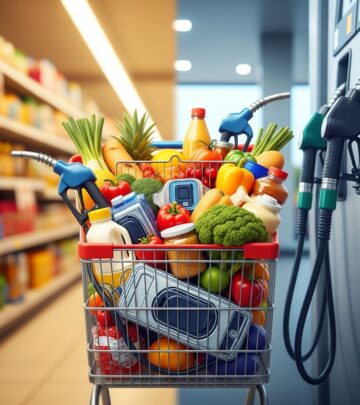
Grocery store gas discount programs can save you money on fuel if you shop wisely and maximize rewards.

Grocery store gas discount programs offer a smart way to offset rising fuel costs by linking your shopping habits to savings at the pump. These loyalty initiatives reward everyday grocery purchases with cents-off-per-gallon discounts, potentially turning routine trips to the supermarket into tangible fuel rewards. However, success depends on understanding program rules, choosing the right stores, and avoiding pitfalls that could negate savings.
With gas prices fluctuating due to global events and supply chain issues, these programs have surged in popularity. Major chains like Kroger, Safeway, and Hy-Vee provide structured rewards systems where spending thresholds unlock discounts up to $1 per gallon. This article breaks down how they work, details major programs, shares strategies for maximization, and highlights FAQs to help you fuel smarter.
What Are Grocery Gas Rewards Programs?
These programs tie grocery store loyalty cards to fuel stations, often affiliated or nearby. You earn points or credits based on qualifying purchases—typically $100–$200 in groceries yields 10–20 cents off per gallon, scaling with spending. Discounts apply at partner pumps, sometimes redeemable for up to 35 gallons.
Core mechanics include:
- Points Accumulation: Spend on eligible items (groceries, not tobacco or lottery) to build credits.
- Discount Tiers: Higher spending unlocks bigger savings, e.g., $150 spent = 10¢/gal, $200 = 20¢/gal.
- Expiration: Rewards often expire weekly, requiring timely use.
- Flexibility: Some allow household pooling or app-based tracking.
According to U.S. Department of Energy data, average household fuel spending exceeds $2,000 yearly, making even modest discounts impactful when combined with smart shopping.
Major Grocery Gas Rewards Programs
Several chains dominate with robust systems. Here’s a breakdown:
| Chain | Spending Threshold | Max Discount | Key Features |
|---|---|---|---|
| Kroger | $100–$200/week | Up to $1/gal | Plus Card; digital coupons; 150+ stations |
| Safeway | $100–$250 | Up to 73¢/gal | ABC Rewards; Vons/Albertsons siblings |
| Hy-Vee | $50–$400 | Up to $1/gal | Red Rewards; Midwest focus |
| Sheetz | Points-based | Up to 60¢/gal | App integration; convenience hybrid |
| Wawa | Credit card linked | Up to 25¢/gal | East Coast; frequent buyer bonuses |
Kroger Family of Stores: The gold standard, covering Ralphs, Fred Meyer, etc. Spend $100 on fuel points (expiring every Monday), redeem up to $1/gal on 35 gallons. Pair with sales for amplified value.
Safeway/Albertsons: Similar tiered structure; $100 gets 10¢, up to 73¢ at peak. Check for regional variations like Carrs in Alaska.
Regional Players: Hy-Vee excels in the Heartland with four tiers; Dillons and Gerbes offer Kroger-like perks in select areas.
How to Maximize Your Gas Savings
To truly convert groceries to gas, strategize:
- Shop the Loyalty Store: Live near a participating chain? Make it your primary grocer, even if pricier baseline—discounts offset.
- Hit Thresholds Efficiently: Buy bulk non-perishables (paper goods, canned items) counting toward totals without waste.
- Combine Promotions: Stack with credit card rewards (e.g., 4% grocery cashback) and store sales.
- Weekly Planning: Track expiration via apps; fill up Sunday/Monday.
- Household Pooling: Link family cards for combined spending power.
- Prepay Options: Some allow $50 gas cards at full discount value.
Example: A family spending $150 weekly at Kroger earns 20¢/gal on 25 gallons, saving $5/trip or $260/year—equivalent to 52 extra grocery tanks.
Common Pitfalls and How to Avoid Them
Not all that glitters is gold. Watch for:
- Exclusions: Tobacco, gift cards, or alcohol often don’t qualify—verify weekly ads.
- Partner Station Limits: Discounts only at branded pumps; scout locations via store apps.
- Overbuying Trap: Don’t purchase solely for points; calculate true savings (e.g., $1.20/gal milk on sale vs. regular).
- Expiration Gotchas: Monday resets mean unused points vanish—set reminders.
- Inflated Grocery Costs: If your chain marks up 10–15%, net savings shrink; compare unit prices.
Avoid penny-wise-pound-foolish errors by auditing: Track a month’s spending pre- and post-program.
Real-World Case Studies
Consider Sarah, a Kroger loyalist in Ohio. By shifting $200 weekly (including bulk buys), she nets 30¢/gal weekly, saving $390/year amid 2025’s $3.50/gal averages. Contrast with Mike in California, who juggles Safeway and Chevron—his split loyalty halves rewards.
Data from the Federal Trade Commission shows such programs boost retention by 20–30%, but only diligent users see ROI.
Alternatives if No Local Programs
Not near a chain? Explore:
- Credit Cards: Costco Anywhere Visa (4% gas) or Blue Cash Preferred (6% groceries).
- Gas Station Apps: GasBuddy for deals; Upside for cashback.
- Wholesale Clubs: Sam’s Club or BJ’s low-fuel prices.
- EV Incentives: If transitioning, federal tax credits via energy.gov.
Frequently Asked Questions (FAQs)
Q: Do gift cards count toward gas rewards?
A: Rarely—most exclude third-party gift cards; check store policy. Visa/MC ones sometimes qualify at select chains like Kroger.
Q: Can I use discounts on diesel or premium?
A: Usually yes on diesel; premium often capped—confirm at pump or app.
Q: What’s the biggest discount possible?
A: Up to $1.50/gal at peak tiers (e.g., Hy-Vee holiday promos), but typically 10–50¢.
Q: Do points roll over?
A: No, most reset weekly—redeem promptly.
Q: Are there apps for tracking?
A: Yes—Kroger app, Safeway Just for U, Hy-Vee Rewards.
Is It Worth It? The Math
Assume $150 weekly spend at 20¢/gal on 20 gal: $4/week or $208/year savings. Factor 5% grocery premium? Net $150. Still beats standalone fuel prices.
Table of Annual Savings:
| Weekly Spend | Discount/Gal | Gal/Wk | Yearly Save |
|---|---|---|---|
| $100 | 10¢ | 20 | $104 |
| $150 | 20¢ | 20 | $208 |
| $200 | 35¢ | 25 | $455 |
Bottom line: For high-volume shoppers near stations, it’s a no-brainer.
References
- Alternative Fuels Data Center: Fuel Prices — U.S. Department of Energy. 2025-10-01. https://afdc.energy.gov/fuels/prices.html
- Consumer Fuel Price Report — Federal Trade Commission. 2025-09-15. https://www.ftc.gov/reports
- Retail Fuel Marketing Practices — U.S. Government Accountability Office (GAO). 2024-11-20. https://www.gao.gov/products/gao-25-106000
- Household Expenditure Survey — Bureau of Labor Statistics (BLS). 2025-01-10. https://www.bls.gov/cex/
- Gasoline and Diesel Fuel Update — U.S. Energy Information Administration (EIA). 2026-01-08. https://www.eia.gov/petroleum/gasdiesel/
Similar Articles








Read full bio of Sneha Tete