Travel This Holiday Season Without Getting Sick
Expert tips to stay healthy and enjoy your holiday travels without falling ill from germs, stress, or fatigue.
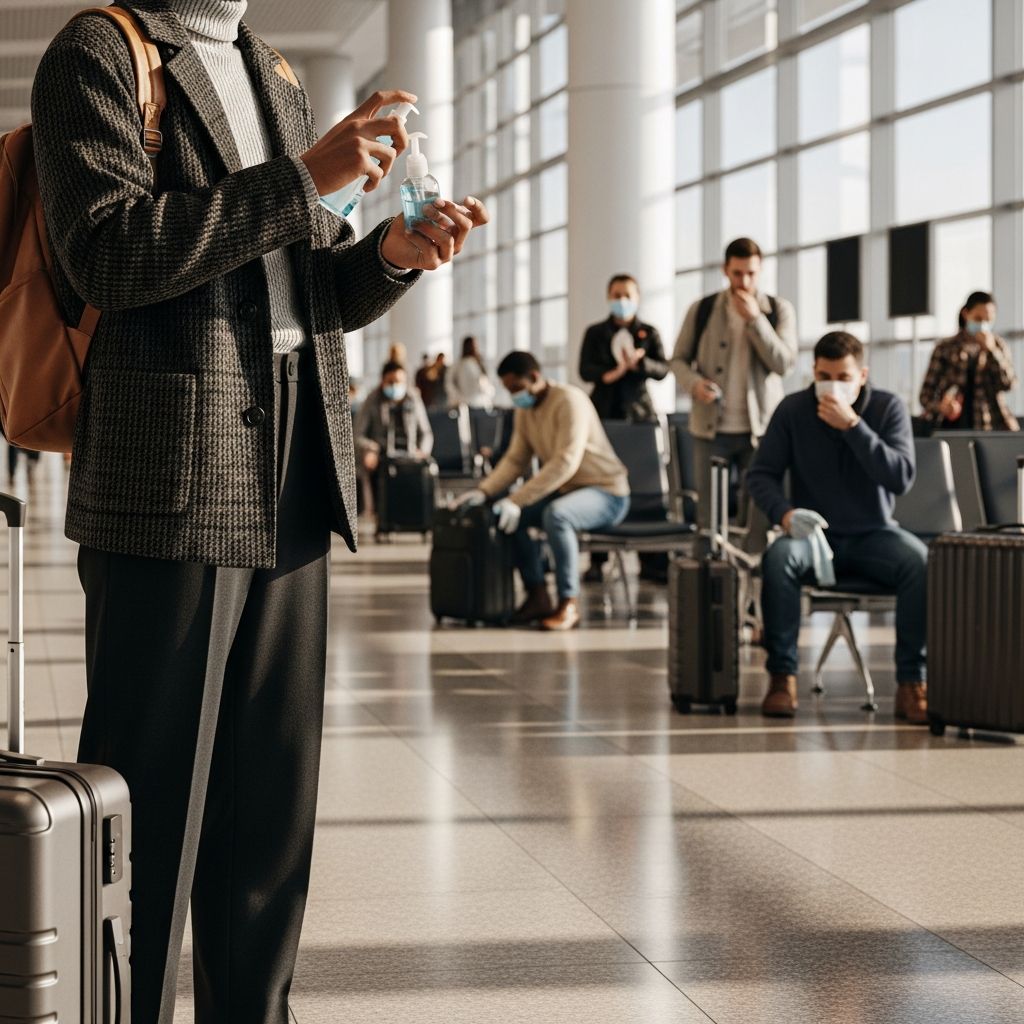
The holiday season brings joy, family gatherings, and travel, but it also heightens the risk of illness due to crowded airports, long flights, and shared spaces. With millions traveling annually, germs spread quickly in close quarters. This guide provides actionable strategies to bolster your immune system, maintain hygiene, and manage travel stressors, ensuring you arrive healthy and enjoy your celebrations.
Get Plenty of Sleep Before You Travel
Sleep deprivation weakens your immune system, making you more susceptible to viruses like the common cold or flu. Adults need 7-9 hours per night, yet holiday prep often disrupts routines. Prioritize sleep in the days leading up to your trip.
- Establish a wind-down routine: Avoid screens an hour before bed; their blue light suppresses melatonin production.
- Optimize your environment: Keep your bedroom cool (60-67°F), dark, and quiet. Use earplugs or white noise machines if needed.
- Avoid caffeine and alcohol: Both disrupt deep sleep stages. Skip coffee after noon and heavy evening drinks.
Research from the Centers for Disease Control and Prevention (CDC) shows chronic sleep loss increases infection risk by up to 4 times. Aim for consistent bedtimes to build resilience against travel-related fatigue.
Pack Smart: Include Health Essentials
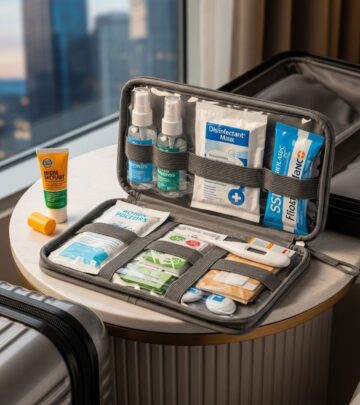
Your luggage should double as a health kit. Overpack preventive items rather than remedies, as prevention trumps cure during travel.
| Category | Essentials | Why It Helps |
|---|---|---|
| Hygiene | Hand sanitizer (60%+ alcohol), disinfectant wipes, face masks | Kills 99.9% of germs on surfaces like tray tables. |
| Medications | Pain relievers, motion sickness bands, saline nasal spray | Manages headaches, nausea, and dry air irritation. |
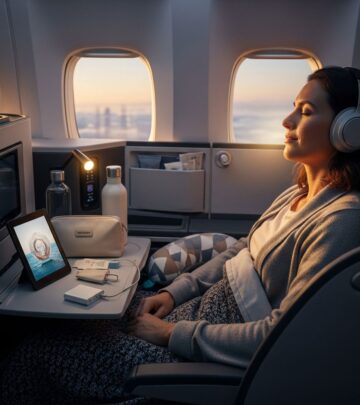
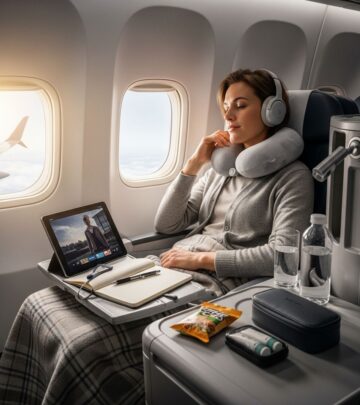
| Comfort | Neck pillow, eye mask, compression socks | Promotes rest and improves circulation on long hauls. |
| Nutrition | Protein bars, ginger chews, vitamin C packets | Sustains energy without relying on airport junk food. |
Customize based on your health needs; consult a doctor for prescriptions like antihistamines if prone to allergies.
Practice Good Hygiene Habits
Airports and planes are germ hotspots—tray tables harbor more bacteria than toilet seats. Vigilant hygiene slashes infection risk by 30-50%, per CDC guidelines.
- Wash hands frequently: Use soap for 20 seconds, especially before eating. If unavailable, sanitizer works.
- Wipe down surfaces: Clean armrests, screens, and seatbelts upon boarding.
- Wear a mask in crowds: Effective against respiratory droplets in enclosed spaces.
- Avoid touching your face: Eyes, nose, and mouth are entry points for pathogens.
For motion sickness, focus on the horizon and use acupressure wristbands, as recommended by health experts.
Eat Well and Stay Hydrated
Airport food is often processed and dehydrating, compromising immunity. Dehydration thickens mucus, trapping viruses.
- Hydrate proactively: Drink 8 oz water hourly. Avoid soda; opt for herbal teas.
- Choose nutrient-dense snacks: Nuts, yogurt, fruits boost vitamins A, C, E.
- Limit sugar and alcohol: They suppress white blood cell function for hours.
The World Health Organization (WHO) emphasizes balanced nutrition for immune health. Pack electrolyte packets for long trips to maintain mineral balance.
Manage Stress to Keep Your Immune System Strong
Holiday stress elevates cortisol, which impairs immune response. Techniques like deep breathing counteract this.
- Practice mindfulness: Use apps for 5-minute guided sessions during layovers.
- Schedule buffer time: Arrive early to avoid rushing, which spikes anxiety.
- Stay connected: Call loved ones to reduce isolation feelings.
Studies from the American Psychological Association link chronic stress to 50% higher cold susceptibility. Build in relaxation to travel resiliently.
Boost Your Immune System Naturally
Fortify defenses pre-trip with lifestyle tweaks.
- Exercise moderately: 30 minutes daily walking enhances lymphocyte circulation.
- Take probiotics: Yogurt or supplements support gut health, 70% of immunity’s hub.
- Get sunlight or vitamin D: Deficiency links to respiratory infections.
- Elderberry or zinc lozenges: Shorten cold duration if exposed.
Consult healthcare providers before supplements, especially if immunocompromised.
Choose the Right Travel Mode and Timing
Not all travel is equal in risk.
- Drive if possible: Control your environment; stop for fresh air.
- Fly off-peak: Early mornings or midweek flights are less crowded.
- Use trains/buses wisely: Ventilate windows; space out seating.
For families, time naps with children’s schedules to minimize meltdowns and fatigue.
What to Do If You Start Feeling Sick
Don’t ignore symptoms—act fast.
- Rest immediately: Isolate if possible; use your neck pillow as a barrier.
- Hydrate and nourish: Broths, bananas (BRAT diet) soothe stomachs.
- Over-the-counter aids: Decongestants for sinuses, anti-diarrheals sparingly.
- Seek medical help: For fever over 101°F or breathing issues.
Post-trip, monitor for 48 hours; quarantine if needed to protect gatherings.
Frequently Asked Questions (FAQs)
Can I travel if I have a mild cold?
Yes, if symptoms are above the neck (no fever), but mask up and sanitize to protect others.
What’s the best way to avoid jet lag?
Adjust sleep gradually pre-trip, stay hydrated, and expose to natural light upon arrival.
Are travel vaccines necessary for holidays?
Check CDC for destinations; flu shots recommended yearly regardless.
How do I handle kids getting sick en route?
Pack distractions, familiar snacks, and pediatric meds; plan flexible itineraries.
Does hand sanitizer replace handwashing?
No—it’s for on-the-go; soap and water are superior for soiled hands.
Final Thoughts on Healthy Holiday Travel
By integrating sleep, hygiene, nutrition, and stress management, you can navigate holiday travel confidently. Small habits yield big protection, letting you focus on making memories. Safe travels!
References
- Sleep and Sleep Disorders — Centers for Disease Control and Prevention (CDC). 2024-10-15. https://www.cdc.gov/sleep/index.html
- Hand Hygiene Recommendations — Centers for Disease Control and Prevention (CDC). 2025-03-20. https://www.cdc.gov/handhygiene/index.html
- Healthy Diet Fact Sheet — World Health Organization (WHO). 2024-07-08. https://www.who.int/news-room/fact-sheets/detail/healthy-diet
- Stress and Health — American Psychological Association (APA). 2025-01-10. https://www.apa.org/topics/stress/health
- Travel Health Notices — Centers for Disease Control and Prevention (CDC). 2026-01-01. https://wwwnc.cdc.gov/travel/notices
Similar Articles








Read full bio of medha deb