How to Transfer Money Between Banks: 4 Methods
Master the best ways to move money between bank accounts with speed and savings.
How to Transfer Money From One Bank to Another: Complete Guide
Moving money between banks is a common financial task that most people face at some point in their lives. Whether you’re paying rent to a landlord who uses a different bank, sending money to family members, consolidating accounts, or managing multiple financial institutions, understanding your transfer options is essential. The good news is that you have several reliable methods available, each with distinct advantages and drawbacks depending on your specific needs.
The landscape of money transfers has evolved significantly in recent years. What once required a trip to the bank branch can now be completed from your smartphone in minutes. However, not all transfer methods are created equal. Some prioritize speed, others focus on cost savings, and some balance both factors effectively. Your choice of transfer method should align with your priorities regarding urgency, expenses, and convenience.
Key Takeaways
Before diving into the details, here are the essential points to remember about transferring money between banks:
- Wire transfers offer the fastest delivery but come with the highest fees, averaging around $25 for domestic transfers
- ACH transfers provide a free option but require patience, typically taking 1-3 business days
- Third-party apps like Zelle balance speed and cost for everyday money movements
- Your choice depends on how urgently you need the funds and your tolerance for transfer fees
- Double-checking recipient information before sending is critical, as reversing transfers is extremely difficult
What You Need Before Transferring Money
Preparation is key to executing a successful money transfer. Before initiating any transfer, you’ll need to gather specific information about the recipient. The exact details required depend on which transfer method you choose, but most traditional banking transfers require the same foundational information.
For wire transfers and ACH transfers, you’ll need the recipient’s bank routing number and account number. The routing number is a nine-digit code that identifies the specific bank or credit union where the recipient has their account. You can find this number in several ways: check the bottom left corner of any personal checks, visit the bank’s official website, or call their customer service line. The account number is typically found on the recipient’s checks as well.
If you’re using modern third-party payment apps like Zelle, the process is simpler. You typically only need the recipient’s phone number or email address that’s connected to their bank account. This simplified requirement makes peer-to-peer payment apps increasingly popular for everyday money transfers.
Accuracy is non-negotiable when providing recipient information. Bank transfers are notoriously difficult to reverse once they’ve been completed. A single digit wrong in an account number could send your money to the wrong account or result in the transfer failing entirely. Always verify information through a secondary source when possible, and take a moment to review everything before hitting the send button.
Factors to Consider When Choosing a Transfer Method
Several important factors should influence your decision about which transfer method to use. Understanding these factors will help you make the best choice for your specific situation.
Speed Considerations
Speed becomes your primary concern when making time-sensitive payments. If you need to pay rent that’s due today or send emergency funds to a family member, wire transfers and certain third-party apps can move money within hours or even minutes. For these urgent situations, the higher fees are usually justified by the peace of mind and necessity of quick delivery.
Cost Considerations
Cost matters most when you’re making routine transfers or sending large amounts where percentage-based fees accumulate quickly. If you’re moving money between your own accounts regularly or making non-urgent payments, ACH transfers are typically free, making them ideal for cost-conscious savers. For larger transfers, even small percentage-based fees can add up significantly.
Convenience and Accessibility
Consider how easily you can initiate the transfer and whether you have access to the necessary tools. Some people prefer the simplicity of apps, while others trust traditional bank methods more. Your comfort level with technology and your bank’s user interface should factor into your decision.
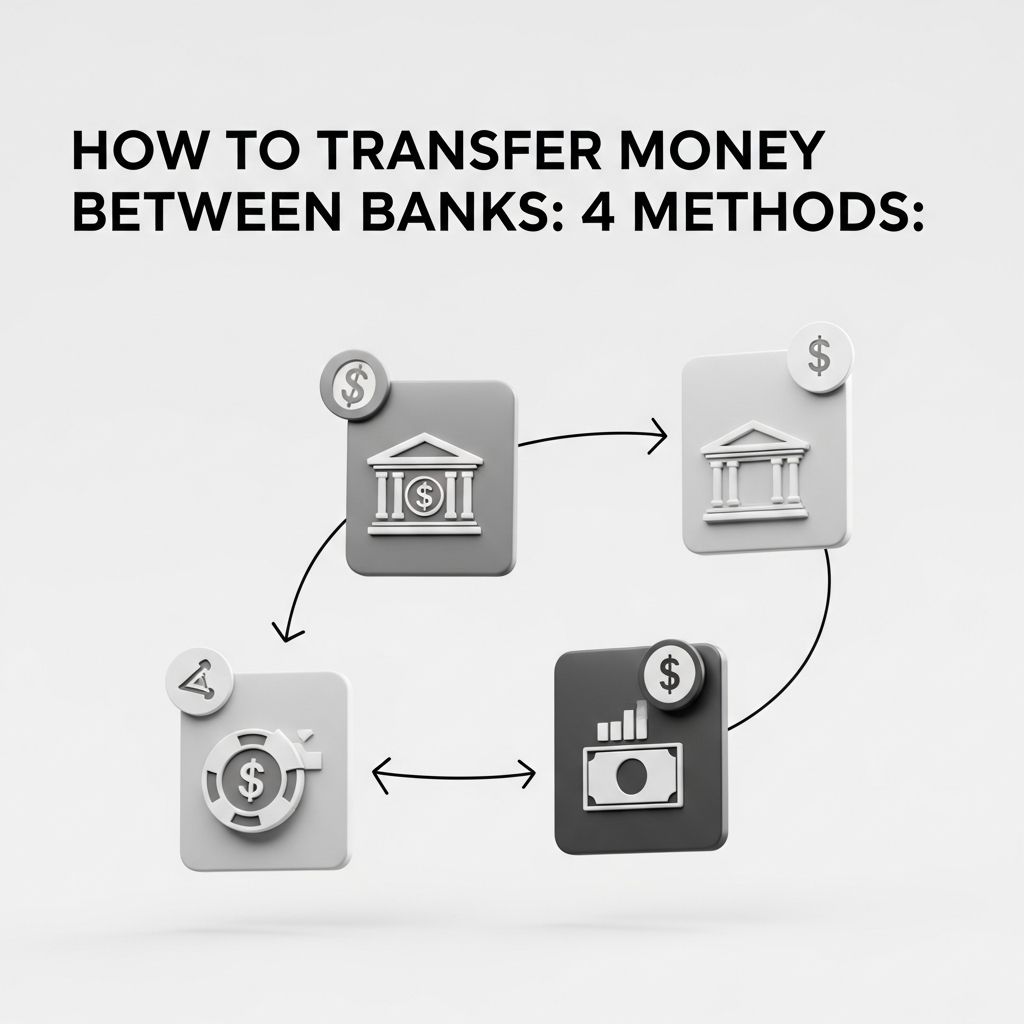
The Four Main Ways to Transfer Money Between Banks
1. Wire Transfers: The Speed Option
Wire transfers represent one of the fastest methods for moving money electronically between accounts. Whether you use your bank or a non-bank provider like Wise (formerly TransferWise), wire transfers can deliver funds within hours, sometimes even faster during business days.
To initiate a wire transfer, you’ll need the recipient’s full name, physical address, bank routing number, and account number. Most modern banks allow you to set up wire transfers through their online banking platform, mobile app, or by visiting a branch in person. Phone banking is another option, though some banks charge extra for phone-initiated transfers.
The main advantage of wire transfers is their speed and reliability. The main disadvantage, however, is cost. Domestic outgoing wire transfers average around $25 per transaction, though this varies by bank and account type. International wire transfers are considerably more expensive, typically ranging from $40 to $50, plus additional currency conversion fees that can add up quickly. Some banks charge up to 3% of the transfer amount when converting to foreign currency.
Important limitations include that wire transfers cannot be sent on weekends or bank holidays, and reversing a wire transfer once it’s been sent is nearly impossible. This permanence makes wire transfers riskier if any information is incorrect.
2. ACH Transfers: The Budget-Friendly Option
Automated Clearing House (ACH) transfers operate through a vast network that processes billions of transactions annually. These transfers are the preferred choice for cost-conscious individuals who don’t need immediate delivery.
ACH transfers typically take 1-3 business days to complete. You can set them up through your bank’s website or mobile app using the recipient’s routing number and account number. The major advantage of ACH transfers is that they’re usually free, making them ideal for routine money movements where urgency isn’t a factor.
The trade-off is time. If you can wait a few days for your money to arrive, ACH transfers offer significant savings compared to wire transfers. For everyday purposes like paying bills or transferring money to savings accounts, ACH transfers are often the smartest choice financially.
3. Third-Party Payment Apps: The Middle Ground
Several third-party payment applications have emerged as popular alternatives for moving money between banks. These apps balance speed and cost in ways that traditional banking methods sometimes don’t.
Zelle
Zelle is integrated with many major banks and allows users to send money directly between bank accounts using just a phone number or email address. Most banks offer Zelle transfers with no fees. Zelle typically has the highest daily limits among peer-to-peer payment apps, ranging from $2,500 to $5,000 depending on your financial institution. Transfers through Zelle typically arrive within minutes to a few hours.
PayPal
PayPal operates with or without a bank connection. Free bank transfers take 1-3 business days, making them comparable to ACH transfers in speed. If you need faster delivery, PayPal offers instant transfers for 1.75% of the amount you’re sending. This option provides flexibility for different urgency levels.
Venmo
Owned by PayPal, Venmo has become popular for splitting bills and casual payments between friends and family. It includes social features that some users enjoy, though it has lower transfer limits than some competing services. Venmo is particularly useful for informal money exchanges rather than business payments.
Cash App
Cash App offers instant transfers for a 1.5% fee or free transfers that take 1-3 business days. Like other peer-to-peer apps, it has transfer limits that vary based on your account verification status and history with the platform.
4. Checks: The Traditional Method
While older than other transfer methods, checks remain a valid option for moving money between banks. Writing a check and mailing it to the recipient is free but slow. Delivery typically takes several days through the postal system, and the recipient must then deposit the check at their bank, adding additional processing time.
Checks work best for situations where timing isn’t critical and you prefer a paper trail. However, for most modern transfers, checks are becoming less common due to their slowness compared to digital alternatives.
Comparing Transfer Methods
| Transfer Method | Average Cost | Speed | Best For |
|---|---|---|---|
| Wire Transfer | $25 (domestic), $40-50 (international) | Hours to 1 business day | Urgent, time-sensitive payments |
| ACH Transfer | Free | 1-3 business days | Routine transfers, bill payments |
| Zelle | Free (most banks) | Minutes to hours | Everyday peer-to-peer payments |
| PayPal | Free (standard), 1.75% (instant) | 1-3 days (standard), instant | Flexible timing needs |
| Check | Free | 5-10 business days | Paper trail requirements |
Special Use Cases for Bank Transfers
Emergency Access
When you need to move money to a specific account quickly because of an emergency, wire transfers are often your best choice despite the fees. Knowing you can access funds within hours provides peace of mind during stressful situations.
Business Needs
Businesses often need to separate personal and business banking while still being able to move money between accounts as needed. Understanding all available transfer methods helps business owners optimize their cash flow and minimize unnecessary expenses.
Consolidating Accounts
If you’re consolidating multiple accounts into one, you likely don’t need same-day delivery for all transfers. Using ACH transfers for these movements can save considerable money compared to paying wire transfer fees for each consolidation transaction.
Frequently Asked Questions
Q: How long does a bank transfer take?
A: Transfer timing varies by method. Wire transfers typically complete within hours, ACH transfers take 1-3 business days, and third-party apps vary from minutes (Zelle) to 1-3 days. Checks are the slowest, taking 5-10 business days.
Q: What information do I need to transfer money?
A: For traditional transfers, you need the recipient’s routing number and account number. For apps like Zelle, you typically only need their phone number or email address linked to their bank account.
Q: Can I reverse a bank transfer?
A: Once a bank transfer completes, reversing it is extremely difficult or impossible. Always double-check recipient information before sending. Wire transfers are particularly hard to reverse.
Q: Why do wire transfers cost so much?
A: Wire transfers involve immediate processing and verification by banks, multiple financial institutions, and sometimes international banking networks. These factors increase operational costs that banks pass to customers.
Q: Are there ways to reduce transfer fees?
A: Yes. Some banks offer accounts that waive wire transfer fees. Initiating transfers online often costs less than doing so through a customer service representative. For international transfers, sending in local currency rather than U.S. dollars can reduce fees significantly.
Q: What are daily transfer limits?
A: Limits vary by service and institution. Zelle typically offers the highest limits at $2,500-$5,000 daily. Other services may limit transfers to $3,000 per week or less. Check with your specific bank or app for exact limits.
Bottom Line
Moving money between banks has never been easier or more flexible. You have multiple options to choose from, each serving different priorities and circumstances. Wire transfers offer unmatched speed for urgent needs, ACH transfers provide completely free options for routine movements, third-party apps balance convenience with reasonable costs, and traditional checks remain available for those who prefer them.
The key to choosing the right transfer method is understanding your specific situation. Ask yourself: How urgently do I need these funds? How much am I willing to spend on fees? What transfer method is most convenient for me? Once you’ve answered these questions, you can select the method that best fits your needs and financial situation.
By understanding all available options and their respective advantages and disadvantages, you can make informed decisions that maximize both convenience and financial efficiency. Whether you’re a frequent money mover or an occasional transferrer, having this knowledge ensures you’re always selecting the optimal method for your circumstances.
References
- How Much Are Wire Transfer Fees? — Bankrate. 2025-11-29. https://www.bankrate.com/banking/wire-transfer-fees/
- How to Transfer Money From One Bank to Another: 4 Ways — Bankrate. 2025-11-29. https://www.bankrate.com/banking/how-to-transfer-money-from-one-bank-to-another/
- International Money Transfer Guide — Bankrate. 2025-11-29. https://www.bankrate.com/banking/international-money-transfer/
- How To Use Zelle: A Beginner’s Guide To Digital Payments — Bankrate. 2025-11-29. https://www.bankrate.com/banking/checking/how-to-use-zelle-beginners-guide-to-digital-payments/
- 7 Best Ways To Send Money — Bankrate. 2025-11-29. https://www.bankrate.com/banking/best-ways-to-send-money/
Similar Articles








Read full bio of Sneha Tete