How to Tell If Your $2 Bills Are Worth Thousands
Discover which rare $2 bills could be worth hundreds or thousands of dollars.
Got A Stash Of $2 Bills? Here’s How To Check If They’re Worth Thousands
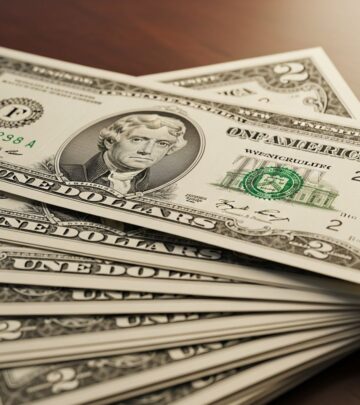
Most people think $2 bills are extremely rare and no longer in circulation, but the reality is quite different. Millions of $2 bills remain in active circulation today, and the U.S. Bureau of Engraving and Printing continues to produce them regularly. In fiscal year 2023 alone, approximately 128 million new $2 bills were printed. Despite their continued production, the average person rarely encounters them in everyday transactions, which perpetuates the misconception that they’re no longer being made.
However, while the vast majority of $2 bills are worth only their face value, certain editions have become highly sought-after by collectors and can fetch impressive prices at auction. Some rare $2 bills have sold for hundreds of dollars, while the most valuable specimens can command thousands. If you happen to have one of these special bills tucked away in a drawer or inherited from a relative, you could be sitting on a valuable collectible without even realizing it.
What Makes Some $2 Bills Worth More Than Others?
Not all $2 bills are created equal. Several factors determine whether a particular bill will be worth its face value or significantly more. Understanding these distinguishing characteristics is essential if you want to identify potentially valuable bills in your possession.
Red Seal Notes (1928–1963)
One of the most sought-after categories among collectors is $2 bills featuring a red Treasury seal. These older bills, produced between 1928 and 1963, are significantly more valuable than their modern counterparts with green seals. Red seal notes typically sell for $100 to $500, depending on their overall condition and circulation history. The red seal itself indicates that these bills are from the Federal Reserve Bank’s earliest modern series, making them historically significant and desirable to currency enthusiasts.
Star Notes
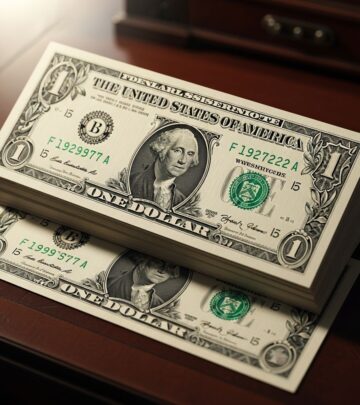
Star notes are another category that commands premium prices in the collector’s market. These bills are identifiable by a small star symbol printed next to the serial number. The star indicates that the bill was a rare printing replacement during the manufacturing process. Star notes are uncommon and highly valued, with some examples worth up to $1,000 or even more, depending on their rarity and condition.
1976 Bicentennial Series
The 1976 $2 bill was released to commemorate the United States Bicentennial celebration. While most of these bills are only worth their face value, certain examples with special characteristics command higher prices. Uncirculated versions, bills with misprints, those featuring special serial numbers, or those marked as star notes can be worth $20 to $50 or more. The rarest $2 bills from this series are known as ladder notes, which feature sequential serial numbers like 12345678. These exceptional notes can be worth thousands of dollars at auction.
Low or Fancy Serial Numbers
Collectors have a particular fondness for $2 bills with distinctive serial numbers. Bills featuring repeating numbers, sequential patterns, or palindromic sequences (numbers that read the same forwards and backwards) command premium prices. These fancy serial numbers are relatively uncommon and make a bill stand out from ordinary currency, making them attractive to specialized collectors who focus on serial number variations.
Other Valuable Characteristics
Beyond the categories listed above, several other features can increase a $2 bill’s value. Bills with red, brown, or blue seals from the 1862 to 1917 era are typically valued between $500 and $1,000. Complete unopened packs of $2 bills from 1995, still in their original wrapping, can bring $500 or more. Even bills from 1928, while not ultra-rare, regularly sell for $35 to $90 depending on their condition.
Most Valuable $2 Bills From The 1800s And 1900s
The oldest $2 bills are generally the most valuable, particularly those from the 1800s and early 1900s. These historical specimens are extremely unlikely to appear in your everyday transactions, but understanding their value can help you appreciate the potential worth of older bills you might inherit or discover.
1890 $2 Treasury Note
An 1890 $2 Treasury Note featuring General James McPherson is worth upwards of $4,500, according to U.S. Currency Auctions. In exceptional cases, particularly when a bill is in perfect condition, it can fetch tens of thousands of dollars at auction. These bills are prized not only for their age but also for their historical significance and the important historical figures depicted on them.
1953 And 1963 Red Seal Notes
While not as valuable as their 1800s counterparts, $2 bills from 1953 and 1963 with red seals remain collectible. Depending on their condition, these bills typically range from $5 to about $20. They represent a middle ground between common modern bills and the extremely rare 1800s issues, making them accessible to newer collectors.
1976 Bicentennial $2 Bills With Special Characteristics
As mentioned earlier, most 1976 $2 bills are worth face value, but those with special attributes are significantly more valuable. Standard circulated versions have minimal value beyond $2, but uncirculated examples, those with misprints, or those featuring star notes can be worth $20 to $50 or more. The rarest of these—ladder notes with sequential serial numbers—can fetch prices in the thousands at auction.
Uncirculated Vs. Circulated $2 Bills
One of the most critical factors affecting a $2 bill’s value is its condition, specifically whether it has been circulated. The condition of a $2 bill significantly impacts its worth, and collectors classify bills into two broad categories.
Uncirculated Bills
Uncirculated bills have never been used in everyday transactions and therefore remain in pristine condition. These bills are crisp, clean, and completely free of folds, creases, or tears. Uncirculated bills are far more valuable—and rare, especially the older they are—compared to their circulated counterparts. For example, an uncirculated 1928 red seal $2 bill could be worth over $1,000, while a circulated version of the same bill may only be worth $5 to $175. The difference in value between uncirculated and circulated bills can be substantial, sometimes representing a difference of hundreds of dollars.
Circulated Bills
Circulated bills have been used in everyday transactions and consequently show visible signs of wear and tear. They may have folds, wrinkles, stains, or other damage from handling. While circulated $2 bills can still be valuable, they are always worth less than their uncirculated counterparts. The amount of wear and the type of damage directly correlate to how much less valuable a bill becomes compared to a pristine example.
The Impact Of Condition
In short, a bill in pristine condition will always fetch a higher price than one showing signs of circulation. Even among circulated bills, those in better condition command higher prices than those heavily worn. This is why properly storing valuable bills—away from moisture, sunlight, and handling—is crucial if you believe you own something potentially valuable.
How To Check What Your $2 Bills Are Worth And Sell Them
If you suspect you have a potentially valuable $2 bill, there are specific steps you should follow to determine its actual worth and find suitable buyers.
Identify The Series And Condition
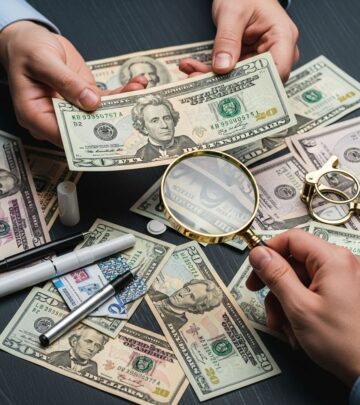
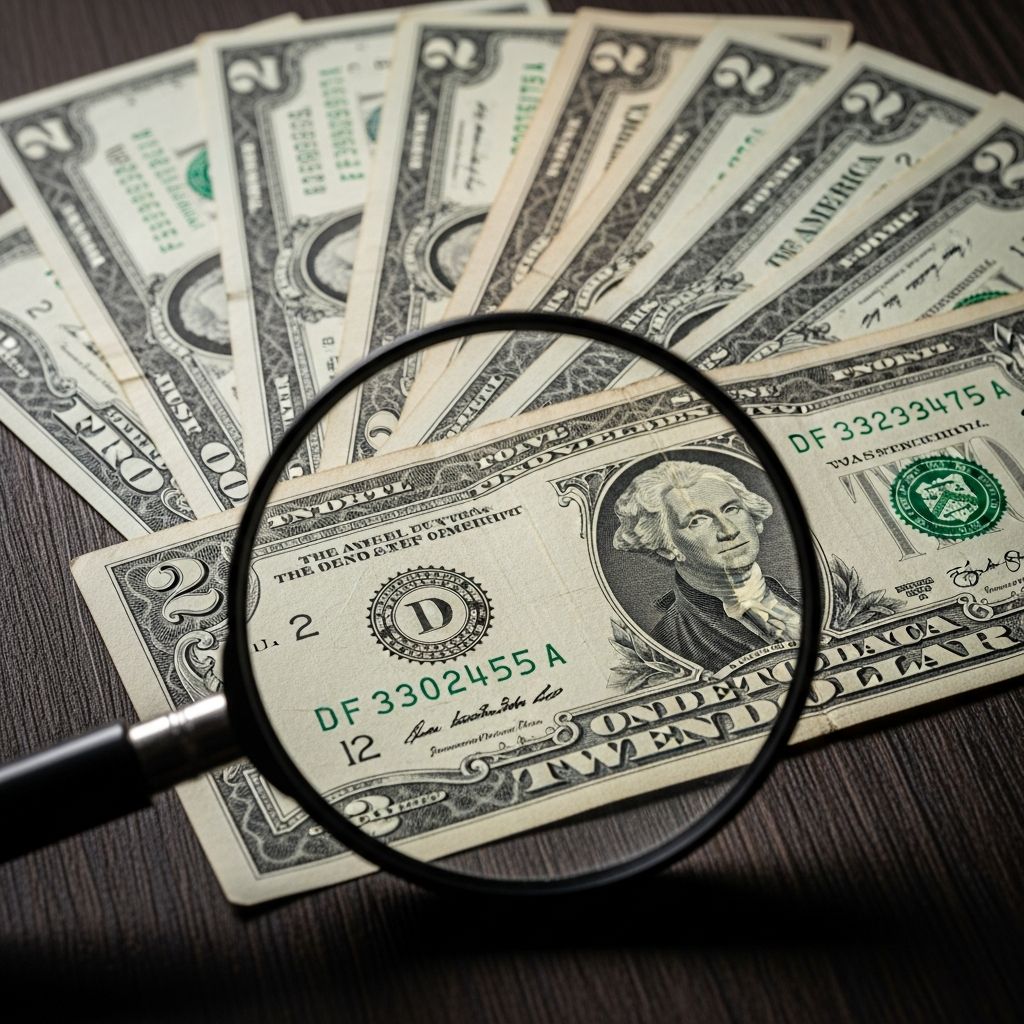
Start by examining your bill carefully. Look at the series year printed on the bill and note the color of the Treasury seal—whether it’s red, green, blue, or brown. Document the bill’s overall condition by assessing whether it shows signs of circulation, damage, or wear. Take clear photographs from multiple angles, as you may need to share these with potential buyers or appraisers.
Research The Value
Compare similar bills that have sold recently on platforms like eBay or at currency auction sites. Consult currency pricing guides and reference materials to understand the current market value for bills matching your bill’s characteristics. Heritage Auctions offers a helpful guide on how to evaluate the value of paper currency, providing benchmarks and comparable sales data. This research will give you a realistic understanding of what your bill might be worth.
Find A Buyer
Once you’ve determined your bill’s potential value, you have several options for selling it. You can list your $2 bill on online marketplaces like eBay, where there is an active market for collectible currency. Alternatively, visit a local coin and currency dealer who can provide professional appraisals and may offer immediate purchase. Another option is listing your bill with auction houses specializing in paper money, such as Heritage Auctions or U.S. Currency Auctions. A financial advisor might also be able to help you evaluate offers and determine the best approach for your specific situation.
The Market For Collectible $2 Bills
The market for collectible $2 bills is remarkably active and dynamic. Many $2 bills are traded through online marketplaces, including eBay, Heritage Auctions, specialized currency dealer websites, and other platforms dedicated to numismatics. The demand for rare $2 bills means that sellers can often find buyers quickly, especially for well-preserved or unique bills. In general, older bills and bills with printing errors tend to sell the fastest and at the highest prices. This active market ensures that if you have a valuable bill, you’ll likely be able to find an interested buyer within a reasonable timeframe.
Understanding $2 Bill Circulation Today
Despite the popular belief that $2 bills have been discontinued, they remain completely legal tender and are still being printed by the U.S. Bureau of Engraving and Printing. The Federal Reserve reported that in 2024, approximately 1.7 billion $2 bills were in circulation. To put this in perspective, this represents only a tiny fraction of the 55.4 billion total U.S. currency notes in circulation. This equals roughly $3.4 billion worth of $2 bills out of $2.3 trillion in total printed currency. While $2 bills aren’t exactly rare, they are definitely uncommon in everyday transactions, which adds to their appeal among collectors and contributes to the misconception that they’re no longer produced.
Banks can still distribute $2 bills upon request, as they are standard legal currency. However, due to their lower demand in everyday commerce, many people mistakenly believe the $2 bill has been discontinued entirely. This confusion has actually contributed to the collectibility of older $2 bills, as fewer people spend them, increasing the number that remain in pristine uncirculated condition.
Bottom Line
The $2 bill may not be a common sight in everyday transactions, but certain editions are worth far more than their face value. Whether you have an 1890 bill worth thousands, a 1976 bicentennial bill with a special serial number, or any other potentially valuable specimen, it’s worth taking the time to check what you own. Before you spend an old $2 bill or assume it’s worthless, consider having it appraised by a certified currency expert. That “ordinary” bill tucked away in a drawer or inherited from a relative could end up being worth thousands of dollars. With the right knowledge about what makes $2 bills valuable, you may discover hidden treasure in your own collection.
Frequently Asked Questions (FAQs)
Q: Are $2 bills still being printed?
A: Yes, $2 bills are still being printed by the U.S. Bureau of Engraving and Printing. In fiscal year 2023 alone, approximately 128 million new $2 bills were produced. They remain legal tender and can be obtained from banks upon request.
Q: Why do people think $2 bills are rare?
A: While $2 bills are still in circulation, they are uncommon in everyday transactions. Most people rarely encounter them, leading to the misconception that they’ve been discontinued. In reality, about 1.7 billion $2 bills were in circulation as of 2024.
Q: What is a star note?
A: A star note is a $2 bill that contains a small star symbol next to the serial number, indicating it was a rare printing replacement during manufacturing. These bills are uncommon and can be worth up to $1,000 or more.
Q: How much can a red seal $2 bill be worth?
A: Red seal $2 bills from 1928–1963 typically sell for $100 to $500, depending on their condition. Some uncirculated examples from 1928 can be worth over $1,000.
Q: What makes an uncirculated bill more valuable?
A: Uncirculated bills have never been used in transactions, so they remain crisp and pristine. They are far more valuable than circulated bills because their condition is preserved. For example, an uncirculated 1928 red seal $2 bill could be worth over $1,000, while a circulated version may only be worth $5 to $175.
Q: What is a ladder note?
A: A ladder note is a $2 bill with a sequential serial number, such as 12345678. These are extremely rare and can be worth thousands of dollars at auction.
Q: Where can I sell my valuable $2 bill?
A: You can sell valuable $2 bills through online marketplaces like eBay, local coin and currency dealers, or specialized auction houses like Heritage Auctions and U.S. Currency Auctions.
Q: How do I determine if my $2 bill is valuable?
A: Check the series year, seal color, condition, and any special characteristics like star notes or fancy serial numbers. Research comparable sales on eBay and currency auction sites, and consult currency pricing guides to estimate value.
References
- Got A Stash Of $2 Bills? Here’s How To Check If They’re Worth Thousands — Bankrate. 2025. https://www.bankrate.com/investing/how-to-tell-if-your-two-dollar-bills-are-worth-thousands/
- U.S. Currency Auctions Price Guide — U.S. Currency Auctions. https://www.uscurrencyauctions.com/
- Bureau of Engraving and Printing – Currency Production — U.S. Department of the Treasury. https://www.moneyfactory.gov/
- That Old $2 Bill Could Be Worth More Than A Month’s Rent In NYC — Secret NYC. 2025. https://secretnyc.co/2-dollar-bill-may-be-worth-thousands/
- Federal Reserve – Currency in Circulation — Board of Governors of the Federal Reserve System. 2024. https://www.federalreserve.gov/
Similar Articles








Read full bio of Sneha Tete