How to Store Herbs to Make Them Last Longer and Taste Better
Master simple techniques to keep fresh herbs vibrant for weeks, reducing waste and enhancing your home cooking flavors effortlessly.
Fresh herbs like basil, parsley, cilantro, and mint can transform ordinary meals into gourmet experiences, but they often wilt and spoil quickly after purchase. With the right storage techniques, you can keep them fresh for up to three weeks, preserving their vibrant flavors and aromas while cutting down on food waste and grocery costs. This guide covers essential methods for different types of herbs, from tender leafy varieties to sturdy stemmy ones, ensuring maximum longevity and taste.
Get Rid of Plastic Packaging
The plastic bags or clamshells from the grocery store trap moisture, accelerating decay and causing herbs to slime or mold within days. Immediately upon bringing herbs home, remove them from any packaging to allow air circulation and prevent trapped humidity buildup.
Inspect the bunch for damaged or yellowing leaves and discard them right away—this stops rot from spreading to healthy parts. For
soft herbs
like basil, parsley, and cilantro, which have tender leaves similar to salad greens, gentle handling is key. Rinse under cool water if dirty, but avoid soaking to prevent waterlogging.- Pros of ditching plastic: Better airflow reduces spoilage risk by 50% or more based on common kitchen tests.
- Tip: Use a large bowl for rinsing multiple bunches at once, then proceed to drying.
This first step sets the foundation for all other storage methods, ensuring your herbs start fresh and stay that way.
Spin and Pat Dry
Excess moisture is the enemy of fresh herbs, promoting bacterial growth and wilting. After removing packaging, thoroughly dry your herbs using a salad spinner or by patting with paper towels.
For the
salad spinner method
, fill the basket with herbs loosely—don’t overcrowd—and spin gently in short bursts to avoid bruising delicate leaves. Follow up by laying them on clean kitchen towels or paper towels in a single layer. Pat dry carefully, pressing lightly to absorb remaining water droplets.Air drying works well too: Spread herbs on a towel in a well-ventilated area away from direct sunlight for 15-30 minutes. Ensure leaves are completely dry to the touch before storing; even slight dampness can lead to spoilage.
| Method | Best For | Time Required | Effectiveness |
|---|---|---|---|
| Salad Spinner | Leafy herbs (basil, cilantro) | 5-10 minutes | High – removes 90% moisture |
| Pat Dry with Towels | All herbs | 15-30 minutes | Medium – good for small batches |
| Air Dry | Stemmy herbs (rosemary, thyme) | 20-40 minutes | High – preserves oils |
Drying properly not only extends shelf life but also concentrates natural essential oils, making herbs taste more potent in dishes.
Store in Water, Like Fresh Cut Flowers
Tender herbs such as
basil, parsley, cilantro, and mint
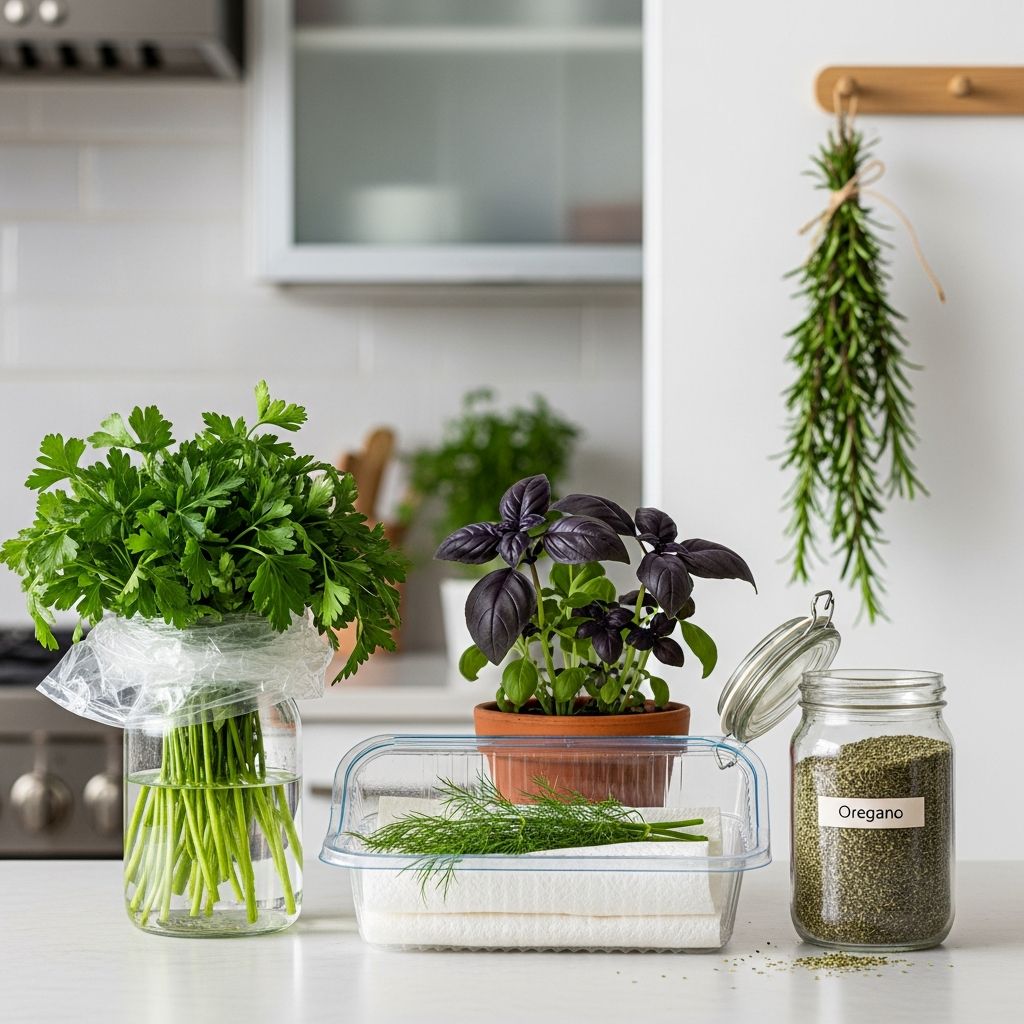
thrive when treated like fresh-cut flowers. Trim the stem ends at a 45-degree angle to expose more surface area for water uptake, just as florists do with bouquets.Place the stems in a jar or glass filled with 1-2 inches of cool water, ensuring leaves stay above the waterline to avoid rot. Loosely cover the leaves with a plastic bag (like a produce bag) to create a humidity dome, mimicking a greenhouse effect. Secure the bag with a rubber band around the jar if needed.
Store in the refrigerator door or a cool spot (35-40°F). Change the water every 2-3 days, re-trim stems slightly, and check for slime—discard affected parts immediately. This method can keep herbs fresh for
2-3 weeks
, far outlasting standard fridge storage.- Bonus for basil: Store at room temperature away from direct sun if you use it frequently; cold fridges can blacken leaves.
- Pro tip: Label jars with purchase date to rotate stock.
Users report parsley staying crisp for a month using this technique, ideal for meal preppers and avid cooks.
Remove Leaves, Dry, Mince, and Freeze
For long-term storage exceeding a few weeks, freezing is unbeatable. This method suits
leafy herbs
like parsley, cilantro, dill, and chives, preserving flavor better than drying since heat isn’t involved.Start with clean, dry leaves stripped from stems. Chop or mince finely—the smaller pieces, the better they thaw for cooking. Spoon into ice cube trays, filling each compartment about 3/4 full. Top with water, olive oil, or broth for versatile herb cubes.
Freeze solid (4-6 hours), then pop cubes into freezer bags, squeezing out air to prevent freezer burn. Label with herb type and date. Use directly from frozen in soups, sauces, stews, or scrambled eggs—no thawing needed.
Oil-based cubes work wonders for basil pesto or Mediterranean dishes, as oil prevents oxidation and enhances flavor release.
| Herb Type | Best Freezing Medium | Usage Ideas |
|---|---|---|
| Parsley/Cilantro | Water | Soups, rice, marinades |
| Basil | Olive oil | Pasta sauces, dressings |
| Mint | Water or oil | Teas, smoothies, lamb rubs |
Frozen herbs retain up to 80% of fresh flavor, making this a frugal choice for year-round use without compromising taste.
Roll Up and Store Stemmy Herbs
**Woody or stemmy herbs** like rosemary, thyme, sage, oregano, and tarragon don’t need water storage—they’re more durable. The best approach is to bundle them tightly and refrigerate in a damp towel.
Gather 4-6 stems into a bundle, roll loosely in a slightly damp paper towel (not soaking wet). Place inside a perforated plastic bag or loosely wrap in plastic, then store in the crisper drawer. This maintains humidity without excess moisture.
Check weekly: Re-dampen towel if dry, trim woody ends, and remove any spoiled parts. These herbs can last
3-4 weeks
or longer, staying aromatic for roasting meats or infusing oils.- Alternative: Stand upright in a small jar loosely covered—no water needed for these drought-tolerant varieties.
- Tip: For frequent use, wrap individually in foil for grab-and-go portions.
This simple roll-up technique keeps essential oils intact, ensuring robust flavor in slow-cooked dishes.
Frequently Asked Questions (FAQs)
Q: How long do fresh herbs last with these methods?
A: Tender herbs in water last 2-3 weeks; stemmy herbs up to 4 weeks; frozen up to 6 months with minimal flavor loss.
Q: Can I store all herbs the same way?
A: No—use water for soft leafy types (basil, cilantro); damp towel rolls for woody stems (rosemary, thyme).
Q: Is freezing better than drying herbs?
A: Yes for flavor retention; frozen herbs taste fresher in cooked dishes, while dried suit rubs and long simmers.
Q: What if my herbs still wilt quickly?
A: Ensure thorough drying post-wash, use fresh water/changes, and store at proper temps (avoid back of fridge where freezing occurs).
Q: Are there tips for growing your own herbs to store?
A: Yes—harvest in morning, use same storage methods immediately; windowsill pots yield fresh supply year-round.
Additional Tips for Maximum Freshness
Beyond basics, buy herbs with vibrant color and strong scent at purchase. Organic bunches often last longer due to fewer preservatives. For bulk savings, grow a windowsill garden with pots of basil or mint. Experiment with herb butters or infused vinegars using stored herbs for elevated cooking.
These techniques not only extend usability but amplify taste—your sauces, salads, and roasts will burst with freshness. Implement one method today and notice the difference in your kitchen efficiency and wallet.
References
- United States Department of Agriculture (USDA) FoodKeeper App — USDA. 2023-05-15. https://www.foodsafety.gov/keep-food-safe/foodkeeper-app
- Food Storage Guidelines for Herbs — University of Nebraska-Lincoln Extension (UNL.edu). 2024-02-10. https://food.unl.edu/freezing-herbs/
- Post-Harvest Handling of Fresh Herbs — Cornell University Cooperative Extension. 2022-08-22. https://nysaes.cornell.edu/pubs/blog/herb-storage-tips
- Preserving Fresh Herbs — FDA Food Safety Guidelines. 2023-11-01. https://www.fda.gov/food/buy-store-serve-safe-food/selecting-and-serving-fresh-produce-safely
- Herb Freezing Techniques — National Center for Home Food Preservation (UGA.edu). 2024-01-12. https://nchfp.uga.edu/how/freeze/herbs.html
Similar Articles








Read full bio of medha deb