How To Stop Online Shopping And Take Back Control
Practical strategies to recognize compulsive online spending triggers, set boundaries, and build healthier money habits that truly last.

Online shopping can feel harmless, but constant impulse purchases can quietly drain your bank account, increase debt, and keep you from reaching your financial goals. This guide walks you through how to recognize if online shopping has become a problem and gives you practical, step-by-step strategies to stop.
Instead of relying on willpower alone, you will learn how to remove triggers, slow down your spending decisions, and build new habits that support your long-term financial well-being.
Are You Addicted To Online Shopping?
Online shopping becomes a problem when it is frequent, emotional, and disconnected from your real needs or budget. While only a small percentage of people meet full criteria for compulsive buying disorder, research shows that problematic shopping is linked to anxiety, depression, and financial distress in many households.
If most of your free time or emotional energy goes into scrolling stores, checking sales, or waiting for packages, it is worth taking a closer look. Below are common signs that online shopping is controlling you more than you are controlling it.
Key Warning Signs Of Problematic Online Shopping
- Rising credit card balances driven by frequent online purchases you cannot pay off in full each month.
- Buying things you do not need or already own, simply because they are on sale or trending.
- Feeling a rush or emotional relief when you click ‘buy now,’ followed by guilt or regret later.
- Hiding packages or receipts from family or partners because you are embarrassed by how much you spend.
- Shopping when you are bored, sad, or stressed instead of dealing with the real issue.
- Breaking your budget or dipping into savings to cover recent online orders.
- Regularly returning items not because of quality, but because of buyer’s remorse or overspending.
If you relate to several of these, it does not mean something is wrong with you; it means your environment and habits are set up to make overspending easy. The rest of this article focuses on changing that environment so you can succeed.
How Online Shopping Hurts Your Finances
Online retailers are deliberately designed to keep you browsing and buying. Features like one-click checkout, personalized recommendations, and constant promotions are optimized to trigger impulse spending. When this becomes frequent, it can have serious financial effects.
| Effect | What It Looks Like | Why It Matters |
|---|---|---|
| Growing high-interest debt | Using credit cards or buy-now-pay-later for non-essentials, then carrying a balance. | Interest charges make future goals (housing, emergencies, retirement) harder to fund. |
| Overspending vs. budget | Regularly going over your planned spending categories because of ‘just this one’ deal. | Reduces money available for savings, bills, and priorities. |
| Clutter and waste | Closets and drawers full of unused clothes, gadgets, and decor. | Money tied up in items that do not add long-term value or happiness. |
| Emotional stress | Feeling anxious about statements, guilty after shopping, or ashamed of ‘bad choices.’ | Financial stress is associated with poorer mental and physical health outcomes. |
The good news is that you can turn this around by changing how easy it is to shop, how you pay, and how you respond to triggers. Start with the following core strategies.
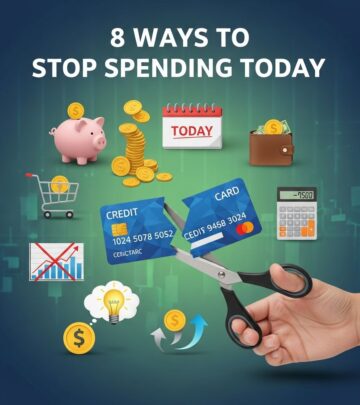
How To Stop Online Shopping: 10 Practical Strategies
These strategies are designed to work together. You do not have to apply all of them at once, but the more layers of protection you add, the easier it becomes to break the habit.
1. Block Shopping Sites
When visiting your favorite store is just a tap away, your brain defaults to habit, not logic. Instead of constantly resisting temptation, make those sites difficult or impossible to access.
- Use website blockers or browser extensions to block or limit time on specific shopping domains.
- Schedule focus periods (for example, evenings or work hours) when shopping categories are completely blocked.
- Protect settings with a password only a trusted friend or partner knows, if you tend to override your own rules.
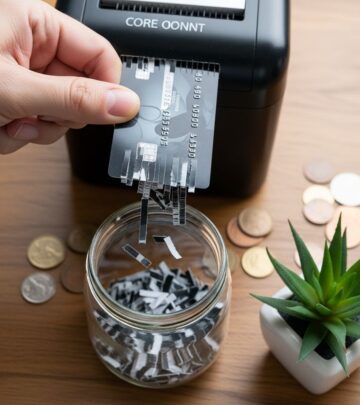
2. Get Rid Of Or Limit Your Credit Cards
Credit cards separate the feeling of buying from the pain of paying, which encourages overspending. If online shopping is a problem, changing how you pay can be more effective than simply promising to ‘try harder.’
- Remove credit cards from regular use and switch to a debit card or prepaid card for everyday spending.
- Keep one card for emergencies or travel only, stored in a place that is not easily accessible.
- If you carry existing balances, build a debt payoff plan and avoid adding new non-essential spending.
3. Remove Stored Card Information From Your Browser
Autofill is convenient, but it makes spending almost effortless. When your browser or device remembers your card details, you can buy in seconds with little time to reflect.
- Clear saved payment methods in your browser and on major retail sites.
- Turn off one-click checkout and similar instant purchase options in your account settings.
- Require yourself to physically get your card for each purchase to add a pause.
4. Ditch Apple Pay, Google Pay, And PayPal For Everyday Shopping
Digital wallets are designed for speed, not mindfulness. While they have appropriate uses, they also allow instant, emotional spending from your phone.
- Disconnect digital wallets from your favorite online stores.
- Remove saved wallet details from browsers and shopping apps.
- Reserve digital wallets for essential transactions only (such as transit passes), not discretionary shopping.
5. Unsubscribe From Marketing Emails
Store newsletters, flash sale alerts, and ‘you left this in your cart’ emails are engineered to pull you back into shopping. Reducing this noise is one of the fastest ways to protect your budget.
- Spend 10–15 minutes hitting “unsubscribe” at the bottom of promotional emails.
- Use your email settings to automatically filter promotional emails into a separate folder you rarely check.
- Create a separate email address for truly necessary accounts (like utilities and banking) and keep it free of marketing.
6. Identify Your Biggest Triggers
Online shopping is rarely just about the item itself. It is often a response to specific feelings, situations, or environments. Understanding your personal triggers makes it easier to choose a healthier response.
- Emotions: feeling lonely, stressed, bored, or discouraged.
- Situations: late-night scrolling, work breaks, or payday.
- Environments: certain rooms in your home, or certain apps and websites.
Start tracking your behavior in a simple journal or note on your phone:
- Write down what you wanted to buy, where you were, and how you felt.
- Note whether you paid with cash, debit, or credit.
- Review every week to see patterns in when and why you spend.
7. Unfollow And Block Brands On Social Media
Social media is full of targeted ads, influencer hauls, and ‘must-have’ product recommendations. These are designed to trigger comparison, FOMO, and impulsive buying.
- Unfollow brand accounts that regularly tempt you to shop.
- Use the platform’s tools to hide or report ads that feature products you are trying to avoid.
- Consider unfollowing influencers whose content revolves around hauls, unboxings, and constant new purchases.
8. Take A Break From Social Media Altogether
In some cases, reducing social media use is not enough; a full break can reset your habits and your mindset around spending.
- Pick a specific period (for example, 7, 14, or 30 days) to stay off all social media apps.
- Delete or log out of apps, and remove shortcuts from your home screen.
- Plan alternative activities for the time you usually spend scrolling: reading, exercising, learning a skill, or connecting with friends offline.
9. Delete Shopping Apps From Your Phone
Shopping apps combine push notifications, saved payment methods, and tailored suggestions—everything needed to trigger frequent purchases. Removing them is one of the most powerful moves you can make.
- Delete all non-essential shopping apps, especially from major retailers and delivery services.
- Turn off marketing notifications from any remaining apps you must keep (for example, groceries or prescriptions).
- If you must shop online, do it from a desktop computer and only after consulting your budget.
10. Only Shop With Preloaded Gift Cards Or Limited Cash Equivalents
When you genuinely need to buy something online, using a preloaded gift card or prepaid card can limit the risk of overspending.
- Decide in advance how much you will spend in a given month on non-essential online shopping.
- Load that exact amount onto a gift card or prepaid card and use only that method for online purchases.
- Once the balance hits zero, you are done for the month—no topping up.
Building Better Habits To Replace Online Shopping
Removing triggers is powerful, but long-term change also requires something positive to take shopping’s place in your life. Think of this as building a new identity around money and time.
Clarify Your Money Goals
People overspend less when they have clear, meaningful goals for their money. When you know what you are working toward, it becomes easier to say no to random purchases.
- List your top 3–5 financial goals (for example, $1,000 emergency fund, debt payoff, home deposit, education, or travel).
- Assign a timeline and monthly savings target for each goal.
- Review these goals every time you feel tempted to shop online: “Does this purchase move me toward or away from my goals?”
Design A Budget That Supports Your Priorities
A realistic budget shows how much you can safely spend on non-essential items while still meeting your needs and goals. Without it, “affordable” is just a feeling, not a fact.
- List your monthly income after taxes.
- Subtract essential expenses: housing, utilities, food, transportation, insurance, and minimum debt payments.
- Decide in advance how much goes toward savings and debt payoff.
- Only then, determine a small, fixed amount for discretionary spending, including online shopping.
Practice Delayed Purchasing
Impulse purchases lose much of their power when you add time between the desire and the decision. A simple rule can dramatically reduce unnecessary spending.
- For smaller items, use a 24- or 48-hour rule before buying.
- For bigger purchases, use a 30-day rule and revisit the item after a month.
- Keep a running ‘want list’ and only consider purchases at set times, after checking your budget.
Channel Emotions Into Healthier Outlets
If shopping has become a way to cope with stress or negative emotions, it is important to build other tools.
- When you feel the urge to shop, rate your mood from 1–10 and write down what you are feeling.
- Try an alternative first: go for a walk, do a short workout, journal, meditate, or talk to someone you trust.
- If emotional or compulsive spending feels unmanageable, consider speaking with a licensed mental health professional who has experience with addiction or behavioral issues.
Frequently Asked Questions (FAQs)
Q: How do I know if my online shopping is really a problem?
If online shopping regularly causes you guilt, financial stress, arguments with loved ones, or difficulty paying bills or saving, it is a problem worth addressing. You do not need to wait until you are in serious debt to take action.
Q: Do I have to quit online shopping completely?
Not necessarily. Many people find success by limiting online shopping to true needs, planned purchases, and pre-set budgets, while removing impulse buying triggers like apps, emails, and stored cards.
Q: What if I relapse and go on a shopping binge?
Treat it as information, not failure. Review what triggered the binge, tighten your boundaries (for example, blocking more sites or adjusting your budget), and continue with your plan. Progress is rarely linear, but consistent changes add up over time.
Q: Can online shopping addiction be treated professionally?
Yes. Compulsive buying is recognized as a behavioral issue, and cognitive-behavioral therapy (CBT) has shown benefits for reducing problematic shopping behaviors in some studies. If your spending feels out of control, a licensed therapist or counselor can help.
Q: How long does it take to break the habit?
There is no single timeline, but many people notice improvement within weeks of consistently using blockers, setting spending limits, and tracking triggers. Over several months, new habits can become your default way of handling money and emotions.
References
- Compulsive buying disorder: Clinical overview and research findings — Journal of Behavioral Addictions / Black, D. W. 2017-03-01. https://doi.org/10.1556/2006.6.2017.013
- Consumer impulse buying: A literature review — Journal of International Consumer Marketing / Muruganantham, G., & Bhakat, R. S. 2013-01-01. https://doi.org/10.1080/08961530.2013.870991
- Credit Cards, Debt and Consumer Behavior — Federal Reserve Bank of Boston / Zinman, J. 2009-06-01. https://www.bostonfed.org/publications/public-policy-discussion-paper/2009/credit-cards-debt-and-consumer-behavior.aspx
- Financial Stress and Mental Health: A Review of the Literature and Directions for Future Research — Mental Health & Prevention / Richardson, T. et al. 2013-03-01. https://doi.org/10.1016/j.mhp.2013.10.002
Similar Articles








Read full bio of medha deb