How to Spot Charity Scams and Give Safely
Learn how scammers exploit charitable giving and discover proven methods to identify legitimate charities.
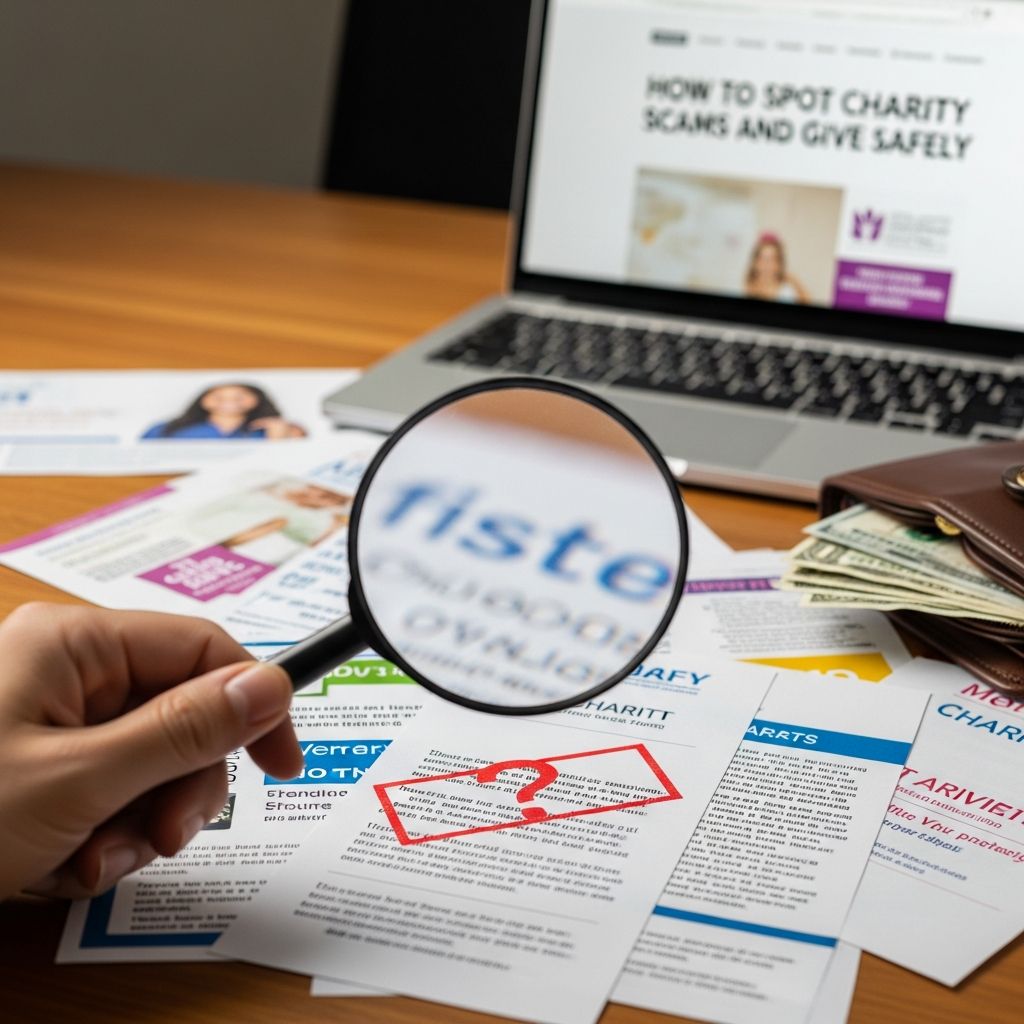
How Scammers Capitalize on Your Desire to Give to Charity
It’s a heartwarming impulse of human nature to want to help those in need. Whether facing devastating natural disasters, humanitarian crises, or personal hardships, there is no shortage of people who could benefit from charitable assistance. The holiday season, traditionally a time of increased generosity, brings both opportunities to help and heightened vulnerability to exploitation. Unfortunately, wherever compassionate individuals exist with genuine intentions to contribute, there will always be opportunistic scammers ready to take advantage of that goodwill. Charity scams have become increasingly sophisticated, targeting the very heart of human kindness to perpetrate financial fraud.
The challenge facing potential donors is significant: how can you help those genuinely in need while protecting yourself from fraudulent schemes? The goal of this guide is not to discourage charitable giving, but rather to empower you with knowledge. By understanding how charity scams operate, recognizing the warning signs, and knowing which resources to trust, you can donate confidently to legitimate organizations while avoiding costly fraud.
Understanding How Charity Scams Work
The most successful charity scams operate with all the appearance of legitimate nonprofit organizations. They typically possess proper certifications, professional websites, and convincing branding that closely mirrors established charitable organizations. This legitimacy veneer is precisely what makes them dangerous—potential donors often cannot immediately distinguish between real and fraudulent charities at first glance.
Scammers employ various tactics to exploit donors’ generosity. They leverage urgency created by natural disasters, health crises, and humanitarian emergencies to prevent donors from asking critical questions or conducting due diligence. By creating a sense of time sensitivity, scammers pressure people into making snap decisions without verification. This psychological manipulation is one of the most effective tools in their arsenal.
Resources to Spot Charity Scams
One of the most powerful defenses against charity fraud is education about the resources available to verify organizations before donating. Several reputable watchdog organizations maintain databases and ratings of charities to help donors make informed decisions.
Charity Watchdog Organizations
Charity Watch operates a letter-grading system that evaluates nonprofits primarily based on the percentage of donations that actually reach charitable programs rather than administrative costs. For example, their analysis of veteran charities reveals significant disparities in efficiency, with some organizations directing as little as 6% of donations to actual charitable work while others dedicate substantially higher percentages. This transparency allows donors to understand exactly where their money goes before contributing.
Before donating to any organization, invest five minutes in verification. Check the organization’s status on watchdog websites, verify their tax-exempt status with the IRS, and review their annual financial reports. This minimal time investment can save you from financial loss and help ensure your donation reaches genuine causes.
Phone and Text Charity Scams
Unsolicited contact from charities—whether via phone call, text message, or email—should immediately raise red flags. Data brokers have compiled extensive information on millions of individuals, enabling scammers to conduct targeted outreach campaigns to potential victims. These contacts often appear to come from established organizations but are actually fraudulent operations.
How Phone Scams Operate
Scammers use caller ID spoofing technology to make their calls appear to originate from legitimate charities. They employ high-pressure sales tactics, requesting immediate donations and discouraging donors from taking time to verify legitimacy. Legitimate charitable organizations rarely employ aggressive cold-calling tactics, as they rely on established relationships and reputation-based fundraising.
Protecting Yourself from Direct Contact Scams
The most effective strategy is simple: if you receive an unsolicited call or text from a charity, assume it’s fraudulent from the start. Legitimate organizations typically do not solicit donations through aggressive phone campaigns. If you genuinely wish to support an organization that contacts you, verify their legitimacy independently by:
- Hanging up and calling the organization’s publicly listed phone number
- Visiting their official website directly (not through links in messages)
- Checking their registration with state charity oversight agencies
- Verifying their nonprofit status through the IRS website
Crowdfunding Fraud and Personal Fundraising Scams
Crowdfunding platforms like GoFundMe have democratized fundraising for individuals facing personal crises. While many legitimate campaigns help people recover from disasters and medical emergencies, these platforms also attract fraudsters seeking quick profits. The trade-off of direct giving is that individual fundraisers lack the accountability structures that govern established nonprofits.
Common Crowdfunding Fraud Types
GoFundMe has identified several prevalent fraud categories on its platform. Fraudulent emails claiming to be from the platform often attempt to redirect donors to phishing websites. Phishing scams involve criminals impersonating legitimate fundraisers to extract personal information for identity theft or financial fraud.
Identifying Fake Crowdfunding Campaigns
Fraudulent campaigns typically share common characteristics that distinguish them from legitimate fundraising efforts:
- Vague descriptions: Lack specific details about the situation, location, or individuals involved
- Stock photography: Use of copyright-free images or AI-generated photos rather than genuine personal photos
- Copied images: Theft of photos from legitimate campaigns or other sources
- Minimal backstory: Little to no verifiable information about the fundraiser or their circumstances
You can verify the authenticity of photos by performing reverse image searches. If the same photo appears in multiple unrelated campaigns or on stock photo websites, this indicates potential fraud.
Verifying Crowdfunding Legitimacy
Before donating to crowdfunding campaigns, take these verification steps:
- Review the campaign’s creation date and activity history
- Check for detailed personal information and verifiable facts
- Perform reverse image searches on all photos
- Look for contact information and social media profiles you can verify independently
- Read all comments and donor feedback carefully
- Be wary of campaigns requesting cryptocurrency or wire transfers
Counterfeit Charity Frauds
Among the most deceptive charity scams are counterfeit operations that impersonate established, well-known organizations. Scammers deliberately create names that closely resemble legitimate charities, exploiting donor familiarity to siphon donations meant for genuine causes.
Examples of Charity Impersonation
A notable case involved the Breast Cancer Society, a fraudulent organization that mimicked the legitimate National Breast Cancer Foundation. This counterfeit charity successfully diverted donations designated for breast cancer research and was ultimately shut down by the Federal Trade Commission for fraud. This case illustrates how closely fake charities can mirror legitimate organizations.
Disaster-Related Charity Scams
Following major natural disasters, fraudulent charities emerge rapidly to exploit donors’ heightened emotional response and urgency. The IRS recently warned the public about scams targeting donations for victims of Hurricanes Milton and Helene. These counterfeit charities use official-sounding names and create convincing websites to appear legitimate while siphoning donations meant for disaster relief.
Data Harvesting Through Fake Charities
Beyond financial theft, some fraudulent charities operate primarily to harvest personal information for data brokers. In March 2024, the Salvation Army reported scammers impersonating their organization while requesting sensitive personal information, including Social Security numbers. This dual-purpose fraud causes both financial loss and identity theft risk.
Red Flags and Warning Signs
Recognizing warning signs before donating can prevent financial loss and identity theft. Be cautious of organizations displaying these characteristics:
- Pressure for immediate donation decisions
- Refusal to provide written materials or annual reports
- Reluctance to answer questions about fund allocation
- Requests for cash, wire transfers, or gift cards
- Unsolicited contact via phone or text
- Vague descriptions of charitable programs
- Requests for personal financial information beyond donation processing
- Poor website quality or numerous grammatical errors
- Inability to verify nonprofit status through official channels
How to Verify Legitimate Charities
Before donating to any organization, conduct basic verification to confirm legitimacy. The IRS maintains a searchable database of tax-exempt organizations where you can verify nonprofit status and access Form 990 filings that show financial information. State attorney generals’ offices also maintain registries of registered charities in their jurisdictions.
Key Verification Steps
- Search the organization on the IRS Tax Exempt Organization Search tool
- Review their Form 990 to understand financial structure and fund allocation
- Check ratings on Charity Watch or similar watchdog organizations
- Verify registration with your state’s charity oversight agency
- Review the organization’s official website for transparency and professional presentation
- Look for detailed information about programs, leadership, and accomplishments
- Check for independent news coverage and third-party validation
Reporting Suspected Charity Fraud
If you suspect a charity scam, report it to appropriate authorities. The Federal Trade Commission (FTC) accepts fraud complaints through its website and uses reports to identify patterns and take enforcement action. Your state attorney general’s office also investigates charity fraud complaints. Additionally, report suspected impersonation to the legitimate organization being mimicked, as they may take legal action and warn donors.
Frequently Asked Questions About Charity Scams
Q: How can I verify a charity’s tax-exempt status?
A: Use the IRS Tax Exempt Organization Search at irs.gov to look up the charity’s name. Legitimate nonprofits will appear in this database with their registration date and annual filing status clearly displayed.
Q: What percentage of donations should go to charitable programs?
A: While standards vary, reputable charities typically allocate at least 75-90% of donations to programs. Watchdog organizations rate charities based on these percentages, with some flagging organizations that dedicate less than 25% to actual charitable work.
Q: Is it safe to donate through crowdfunding platforms?
A: Crowdfunding can be safe if you verify campaign details thoroughly. Look for specific personal information, recent photos, detailed descriptions, and active donor engagement. Avoid campaigns that seem vague or use stock photography.
Q: Should I ever provide personal information to a charity?
A: Legitimate charities only need information necessary for donation processing: name, address, and payment information. They should never request your Social Security number, passwords, or complete financial information.
Q: What should I do if I accidentally donated to a fraudulent charity?
A: Contact your bank or credit card company immediately to report the fraud. File a complaint with the FTC and your state attorney general. Monitor your accounts for unauthorized activity and consider placing fraud alerts on your credit reports.
Q: How can I protect myself from text and phone charity scams?
A: Assume all unsolicited charity contact is fraudulent. If interested in supporting an organization that contacts you, independently verify their information and call their official phone number from legitimate sources rather than responding to the initial contact.
Q: Are disaster relief charities particularly risky?
A: Disaster relief does attract more fraudulent organizations, but legitimate charities also surge in response. Use the same verification methods, and consider supporting established national organizations with long track records rather than newly created entities.
References
- How Scammers Capitalize on Your Desire to Give to Charity — The Penny Hoarder. https://www.thepennyhoarder.com/save-money/charity-scams/
- Tax Exempt Organization Search — Internal Revenue Service (IRS). https://www.irs.gov/charities-non-profits/tax-exempt-organization-search
- Charity Navigator Methodology — Charity Navigator. https://www.charitynavigator.org/
- Report Fraud to the FTC — Federal Trade Commission. https://reportfraud.ftc.gov/
- Complaint Process for Charity Fraud — National Association of State Charity Officials. https://www.nasconet.org/
Similar Articles








Read full bio of medha deb