How to Solve These 6 Problems Your Heirs Could Have With Your Estate
Even with a will, your heirs may face estate issues like vague terms or outdated beneficiaries. Discover solutions to ensure smooth inheritance.

Fifty-eight percent of Americans have no will, according to a 2017 Caring.com survey, leaving state laws to dictate asset distribution rather than their wishes.1 However, even the 42% with wills risk complications if plans are incomplete or outdated. This article outlines six common problems heirs face and actionable solutions to ensure your estate transfers smoothly, minimizing disputes, taxes, and probate delays.
Your Heirs Don’t Know Where to Find Your Estate Plan
One of the most immediate hurdles for heirs is locating critical documents like wills, trusts, powers of attorney, and financial records. Without clear access, families scramble amid grief, delaying probate and increasing costs. High-profile cases, such as Prince’s $156 million estate, illustrate how unknown documents and heirs prolong administration, with courts appointing special administrators and disputes among siblings dragging proceedings.4
To solve this, create an “in case of emergency” folder containing your will, trust documents, attorney contacts, bank accounts, insurance policies, passwords, and bill payment instructions. Store it in a secure, accessible location like a fireproof safe or shared digital vault, and inform trusted family members of its whereabouts. Introduce heirs to your estate attorney so they know whom to contact immediately upon your passing.1
- Digital tools: Use password managers or services like Everplans to centralize info securely.
- Family discussions: Hold open conversations about your plan to reduce surprises and build consensus.
- Regular updates: Review and relocate documents after life changes like moves or new advisors.
Proactive organization prevents chaos, as seen in estates where clear guidance allowed swift asset transfers without court intervention.
Your Will Is Too Vague
Vague language, such as “divide my jewelry among my children,” invites disputes over sentimental or valuable items. Siblings may clash over specific pieces, leading to costly legal battles or lifelong rifts. Estate attorney Ashley L. Case recommends grouping items of equal monetary or sentimental value and assigning them randomly to heirs, allowing private negotiations for swaps.3
Specific bequests eliminate ambiguity. List heirlooms by description—e.g., “my grandmother’s diamond brooch to daughter Jane”—and use a personal property memorandum attached to your will, which can be updated without rewriting the entire document. For complex distributions, consider trusts that outline exact terms.
| Problem | Solution | Benefit |
|---|---|---|
| Vague item division | Specific bequests or memorandum | Prevents sibling fights |
| Unequal perceived value | Appraisal and “buy” system | Equalizes shares fairly |
| Sentimental conflicts | Random group assignment | Allows heir negotiations |
Hire an appraiser for high-value items to assign fair prices, letting heirs “purchase” desired pieces from a shared pool, reducing tension.3 This method, suggested by experts, promotes equity and preserves family harmony.
Your Beneficiaries Don’t Match Your Will
Beneficiary designations on retirement accounts, IRAs, 401(k)s, and life insurance override wills, potentially sending assets to ex-spouses or outdated names despite detailed estate plans. Relationships change—divorces, births, deaths—but many neglect updates, creating unintended windfalls or disinheritances.15
Review designations every 2-3 years or after major events like marriage, divorce, or child birth. Name primary and contingent beneficiaries, avoiding minors or incapacitated individuals who trigger court guardianship. For example, Heath Ledger’s pre-daughter will left his $20 million to family, sparking questions resolved only by family agreement—not a guaranteed outcome.4
- Life insurance/Retirement: Update to align with current wishes; use trusts for minors.
- Joint accounts: Understand JTWROS passes directly, bypassing probate but risking unequal shares.
- Tools: Contact custodians annually for beneficiary forms.
Alignment ensures assets flow as intended, avoiding probate and taxes on mismatched distributions.
You Name the Estate as a Beneficiary
Designating your estate as beneficiary on IRAs, 401(k)s, or insurance forces assets through probate, exposing them to creditors and delays. Heirs receive only remnants after claims, unlike direct beneficiary transfers that bypass probate.1
Instead, name individuals or trusts directly. This allows faster access and creditor protection. Direct custodians to handle inherited IRAs automatically, ensuring required minimum distributions (RMDs) compliance to avoid 50% penalties plus income taxes.1 Trusts protect vulnerable heirs, preserving government benefits like Medicaid.
For special needs family, special needs trusts distribute without disqualifying aid, providing clear instructions.1
Probate Delays and Creditor Claims
Probate, the court validation of wills, averages 1-2 years and incurs 3-7% fees, tying up assets. Michael Jackson’s estate faced years of challenges despite a trust, as non-trust assets probated amid creditor suits.4
Avoid probate via:
- Living trusts: Transfer assets pre-death for immediate distribution.
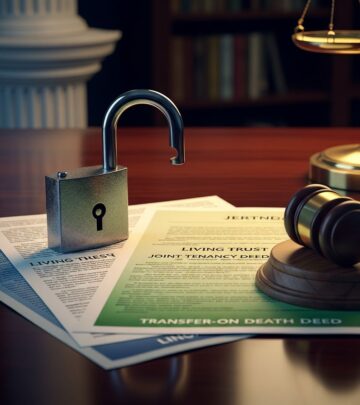
- Payable-on-death (POD)/Transfer-on-death (TOD): For bank/brokerage accounts.
- Joint ownership: Carefully, to avoid other issues.
These strategies, per financial advisors, slash delays and costs, ensuring heirs access funds promptly.5
Tax Pitfalls and Required Minimum Distributions
Inherited IRAs require RMDs; errors trigger steep penalties. Outdated plans ignore tax changes, eroding inheritances. Consult advisors for strategies like Roth conversions.6
Solutions include automatic custodian withdrawals and trusts specifying tax handling. Consider family dynamics—equal shares may need adjustment for needs.6
Frequently Asked Questions (FAQs)
Q: How often should I review my estate plan?
A: Every 3-5 years or after life events like divorce, birth, or death to keep beneficiaries and terms current.5
Q: What if I have no will?
A: Intestacy laws decide, often unequally; draft one immediately via attorney or online tools, then notarize.1
Q: Can trusts protect against creditors?
A: Yes, irrevocable trusts shield assets; revocable ones ease management but offer less protection.1
Q: How to handle special needs heirs?
A: Use special needs trusts to supplement without affecting benefits.1
Q: What’s the cost of poor planning?
A: Disputes, taxes, probate fees—up to 7% of estate value, plus emotional toll.4
Implementing these fixes safeguards your legacy. Start with a family meeting and attorney consult for tailored advice.
References
- How to Solve These 6 Problems Your Heirs Could Have With Your Estate — Wise Bread. 2017 (approx., based on cited survey). https://www.wisebread.com/how-to-solve-these-6-problems-your-heirs-could-have-with-your-estate
- What Dead Celebrities can Teach Us about Estate Planning — Council of Advanced Estate Planners (CAEPC). 2018-03. https://www.caepc.org/assets/Councils/CentralArizona-AZ/userContent/files/What%20Dead%20Celebrities%20can%20Teach%20Us%20about%20Estate%20Planning%20(CAEPC%20March%202018)(1).pdf
- The Fair Way to Split Up Your Family’s Estate — Wise Bread. N/A. https://www.wisebread.com/the-fair-way-to-split-up-your-familys-estate
- Estate Plans Gone Wrong — Dallas Theological Seminary Foundation. 2024-11. https://foundation.dts.edu/wp-content/uploads/sites/40/2024/11/2025-06-eNews-Article-Estate-Plans-Gone-Wrong_v2.pdf
- The 9 Biggest Estate Planning Mistakes to Avoid — Vision Retirement. Recent (within 24 months as of 2026). https://www.visionretirement.com/articles/estate-planning/common-mistakes-to-avoid
- 10 Estate Planning Mistakes — Cowrywise. Recent. https://cowrywise.com/blog/estate-planning-mistakes/
Similar Articles








Read full bio of medha deb