How to Save Money on College Applications
Smart strategies to minimize college application costs without sacrificing your dream schools and maximize your financial aid opportunities.

Applying to college can be an expensive endeavor, with application fees alone adding up to hundreds or even thousands of dollars for students aiming for multiple schools. The average application fee ranges from $50 to $90 per school, and when combined with test fees, transcript costs, and test prep, the total can exceed $1,000 easily. However, with strategic planning, students can significantly reduce these costs while still pursuing their top-choice institutions. This guide outlines proven methods to minimize expenses, drawing from expert financial advice tailored for prospective college applicants.
Narrow Down Your College List
The foundation of saving on applications starts with a targeted college list. Instead of applying to 15-20 schools indiscriminately, aim for 8-12 well-researched options. Categorize them into reach, match, and safety schools based on your GPA, test scores, and extracurriculars. Tools like the Common Data Set for each school or free college matchmakers from the College Board can help refine your list without cost.
Research shows that students who apply to fewer, more suitable schools often receive better financial aid packages and higher acceptance rates. Focus on geographic preferences, program strengths, and net cost after aid rather than prestige alone. For instance, public universities in your state typically have lower fees and guaranteed lower tuition for residents.
- Reach schools: 2-3 ambitious options where admission is competitive.
- Match schools: 4-5 where your profile aligns well with admitted students.
- Safety schools: 2-3 with high acceptance rates and strong programs.
By limiting applications, you avoid unnecessary fees; for example, skipping just five $75 applications saves $375.
Apply Early Action or Early Decision Where Possible
Early Action (EA) and Early Decision (ED) programs allow non-binding or binding applications by November 1st or 15th, often waiving fees entirely. Over 800 schools offer EA, which lets you hear decisions early without commitment, giving time to apply elsewhere if needed. ED is binding but ideal if it’s your top choice, as many schools waive fees and offer priority aid consideration.
Benefits extend beyond fees: early applicants typically face less competition and receive decisions by December, reducing stress and supplemental material costs. Check the Common App or Coalition App for fee waiver checkboxes in EA/ED sections. Note: Some elite schools like Harvard use Restrictive Early Action, limiting other private school applications.
| Application Type | Fee Typical? | Binding? | Decision Timeline |
|---|---|---|---|
| Regular Decision | Yes ($50-90) | No | March-April |
| Early Action | Often Waived | No | December |
| Early Decision | Often Waived | Yes | December |
Request Application Fee Waivers
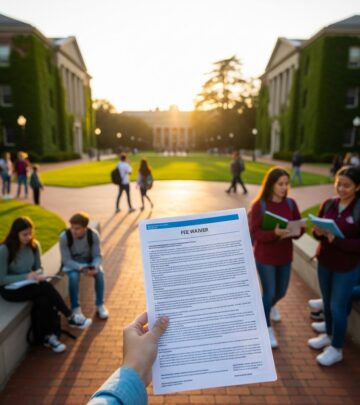
Fee waivers are a game-changer for eligible students, covering costs at most U.S. colleges. The SAT/ACT fee waiver program automatically qualifies you for college app waivers via the NACAC form or directly through Common App. Eligibility includes free/reduced lunch, family income under $60,000, or public assistance receipt.
Over 80% of four-year colleges accept waivers, including Ivies like Yale and Stanford. Request via counselor, create a Common App account early (waivers load after counselor approval), or use the school’s portal. No need to disclose waiver use to colleges; it’s confidential. Pro tip: Apply to test-optional schools to skip SAT/ACT fees entirely, saving $60+ per test.
- Documents needed: Tax returns, lunch program letter, or SSI proof.
- Common App: Mark ‘yes’ for waiver; counselor verifies.
- Individual schools: Email admissions for case-by-case waivers based on merit or hardship.
Use the Common App or Coalition App Strategically
The Common App covers 900+ schools with one $90 membership fee, allowing up to 20 applications. Customize essays per school but reuse core sections like activities and honors. Coalition App, for 150+ schools, is free and emphasizes locked documents for authenticity.
Both platforms support fee waivers seamlessly. Start early to use preview mode, avoiding supplemental fee surprises. For schools outside these (e.g., UCs use their own app), apply minimally as California residents get fee grants.
Prioritize Schools That Share Essays and Supplements
Group schools by similar supplements to reuse writing. Public universities like UMN and UMich share prompts; privates like NYU and Michigan State reuse activities lists. Tools like CollegeVine’s supplement tracker help identify overlaps.
Avoid schools with unique supplements (e.g., UChicago quirky essays) unless top priorities. This reduces writing time and editing costs if using paid services.
Skip Unnecessary Standardized Tests
With 1,900+ test-optional/permanent-test-free schools post-COVID, forego SAT/ACT unless required. Sending scores costs $12/report; skip for savings. Prepare via free Khan Academy, not pricey courses ($1,000+).
Test out of classes via AP/IB/CLEP later, but focus high school efforts on GPA-building. Confirm policies on each school’s site.
Get Transcripts and Recommendations Efficiently
HS transcripts cost $2-5 each via Parchment/Naviance; request only for applied schools. Teachers provide recs free—choose 2-3 who know you well. Waive FERPA rights for stronger letters.
Digital submissions via Common App are free; avoid mail ($10+ postage). Mid-year reports are optional unless requested.
Apply for Scholarships Early to Offset Costs
Scholarships cover app fees retroactively. Sites like Fastweb (free) list local/national awards. Apply to 10-20 small scholarships ($500-2,000) for high ROI. No-essay options like Niche $10K save time.
Merit aid from schools can reimburse fees; negotiate post-acceptance.
Frequently Asked Questions (FAQs)
Q: Who qualifies for application fee waivers?
A: Students from families with income <$60K, free/reduced lunch recipients, or financial hardship. Counselors verify via NACAC form.
Q: Does applying early hurt my chances?
A: No, early pools are often stronger but non-binding EA doesn’t limit options.
Q: Can I get fee waivers for private schools?
A: Yes, most accept SAT/ACT or Common App waivers, including Ivies.
Q: How many schools should I apply to?
A: 8-12 targeted schools balance options and costs effectively.
Q: Are test-optional policies permanent?
A: Many are; check each school’s updated policy as some revert post-2025.
Final Tips for Maximum Savings
Track expenses in a spreadsheet: fees, stamps, prints. Use library for test prep. Parent involvement: discuss list, proofread (free). Total savings can exceed $800 per student. Invest saved funds in a high-yield account for college.
College is an investment; smart application saves pave the way for debt-free graduation. Start planning sophomore year for compounded benefits.
References
- College Board’s BigFuture — College Board. 2024-08-15. https://bigfuture.collegeboard.org/
- FAFSA Application Guide — U.S. Department of Education. 2025-10-01. https://studentaid.gov/apply-for-aid/fafsa
- Common Application Fee Waiver Policy — Common App. 2025-01-10. https://www.commonapp.org/apply/first-year-students/fee-waiver
- NACAC How to Request a Fee Waiver — National Association for College Admission Counseling. 2024-11-20. https://www.nacacnet.org/topics-resources/fee-waivers/
- NCES Data on Application Fees — National Center for Education Statistics. 2023-09-01. https://nces.ed.gov/programs/coe/indicator_cuc
- Princeton Review College Savings Strategies — The Princeton Review. 2024-05-12. https://www.princetonreview.com/college-advice/creative-ways-to-save-money-on-college
Similar Articles








Read full bio of Sneha Tete