How To Save For A House While Renting: Proven Strategies
Master practical strategies to build your down payment and achieve homeownership while renting.
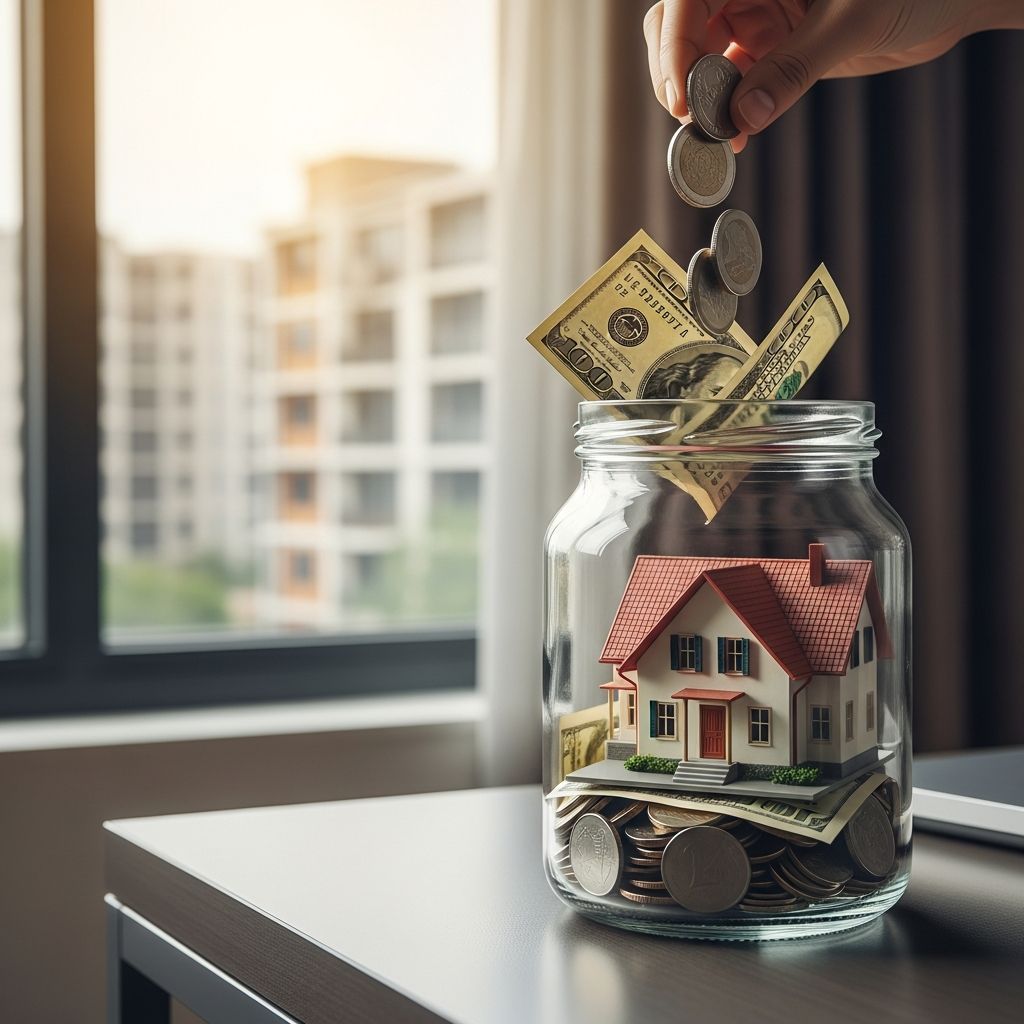
How to Save for a House While Renting
Saving for a house while managing rent payments may seem challenging, but with the right strategies and mindset, homeownership is absolutely achievable. Whether you’re a first-time buyer or returning to the housing market, understanding how to prioritize your down payment savings while covering your current living expenses is essential. This comprehensive guide walks you through proven methods to accelerate your savings journey and turn your homeownership dreams into reality.
Assess Your Financial Readiness
Before diving into aggressive savings strategies, take a comprehensive look at your current financial situation. Start by evaluating your income, monthly expenses, and existing debt to determine a realistic amount you can set aside for a down payment. This honest assessment prevents you from setting unattainable goals that could lead to frustration.
During this evaluation, calculate what a potential mortgage payment would look like for your target home price. Understanding your future housing expenses prepares you for the transition from renting to homeownership and helps you gauge whether your current income can comfortably support a mortgage alongside your other financial obligations.
Create a Powerful Budget Using the 50/30/20 Rule
One of the most effective budgeting frameworks for savers is the 50/30/20 rule, which allocates your after-tax income into three categories:
- 50% for Needs: Essential expenses including rent, groceries, utilities, insurance, and transportation costs
- 30% for Wants: Discretionary spending on entertainment, dining out, hobbies, subscriptions, and lifestyle choices
- 20% for Savings & Debt: Contributions toward savings goals and debt repayment
The beauty of this framework lies in its flexibility. By transferring just 5-10% of your “wants” expenses toward your down payment fund, you can significantly accelerate your savings without drastically reducing your quality of life. For example, if your “wants” budget is $600 monthly, redirecting $50-60 toward your down payment adds $600-720 to your savings annually.
Set S.M.A.R.T. Savings Goals
Vague objectives like “save for a house” rarely succeed. Instead, create S.M.A.R.T. goals that guide your efforts:
- Specific: Define exactly what you’re saving for (e.g., a down payment)
- Measurable: Set a concrete dollar amount (e.g., $50,000)
- Attainable: Base your target on your income and expenses to ensure feasibility
- Relevant: Ensure the goal aligns with your homeownership needs and timeline
- Time-Bound: Establish a specific deadline (e.g., “within 3 years”)
Once you’ve set your total savings goal, break it into smaller monthly or weekly contributions. If you need to save $30,000 within 24 months, that translates to approximately $1,250 monthly. Dividing large goals into manageable increments makes the objective feel less overwhelming and easier to track.
Monitor and Improve Your Credit Score
Your credit score directly impacts your ability to qualify for favorable mortgage terms. Lenders use credit scores to determine interest rates, so a higher score can save you thousands over the life of your loan.
Focus on these credit-building actions:
- Regularly monitor your credit report for errors and dispute any inaccuracies
- Make all payments on time, as payment history comprises 35% of your credit score
- Pay down existing debt to lower your debt-to-income ratio
- Avoid opening new credit accounts unnecessarily
- Keep credit card balances low relative to your credit limits
By the time you’re ready to purchase, a strong credit profile positions you to secure better loan terms and lower interest rates, ultimately allowing you to afford more home for your money.
Automate Your Savings
One of the most powerful savings strategies is automation. Rather than relying on willpower to manually transfer money to savings each month, set up automatic transfers directly from your paycheck to a dedicated savings account.
This “set it and forget it” approach eliminates the temptation to spend money intended for your down payment. Many employers and banks offer automated transfer options that move funds before you see them in your checking account, making it psychologically easier to save. These consistent contributions accumulate quickly without requiring ongoing effort or decision-making.
Choose the Right Savings Account
Where you keep your down payment savings matters significantly. Avoid investing your down payment fund in volatile instruments like the stock market, which could crash right when you’re ready to buy.
Instead, consider these safer options:
- High-Yield Savings Accounts: Offer interest rates around 1.5-2.2%, allowing your savings to grow while maintaining liquidity and FDIC protection
- Money Market Accounts: Similar to savings accounts but often with slightly higher interest rates and check-writing capabilities
- Traditional Savings Accounts: FDIC-insured and secure, though interest rates are minimal compared to high-yield alternatives
These accounts provide security, accessibility, and modest growth without the risk of losing principal before your purchase date.
Slash Unnecessary Expenses
With your budget structured and automated savings in place, identify and eliminate expenses that don’t align with your priorities.
Common areas to cut include:
- Dining out frequently—cook at home or host potlucks with friends instead
- Unused subscriptions—audit streaming services, gym memberships, and software subscriptions
- Expensive habits—reduce coffee shop visits, premium phone plans, or luxury items
- Energy waste—lower utility costs through conservation and efficiency improvements
These adjustments don’t require extreme sacrifices; they involve redirecting spending toward your most important goal.
Get a Roommate
Sharing your living space with a responsible roommate can dramatically accelerate your savings. Splitting rent and utilities cuts your housing costs in half, freeing up significant funds for your down payment.
This strategy offers multiple benefits:
- Reduced monthly rent and utility expenses
- Faster accumulation of down payment savings
- Shared household expenses and responsibilities
- Potential social benefits and companionship
However, choose your roommate carefully and establish clear agreements about rent contributions, lease terms, and household expectations to avoid conflicts.
Find Buying Partners Through Co-Buying
Co-buying allows you to share the financial responsibility and potentially purchase a property sooner than going solo. By partnering with one or more trusted individuals, you can split mortgage payments, utilities, property taxes, and maintenance costs.
Before entering a co-buying arrangement, establish clear agreements covering:
- Ownership percentages and equity distribution
- Financial contributions from each party
- Decision-making processes and authority
- Plans for renovations, improvements, and maintenance
- Exit strategies if circumstances change
- How future disputes will be resolved
Formalize all agreements with a lawyer or title company to protect everyone’s interests and ensure a smooth partnership throughout your homeownership journey.
Consider Withdrawing from Your IRA
If you have a traditional IRA, the IRS allows you to withdraw up to $10,000 penalty-free for qualified first-time home buyer expenses. This can provide a meaningful boost to your down payment funds.
Important considerations:
- You must still pay income taxes on the withdrawn amount
- The withdrawal reduces your retirement savings and future compound growth
- This option is only available once in your lifetime
- Consult a financial advisor before making this decision
While this strategy can help, carefully weigh the long-term impact on your retirement security before using it.
Explore Rent-to-Own Opportunities
Rent-to-own (also called lease-to-own) arrangements allow you to live in a house while building toward eventual ownership. These programs typically span 2-5 years and offer unique advantages for savers.
Potential benefits include:
- A portion of your monthly rent may be credited toward the down payment
- Negotiated lower monthly payments compared to traditional rentals
- Time to improve your credit score before formal purchase
- Opportunity to build equity while saving
- Experience living in the home before committing to ownership
However, carefully review all terms, understand your obligations, and consult with a real estate attorney to ensure the arrangement protects your interests.
Additional Income-Boosting Strategies
Beyond expense reduction, consider increasing your income to accelerate savings:
- Side Gigs: Freelance work, consulting, or gig economy jobs can generate extra income
- Sell Unused Items: Convert clutter into cash through online marketplaces
- Negotiate Better Rates: Call your internet and phone providers to lower your bills
- Ask for a Raise: Advocate for higher compensation at your current job
- Part-Time Work: Seasonal or weekend employment adds to your savings
Frequently Asked Questions
Q: How much should I save for a down payment?
A: Conventional loans typically require 3-5% down, though 20% is ideal to avoid mortgage insurance. Your target depends on your home price, local market conditions, and loan type. Calculate based on your desired home’s price and work backward to determine monthly savings needed.
Q: How long does it typically take to save for a down payment?
A: Timeline varies based on your savings rate and target amount. Saving $10,000 at $400/month takes 25 months. Saving $50,000 at $1,250/month takes 40 months. Use your specific numbers to create a realistic timeline.
Q: Is renting while saving considered “throwing money away”?
A: No. Rent provides housing, stability, and flexibility while you build savings for homeownership. This narrative is counterproductive and ignores the benefits of renting while achieving your financial goals.
Q: Can I use my retirement savings for a down payment?
A: First-time buyers can withdraw up to $10,000 from a traditional IRA penalty-free, but taxes still apply. Consult a financial advisor about the long-term impact on your retirement before deciding.
Q: What’s the best account type for down payment savings?
A: High-yield savings accounts and money market accounts offer better interest rates (1.5-2.2%) than traditional savings accounts while maintaining FDIC protection and liquidity. Avoid volatile investments for funds needed within 2-5 years.
Q: How does co-buying work legally?
A: Co-buyers share mortgage responsibility and property ownership. Legal agreements should specify ownership percentages, financial contributions, and decision-making authority. Work with a lawyer to formalize the arrangement.
References
- How to Save for a House While Renting — Satsuma Real Estate. 2025. https://www.satsumarealestate.com/how-to-save-for-house-while-renting/
- How to Quickly Save For A House While Renting – Budget Tips, Debt Advice & Smart Saving Hacks — Living In Central Arkansas. 2025. https://www.youtube.com/watch?v=JqHiczUu_Cc
- How to Save for a Down Payment on a House — SmartAsset.com. 2025. https://smartasset.com/mortgage/how-to-save-for-a-house
- Federal Deposit Insurance Corporation (FDIC) Coverage Information — U.S. Federal Deposit Insurance Corporation. 2026. https://www.fdic.gov
- IRA Withdrawal Rules for First-Time Home Buyers — Internal Revenue Service (IRS). 2026. https://www.irs.gov
Similar Articles








Read full bio of medha deb