How To Save For A Rainy Day: 6 Practical Tips For 2025
Learn what a rainy day fund is, how much you need, and simple, practical steps to build savings that protect you from life’s little surprises.

Life is full of small surprises: a flat tire, a last-minute flight change, or a vet bill you did not see coming. These moments can derail your budget if you do not have money set aside. That is where a rainy day fund comes in.
This guide explains what rainy day savings are, why they matter, how much you should save, and six practical tips to build your fund step by step. You will also see how rainy day savings fit into your broader financial plan, including budgeting and emergency funds.
What Are Rainy Day Savings?
Rainy day savings are small cash reserves you set aside for minor, unexpected expenses that do not rise to the level of a serious emergency.
These are unplanned costs that are:
- One-time or infrequent
- Relatively small (often under a few hundred dollars)
- Needed soon, but not life-threatening
Examples of rainy day expenses include:
- A flat tire or small car repair
- Replacing a broken appliance like a toaster or kettle
- Minor medical or dental bills not fully covered by insurance
- School-related costs such as supplies or activity fees
- Pet care, like a basic vet visit or medication
The goal of your rainy day fund is to help you avoid using credit cards or loans for these smaller surprises. Research from the U.S. Federal Reserve shows that many households struggle to cover even modest unexpected expenses in cash, which can lead directly to high-interest debt.
Rainy Day Fund vs Emergency Fund
A rainy day fund is often confused with an emergency fund, but they serve different roles.
| Feature | Rainy Day Fund | Emergency Fund |
|---|---|---|
| Purpose | Small, unexpected, one-off expenses | Major life disruptions and income loss |
| Typical Size | Few hundred to a few thousand dollars | 3–6 months of essential living expenses |
| Examples | Car tire, minor home repair, co-pay | Job loss, serious illness, major home damage |
| Account Type | Easy-access savings account | Separate, highly liquid savings account |
Emergency savings are widely recommended by financial educators and regulators, typically in the range of three to six months of expenses, to provide a buffer from income shocks. Your rainy day fund is a first line of defense for smaller bumps, so you do not constantly tap your larger emergency fund.
Why You Need Rainy Day Savings
Without a rainy day fund, even minor surprises can trigger a cascade of money stress. Several benefits make this type of savings essential:
- Reduces reliance on high-interest debt – When an unexpected bill arrives and you lack savings, credit cards and payday loans become the default. These often carry very high interest rates, which can lead to long-term debt cycles.
- Protects your emergency fund – Using a separate small savings buffer helps you reserve your emergency fund for truly major events like job loss or serious illness.
- Improves financial resilience – Households with even modest savings are far better able to absorb unexpected expenses without falling behind on rent, utilities, or loan payments.
- Lowers money-related stress – Knowing you have cash available for life’s small surprises can greatly reduce anxiety, making it easier to focus on longer-term goals.
Building a rainy day fund is a realistic first step if you are just starting your financial journey or rebuilding after a setback.
How Much Should You Save In Your Rainy Day Fund?
There is no single perfect number, but you can use a simple framework to estimate your rainy day savings target.
Step 1: List Typical “Rainy Day” Expenses
Think about the small, unexpected costs you have faced in the past year, or could reasonably expect in the next year. For example:
- Average car repair or tire replacement
- Basic doctor or urgent care visit co-pay
- Minor home repair (like fixing a leak or replacing a small appliance)
- Pet vet visit
- School or childcare-related fees that pop up during the year
Write down rough amounts for each and take an average of the likely cost.
Step 2: Choose a Starter Goal
For many people, a realistic starting target is between $500 and $1,000 as a rainy day fund. Financial capability surveys show that many households struggle to cover a $400–$1,000 unexpected expense, so reaching this level is a meaningful milestone.
You can adjust based on your situation:
- If you have a car, pets, or an older home, aim toward the higher end.
- If your budget is tight, start with a smaller goal like $250, then increase it over time.
Step 3: Separate From Your Emergency Fund Target
Once you have a rough amount for your rainy day fund, keep it distinct from your emergency fund goal (generally three to six months of necessary expenses like rent, utilities, food, and insurance).
One approach is to:
- Fully fund your rainy day fund first (e.g., $500–$1,000).
- Then shift focus to building your larger emergency fund while maintaining your rainy day balance.
Where To Keep Your Rainy Day Savings
Your rainy day fund needs to be safe, separate, and easy to access. A basic savings account at a bank or credit union is usually the best fit.
Look for:
- FDIC- or NCUA-insured accounts – In the U.S., deposit insurance helps protect your money up to set limits in the event of a bank or credit union failure.
- No monthly maintenance fees – Fees can slowly eat away at your savings.
- Easy access – You should be able to transfer money quickly to checking when you need it, without penalties.
- Some interest – A competitive savings rate will help your fund grow modestly over time.
Avoid keeping your rainy day money in cash at home if possible; it can be lost, stolen, or too easy to spend. Likewise, avoid tying it up in investments that can lose value or be hard to liquidate quickly when you need the money.
6 Key Tips To Start & Grow Your Rainy Day Fund
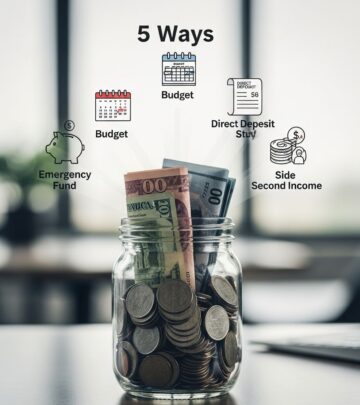
Once you know your rainy day savings target and where you will keep it, the next step is to build it. Here are six practical strategies.
1. Build a Budget That Makes Room For Saving
A clear budget shows you where your money is going and where you can find room to save. Budgeting is repeatedly identified by financial educators as a core habit for improving money management.
To budget for your rainy day fund:
- List your monthly income from all sources.
- Write down your fixed expenses (rent, insurance, loan payments, childcare).
- Estimate variable expenses (groceries, transport, utilities, personal spending).
- Identify areas where you can trim even $20–$50 a month.
- Assign a specific line in your budget for “Rainy Day Savings.”
Even small, consistent monthly contributions add up over time and help you reach your goal without feeling overwhelmed.
2. Automate Your Savings
Automation removes the need to rely on willpower every month. Many banks and credit unions allow you to set up automatic transfers from your checking account to your savings account on a regular schedule.
To automate effectively:
- Choose a realistic transfer amount (for example, $25–$100 per paycheck).
- Schedule the transfer for the same day you get paid.
- Treat this transfer like a non-negotiable bill you owe yourself.
If money is tight, start with a very small amount (even $10) and increase it as your budget improves.
3. Use Windfalls And Extra Income
One of the fastest ways to boost your rainy day fund is to direct unexpected income straight into savings. This could include:
- Tax refunds
- Work bonuses or commissions
- Cash gifts
- Side hustle or freelance income
- Rebates or refunds from bills
Research and personal finance education often encourage using windfalls to strengthen your financial foundation, including paying off high-interest debt and building savings.
A simple rule: Decide in advance to put a set percentage (for example, 50%–80%) of every windfall into your rainy day or emergency fund before you spend the rest.
4. Cut Small, Ongoing Costs
You do not need to eliminate every treat from your life to save money. Instead, look for small, recurring expenses that you can reduce or rethink.
Potential areas to trim include:
- Subscription services you rarely use (streaming, apps, memberships)
- Takeout or delivery meals
- Convenience purchases, such as frequent snacks or drinks on the go
- Unused gym memberships or duplicate services
Decide which cuts feel realistic and sustainable, then redirect the savings directly into your rainy day account. You can even make this a personal “savings challenge” for one or two months to build momentum.
5. Pay Yourself Back When You Use It
Your rainy day fund is meant to be used. The key is to treat it as a revolving buffer, not a one-time stash.
When you spend from your rainy day savings:
- Record what you spent it on and how much.
- Resume (or increase) your automatic contributions.
- Set a mini-goal to restore the balance within a specific timeframe.
This habit keeps your fund ready for the next unexpected expense and prevents it from gradually shrinking to zero.
6. Balance Saving With Debt Repayment
If you have high-interest debt, it can be difficult to decide whether to prioritize saving or debt payoff. Many financial educators recommend a blended approach:
- First, build a small rainy day or starter emergency fund (for example, $500–$1,000) so you are not forced to borrow for every surprise.
- Then, focus aggressively on paying down high-interest debt while maintaining your small savings buffer.
This balance can help you avoid taking on new debt while you are paying down existing balances, improving your overall financial stability.
How Rainy Day Savings Fit Into Your Bigger Financial Picture
Your rainy day fund does not exist in isolation; it is part of a broader financial plan that includes:
- Budgeting – Aligning your spending with your priorities and goals.
- Emergency savings – Building three to six months of essential expenses as a safety net against major disruptions.
- Debt management – Paying down high-interest debt to reduce financial strain and interest costs.
- Insurance – Having the right coverage (health, auto, renters/home, disability) so one event does not wipe out your savings.
- Long-term investing – Once your short-term savings and emergency fund are secure, investing for goals like retirement or education.
Think of your rainy day savings as the first layer of protection: it absorbs the small shocks so your long-term plans can stay on track.
Simple Rainy Day Savings Plan (Example)
Here is a sample plan you can adapt to your situation:
| Step | Action | Target |
|---|---|---|
| 1 | Open a separate savings account for your rainy day fund. | Zero balance to start |
| 2 | Set an initial goal. | $500 in 6 months |
| 3 | Automate a transfer from each paycheck. | $40 every two weeks |
| 4 | Redirect one trimmed expense. | $20 per month from cancelled subscription |
| 5 | Put 50% of any windfall into your fund. | Boost progress when extra income appears |
By combining automatic contributions, small spending cuts, and occasional windfalls, you can reach your rainy day goal steadily and with less stress.
Frequently Asked Questions (FAQs)
Q: Is a rainy day fund the same as an emergency fund?
A: No. A rainy day fund covers smaller, one-time unexpected expenses like minor repairs or medical co-pays, while an emergency fund is larger and designed to cover major events such as job loss, serious illness, or major home damage, typically totaling three to six months of essential expenses.
Q: How much should I keep in my rainy day fund?
A: Many people aim for $500–$1,000 as an initial rainy day savings target, then adjust based on factors like car ownership, home repairs, medical costs, or dependents. The key is to choose a number that meaningfully reduces your stress but still feels achievable.
Q: Should I save for a rainy day fund if I have high-interest debt?
A: Yes, but with balance. Building a small buffer (for example, $500–$1,000) can prevent you from relying on more debt when unexpected expenses arise, while you focus the rest of your extra cash on paying down high-interest balances.
Q: Where should I keep my rainy day savings?
A: A separate, FDIC- or NCUA-insured savings account with no monthly fees and easy access is typically best. This keeps your rainy day money safe, slightly interest-earning, and available when you need it, without mixing it with your everyday spending.
Q: What if I can only save a small amount each month?
A: Start where you are. Even $10–$25 a month moves you closer to your goal. Automate the transfer so saving becomes consistent, then look for opportunities to increase the amount over time as your income grows or expenses decrease.
References
- Consumer Financial Protection Bureau: Understand your credit card bill — Consumer Financial Protection Bureau. 2023-05-10. https://www.consumerfinance.gov/consumer-tools/credit-cards/understand-your-credit-card-bill/
- Deposit Insurance FAQs — Federal Deposit Insurance Corporation (FDIC). 2024-01-01. https://www.fdic.gov/resources/deposit-insurance/
- Economic Well-Being of U.S. Households in 2023 — Board of Governors of the Federal Reserve System. 2024-05-21. https://www.federalreserve.gov/publications/2024-economic-well-being-of-us-households-in-2023-overall-financial-well-being.htm
- Emergency Savings — Consumer Financial Protection Bureau. 2023-08-15. https://www.consumerfinance.gov/consumer-tools/educator-tools/financial-well-being-resources/emergency-savings/
Similar Articles








Read full bio of Sneha Tete