How To Save For A Car: 6 Essential Steps For Any Budget
Master saving for your next car with proven steps, smart budgeting, and insider tips to afford the wheels you want without breaking the bank.
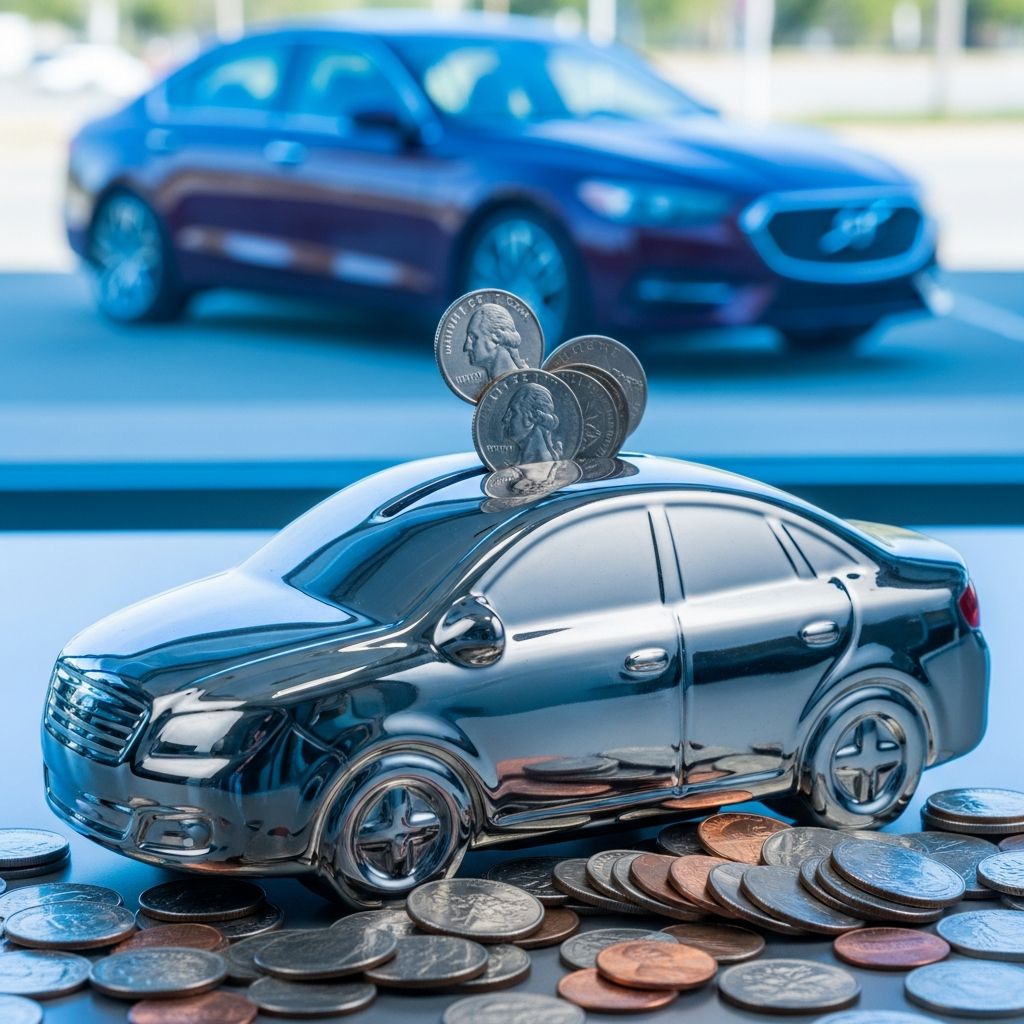
Buying a car is a major financial milestone, but it doesn’t have to drain your savings or trap you in debt. Whether you’re eyeing a reliable commuter, a family SUV, or your first set of wheels, a strategic savings plan makes it achievable on any budget. This guide outlines six essential steps to determine affordability, select the right vehicle, calculate true costs, trim expenses, increase income, and park your savings securely. By following these proven tactics, you can drive off confidently without financial stress.
How to Save Money for a Car in 6 Steps
Saving for a car requires discipline and foresight. Start by assessing your finances, narrowing your options, and accounting for every expense. Here’s the roadmap to success.
1. Figure Out How Much Can You Afford to Spend
The foundation of any car purchase is knowing your limits. Begin by tallying your essential monthly expenses: rent or mortgage, utilities, phone bills, credit card payments, student loans, and insurance. Subtract these from your take-home pay to reveal your disposable income. Importantly, this leftover amount isn’t your full car budget — reserve room for food, emergencies, and fun.
For example, consider Jane, earning $1,500 monthly ($18,000 annually). Her basics break down as:
- Rent: $500
- Utilities (water, electric, gas, internet): $200
- Phone: $60
- Credit card: $100
Total essentials: $860. Leftover: $640. But Jane’s realistic car allocation is lower, factoring in insurance, gas, maintenance, groceries, and unexpected costs. Financial experts recommend capping all car-related expenses at 10-15% of take-home pay to avoid strain.
Use a simple budget worksheet: List income minus fixed costs, then allocate 50% of the remainder to savings goals like a car fund. Tools like auto loan calculators from the Consumer Financial Protection Bureau (CFPB) help simulate payments based on your numbers.
2. Determine What Kind of Car You Want
With a budget in hand, define your needs to avoid impulse buys. Ask key questions: Do you need a compact for city driving, a sedan for commuting, a van for family hauls, a truck for work, or an SUV for versatility? Consider usage — daily errands, long trips, or off-road adventures? Prioritize must-haves like fuel efficiency, safety features, or cargo space over luxuries like leather seats.
Create a car comparison spreadsheet to evaluate options. Track models by price, MPG, safety ratings from the National Highway Traffic Safety Administration (NHTSA), and Insurance Institute for Highway Safety (IIHS) scores. For used cars, note mileage, owners, and history reports from services like Carfax. New cars? Check warranties — Hyundai’s 10-year powertrain coverage beats standard five-year plans.
| Category | New Car Focus | Used Car Focus |
|---|---|---|
| Cost | Sticker price, monthly payment, 5-year ownership cost | Mileage, accident history |
| Performance | Horsepower, fuel economy, towing | Maintenance records |
| Safety | NHTSA/IIHS ratings | Vehicle history report |
| Features | Infotainment, ADAS tech | Interior/exterior condition |
This table streamlines decisions, ensuring your choice aligns with lifestyle and wallet.
3. Get Preapproved for a Car Loan
Preapproval strengthens your negotiating power and reveals true borrowing costs. Shop lenders — banks, credit unions, online platforms — for rates before dealerships. The Federal Reserve notes average auto loan rates hover around 7% for good credit, but preapproval locks in terms.
Provide income proof, credit history, and down payment estimates. Approval shows sellers you’re serious, often yielding better deals. Avoid dealership financing alone; their rates can exceed 10%.
4. Calculate the True Cost of Owning a Car
Beyond sticker price, ownership expenses add up. Break it down systematically.
How Much to Put Down on a Car: Aim for 10% on used cars ($600 on a $6,000 vehicle) and 20% on new ($4,000 on $20,000). This lowers financed amounts, interest, and payments. Buffer for tags, titles, and taxes — often 8-10% of price.
Calculating Your Monthly Car Payments: For $5,400 financed (after $600 down on $6,000 car), expect $100-150 monthly over 48-60 months at 6-8% APR. Use calculators from Bankrate or CFPB, inputting tax, trade-in value, and rates.
Budgeting for Additional Car Expenses: Insurance averages $1,800 yearly (NHTSA data), varying by model and history. Gas: Budget $50-100 weekly based on MPG and drives. Maintenance: $100 monthly for high-mileage cars, per mechanic Patrice Banks. Total car costs should not exceed 15% of income.
Factor 5-year ownership: Kelley Blue Book estimates $30,000+ for midsize sedans, including depreciation.
5. Cut Expenses and Increase Your Income
Accelerate savings by slashing costs and earning more. Trim variables: Cook at home (save $200/month vs. eating out), cancel unused subscriptions ($50/month), shop sales for groceries. Use apps like Mint to track and automate cuts.
Boost income: Side gigs like ridesharing, freelancing, or selling items via Facebook Marketplace. Trade in your old car via Peddle for cash toward the new one. Every dollar saved or earned funnels to your goal.
- Refinance debts to free cash flow.
- Renegotiate bills (phone, insurance).
- Downsize housing or utilities.
6. Choose Where to Stash Your Car Savings — and Use a Savings Account
Park funds in a high-yield savings account (HYSA) yielding 4-5% APY from FDIC-insured banks like Ally or Capital One. Automate transfers matching your target payment — e.g., $200/month builds $12,000 in five years with interest.
Apps like Acorns or Qapital round up purchases, investing spare change. For discipline, use ‘set it and forget it’ transfers post-payday.
Pro Tips for Buying Smart
- Timing: Shop end-of-month or year-end for dealer quotas.
- New vs. Used: Used saves 30-50% upfront, but inspect thoroughly.
- Warranties: Essential for used; third-party options available.
- Test Drives: Essential for comfort and features.
Frequently Asked Questions (FAQs)
Q: How much should I save for a car down payment?
A: Target 10% for used, 20% for new, plus fees. This minimizes loans and interest.
Q: What’s the average cost of car ownership?
A: AAA reports $12,182 annually for new vehicles, covering fuel, maintenance, insurance, and depreciation.
Q: Should I buy new or used?
A: Used for savings if low-mileage and certified; new for warranties and tech.
Q: How do I compare cars effectively?
A: Use spreadsheets tracking cost, safety, MPG, and history reports from NHTSA and IIHS.
Q: Can I save for a car on minimum wage?
A: Yes — budget tightly, side hustle, and aim for affordable used models under $10,000.
References
- Consumer Financial Protection Bureau: Auto Loan Shopping Sheet — CFPB. 2024-06-15. https://www.consumerfinance.gov/consumer-tools/auto-loans/
- National Highway Traffic Safety Administration: Vehicle Safety Ratings — NHTSA. 2025-11-20. https://www.nhtsa.gov/ratings
- Insurance Institute for Highway Safety: Vehicle Ratings — IIHS. 2025-12-01. https://www.iihs.org/ratings
- Federal Reserve: Consumer Credit – G.19 — Federal Reserve Board. 2026-01-10. https://www.federalreserve.gov/releases/g19/current/
- AAA: Your Driving Costs — AAA. 2025-08-05. https://www.aaa.com/yourdrivingcosts/
Similar Articles








Read full bio of medha deb