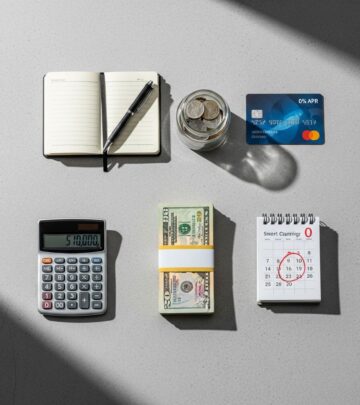
How To Save $10,000 In A Year: 8 Practical Steps
Proven strategies to save $10,000 in just 12 months through budgeting, cutting expenses, and smart habits.

Saving $10,000 in a single year is an ambitious yet achievable goal for many people, regardless of income level. By breaking it down into manageable daily, weekly, or monthly targets—such as
$28 per day
,$192 per week
, or$833 per month
—you can build momentum without feeling overwhelmed. This guide outlines a comprehensive plan covering budgeting, expense reduction, automation, income boosts, and long-term habits to hit your target.Why Save $10,000?
Reaching $10,000 in savings provides a powerful financial buffer. It covers most emergency expenses, like car repairs or medical bills, where 56% of U.S. adults can’t handle a $1,000 surprise without debt. Beyond emergencies, it seeds investments, reducing risk in stocks via diversification and margin. High-yield savings accounts can grow it further, turning savings into wealth.
Step 1: Break Down the Goal into Manageable Pieces
Start by calculating what $10,000 requires:
| Interval | Amount Needed |
|---|---|
| Daily | $27.40 |
| Weekly | $192.31 |
| Bi-weekly | $385 |
| Monthly | $833 |
Focus on daily $28 to make it habitual. Smaller chunks build confidence and trackability.
Step 2: Evaluate Your Income and Expenses
Track every dollar using apps or spreadsheets. Categorize into needs (rent, food), wants (dining out), and savings. Identify leaks like subscriptions or impulse buys. Tools like budget calculators reveal cuts, freeing $200+ monthly. On fixed incomes, prioritize non-essentials first.
- Income sources: Salary, side gigs, benefits.
- Expenses: Fixed (mortgage) vs. variable (groceries).
- Gap analysis: Subtract expenses from income; allocate surplus to savings.
Step 3: Create a Detailed Budget and Savings Plan
A zero-based budget assigns every dollar a job, ensuring savings first. Set SMART goals: Specific (e.g., emergency fund), Measurable, Achievable, Relevant, Time-bound. Automate transfers to high-yield accounts immediately after payday—’pay yourself first’. Review monthly, adjusting for life changes.
Step 4: Cut Unnecessary Expenses
Trim without pain:
- Dining out: Cook at home; save $300/month vs. takeout.
- Subscriptions: Cancel unused streaming; consolidate.
- Shopping: Wait 48 hours before buys; shop sales.
- Commute: Carpool or public transit.
- Housing: Refinance mortgage, rent a room.
A $5 daily cut (coffee/lunch) yields $1,825 yearly. Avoid lifestyle inflation.
Step 5: Automate Your Savings
Set daily/weekly auto-transfers, even $1 initially to build habit. Use round-up apps (e.g., bank features) or jars for spare change—effortless accumulation. High-yield accounts (4-5% APY) compound growth.
Step 6: Increase Your Income
Savings alone may not suffice; earn more:
- Side hustles: Gig apps, freelancing ($500+/month).
- Raise/negotiate: Job hop for 10-20% bumps.
- Sell items: Declutter online.
- Windfalls: Direct bonuses/tax refunds to savings.
Refinance high-interest debt first; saves hundreds in interest.
Step 7: Start Small to Build Habits
Begin with $1/day to prove consistency, then scale to $5 ($1,825/year). Redirect ‘hidden money’ like coffee upgrades. This mindset shift views savings as redirection, not sacrifice.
Step 8: Track Progress and Stay Motivated
Monthly reviews: Celebrate milestones (e.g., $2,500 quarters). Apps visualize growth. Adjust for shortfalls—increase cuts or income. Pitfalls: Impulse buys, ignoring variables—stay vigilant.
Advanced Tips for Success
- High-Yield Savings: Earn interest vs. 0.01%.
- Debt Strategy: Pay minimums on low-interest; attack high-interest.
- Insurance Review: Shop rates annually.
- Retirement Boost: Max 401(k)/IRA matches for ‘free’ money.
Common Challenges and Solutions
| Challenge | Solution |
|---|---|
| Impulse Spending | 30-day rules, cash envelopes. |
| Unexpected Costs | Mini-emergency fund first. |
| Motivation Dip | Visual trackers, accountability partners. |
| Low Income | Side income + ruthless cuts. |
Frequently Asked Questions (FAQs)
Q: Is saving $10,000 realistic on minimum wage?
A: Yes, with extreme discipline—budget tightly, side hustle, cut all non-essentials. Aim for $833/month via multiple strategies.
Q: What if I miss a month?
A: Adjust by saving more later or extending timeline slightly. Consistency over perfection; catch up with windfalls.
Q: Should I invest the savings?
A: Park in high-yield savings first for liquidity; invest excess after $10K emergency fund.
Q: How do round-up apps help?
A: They save spare change automatically, adding $500+ yearly unnoticed.
Q: What’s the best account type?
A: FDIC-insured high-yield savings for safety and growth.
Implement these steps consistently, and $10,000 becomes reality. Small daily actions compound into financial freedom.
References
- Want to Save $10,000 in a Year? Start With Just $28 a Day — Nasdaq. 2024-10-01. https://www.nasdaq.com/articles/want-save-10000-year-start-just-28-day
- How To Save $10,000 In A Year — Bankrate. 2024-11-15. https://www.bankrate.com/banking/savings/how-to-save-10000/
- How to save $10,000 a year — Brigit Blog. 2024-09-20. https://www.hellobrigit.com/learn/how-to-save-10000-a-year
- How to Save $10,000 in a Year in 8 Steps — 1st Financial Bank USA. 2024-08-05. https://students.1fbusa.com/money-smarts/how-to-save-10000-in-a-year
- Why Everything Changes Once You Save $10K — YouTube (Ramit Sethi channel). 2024-07-12. https://www.youtube.com/watch?v=HwoUWNhpqmA
Similar Articles








Read full bio of Sneha Tete