How to Research a Home’s Location Before You Buy
Master the art of evaluating neighborhoods to ensure your home purchase is a smart, long-term investment in the perfect location.
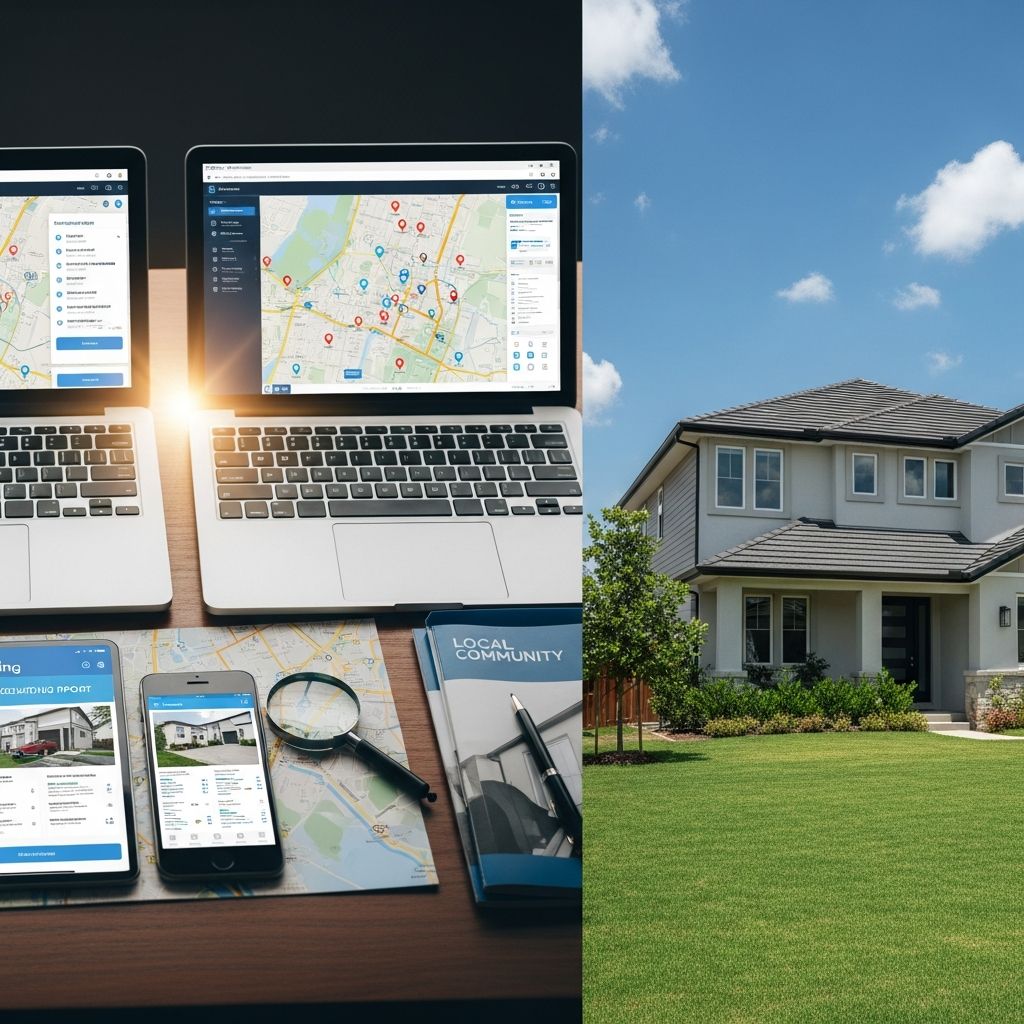
When house hunting, the adage ‘location, location, location’ rings true because you can renovate nearly everything about a property except its position. A home’s surroundings dictate your daily life, resale value, and overall satisfaction. Thoroughly vetting a neighborhood, city, and region prevents costly regrets and ensures alignment with your lifestyle and finances. This guide outlines key criteria—from market dynamics to natural risks and lifestyle perks—to empower informed decisions in today’s competitive real estate market.
1. The Home Market
Assessing the local real estate market is foundational. Examine current home prices to gauge affordability and whether a listing is fairly priced relative to comparables. Track price trends over the past five years: an upswing signals growth potential, while a downswing may indicate risks. Neighborhoods with homes lingering on the market despite price cuts often flag underlying issues like poor desirability or economic shifts.
Use tools like Zillow’s Home Value Index by entering the ZIP code for historical summaries, recent changes, and one-year forecasts. Realtor.com offers inventory data, days-on-market stats, and sales histories. Compare similar properties (comps) within a half-mile radius, factoring in size, age, and condition. Strong markets show quick sales (under 30 days) and steady appreciation, ideal for long-term equity building.
- Key Metrics to Check:
- Average sale price vs. listing price (aim for 95-100% in balanced markets).
- Median days on market (below 60 days is healthy).
- Inventory levels (low supply drives prices up).
- Future projections based on employment growth and infrastructure plans.
Consult local real estate reports from the National Association of Realtors (NAR) for broader context on regional trends.
2. Crime
Safety profoundly impacts quality of life and property values. Subjective opinions vary, so prioritize data-driven insights. Trulia’s City Guides provide crime statistics and interactive neighborhood heat maps for major metros. CrimeReports aggregates data from over 1,000 police departments, searchable by ZIP code, covering violent and property crimes.
Many municipal police sites offer custom crime maps; for example, Los Angeles PD’s portal details incidents by type and recency. The U.S. Department of Justice’s National Sex Offender Public Website (NSOPW) lets you search addresses for nearby registered offenders. Review trends: declining rates suggest improvement, while spikes warrant caution.
| Crime Type | National Average (per 1,000 residents) | Red Flags |
|---|---|---|
| Violent Crime | 4.0 | >6.0; check for gang activity |
| Property Crime | 19.6 | >30; high burglary/theft |
| Sex Offenders | N/A | >1 per 1,000 households |
Visit at different times—day, night, weekends—to observe street activity. Chat with residents and review Nextdoor app discussions for unfiltered views.
3. Walkability
Walkability enhances convenience, health, and environmental footprint by minimizing car dependence. Walk Score rates locations from 0-100: 90+ is a ‘Walker’s Paradise,’ where most errands are feasible on foot. Enter an address to see scores for walking, biking, and amenities like grocery stores, parks, and cafes.
New York City averages 89, while San Francisco’s Chinatown scores a perfect 100. Test personally: time a walk to essentials. Narrow sidewalks, heavy traffic, or absent crosswalks lower effective scores. Highly walkable areas often command premiums but save on gas and gym fees.
- Walk Score Breakdown:
- 90-100: Daily errands without a car.
- 70-89: Most errands possible on foot.
- 50-69: Somewhat walkable.
- 0-49: Car-dependent.
Prioritize if you value urban vibrancy over suburban sprawl.
4. Public Transit
Reliable transit expands access to jobs, entertainment, and services without owning multiple cars. Walk Score’s Transit Score complements walkability, factoring in routes, frequency, and proximity. Beyond scores, scrutinize specifics: Does it connect to your workplace? Are stops walkable or bikeable, or require driving?
Evaluate parking at stations, backup options during disruptions, and rush-hour reliability. Local agency sites (e.g., MTA for NYC, BART for Bay Area) provide schedules, apps, and real-time tracking. Ride the route during peak times pre-purchase. Proximity to airports, trains, or ferries adds value for travelers.
In car-centric suburbs, poor transit can trap you in traffic; urban cores offer freedom but higher costs.
5. Schools
School quality drives 20-30% of home price differences in similar areas. Zillow maps districts and links to ratings; GreatSchools.org details test scores, progress, equity, discipline, and parent reviews. High performers (7-10/10) correlate with better outcomes and resale appeal.
Consider boundaries carefully—a block can shift districts. For families eyeing private options, weigh savings against public premiums. Homeschoolers or empty-nesters may prioritize other factors, but strong schools boost universal value.
- Evaluation Factors:
- Standardized test proficiency (above state averages).
- Student-teacher ratios (<20:1 ideal).
- College readiness and equity gaps.
- Extracurriculars and facilities.
6. Climate
Climate affects comfort, utility bills, and health. U.S. Climate Data provides monthly averages for highs/lows, precipitation, sunshine, and humidity by city or ZIP. Coastal areas may face fog or hurricanes; inland spots endure extremes.
Factor seasonal impacts: snowy winters demand plowing and heating; humid summers require AC. Historical data from NOAA reveals anomalies like increasing heatwaves. Lifestyle fit matters—snow lovers avoid Sun Belt; gardeners seek mild zones.
7. Seismic Risk
In earthquake-prone regions like California, assess fault proximity via USGS Earthquake Hazards Program maps. Sites like Earthquake Track show historical activity. Decide on earthquake insurance (often excluded from standard policies) and hire a seismic engineer for retrofitting evaluations.
Soft soils amplify shaking; older homes may need bolting or bracing. FEMA’s risk index rates areas; low-risk buyers save on premiums elsewhere.
8. Local Amenities and Lifestyle
Beyond basics, explore fun and convenience. NabeWise profiles neighborhoods’ strengths (e.g., dining, parks) and weaknesses. Yelp and Google reviews detail restaurants, shops, gyms, and events. Stroll downtowns, arts districts, or farmers’ markets to gauge vibe.
Proximity to hospitals, libraries, and recreation preserves time and stress. University towns offer cheap culture; coastal spots provide beaches. Balance must-haves like quiet streets with nice-to-haves like nightlife.
Frequently Asked Questions (FAQs)
Q: How far back should I check home price trends?
A: Review at least five years for cycles; 10+ years reveals long-term patterns.
Q: What’s a good Walk Score for families?
A: 70+ ensures parks and schools are accessible on foot.
Q: Do I need earthquake insurance everywhere?
A: Essential in high-risk zones like the Pacific Coast; optional elsewhere.
Q: How do school districts affect resale?
A: Top districts increase values by 5-10% and sell 20% faster.
Q: Can I rely solely on online crime data?
A: No—combine with visits and resident input for full picture.
Researching a home’s location demands time but yields dividends in satisfaction and wealth. Prioritize your needs, verify data, and test-drive the area to buy confidently.
References
- Home Value Index — Zillow. 2025-10-15. https://www.zillow.com/research/data/
- Crime Data Explorer — U.S. Department of Justice, FBI. 2025-12-01. https://cde.ucr.cjis.gov/
- Earthquake Hazards Program — U.S. Geological Survey. 2025-11-20. https://earthquake.usgs.gov/hazards/
- GreatSchools Ratings Methodology — GreatSchools.org. 2025-09-10. https://www.greatschools.org/gk/methodology/
- Climate Normals — National Oceanic and Atmospheric Administration. 2025-08-05. https://www.ncei.noaa.gov/products/land-based-station/us-climate-normals
- Quarterly Housing Market Report — National Association of Realtors. 2025-10-20. https://www.nar.realtor/research-and-statistics/housing-statistics
Similar Articles








Read full bio of medha deb