How To Read An Annual Report: 7 Key Sections To Focus On
Unlock the secrets of annual reports to make smarter investment decisions without getting lost in financial jargon.

Annual reports are essential documents for investors, yet many find them intimidating and discard them quickly. This guide breaks down the key components, teaching you how to extract valuable insights efficiently to assess a company’s health and make informed decisions.
Why Read Annual Reports?
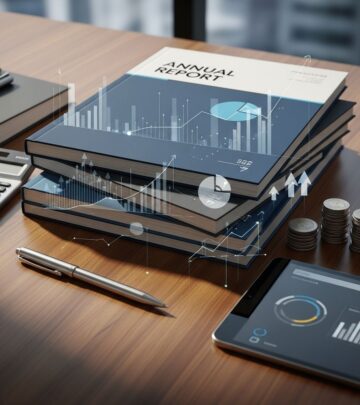
Annual reports provide a comprehensive view of a company’s performance, strategy, and risks over the past year. Unlike news headlines or stock prices, they offer detailed financials, management’s perspective, and forward-looking statements. By comparing year-over-year data, investors can detect trends, such as recovery post-takeover or industry pressures, helping decide whether to invest, hold, or sell.
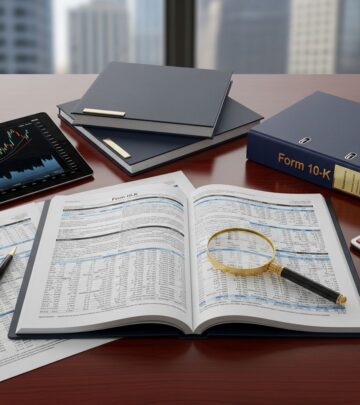
Public companies must file these reports (Form 10-K in the US) with the SEC, making them freely available on EDGAR. They include audited financials, ensuring reliability, unlike unaudited quarterly reports.
Main Components of an Annual Report
An annual report typically spans 100-300 pages and includes several sections. Not all need deep reading; focus on high-impact areas first. Common structure:
- Letter to Shareholders: CEO’s overview of achievements, challenges, and outlook.
- Business Overview: Company description, segments, and market position.
- Management’s Discussion and Analysis (MD&A): Narrative on results, risks, and strategy.
- Financial Statements: Core numbers—Income Statement, Balance Sheet, Cash Flow.
- Notes to Financials: Explanations of accounting policies and contingencies.
- Auditor’s Report: Independent verification of financials.
- Risks and Legal Proceedings: Potential threats and lawsuits.
All sections compare 1-3 years of data for trend analysis.
1. Start with the Letter to Shareholders
The CEO’s letter sets the tone, summarizing the year without jargon. Look for honest discussion of wins (e.g., revenue growth) and setbacks (e.g., supply chain issues). Avoid glossy PR; seek quantifiable goals like ‘double market share by 2027’.
This section often highlights key metrics and future plans, providing context before diving into numbers.
2. Management’s Discussion and Analysis (MD&A)
MD&A explains financial results in plain language. It covers:
- Revenue drivers and cost pressures.
- Segment performance (e.g., by product line or region).
- Risks like competition or regulation.
- Liquidity and capital resources.
Scan for growth drivers, capex plans, and milestones. Prioritize risks—boilerplate is common, but unique ones (e.g., cybersecurity threats) warrant full reading.
3. Financial Statements: The Core
These audited statements are the heart. Read in this order for efficiency: Cash Flow, Balance Sheet, Income Statement.
Cash Flow Statement
Shows actual cash generation/usage from operations, investing, financing. Positive operating cash flow indicates health; negative may signal issues.
- Operating Activities: Core business cash.
- Investing: Capex, acquisitions.
- Financing: Debt, dividends.
Balance Sheet
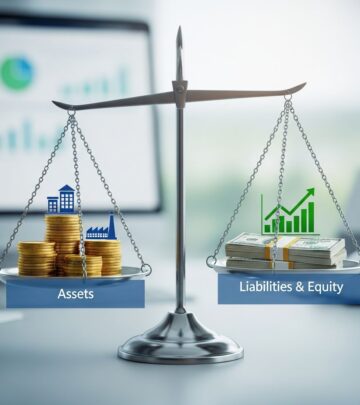
Snapshot of assets, liabilities, equity at year-end. Key ratios: Current Ratio (assets/liabilities >1 for liquidity), Debt-to-Equity (<1 ideal for stability).
| Category | What to Check | Red Flags |
|---|---|---|
| Assets | Cash, receivables, inventory growth | Inflated inventory |
| Liabilities | Debt levels, payables | Rising short-term debt |
| Equity | Retained earnings | Declining shareholder equity |
Income Statement
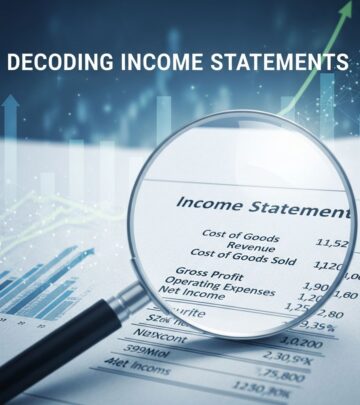
Revenue minus expenses = profit. Track margins: Gross (revenue-cost of goods), Operating, Net. Declining margins signal trouble.
Review segmental results for diversified firms.
4. Notes to the Financial Statements
Critical for context. Covers accounting policies, contingencies (e.g., lawsuits), related-party transactions. Check contingent liabilities—they’re potential future hits.
Look for off-balance-sheet items or revenue recognition tricks.
5. Auditor’s Report and Corporate Governance
Auditors opine on fair presentation. ‘Unqualified’ is good; qualifications are warnings.
Directors’ report and governance section detail board composition, compliance.
6. Risks, Legal Proceedings, and Other Disclosures
Lists top risks (e.g., market, operational). Skim titles first; deep-dive concerns. Legal section flags lawsuits that could impact finances.
How to Analyze Efficiently
Don’t read cover-to-cover. Strategy:
- Download PDF from company site or EDGAR.
- Highlight key sections (20-30 mins).
- Review financials with ratios (30 mins).
- Answer strategic questions: Sustainable moat? Management quality? Growth prospects?
Use 5-year summaries for trends. Tools like Excel worksheets aid ratio calculation.
Common Pitfalls and Red Flags
- Aggressive Accounting: Frequent policy changes in notes.
- High Debt: If cash flow can’t cover interest.
- Insider Selling: Check proxy statements.
- Vague MD&A: Lacks specifics.
Cross-reference with 10-Qs for quarterly updates.
Frequently Asked Questions (FAQs)
Q: Where to find annual reports?
A: Company investor relations page, SEC EDGAR (search CIK), or stock exchange sites. PDFs are free.
Q: How long to read one?
A: 1-2 hours for initial scan; deeper analysis 4-6 hours.
Q: Standalone vs. Consolidated statements?
A: Use consolidated for group view (includes subsidiaries); standalone for parent.
Q: What if reports differ internationally?
A: US 10-K follows GAAP; others IFRS. Compare apples-to-apples.
Q: Are projections reliable?
A: Historical analysis trumps forecasts; scrutinize assumptions.
Pro Tips for Investors
– Focus on cash over earnings—it’s harder to manipulate.
– Compare peers in same industry.
– Track changes year-over-year.
Mastering annual reports empowers better investing, spotting gems before the market.
References
- How To Read an Annual Report — Wise Bread. 2010-approx (enduring guide). https://www.wisebread.com/how-to-read-an-annual-report
- How to Read and Analyze Annual Reports — YouTube Webinar (SEBI-aligned). 2025-04-17. https://www.youtube.com/watch?v=_SlxNuoumcA
- How to Read Annual Report of any Company [+Worksheet] — Ditto Insurance YouTube. Recent (2023+). https://www.youtube.com/watch?v=V28LpTApAww
- How to Read a 10-K Annual Report Efficiently — The Rational Walk. 2016-02 (updated principles valid). https://rationalwalk.com/how-to-read-a-10-k-annual-report-efficiently/
- Annual Reports: How to Read the Messages to Different Audiences — Business Case Analysis (official guide). N/A. https://www.business-case-analysis.com/annual-report.html
Similar Articles








Read full bio of medha deb