How to Rack Up Extra Rewards Points by Buying Gift Cards
Unlock bonus credit card rewards and maximize points by strategically purchasing gift cards at bonus category stores.
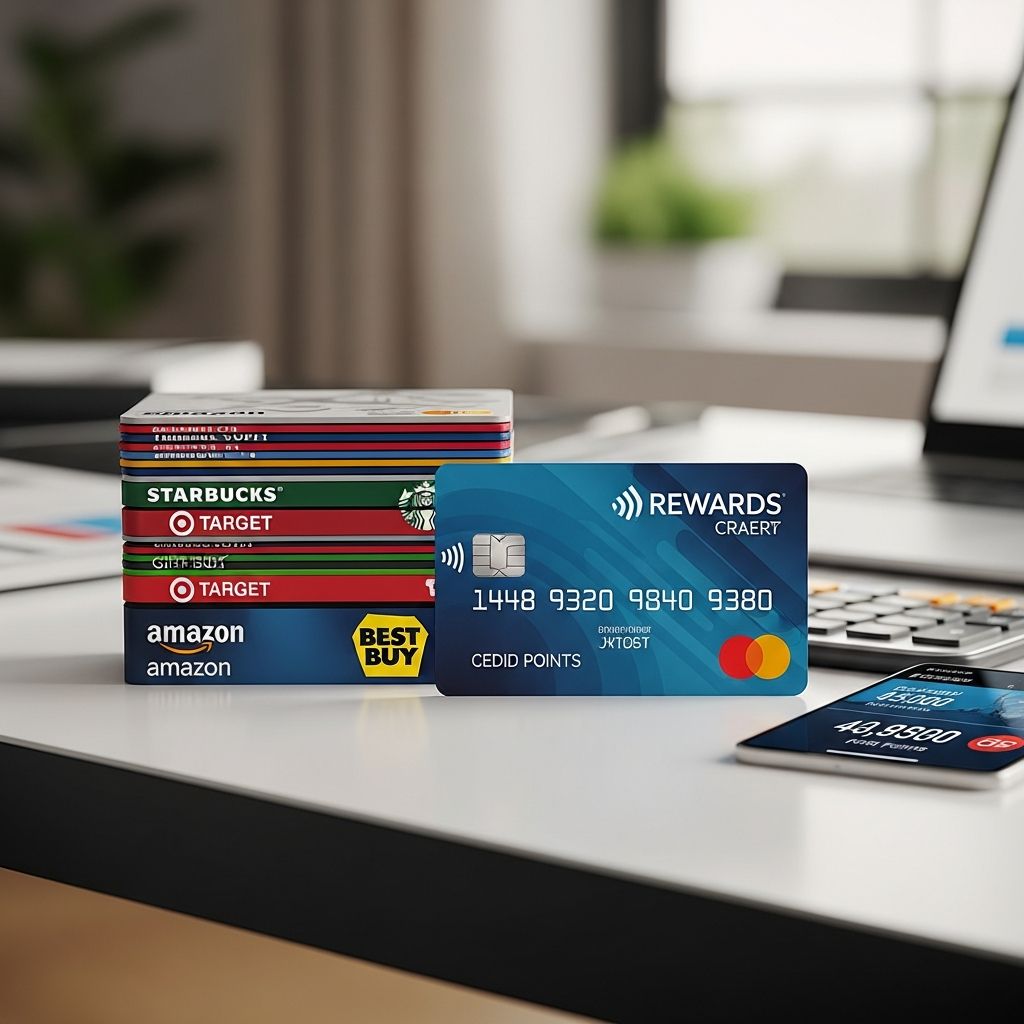
Gift cards offer a versatile way to earn substantial credit card rewards points, especially when purchased at retailers that trigger bonus categories on your cards. By strategically selecting where and how to buy them, you can amplify your points earnings on everyday spending or to meet welcome bonus requirements.
Buying Gift Cards with Bonus Category Credit Cards
Most supermarkets, office supply stores, drugstores, and wholesale clubs stock extensive selections of gift cards for major retailers. These locations often align with high-multiplier bonus categories on popular credit cards, allowing you to earn 2x, 3x, 4x, or even 5x points per dollar spent.
- Grocery stores like Kroger, Safeway, or Publix frequently offer racks of Visa, Mastercard, Amazon, and restaurant gift cards, pairing perfectly with cards like the Blue Cash Preferred® Card from American Express (6% cash back at U.S. supermarkets on up to $6,000 per year).
- Office supply giants such as Staples, Office Depot, or OfficeMax provide vast inventories, ideal for small-business cards like the Ink Business Cash® Credit Card from Chase (5% cash back on the first $25,000 spent annually at office supply stores).
- Drugstores including CVS and Walgreens also sell gift cards and may code as bonus categories on certain cards.
For instance, if you’re planning a home renovation, buy $500 in Home Depot gift cards at Staples using a 5x points card. You’ll earn 2,500 points on that purchase alone, far exceeding standard 1x earnings elsewhere.
Using Gift Cards to Meet Welcome Bonus Requirements
New credit cards often feature lucrative sign-up bonuses, such as 60,000–100,000 points after spending $4,000–$6,000 in the first 3–6 months. If your regular spending falls short, gift card purchases can bridge the gap—provided you pay off the balance in full to avoid interest.
Calculate the math: A 75,000-point bonus valued at 1.5 cents per point equals $1,125 in travel redemptions. Spending $5,000 on gift cards at a 3x bonus category yields an additional 10,000 points, boosting your total return.
| Credit Card Example | Bonus Spend Req. | Bonus Points | Gift Card Strategy |
|---|---|---|---|
| Chase Sapphire Preferred® | $4,000 in 3 months | 60,000 points | Buy at office supply (3x grocery/office) |
| American Express® Gold Card | $6,000 in 6 months | 60,000 points + credits | Supermarket gift cards (4x dining/U.S. supermarkets) |
| Citi Premier® Card | $4,000 in 3 months | 60,000 points | Gas stations/drugstores (3x) |
Pro Tip: Always verify your card’s current bonus categories via the issuer’s app or website, as they rotate quarterly (e.g., Chase Ultimate Rewards, Amex Offers).
Types of Gift Cards: Closed Loop vs. Open Loop
Understanding the two primary gift card types helps optimize fees and usability.
Closed Loop (Specific Retailer) Gift Cards
These are branded for one merchant, like Target, Starbucks, or Apple. They cost face value—no activation fees—and can be used exclusively there.
- Advantages: Zero fees, easy purchase with credit cards everywhere, perfect for planned spending or gifting.
- Examples: Buy Walmart cards at grocery for groceries; restaurant cards for dining out.
- Rewards Hack: Stock up on cards for merchants where you shop frequently to channel all spending through bonus categories.
Open Loop (General Purpose) Gift Cards
Visa, Mastercard, or Amex prepaid cards usable anywhere the network is accepted. They offer flexibility but come with caveats.
- Fees: $3–$8.95 activation; possible monthly inactivity fees after 6–12 months.
- Restrictions: Some stores (e.g., Sam’s Club) ban credit card buys; others limit to $200–$500 per card.
- Best Use: Liquidate for cash equivalents without fees eating rewards, but prioritize closed-loop for simplicity.
In summary, closed-loop cards maximize pure rewards without fee drag, while open-loop suits versatility needs.
Earning Additional Rewards from Retailers
Beyond credit card points, merchants layer on extras.
- Fuel Points: Supermarkets like Harris Teeter or Giant Eagle award 2x–4x fuel points on gift card buys, saving 20–40¢/gallon on gas.
- Wholesale Cash Back: Costco Executive Members get 2% back on all purchases (including gift cards) via their reward certificate, redeemable annually. Pair with Costco Anywhere Visa® (4% cash back on gas).
- Promotions: Watch for ‘buy $50 in gift cards, get $10 bonus’ deals at grocery chains.
Stacking these with credit card bonuses compounds value: 3x points + 2% cash back + fuel discounts.
Advanced Strategy: Buying Discounted Gift Cards to Resell
Experienced ‘manufactured spending’ enthusiasts buy discounted gift cards (e.g., 5–10% off via sites like Raise or CardCash) and resell at near face value on platforms like eBay or Facebook Marketplace. The goal: Offset any loss/profit while earning card rewards.
Potential Workflow:
- Spot 93¢ on the dollar Visa cards at office supply.
- Buy $1,000 with 5x card → 5,000 points (worth ~$75–$100).
- Resell at 97¢ → $40 net loss, but points cover it (net +$35–$60).
Risks & Caveats:
- No Debt: Pay in full monthly—interest obliterates gains.
- Liquidity: Cards may not sell quickly; fees (3–13% on resale sites) erode margins.
- Issuer Scrutiny: Excessive activity flags ‘gaming,’ risking account shutdown (e.g., Chase’s 5/24 rule).
- Organization: Track inventory meticulously to avoid expiration losses.
This isn’t for beginners—stick to personal use unless you’re highly organized.
Frequently Asked Questions (FAQs)
Is buying gift cards with a credit card considered cash advance?
No, legitimate retail gift card purchases code as regular purchases, earning rewards. Avoid ATMs or quasi-cash.
Can I buy unlimited gift cards for rewards?
Most stores impose daily limits ($2,000–$10,000); issuers monitor for abuse. Stay under radar.
Do gift cards expire?
Closed-loop often don’t; open-loop may after 1–5 years. Check terms; use promptly.
Best cards for gift card buying?
Ink Business Unlimited® (1.5% unlimited), Amex Blue Business® Plus (2x up to $50k), or category-specific like Fidelity® Rewards Visa (2% everywhere).
Is this ethical?
Yes, if for personal use/gifting and debt-free. It’s leveraging public bonus programs.
Final Tips for Success
– Always pay balances fully.
– Track category caps/rotations.
– Use for real spending/gifts.
– Diversify cards to avoid over-reliance.
– Monitor resale markets for deals.
Gift cards transform routine buys into rewards powerhouses. Start small, scale smartly, and watch points soar.
References
- Consumer Financial Protection Bureau: Prepaid Cards and Gift Cards — U.S. Government (CFPB). 2023-05-15. https://www.consumerfinance.gov/consumer-tools/prepaid-cards/
- Understanding Credit Card Rewards Programs — Federal Trade Commission (FTC). 2024-02-10. https://consumer.ftc.gov/articles/credit-card-rewards-programs
- Payment Card Industry Data Security Standard (PCI DSS) v4.0 — PCI Security Standards Council. 2022-03-31. https://www.pcisecuritystandards.org/
- Annual Report on Gift Card Fees and Expiration — Federal Reserve Board. 2024-07-01. https://www.federalreserve.gov/
- Best Practices for Rewards Optimization — NerdWallet Research (citing issuer terms). 2025-01-05. https://www.nerdwallet.com/
Similar Articles








Read full bio of Sneha Tete