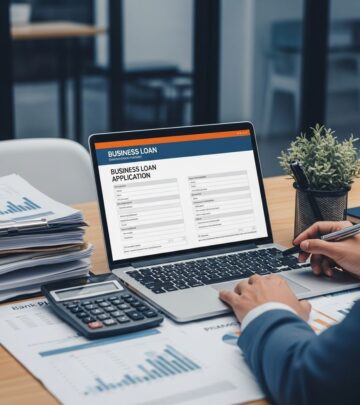
How to Qualify for a Small Business Loan
Learn the key requirements, documents, and strategies you need to qualify for a small business loan and improve your odds of approval.

Securing a small business loan can help you launch, stabilize, or scale your company, but approval depends on meeting specific lender requirements. This guide breaks down what lenders look for, which loan options you can pursue, and how to strengthen your application before you apply.
Why Lenders Are Selective About Small Business Loans
Lending money to small businesses involves risk. To manage that risk, banks, online lenders, and government-backed programs use clear criteria to judge whether your business is likely to repay the loan on time. They typically examine your credit history, revenue, time in business, industry, and overall financial health before making a decision.
Understanding these requirements before applying helps you target the right lender, ask for a realistic amount, and present a compelling application.
Key Factors Lenders Evaluate
While each lender has its own underwriting standards, most business loan decisions revolve around a similar set of core factors.
1. Personal and Business Credit Scores
Credit scores signal how reliably you have managed debt in the past. Lenders review your personal credit score and, when available, your business credit score to estimate the likelihood you will repay a loan.
- Personal credit scores (FICO) generally range from 300 to 850, with higher scores indicating lower risk.
- Traditional banks and SBA lenders often look for personal scores around the high 600s (for example, 680 or higher).
- Online lenders may accept lower scores but usually charge higher interest rates and emphasize cash flow and recent performance.
If your business has an established credit file, lenders can also check scores from commercial bureaus. Strong business credit can sometimes offset a weaker personal score for more mature companies.
2. Annual Revenue and Cash Flow
Lenders need evidence that your business generates enough income to handle monthly payments on top of existing expenses. They typically set a minimum annual revenue and look closely at your bank statements and financial reports.
- Many lenders require at least around $100,000 in annual revenue to consider a standard term loan or line of credit, and some banks look for $250,000 or more.
- Lenders review your net operating income and compare it with your current debts to gauge your capacity to take on new obligations.
- Strong, consistent positive cash flow improves your chances of approval and may qualify you for better terms.
3. Time in Business
Time in business is a quick way for lenders to assess stability. New ventures are inherently riskier because they have less financial history and a shorter track record of performance.
- Traditional banks and many SBA lenders commonly require at least two years in business for standard loans.
- Some online or community lenders may consider businesses with as little as six months of operations, especially for smaller amounts or specialized startup products.
- Longer operating histories, especially with consistent revenue, typically result in more options and more favorable rates.
4. Industry and Business Size
Your company’s industry and size also influence your eligibility. Certain sectors are considered higher risk, while others may be ineligible for specific programs.
- The U.S. Small Business Administration (SBA) defines what counts as a small business using industry-specific size standards, such as number of employees or average annual receipts.
- To qualify for SBA-backed loans, your business must be for-profit, operate legally in the U.S., and not fall under prohibited categories (for example, some speculative real estate or certain financial activities).
5. Existing Debt and Ability to Repay
Lenders want to see that your business can manage its current debt load plus the new loan. They may calculate metrics like a debt service coverage ratio (DSCR) to determine whether your income comfortably covers your obligations.
- High existing debt relative to your revenue can limit approval chances or reduce the amount you qualify for.
- Delinquencies, defaults, or recent bankruptcies in your history will typically require explanation and may steer you toward specialized or more flexible lenders.
Common Types of Small Business Loans and Programs
Understanding your financing options can help you match your qualifications to the right product. Different loan types have different approval standards.
| Loan Type | Best For | Typical Requirements |
|---|---|---|
| SBA 7(a) and related SBA loans | General working capital, expansion, acquisitions | For-profit, U.S.-based small business; good credit; ability to repay; may need collateral and personal guarantee. |
| Traditional bank term loans | Established companies needing larger amounts | Strong credit, 2+ years in business, solid financials, and documentation; often collateral required. |
| Business lines of credit | Ongoing cash flow gaps and short-term needs | Minimum credit score around the high 600s, consistent revenue, at least 6–24 months in business. |
| Online term loans & merchant loans | Faster funding or borrowers with thinner credit | Lower credit thresholds but higher emphasis on bank statements and cash flow; often higher rates. |
Basic Eligibility Requirements for SBA-Backed Loans
SBA loans are issued by participating lenders but partially guaranteed by the U.S. Small Business Administration. This guarantee reduces lender risk and often allows for longer terms and competitive rates.
To qualify, your business usually must:
- Be an operating, for-profit business.
- Be located in the United States or its territories.
- Meet the SBA’s size standards for your industry.
- Operate in an eligible industry (not on the SBA ineligible list).
- Demonstrate that you cannot obtain comparable credit elsewhere on reasonable terms.
- Be creditworthy and show a reasonable ability to repay the loan.
While SBA programs can be accessible even to some borrowers with previous credit challenges, they still require substantial documentation and careful underwriting.
Documents Typically Required for a Small Business Loan
Regardless of lender type, you will usually need to provide documentation that supports your application. The exact list varies, but most lenders request some combination of the following:
- Personal and business tax returns (often 2–3 years).
- Business financial statements, including:
- Profit and loss (income) statements.
- Balance sheets.
- Cash flow statements.
- Recent business bank statements (usually 6–12 months).
- Business formation documents (articles of incorporation, operating agreement).
- Business licenses, permits, or registrations.
- Commercial lease agreements (if applicable).
- A detailed business plan or use-of-funds statement explaining why you need the loan and how you will repay it.
- Personal financial statements for major owners.
- Collateral documentation if you are pledging assets to secure the loan.
Having these documents organized and ready can significantly speed up underwriting and reduce back-and-forth with your lender.
How to Improve Your Chances of Approval
Even if you are not a perfect candidate today, there are concrete steps you can take to improve your eligibility and terms before applying.
1. Strengthen Your Credit Profile
Because credit scores heavily influence loan decisions and pricing, building a stronger credit profile is one of the most effective ways to qualify for better financing.
- Check your personal credit reports regularly and dispute any errors with the bureaus.
- Pay all bills on time, including credit cards, utilities, and existing loans.
- Lower your credit utilization ratio by reducing balances on revolving accounts.
- For longer-term growth, establish trade lines in your business’s name and pay vendors and suppliers promptly to build business credit.
2. Organize and Update Your Financial Records
Clear, accurate financial records help lenders understand your business and may boost confidence in your management capabilities.
- Use reliable bookkeeping software or a professional accountant to maintain up-to-date financial statements.
- Prepare realistic projections that show how you will use the loan proceeds and meet payments.
- Regularly review your margins, expenses, and cash flow to identify areas for improvement before a lender points them out.
3. Reduce Existing Debts Where Possible
Paying down high-interest or unnecessary debt can improve cash flow and your debt ratios, which lenders evaluate closely.
- Consider consolidating short-term, high-cost obligations into more manageable structures—if the overall cost is lower.
- Avoid taking on new nonessential financing in the months leading up to a major loan application.
4. Choose the Right Lender for Your Profile
Different lenders cater to different borrowers. Matching your situation with the right institution can make a substantial difference in your approval odds.
- Established, profitable businesses may benefit from traditional bank loans or SBA products, which often offer lower rates and longer terms.
- Newer or rapidly growing companies might consider online lenders or community financial institutions with more flexible criteria, understanding they may pay more for speed or leniency.
- If your credit profile is still developing, exploring smaller amounts, secured options, or microloans may help you build a track record.
Step-by-Step: Preparing to Apply for a Small Business Loan
The process of qualifying for a loan becomes far more manageable when you approach it in a structured way.
- Clarify your purpose and amount. Decide how much capital you realistically need and exactly how you will use it. Lenders prefer specific, well-reasoned funding requests.
- Review your credit and finances. Check your credit scores, gather financial statements, and identify any weaknesses you can address ahead of time.
- Research loan options. Compare SBA loans, traditional bank loans, and online products based on your time in business, revenue, and credit profile.
- Prepare documentation. Assemble tax returns, financial statements, bank statements, and legal documents in advance to streamline applications.
- Engage with a lender. Use prequalification tools or speak with a loan officer to understand eligibility before submitting full applications.
- Submit and respond promptly. Complete your application carefully and respond quickly to any follow-up requests for details or additional documents.
Frequently Asked Questions (FAQs)
Q: What credit score do I need to qualify for a small business loan?
A: Requirements vary, but many banks and SBA lenders look for personal credit scores around the high 600s, such as 680 or above, especially for larger loans. Some online and alternative lenders may work with lower scores but often charge higher rates or offer smaller amounts.
Q: Can I get a small business loan as a startup?
A: Yes, but your options may be more limited. Some lenders and SBA programs consider startups if you have strong personal credit, collateral, and a solid business plan. Others require at least six months to two years of operating history, so startups often rely on personal financing, microloans, or investors in the early stages.[10]
Q: What do banks usually require for a small business loan?
A: Banks typically want good to excellent credit, at least two years in business, consistent revenue, and complete financial documentation. They may also require collateral and a personal guarantee from major owners, along with in-person or detailed online applications.
Q: How can I increase my chances of getting approved?
A: Focus on improving your credit score, reducing existing debts, documenting steady cash flow, and preparing accurate financial statements. Choosing a lender whose requirements align with your profile and presenting a clear plan for how you will use and repay the funds can also significantly boost your odds.
Q: Are SBA loans easier to qualify for than bank loans?
A: SBA loans are issued through banks and other lenders but partially guaranteed by the government, which can make lenders more willing to approve qualified borrowers. However, SBA loans still require good credit, thorough documentation, and a viable business, and the application process can be more detailed and time-consuming than some non-SBA options.
References
- Business Loan Requirements: What You Need to Qualify — NerdWallet. 2024-01-10. https://www.nerdwallet.com/business/loans/learn/how-to-qualify-for-small-business-loans
- Resources for Obtaining a Business Loan — Florida Office of Financial Regulation. 2023-06-01. https://flofr.gov/education/entrepreneurial-and-investor-resources/entrepreneurial-resources/idea-phase/resources-for-obtaining-a-business-loan
- Loans — U.S. Small Business Administration (SBA). 2024-03-15. https://www.sba.gov/funding-programs/loans
- How to Qualify for a Small Business Loan — Mercury. 2023-08-22. https://mercury.com/blog/how-to-qualify-for-a-small-business-loan
- Terms, Conditions, and Eligibility: 7(a) Loan Program — U.S. Small Business Administration (SBA). 2023-11-30. https://www.sba.gov/partners/lenders/7a-loan-program/terms-conditions-eligibility
- SBA (7a) Loan Requirements & Considerations — First Business Bank. 2023-05-05. https://firstbusiness.bank/resource-center/applying-for-sba-loans/
- Small Business Loans and Lines of Credit — Wells Fargo. 2023-09-18. https://www.wellsfargo.com/biz/business-credit/
- What You Need to Apply & Qualify for a Business Loan — Bank of America. 2023-10-02. https://www.bankofamerica.com/smallbusiness/business-financing/learning/what-you-need-to-apply/
- How to Start and Fund Your Own Business — USA.gov. 2024-02-01. https://www.usa.gov/start-business
Similar Articles








Read full bio of Sneha Tete