How To Put Out A Grease Fire Safely: 3 Reliable Methods
Learn the safest and most effective methods to extinguish grease fires in your kitchen.
How to Put Out a Grease Fire Safely: Essential Kitchen Safety Guide
Cooking-related fires represent the leading cause of domestic fires in the United States, accounting for approximately 550 deaths, nearly 5,000 injuries, and more than $1 billion in property damage annually. Most of these fires originate from unattended stovetops, but what makes them particularly dangerous is how people respond when a fire does ignite. Understanding the proper techniques for extinguishing a grease fire can mean the difference between a minor kitchen incident and a life-threatening emergency.
Understanding Grease Fires: Why They’re Different
Grease fires behave very differently from other types of fires because of the unique properties of cooking oil. When oil heats to its ignition point—typically between 300 and 400 degrees Fahrenheit—it can spontaneously catch fire, especially if it’s left unattended or if food particles or water enter the pan. The key to responding effectively is understanding the science behind what happens when water meets burning grease.
Oil is less dense than water, which means it naturally floats on the surface. When water is introduced to a pan of burning oil, it immediately sinks beneath the grease to the extremely hot surface of the pan. This causes the water to expand rapidly to approximately 1,700 times its original volume almost instantaneously, turning to steam and violently expelling the burning oil out of the pan. This explosive reaction spreads fire throughout the kitchen and poses severe burn risks to anyone nearby. This is precisely why the most common mistake people make—throwing water on a grease fire—is so dangerous.
The Most Critical Rule: Never Use Water
The absolute most important rule when dealing with a grease fire is simple: never, under any circumstances, use water to extinguish it. This cannot be overstated. While water is effective for most household fires, it creates a catastrophic reaction with burning oil. The violent expansion of water turning to steam will cause the burning oil to splash and spread, potentially causing severe burns and spreading the fire throughout your kitchen. This includes avoiding the temptation to move the burning pan to the sink, as this significantly increases the risk of introducing water to the fire.
Effective Methods for Extinguishing a Grease Fire
Method 1: Smother the Fire with a Lid or Baking Sheet
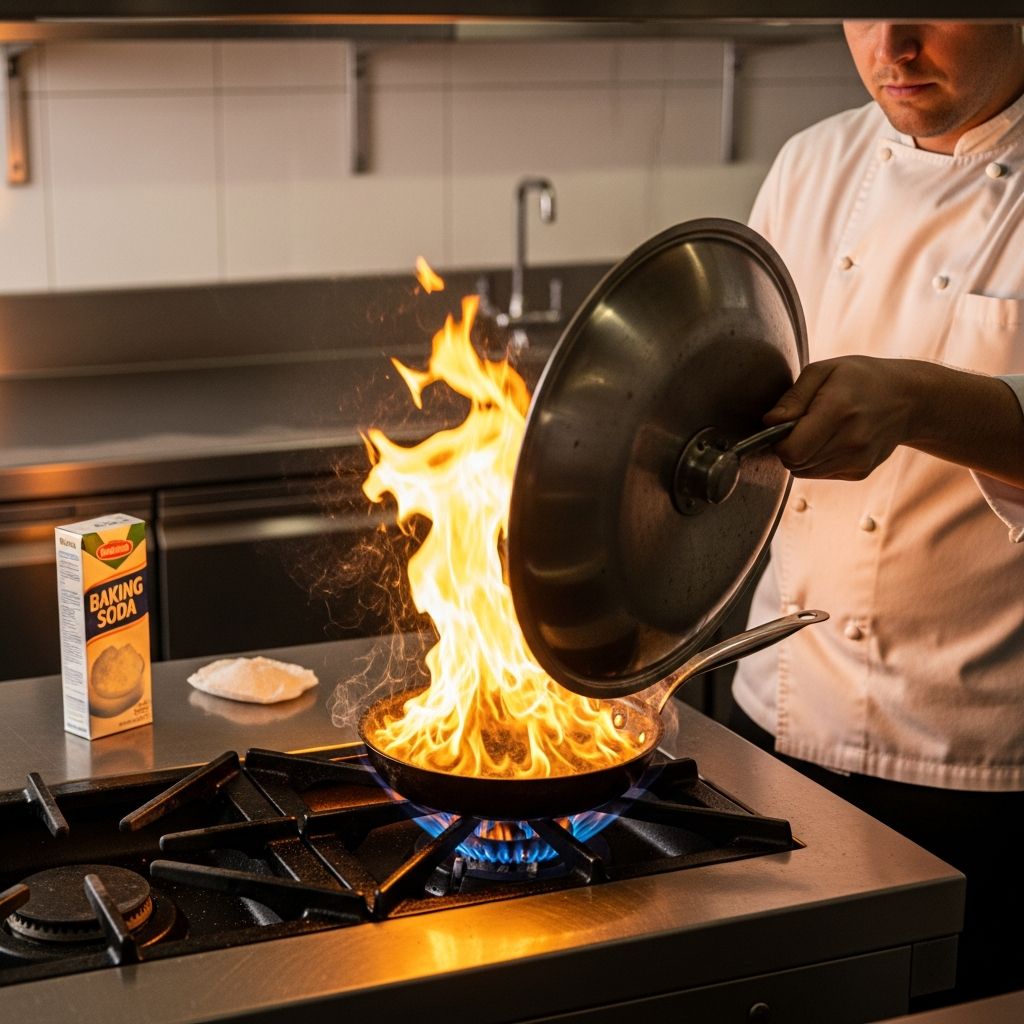
The most effective and safest method for extinguishing a grease fire is to smother it. By placing a metal lid, cooking sheet, or any metal cover directly over the burning pan, you cut off the fire’s oxygen supply, which is essential for combustion. This method works quickly and prevents further heat from escaping the pan. Once you’ve covered the pan with a lid, turn off the heat source—whether it’s your gas stove or electric burner. Then leave the pan undisturbed for at least five to ten minutes to allow it to cool completely. Do not attempt to move the pan or remove the lid to check on the fire, as re-introducing oxygen will reignite the flames.
Method 2: Use Baking Soda for Smaller Fires
Baking soda can be an effective extinguishing agent for small grease fires. The chemical composition of baking soda is very similar to the powder used inside commercial fire extinguishers, allowing it to smother the fire and interrupt the combustion process. If you choose to use baking soda, pour it directly onto the flames in large quantities. However, this method has significant limitations: you need an impractically large amount of baking soda to be effective, making it difficult to dispense quickly enough for larger fires. Additionally, this method only works for fires that are still relatively small and contained within the pan.
Method 3: Use a Fire Extinguisher
If you have a fire extinguisher readily available in your kitchen, this can be an excellent tool for handling grease fires. Class B fire extinguishers are specifically designed for flammable liquid fires, including cooking oil. When using a fire extinguisher, remember the PASS technique: Pull the pin, Aim at the base of the fire, Squeeze the handle, and Sweep from side to side. Keep the extinguisher in an easily accessible location and ensure all household members know where it is and how to use it.
Critical Mistakes to Avoid
Do Not Use Flour, Sugar, or Salt
While some people suggest using salt, flour, or sugar to extinguish grease fires, these methods are ineffective and potentially counterproductive. Flour and sugar are highly flammable and will actually intensify the fire rather than extinguish it. Salt may technically absorb some of the heat, but it requires an enormous quantity to be effective—far more than you could reasonably carry or dispense during an emergency. Moreover, throwing any powder into a burning pan can cause the flames to flare up suddenly, putting you at risk of serious burns.
Do Not Move the Burning Pan
Moving a burning pan of grease is extremely dangerous for multiple reasons. First, the movement can cause hot oil to splash out of the pan, potentially causing severe burns to your hands, face, or body. Second, carrying a burning pan increases the risk of spilling the oil throughout your kitchen, spreading the fire to cabinets, curtains, and other flammable materials. Third, the temptation to move the pan to the sink creates the possibility of introducing water to the fire, which will cause the dangerous explosive reaction described earlier.
Do Not Leave Cooking Unattended
The most effective way to prevent a grease fire is to never leave cooking oil unattended on the stove. Most cooking fires start on unattended stovetops where the oil has heated beyond its ignition point. Stay in the kitchen while cooking, especially when using oil, and keep a close eye on the temperature. If you must leave the kitchen, turn off the heat source or adjust it to a lower temperature.
Immediate Response Steps When a Grease Fire Occurs
Step 1: Stay Calm and Assess the Situation
When you notice a grease fire, your first instinct might be to panic, but staying calm is crucial. Take a moment to assess whether the fire is small enough to handle safely on your own or whether you need to evacuate and call emergency services immediately.
Step 2: Turn Off the Heat Source
If it’s safe to do so without getting too close to the flames, turn off the gas or electric burner. This stops additional heat from being added to the situation.
Step 3: Cover the Pan with a Lid or Metal Sheet
Quickly and safely place a metal lid or baking sheet over the pan to smother the fire. This is your most reliable extinguishing method.
Step 4: Leave the Pan Undisturbed
Once covered, do not attempt to move the pan or remove the lid for at least five to ten minutes. Allow the fire to burn out the available oxygen and the oil to cool down.
Step 5: Call Emergency Services if Necessary
If the fire spreads beyond the pan, if you feel unsafe, or if you cannot control the situation, immediately evacuate the kitchen and call 911. Never prioritize saving property over your personal safety.
Prevention: The Best Strategy
The most effective approach to grease fires is preventing them from occurring in the first place. Maintain careful attention to your cooking oil, monitor its temperature, and never allow it to heat unattended. Ensure your kitchen has good ventilation to help prevent oil from reaching unsafe temperatures. Keep a fire extinguisher readily available in your kitchen, and make sure all household members know its location and how to use it. Additionally, consider keeping a metal lid near your stove specifically for fire emergencies.
When to Call Emergency Services
Not all grease fires can be safely handled without professional assistance. Call 911 immediately if:
- The fire spreads beyond the pan to other kitchen surfaces or materials
- You feel uncertain about your ability to safely control the fire
- The fire continues burning after you’ve attempted to extinguish it
- Thick, dark smoke fills your kitchen or home
- Anyone has been burned or injured
- You cannot safely reach the stove or pan
When emergency services arrive, provide clear information about what’s burning and any actions you’ve already taken. This helps firefighters respond more effectively.
Frequently Asked Questions
Q: Can I use a glass lid to cover a grease fire?
A: No. Glass can crack or shatter from the intense heat, potentially causing the lid to fail and releasing flames. Always use a metal lid or baking sheet specifically designed to withstand high temperatures.
Q: What should I do if the oil splatters onto my skin?
A: Immediately run cool water over the affected area for at least ten to fifteen minutes. Remove any jewelry or tight clothing from the area if possible. Do not apply ice directly to the burn, as this can cause additional damage. Seek medical attention if the burn is severe or covers a large area.
Q: How long should I wait before moving the pan after extinguishing the fire?
A: Wait at least five to ten minutes for the oil to cool completely. Even after the flames are extinguished, the oil remains extremely hot and can reignite if oxygen is reintroduced by moving the pan or removing the lid.
Q: Is it safe to use a fire blanket on a grease fire?
A: Fire blankets are designed for extinguishing fires on a person’s clothing, not for grease fires in pans. A metal lid or fire extinguisher is a safer choice for grease fires.
Q: Can I pour baking soda on a large grease fire?
A: While baking soda can work for small fires, it requires an impractically large quantity for larger fires. A metal lid or fire extinguisher is much more reliable for fires of any significant size.
Q: Should I open windows or doors when dealing with a grease fire?
A: Do not open windows or doors immediately, as this introduces fresh oxygen to the fire, which can cause it to intensify. However, if the fire spreads or smoke becomes overwhelming, evacuate immediately and open exits as you leave.
Q: What temperature does cooking oil ignite?
A: Most cooking oils begin to smoke and break down around 300 to 350 degrees Fahrenheit. They can spontaneously ignite around 375 to 400 degrees Fahrenheit, depending on the type of oil and its purity.
Q: How often should I check my fire extinguisher?
A: Fire extinguishers should be inspected monthly to ensure the pressure gauge is in the green zone. Professional inspection and maintenance should be performed annually, and the extinguisher should be replaced according to the manufacturer’s recommendations.
References
- Moment of Science: How to Put Out a Grease Fire — Charleston Fire Department, via YouTube. 2021-11-21. https://www.youtube.com/watch?v=XuJllR2YNOc
- Can You Use Salt to Put Out a Grease Fire? — LifeSafe Technologies. Accessed 2025-11-29. https://www.lifesafetechnologies.com/blogs/the-home-family-and-safety-blog/can-you-use-salt-to-put-out-a-grease-fire
- How to Put Out a Grease Fire Safely — AARP. Accessed 2025-11-29. https://www.aarp.org/videos/top-tips/6331127107112/
Similar Articles








Read full bio of Sneha Tete