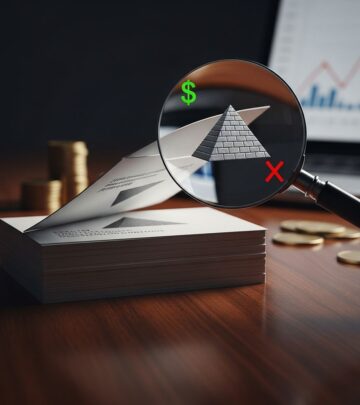
How to Protect Yourself From an Investment Scam
Learn essential strategies to spot and avoid investment scams that could wipe out your savings and secure your financial future effectively.

Investments offer the potential to grow your wealth and achieve financial security, but they also attract scammers promising quick riches with minimal effort. Following the timeless advice—”If it sounds too good to be true, it probably is”—remains one of the most effective ways to sidestep these traps. This guide covers common investment scams, their red flags, and practical steps to protect yourself, drawing from expert insights and official warnings.
Pyramid Schemes
Pyramid schemes promise enormous profits for recruiting others rather than selling legitimate products or services. They spread rapidly through social media, websites, online ads, and group presentations, often disguised as multi-level marketing opportunities. Early participants may see gains from new recruits’ fees, creating an illusion of success, but the structure inevitably collapses, leaving most investors with losses.
These schemes thrive on urgency and exclusivity, pressuring you to act fast before spots fill up. Be alert to these
key warning signs
:- Lots of money for little work: Promises of high returns with minimal effort or time investment scream fraud.
- Emphasis on recruitment over product: The focus is on bringing in new members, not genuine sales.
- Unsustainable growth claims: Assurances of exponential earnings that defy economic reality.
- Vague business plans: Little transparency on how money is generated beyond recruitment.
To protect yourself, always verify the opportunity independently. Check if the company is registered with the Securities and Exchange Commission (SEC) via their EDGAR database. Legitimate investments disclose risks clearly and don’t guarantee profits. Research the promoters’ backgrounds for prior complaints using the SEC’s Investor.gov or FINRA’s BrokerCheck.
Energy Investment Scams
Oil and gas investments allure with visions of striking black gold, but scams exploit this by promising guaranteed returns from drilling projects. Legitimate energy developments are high-risk ventures requiring substantial capital and time, with no assured payouts—developers may drill dry wells repeatedly. Fraudsters skip real exploration, pocketing your funds instead.
These scams often target experienced investors via seminars, cold calls, or online promotions. Spot them by watching for these
red flags
:- Guaranteed high returns: No legitimate energy deal offers risk-free profits.
- High-pressure sales tactics: Urgency to invest immediately to ‘secure your spot’.
- Lack of transparency: Refusal to provide audited financials, drilling permits, or SEC filings.
- Unrealistic projections: Claims of outsized yields without geological data or expert analysis.
- Complex ownership structures: Offshore entities or shell companies hiding true operators.
Protect yourself by demanding verifiable documentation, such as state drilling permits and third-party reserve reports. Consult a registered investment advisor unaffiliated with the promoter. Use tools like the SEC’s investor alerts for ongoing scam warnings. Remember, energy is a business—demand full disclosure on all aspects.
Affinity Fraud
Affinity fraud preys on trust within communities, targeting groups by age, religion, ethnicity, or shared interests. Scammers pose as insiders, sometimes enlisting respected leaders to lend credibility. Victims feel an instant bond, lowering defenses, but these schemes mirror pyramids or Ponzi operations, collapsing when recruitment dries up.
Even savvy community figures can fall victim, unwittingly promoting the fraud to others.
Warning signs include
:- Insider appeals: ‘This is just for our group’ to foster exclusivity.
- Trusted endorsers: Reliance on familiar faces without independent verification.
- Suppressed doubts: Pressure not to question to avoid seeming disloyal.
- Secretive details: Evasive answers on risks or past performance.
Counter this by separating personal connections from financial due diligence. Independently verify claims through SEC filings and state regulators. Discuss with neutral financial professionals and trusted family outside the group. Your affinity shouldn’t blind you to fraud—verify everything.
General Tips to Avoid Investment Scams
Beyond specific schemes, adopt these habits to fortify your defenses. Scammers evolve tactics, so vigilance is key.
- Question unsolicited contacts: Ignore unexpected calls, emails, or messages pushing investments. Don’t share personal info.
- Reject urgency: Scammers create panic to bypass rational thinking—take time to research.
- Verify independently: Use official sites like SEC.gov or FINRA.org, not promoter-provided info.
- Monitor accounts: Review statements frequently, enable alerts for transactions.
- Use strong security: Employ unique passwords, two-factor authentication, and password managers.
- Freeze credit: Prevent new accounts in your name via Equifax, Experian, TransUnion.
- Avoid unusual payments: Steer clear of wire transfers, gift cards, or crypto demands.
For personalized advice, consult SEC-registered advisors via Investor.gov. Understand risks—no investment is guaranteed.
Reporting Investment Scams
If targeted or scammed, report promptly to limit damage and aid investigations. Start with:
- Federal Trade Commission (FTC) at ReportFraud.ftc.gov
- SEC at sec.gov/tcr
- Your bank or credit card issuer for charge disputes.
- Local law enforcement and IdentityTheft.gov for recovery plans.
Don’t feel embarrassed—scammers are experts at manipulation. Reporting helps protect others.
Frequently Asked Questions (FAQs)
Q: What should I do if an investment sounds too good to be true?
A: Pause and verify independently via SEC or FINRA tools. Legitimate deals disclose risks fully.
Q: How can I check if an investment is registered?
A: Search the SEC’s EDGAR database or use FINRA’s BrokerCheck for advisors and firms.
Q: What payment methods do scammers prefer?
A: Untraceable ones like gift cards, wire transfers, or cryptocurrency—avoid them entirely.
Q: Is affinity fraud only for certain groups?
A: No, it targets any tight-knit community by exploiting trust—always verify separately.
Q: How often should I review my financial accounts?
A: At least weekly online, with transaction alerts enabled for real-time monitoring.
Investment Scam Red Flags Table
| Scam Type | Common Red Flags | Protection Step |
|---|---|---|
| Pyramid | Recruitment focus, huge returns | Check SEC registration |
| Energy | Guaranteed profits, pressure | Demand permits & audits |
| Affinity | Group exclusivity, trusted endorsers | Independent verification |
Armed with this knowledge, you can invest confidently while dodging fraud. Stay skeptical, verify rigorously, and protect your financial future.
References
- 12 Ways to Protect Yourself From Fraud and Scams — Kiplinger. 2023-10-15. https://www.kiplinger.com/personal-finance/ways-to-protect-yourself-from-fraud-and-scams
- Exposed to Scams – FINRA Foundation — FINRA Foundation. 2020-06-01. https://www.finrafoundation.org/sites/finrafoundation/files/exposed-to-scams-can-challenging-consumers-beliefs-protect-them-from-fraud.pdf
- Investment Scams — Federal Trade Commission (FTC). 2024-05-20. https://consumer.ftc.gov/articles/investment-scams
Similar Articles








Read full bio of Sneha Tete