How to Prepare for a Baby Financially in 9 Smart Ways
Master your finances before baby arrives with these 9 essential strategies to build savings, cut costs, and plan for childcare and beyond.

Welcoming a baby is one of life’s greatest joys, but it comes with significant financial responsibilities. From diapers and formula to childcare and healthcare, the costs can add up quickly. According to a survey by The Penny Hoarder of over 1,200 parents with children under 6, 82% spend $500 or more monthly on childcare alone. Proper financial preparation can alleviate stress and ensure you’re ready for both expected and unexpected expenses. This guide outlines nine practical steps to get your finances in order before your little one arrives.
1. Build an Emergency Fund
The first step in preparing financially for a baby is establishing or bolstering an emergency fund. Newborns bring unpredictability—medical emergencies, home modifications, or sudden job changes can strain your budget. Aim for 3-6 months of living expenses in a high-yield savings account. For example, if your monthly costs are $5,000, target $15,000-$30,000.
Start small: Automate transfers of $100-$500 weekly into a dedicated account. Use windfalls like tax refunds or bonuses to accelerate growth. This fund acts as a safety net, preventing reliance on high-interest credit cards during tough times.
- Tip: Compare high-yield savings accounts offering 4-5% APY for maximum growth.
- Why it matters: 40% of Americans can’t cover a $400 emergency, per Federal Reserve data—don’t join them.
2. Review and Adjust Your Budget
Pre-baby budgeting is crucial as expenses shift dramatically. Track current spending for one month using apps like Mint or YNAB, then forecast baby-related costs: $1,200-$1,500 monthly for formula, diapers, and gear.
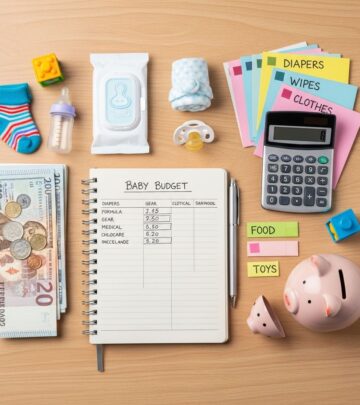
Create categories for one-time purchases (stroller: $300-$1,000; crib: $200-$800) and recurring ones (diapers: $70-$100/month). Cut non-essentials like dining out or subscriptions to free up cash. A sample baby budget might look like this:
| Category | Monthly Cost | Annual Cost |
|---|---|---|
| Diapers/Wipes | $80 | $960 |
| Formula/Food | $150 | $1,800 |
| Clothing | $50 | $600 |
| Childcare | $1,000 | $12,000 |
| Healthcare | $200 | $2,400 |
Adjust your overall household budget to accommodate these, prioritizing needs over wants.
3. Plan for Childcare Costs
Childcare often emerges as the largest expense. The Penny Hoarder’s 2018 survey revealed 82% of parents spend $500+ monthly, with averages exceeding $1,000 in urban areas. Research options early: daycare ($800-$2,000/month), nannies ($15-$30/hour), or family help.
Start ‘paying’ for childcare pre-baby by setting aside funds monthly. Explore employer benefits, subsidies via Child Care and Development Fund (CCDF), or tax credits like the Child and Dependent Care Credit (up to $3,000/child). In-home care or au pairs can be cost-effective long-term.
- Daycare waitlists can be 6-12 months—apply now.
- Consider part-time or co-op arrangements to split costs.
4. Understand Parental Leave Policies
Paid parental leave isn’t universal in the U.S., where only 25% of workers have access via employers. Review your company’s policy: FMLA offers 12 weeks unpaid, job-protected leave. States like California and New York provide paid family leave through payroll taxes.
Plan financially by calculating lost income—e.g., 8 weeks at $4,000/month salary equals $8,000 shortfall. Save accordingly or explore short-term disability insurance. Self-employed parents should budget fully for unpaid time.
5. Update Your Health Insurance
Adding a baby to your plan incurs premiums ($100-$500/month) and potential out-of-pocket costs. Open enrollment or qualifying life events allow changes. Compare marketplace plans if employer coverage lapses.
Understand maternity coverage: Pre-existing conditions are covered under ACA, but copays for delivery average $3,000. Stock up on FSA funds for eligible expenses like breast pumps (up to $5,000/year pre-tax).
6. Tackle High-Interest Debt
Enter parenthood debt-free or minimized. Prioritize debts over 7% interest (credit cards average 20%+). Use debt snowball or avalanche methods: Pay minimums on all, extra on highest interest/smallest balance.
Consolidate via balance transfers (0% intro APR) or personal loans (5-10% rates). Post-baby, debt payments compete with essentials—clearing $10,000 at 20% saves $2,000/year in interest.
7. Start Saving for College (Yes, Really)
Though distant, early college savings compound powerfully. Open a 529 plan: Contributions grow tax-free for education. A $100/month investment at 7% return yields $150,000 by age 18.
Many states offer tax deductions ($500-$5,000/year). Grandparents can contribute via Ugift links. Roth IRA alternatives allow penalty-free withdrawals for education.
8. Research Government Benefits and Tax Credits
Leverage programs like WIC (nutrition for low-income families), SNAP, and Medicaid. Tax perks include Child Tax Credit ($2,000/child), Earned Income Tax Credit (up to $7,430), and dependent care FSA.
Estimate refunds with tools like IRS withholding estimator. Newborns qualify for dependent status immediately—file accordingly for maximum benefits.
9. Buy Smart: Gear, Clothes, and Essentials
Avoid overspending on baby gear totaling $10,000+. Prioritize multi-use items: convertible car seats ($250), pack ‘n plays ($150). Buy used via Facebook Marketplace or consignment (save 50-70%).
Registry tips: Include gift cards for flexibility. Breastfeeding saves $1,200/year vs. formula. Cloth diapers cut costs by 30% long-term.
- Must-haves: Safe crib, car seat (new), baby monitor.
- Skip: Wipe warmers, expensive strollers initially.
Frequently Asked Questions (FAQs)
What is the average cost of raising a baby in the first year?
Around $13,000-$22,000, excluding childcare, per USDA estimates. Childcare adds $10,000+ annually.
How much should I save for an emergency fund with a newborn?
3-6 months of expenses, ideally $15,000+ for families, to cover surprises like NICU stays.
Can I get paid parental leave in the U.S.?
Depends on employer/state; plan for unpaid FMLA and save 2-3 months’ income.
Are 529 plans only for college?
Primarily, but funds can roll to Roth IRA under new rules or for K-12 tuition (up to $10,000).
How do I budget for diapers and formula?
$70-$150/month; buy in bulk, use coupons, consider cloth alternatives.
Final Thoughts on Financial Prep for Baby
Financial preparation empowers joyful parenthood. Implement these nine steps systematically: Start with your emergency fund and budget review today. Track progress monthly, adjust as needed, and celebrate milestones. With planning, you can focus on bonding, not bills. Consult a financial advisor for personalized advice.
References
- 4 Money Moves to Make Before Baby Arrives — MRT.com. 2023-05-15. https://www.mrt.com/business/personalfinance/article/4-Money-Moves-to-Make-Before-Baby-Arrives-17307150.php
- How to Prepare for a Baby Financially in 9 Smart Ways — The Penny Hoarder. 2023-10-01. https://www.thepennyhoarder.com/save-money/how-to-prepare-for-a-baby-financially/
- Budgeting for a Baby: An Ultimate Guide for New Parents — The Penny Hoarder. 2023-08-20. https://www.thepennyhoarder.com/budgeting/budgeting-for-a-baby/
- Expenses Associated With Planning for Child(ren) — United States Department of Agriculture (USDA). 2024-01-10. https://www.usda.gov/media/blog/2017/01/13/expenses-associated-planning-children
- Family and Medical Leave Act (FMLA) — U.S. Department of Labor (.gov). 2025-12-01. https://www.dol.gov/agencies/whd/fmla
Similar Articles








Read full bio of Sneha Tete