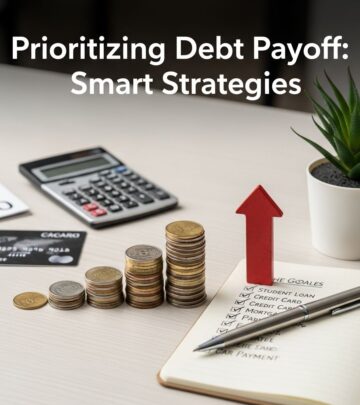
How to Pay Off Debt: Strategies and Methods
Master debt repayment with proven strategies to eliminate debt faster and save money.

How to Pay Off Debt: A Comprehensive Guide to Financial Freedom
Debt can feel overwhelming, but with the right strategy and commitment, you can work your way toward financial freedom. Whether you’re struggling with credit card balances, student loans, or multiple debts, there are proven methods to help you pay off what you owe more efficiently. The key is finding an approach that aligns with your financial situation and sticking with it consistently.
Paying off debt doesn’t have to be complicated. By understanding your options and choosing a strategy that works for your circumstances, you can create a clear path to becoming debt-free. This guide explores the most effective debt repayment strategies, from the popular snowball and avalanche methods to debt consolidation and income-boosting techniques.
Understanding Your Debt Repayment Options
When it comes to tackling debt, there’s no one-size-fits-all solution. Your best approach depends on your current financial situation, the types of debt you have, and what motivates you to stay on track. Some people thrive with quick wins, while others prefer the mathematical efficiency of targeting high-interest debt first. Understanding these different strategies will help you choose the method that resonates with you and keeps you committed to your goal.
The Debt Snowball Method: Building Momentum
The debt snowball method focuses on paying off your smallest debts first, regardless of interest rate. This strategy works by listing all your debts from smallest to largest balance, making minimum payments on everything except your smallest debt, and putting any extra money toward that smallest balance.
Once you pay off your smallest debt, you take the money you were putting toward it and add it to your payment on the next-smallest debt. This creates momentum as you see quick wins, much like a rolling snowball gathering speed and size as it rolls downhill. The psychological boost from eliminating debts can be powerful, especially for people who need to see progress to stay motivated.
The snowball method is particularly effective for managing multiple debts such as credit card balances, student loans, and car loans. These small wins can help make a big difference in the long run, keeping you energized and committed to your debt payoff journey.
The Debt Avalanche Method: Maximizing Savings
The debt avalanche method takes a different approach by focusing your efforts on high-interest debt first. With this strategy, you rank all your debts from the highest interest rate to the lowest, then put as much money as possible toward the highest-interest debt while making minimum payments on everything else.
Once you pay off your highest-interest debt, you move onto the next-highest interest rate and repeat the process. This method works like an avalanche gaining momentum—each time you pay off a high-interest debt, you’ll have more money to put toward the next one. You’ll build momentum while saving money along the way, since you’re minimizing the amount of interest you pay overall.
The avalanche method is best suited for people who want to save the most money on interest and aren’t necessarily dependent on seeing quick progress. If you have high-interest debts, particularly credit cards, this approach could be your best choice for achieving long-term financial savings.
Paying More Than the Minimum: The Power of Extra Payments
One of the simplest yet most effective debt reduction strategies is paying more than the minimum monthly payment on your debts. When you pay more than the minimum, you chip away at a larger portion of the principal, which means you save money on interest and speed up your debt payoff timeline.
The good news is that even a small increase in your monthly payment can have a significant impact. Start with what fits your budget—whether that’s an extra $20 or $200 per month. The key is consistency. By maintaining those extra payments, you can dramatically reduce the time it takes to become debt-free and save thousands in interest charges. This strategy works for all types of debt, from student loans and medical bills to personal loans, auto loans, and credit card debt.
Debt Consolidation: Simplifying Your Payments
If you’re juggling several debts with different due dates and interest rates, debt consolidation might be the solution you need. Consolidation involves combining multiple debts into one, usually through a debt consolidation loan or a balance transfer credit card. This approach reduces the number of payments you have to make each month, ideally at a lower interest rate compared to your original balances.
Many balance transfer credit cards offer introductory 0% annual percentage rate (APR) promotions to help you maximize your interest savings. However, keep in mind that balance transfer cards and some debt consolidation loans may come with upfront fees, so calculate whether the interest savings justify these costs.
The advantages of debt consolidation include having one simple monthly payment instead of multiple due dates, potentially lower interest rates than what you’re currently paying, a clear payoff date for better financial planning, and fixed monthly payments that make budgeting easier. If you’re a homeowner with substantial equity, you might also consider a home equity loan or line of credit, which can offer competitive interest rates based on your home’s value.
Increasing Your Income: Accelerating Debt Payoff
While budgeting and cutting costs are important, sometimes you need more money to throw at your debt. Bringing in extra income can significantly speed up your debt payoff timeline. There are numerous ways to make additional cash beyond your primary job.
Consider selling items you no longer use, taking on a side gig like freelancing, dog walking, or virtual assistance, or asking for more hours at your current job. Some people turn hobbies into income by selling crafts or offering services online. The additional income you generate can be dedicated entirely to debt repayment, accelerating your journey to financial freedom. Even modest side income can make a substantial difference over time.
Choosing the Right Strategy for Your Situation
Selecting the best debt payoff strategy depends on your unique financial circumstances and what keeps you motivated. Here are some guidelines to help you decide:
- If you can, pay a little extra on one or more of your monthly debt payments to reduce interest and accelerate payoff
- If you have high-interest debts, the avalanche method might be your best choice for maximum savings
- If you need to see quick progress to stay motivated, try the snowball method for psychological momentum
- If you have credit card debt, try transferring your balance to a low-interest card to reduce interest charges
- If you’re juggling multiple payments, consolidation could make things simpler and more manageable
Maintaining Other Financial Goals While Paying Off Debt
While aggressively paying down debt is important, it’s equally crucial to maintain other financial goals and avoid derailing your overall financial health. Continue building an emergency fund if possible, even if it’s just a small amount each month. This prevents you from accumulating additional debt if an unexpected expense arises.
Additionally, don’t neglect retirement contributions entirely, especially if your employer offers matching contributions—that’s free money you shouldn’t pass up. The goal is to create a balanced approach where you’re making meaningful progress on debt while still protecting yourself financially and planning for the future.
Adjusting Your Strategy as Your Situation Changes
Remember that you can always adjust your approach as your situation evolves. If you get a raise, redirect the additional income toward debt. If your circumstances change, you might switch from the snowball to the avalanche method or vice versa. The most important thing is picking a strategy you can stick with consistently until you reach your financial goal.
As you pay off individual debts, celebrate those milestones and let that success fuel your motivation to continue. Each debt eliminated brings you closer to financial freedom and represents tangible progress toward your goal.
Frequently Asked Questions
Q: What is the fastest way to pay off debt?
A: The fastest way depends on your situation. The avalanche method saves the most money on interest, while increasing your income and paying more than the minimum accelerate payoff regardless of method. Combining strategies often produces the quickest results.
Q: Should I use the snowball or avalanche method?
A: Choose the snowball method if you need psychological motivation from quick wins. Choose the avalanche method if you want to minimize interest paid and have the discipline to stay focused without early victories.
Q: Is debt consolidation a good idea?
A: Debt consolidation can be beneficial if it results in a lower interest rate and simplifies your payments. However, evaluate upfront fees and ensure the lower rate justifies any costs associated with consolidation.
Q: How much extra should I pay toward debt each month?
A: Start with what fits your budget—even an extra $20 per month makes a difference. The key is consistency; what matters most is that you can maintain extra payments over time.
Q: Can I use multiple strategies at once?
A: Yes, many people combine strategies. For example, you might consolidate high-interest credit cards while using the snowball method on remaining debts and increasing income through a side gig.
Conclusion: Your Path to Financial Freedom
Paying off debt requires commitment, strategy, and consistency, but it’s absolutely achievable. Whether you choose the snowball method for its motivational benefits, the avalanche method for mathematical efficiency, or debt consolidation for simplicity, the most important step is taking action today. The sooner you start, the better your financial future will be. Remember, any payment toward existing debt beats not paying at all. Choose a strategy that aligns with your circumstances, stay focused, and celebrate each milestone along the way. Your debt-free future is within reach.
References
- Strategies for Paying Off Debt — Equifax. 2024. https://www.equifax.com/personal/education/debt-management/articles/-/learn/paying-off-debt-strategies/
- How to Pay Off Debt Faster: Strategies for Smart Repayment — Merchants Bank of Alabama. 2024. https://merchantsbankal.bank/pay-off-debt-strategies-smart-repayment/
- 5 Debt Repayment Strategies That Could Change Your Life — Navy Federal Credit Union. 2024. https://employeeinfo.dev2.navyfederal.org/content/nfo/en/home/makingcents/credit-debt/debt-repayment-strategies.html
- What’s the Best Way to Pay Off Debt? — Experian. 2024. https://www.experian.com/blogs/ask-experian/what-is-best-way-to-pay-off-debt/
- 5 Strategies for Paying Off Credit Card Debt — Baird Wealth. 2022. https://www.bairdwealth.com/insights/wealth-management-perspectives/2022/08/5-strategies-for-paying-off-credit-card-debt/
- Strategies for Paying Down Debts: Snowball & High Rate — Bank of America Better Money Habits. 2024. https://bettermoneyhabits.bankofamerica.com/en/debt/strategies-for-paying-debts
- How should I prioritize paying off my debts? — Vanguard. 2024. https://ownyourfuture.vanguard.com/content/en/learn/financial-planning/how-should-i-prioritize-paying-off-my-debt.html
Similar Articles








Read full bio of Sneha Tete