How to Pay Off Debt and Regain Financial Control
Learn practical strategies to pay off debt faster, save on interest, and build habits that keep you out of debt for good.
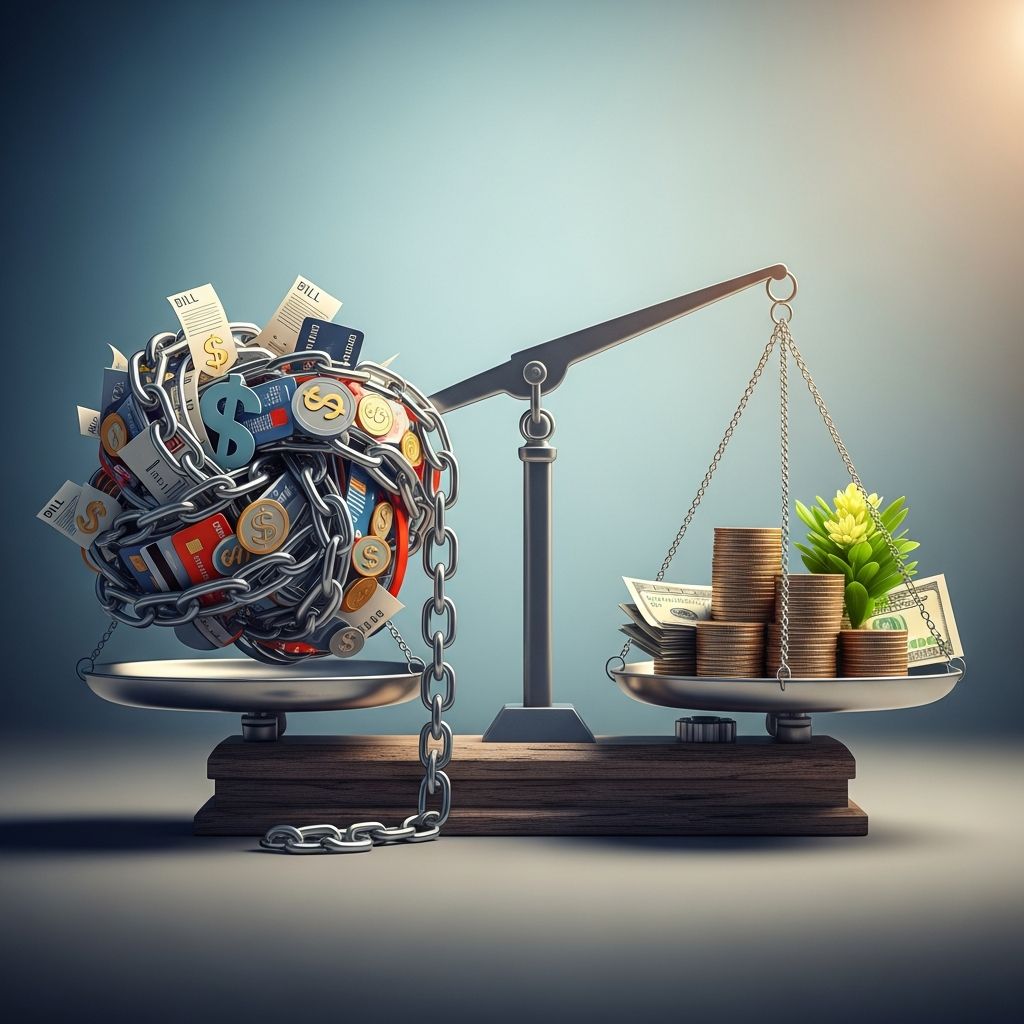
Managing debt can feel overwhelming, but with a clear plan and consistent habits, you can pay it down faster, reduce stress, and improve your financial stability. Research shows that household debt is common, yet structured payoff strategies and budgeting significantly improve repayment success and long-term financial health.
Understanding Your Debt Situation
Before choosing a payoff method or considering consolidation, you need a complete picture of what you owe. Lenders and credit bureaus evaluate factors such as total balance, interest rate, credit utilization, and payment history when assessing your risk.
List and Categorize Your Debts
Start by creating a detailed inventory of all your debts. Include:
- Credit card balances (with APRs and minimum payments)
- Personal loans and auto loans
- Student loans
- Medical bills and collections accounts
- Buy now, pay later plans and store cards
For each debt, write down:
- Current balance
- Interest rate (APR)
- Minimum monthly payment
- Due date
- Whether the rate is fixed or variable
Calculate Your Debt-to-Income Ratio
Your debt-to-income (DTI) ratio compares your monthly debt payments to your monthly gross income and is widely used by lenders to judge affordability.
Use this formula:
DTI = (Total monthly debt payments ÷ Gross monthly income) × 100
As a rule of thumb:
- Below 36%: Generally considered manageable
- 36%–49%: May be acceptable but indicates elevated risk
- 50% or more: Often viewed as high and may limit your options
Building a Budget That Supports Debt Payoff
A realistic budget is essential for freeing up cash to attack your balances. Consumer education resources emphasize that budgeting and tracking expenses are core to successful repayment and long-term financial health.
Track Your Spending
Review the last 2–3 months of bank and card statements and sort spending into categories such as:
- Housing and utilities
- Food (groceries and dining out)
- Transportation
- Insurance and healthcare
- Debt payments
- Subscriptions and entertainment
- Miscellaneous spending
Identify nonessential categories where you can cut back to redirect money toward debt repayment.
Set a Dedicated Debt Payoff Budget
Once you know your typical spending, create a budget that prioritizes debt. A simple structure is:
- Essential expenses: Rent/mortgage, utilities, food, transportation, insurance
- Minimum payments on all debts
- Emergency savings contribution (even a small amount)
- Extra amount dedicated to your chosen debt payoff strategy
Automating payments and transfers can reduce missed payments and support consistent progress.
Popular Strategies to Pay Off Debt Faster
Once your budget is in place, choose a primary payoff method. Evidence suggests that both mathematically optimized and psychologically motivating strategies can be effective when followed consistently.
Debt Snowball Method
The debt snowball method focuses on paying off debts from smallest balance to largest, regardless of interest rate.
- Make minimum payments on all debts.
- Put all extra money toward the smallest balance.
- Once it is paid off, roll that payment into the next smallest balance.
This method may cost more in interest than some alternatives, but many people find the early “wins” boost motivation and help them stick to the plan.
Debt Avalanche Method
The debt avalanche method targets debts with the highest interest rate first, which can minimize total interest paid.
- Make minimum payments on all debts.
- Apply all extra money to the debt with the highest APR.
- After that is paid off, move on to the next highest APR.
This approach is mathematically efficient because more of your money goes toward reducing principal rather than interest over time.
Hybrid or Custom Strategy
You can also combine these methods—for example, paying off one small, easy balance for motivation, then switching to the highest-interest debt. The best approach is the one you are most likely to follow consistently.
When to Consider Debt Consolidation
Debt consolidation involves combining multiple debts into a single new loan or credit line, ideally with a lower interest rate and a predictable payment. It is especially useful for high-interest consumer debt, such as credit cards.
How Debt Consolidation Works
In a typical consolidation:
- You take out a new loan or open a new credit line.
- You use it to pay off existing debts (often credit cards).
- You repay the new debt with one monthly payment, usually at a lower rate.
Common consolidation tools include personal loans, balance transfer credit cards, and home equity products.
| Consolidation Option | Typical Use | Key Advantages | Main Risks |
|---|---|---|---|
| Debt consolidation personal loan | Multiple credit cards and personal debts | Fixed rate, fixed term, one payment | Needs solid credit for best rate; fees may apply |
| Balance transfer credit card | High-interest credit card balances | Intro 0% or low APR period, potential fast payoff | Transfer fees; high rate after promo; requires discipline |
| Home equity loan or HELOC | Larger debt amounts backed by home equity | Often lower rates than unsecured loans | Your home secures the debt; risk of foreclosure |
Potential Benefits of Consolidation
- Lower interest costs: A lower APR can reduce total interest and help you pay off debt faster when payments are kept the same or increased.
- Simplified payments: One payment instead of many reduces missed or late payments and makes budgeting easier.
- Predictable payoff date: Installment loans have fixed terms, so you know when the debt should be fully repaid.
- Credit score improvement over time: On-time payments and lower credit utilization can benefit your credit in the long run.
Risks and Drawbacks to Watch Out For
- Extending the term: Lower monthly payments achieved by stretching repayment can increase total interest paid, even at a lower rate.
- Fees and costs: Origination fees, balance transfer fees, and closing costs can reduce or erase potential savings.
- Behavioral risk: Paying off credit cards via consolidation but then running them back up can leave you with more total debt than you started with.
- Secured vs. unsecured: Using home equity or other collateral puts important assets at risk if you cannot repay.
Is Debt Consolidation Right for You?
Consolidation is generally more effective when certain conditions are met.
Good Candidates for Debt Consolidation
You may be a strong candidate if:
- Your credit profile qualifies you for a lower interest rate than you currently pay on average.
- You have stable income and can commit to regular payments.
- You are primarily dealing with high-interest unsecured debt, such as credit cards.
- You are unlikely to continue using credit cards heavily once balances are consolidated.
When Consolidation May Not Be Appropriate
Consolidation may not be ideal if:
- You cannot qualify for a rate meaningfully lower than your current blended APR.
- Your income is unstable, and you are at high risk of missing payments.
- Your primary challenge is overspending rather than just high interest rates.
- You are already in or near default and may need a different solution (such as a debt management plan or legal advice).
Step-by-Step Plan to Implement Your Strategy
After choosing a payoff method and deciding whether to consolidate, follow a structured plan.
1. Clarify Your Goal and Timeline
- Decide when you would like to be debt-free (for example, in 24, 36, or 60 months).
- Use an online calculator or a spreadsheet to estimate how much you must pay each month to reach that date.
- Check if this amount fits within your budget or if you need to adjust expenses or your timeline.
2. Choose and Activate Your Payoff Method
- Pick snowball, avalanche, consolidation, or a hybrid approach.
- Set up automatic payments at least for minimums to avoid missed due dates.
- Schedule your additional principal payment to your priority debt right after you get paid.
3. Negotiate Where Possible
Sometimes you can improve your situation without formal consolidation:
- Ask your credit card issuers if they can reduce your APR or convert to a lower-rate hardship program.
- Explore income-driven or alternative repayment options for eligible student loans through official channels.
- Contact service providers or creditors early if you anticipate payment trouble; hardship assistance is often more available before accounts go delinquent.
4. Protect Yourself with a Small Emergency Fund
Having even a modest buffer (for example, a few hundred dollars) can prevent new debt when small, unexpected expenses arise. Consumer education agencies often recommend building an emergency fund alongside reasonable debt payments.
Long-Term Habits to Stay Out of Debt
Paying off debt is only part of the journey; staying out of debt requires ongoing habits and risk management.
Strengthen Your Financial Resilience
- Gradually grow your emergency fund to cover at least several weeks to months of essential expenses over time.
- Review insurance coverage (health, renters or homeowners, auto, disability) to reduce the risk of large, unexpected bills.
- Monitor your credit reports regularly to catch errors and signs of identity theft.
Adjust Your Use of Credit
- Keep credit card balances well below your limits to maintain a lower credit utilization ratio, a key factor in credit scores.
- Pay your statement balance in full each month whenever possible to avoid interest.
- Be cautious about opening new credit accounts unless they serve a clear, planned purpose.
Review and Update Your Plan Periodically
Your income, expenses, and goals can change over time. Revisit your budget and payoff plan every few months and whenever you experience:
- A change in employment or income
- A new major expense or life event
- A shift in interest rates or financial products you use
Frequently Asked Questions (FAQs)
Q: Should I pay off debt or build savings first?
A: Many experts suggest maintaining a small emergency fund while aggressively paying down high-interest debt, then increasing savings once that debt is reduced.
Q: How does debt consolidation affect my credit score?
A: Applying for a new loan or card may cause a small, temporary drop due to a hard inquiry, but making on-time payments and lowering your credit utilization can help improve your score over time.
Q: Is it better to use the snowball or avalanche method?
A: The avalanche method usually saves more on interest, while the snowball method can provide quicker psychological wins. The best method is the one you are most likely to maintain consistently.
Q: When is professional help a good idea?
A: If you are missing payments, being contacted by collectors, or unsure which option fits your situation, you may benefit from consulting a nonprofit credit counseling agency or a qualified financial professional for personalized guidance.
Q: Can consolidation guarantee that I will get out of debt faster?
A: No. Consolidation is a tool. You typically save time and money only if you secure a lower rate, avoid extending the repayment period unnecessarily, make payments on time, and do not take on new debt during repayment.
References
- How to Pay Off Debt: Top Strategies for 2026 — NerdWallet. 2025-01-02. https://www.nerdwallet.com/personal-loans/learn/pay-off-debt
- Pros and Cons of Debt Consolidation — Experian. 2024-03-13. https://www.experian.com/blogs/ask-experian/pros-and-cons-of-debt-consolidation/
- Getting Out of Default — U.S. Department of Education, Federal Student Aid. 2024-06-20. https://studentaid.gov/manage-loans/default
- Debt Collection FAQs — Federal Trade Commission (FTC). 2023-11-01. https://consumer.ftc.gov/articles/debt-collection-faqs
- Credit Scores and Reports — Consumer Financial Protection Bureau (CFPB). 2023-09-15. https://www.consumerfinance.gov/consumer-tools/credit-reports-and-scores/
Similar Articles








Read full bio of Sneha Tete