CD Ladder: 6 Steps To Optimize Your Strategy
Learn how to build, manage, and refine a CD ladder so you can balance liquidity, safety, and yield in changing interest rate environments.

A carefully planned CD ladder can help you earn more interest than a standard savings account while still giving you regular access to your money. By splitting your savings across multiple certificates of deposit (CDs) with staggered maturity dates, you can balance liquidity, safety, and yield over time.
This guide explains what a CD ladder is, how it works, how to build one step by step, and how to optimize it for different rate environments and financial goals. It also highlights common mistakes, alternatives, and answers to frequently asked questions.
What Is a CD Ladder?
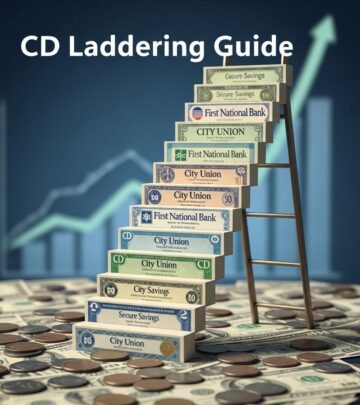
A CD ladder is a savings strategy where you divide a lump sum into several CDs that mature at different times, rather than locking everything into a single term.
For example, instead of putting $10,000 into one 5-year CD, you might open:
- $2,000 in a 1-year CD
- $2,000 in a 2-year CD
- $2,000 in a 3-year CD
- $2,000 in a 4-year CD
- $2,000 in a 5-year CD
As each CD matures, you can either use the funds or reinvest them into a new long-term CD at the top “rung” of your ladder. Over time, this creates a cycle where part of your money becomes available at regular intervals, while the rest stays in longer-term CDs that typically offer higher interest rates.
Key Features of a CD Ladder
- Staggered maturities: Each CD has a different term length, such as 6 months, 1 year, 2 years, 3 years, and 5 years.
- Regular liquidity: One CD matures at predictable intervals (for example, every 6 or 12 months), giving you periodic access to cash.
- Rate diversification: You avoid committing all funds to one interest rate and maturity date, helping reduce reinvestment and interest rate risk.
- Low risk: CDs are typically insured (for example, FDIC-insured in the U.S. up to standard limits), which offers principal protection compared with many market-based investments.
Why Use a CD Ladder?
A CD ladder is designed to solve a common trade-off: long-term CDs usually pay more interest, but they restrict access to your money for longer periods and can impose early withdrawal penalties if you need funds sooner.
By using several CDs with different maturities, you can:
- Capture higher yields from longer-term CDs
- Maintain periodic access to some of your money
- Spread interest rate risk across multiple terms
Benefits of a CD Ladder
- Higher potential interest: Longer-term CDs generally offer higher annual percentage yields (APYs) than shorter-term CDs or typical savings accounts.
- Regular access to cash: Because one CD matures regularly, you are not completely locked in for years at a time.
- Reduced interest rate risk: By staggering terms, you avoid putting all funds into a single rate that could become unattractive as market rates change.
- Predictable returns: CD interest rates are typically fixed for each term, so you know your future earnings if you hold to maturity.
- Low volatility: CD values do not fluctuate daily like bond or stock prices; you simply receive the contracted interest plus principal at maturity, assuming the institution remains sound and insured.
Potential Drawbacks
- Limited liquidity between rungs: If you need money before a CD matures, early withdrawal penalties may apply and can reduce your yield substantially.
- Opportunity cost: In sharply rising rate environments, money locked into existing CDs may earn less than new CDs or other instruments opened later.
- Administrative complexity: Managing multiple CDs with different maturity dates can be more work than maintaining a single account, especially across several banks.
How a CD Ladder Works in Practice
To understand how a CD ladder functions over time, it helps to look at a simple example with evenly spaced maturities.
| Rung | Initial Term | Initial Deposit | Role in Ladder |
|---|---|---|---|
| 1 | 1-year CD | $2,000 | Provides liquidity in year 1; later rolled into a 5-year CD. |
| 2 | 2-year CD | $2,000 | Matures in year 2 and joins the longest term once reinvested. |
| 3 | 3-year CD | $2,000 | Continues the cycle, offering a balance between yield and access. |
| 4 | 4-year CD | $2,000 | Bridges the gap to the 5-year rung with solid earning potential. |
| 5 | 5-year CD | $2,000 | Highest-yielding rung; sets the long-term yield anchor. |
Once the first 1-year CD matures, you can reinvest it into a new 5-year CD. A year later, the original 2-year CD matures and you do the same. After several cycles, you will have a fully established ladder with all funds in 5-year CDs, but still having one mature each year.
Step-by-Step: How to Build a CD Ladder
While the exact details can vary, most CD ladders follow a similar setup process.
1. Define Your Time Horizon and Goals
Start by clarifying when you may need the money and what you want the funds to do.
- Short-term goals (1–3 years): emergency reserves, near-term major purchases, tuition payments.
- Medium-term goals (3–7 years): home down payment, planned renovation, vehicle purchase.
- Long-term goals (7+ years): supplemental retirement savings, funding a child’s education beyond the near term.
Your time horizon affects the length of your ladder, the number of rungs, and how aggressively you use longer-term CDs.
2. Choose the Number of Rungs and Maximum Term
Next, decide how many CDs to use and the longest maturity you are comfortable with.
- Common options include 3-, 4-, or 5-rung ladders.
- Typical maximum terms range from 2 to 5 years, depending on rates and your comfort level.
For example:
- 3-rung ladder: 6-month, 12-month, and 18-month CDs
- 5-rung ladder: 1-, 2-, 3-, 4-, and 5-year CDs
3. Decide How Much to Invest
Determine how much you can afford to lock up, keeping in mind that you should maintain a separate, highly liquid emergency fund. Many people split their ladder funds evenly across rungs for simplicity, but you can adjust allocations if you want more or less maturing at specific times.
4. Compare CD Rates and Terms
Before opening any accounts, evaluate CD offerings at different institutions. Key factors include:
- APY by term length
- Minimum deposit requirements
- Early withdrawal penalties
- Insurance coverage (e.g., FDIC or equivalent)
Consumer guidance from regulators and financial institutions consistently emphasizes comparing APYs and fees before choosing deposits, because small rate differences can compound into significant dollar differences over multi-year terms.
5. Open the CDs and Document Your Ladder
Once you select an institution (or institutions), open each CD with the desired maturity date and deposit amount.
For organization:
- Record each CD’s maturity date, interest rate, and amount.
- Set calendar reminders a few weeks before each maturity.
- Review auto-renewal policies so you are not surprised if a CD rolls into a new term automatically.
6. Reinvest Maturities to Keep the Ladder Rolling
The ongoing management of a CD ladder is as important as the initial setup. When a CD matures, you have three main options:
- Reinvest into the longest rung: For example, when a 1-year CD matures in a 1-5 year ladder, reinvest into a new 5-year CD to maintain the structure.
- Use the funds: Apply the proceeds to your goal (such as tuition or a planned purchase).
- Adjust the ladder: Change term lengths or amounts if your needs or the rate environment has changed.
How to Optimize a CD Ladder
Once your ladder is in place, you can fine-tune it to better match changing interest rates, income needs, and risk preferences.
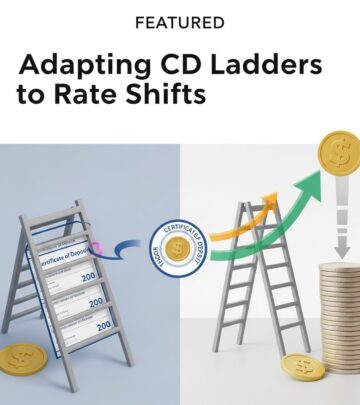
1. Tailor the Ladder to the Interest Rate Environment
The direction of interest rates can influence the ideal structure for your ladder.
- If rates are rising: You may prefer shorter terms initially so you can reinvest at higher future rates more frequently.
- If rates are falling: It can be beneficial to quickly roll maturing CDs into longer terms to lock in today’s higher yields for longer.
Using a ladder naturally spreads your exposure over time, which helps manage reinvestment risk when future rates are uncertain.
2. Adjust Ladder Length for Liquidity Needs
If you anticipate major expenses sooner than planned, you might shorten the ladder by:
- Reinvesting maturing funds into shorter-term CDs instead of the longest rung.
- Temporarily parking maturities in a high-yield savings account until your plans are clearer.
Conversely, if your time horizon extends, you might lengthen the ladder by adding new longer-term CDs or increasing the maximum term, assuming you are comfortable with reduced liquidity.
3. Coordinate With Other Cash and Fixed-Income Holdings
A CD ladder rarely stands alone. It often complements:
- High-yield savings accounts: for immediate access to emergency funds.
- Money market funds: for short-term cash management.
- Treasury bills or notes: sometimes structured as a separate ladder for additional diversification.
Coordinating these pieces can provide both stability and flexibility while targeting a blended yield that fits your risk tolerance.
4. Minimize Early Withdrawal Penalties
Breaking a CD early typically results in a penalty, often forfeiting several months of interest. To reduce the likelihood and impact of penalties:
- Keep a separate emergency fund outside the ladder.
- Select shorter intervals between rungs if you expect variable cash needs.
- Consider no-penalty CDs for part of the ladder if available, understanding that rates may be lower.
When a CD Ladder Makes Sense
A CD ladder can be particularly useful in the following scenarios:
- Conservative savers who prioritize safety and predictability over maximum returns.
- Retirees or near-retirees seeking scheduled access to cash while avoiding stock-market volatility.
- Goal-based savers with known timelines, such as college tuition, home repairs, or a future down payment.
- Cash-heavy investors looking to improve yields on idle funds without taking on significant market risk.
Alternatives and Complements to CD Ladders
While CD ladders are a time-tested savings tool, you may also consider:
- Treasury ladders: A similar concept using U.S. Treasury bills, notes, or bonds, which can offer state tax advantages and an active secondary market.
- Bond funds or bond ladders: Using individual bonds or diversified bond funds to seek higher yields with additional interest rate and credit risk.
- High-yield savings or money market accounts: Offering more flexibility but often with lower yields than longer-term CDs, depending on market conditions.
Frequently Asked Questions (FAQs)
Q: How many CDs should I use in a CD ladder?
A: Many savers start with 3 to 5 rungs, such as 1-, 2-, 3-, 4-, and 5-year CDs, but the ideal number depends on your time horizon, liquidity needs, and how granular you want your maturity schedule to be.
Q: Is a CD ladder safe?
A: When CDs are held at insured institutions within coverage limits, principal and accrued interest are generally protected against bank failure, making CD ladders a low-risk savings strategy compared with market-based investments.
Q: Can I add more money to my CD ladder later?
A: Yes. You can add new CDs as additional rungs, increase the size of existing rungs when they mature, or start a second ladder with a different time frame or purpose.
Q: What happens if I need money before a CD matures?
A: You can usually withdraw early, but you will likely pay an early withdrawal penalty that reduces your interest earnings, and in some cases could dip into principal if the penalty is large relative to accrued interest.
Q: Are CD ladders better than just using a savings account?
A: It depends on your priorities. Savings accounts offer greater flexibility and instant access, while CD ladders can provide higher, more predictable yields if you are willing to limit access to your funds between maturity dates.
References
- CD Ladder: What It Is and How to Build One — Bankrate. 2024-04-16. https://www.bankrate.com/banking/cds/cd-ladder-guide/
- CD Ladder: What It Is and How to Build a Smart Strategy — State Bank of India (California). 2023-09-01. https://www.sbical.bank/education-center/cd-ladder-strategy
- Use a CD Ladder to Climb Up to More Money—A Savings Strategy — Delta Community Credit Union. 2025-04-10. https://www.deltacommunitycu.com/knowledge-center/blog/april-2025/use-a-cd-ladder-to-climb-up-to-more-money-a-savings-strategy.html
- CD Ladder vs. Treasury Ladder: Choosing a Smart Cash Strategy — Mercer Advisors. 2023-11-03. https://www.merceradvisors.com/insights/personal-finance/cd-ladder-vs-treasury-ladder-choosing-a-smart-cash-strategy/
- Tiered Savings Strategy: How to Structure a CD Ladder for Steady Growth — M&T Bank. 2024-05-20. https://www.mtb.com/library/article/tiered-savings-strategy-how-to-structure-a-cd-ladder-for-steady-growth
- Building a CD Ladder: A Smart Savings Strategy — F&M Bank. 2024-08-16. https://www.fm.bank/blogs/blog/2024/08/16/building-a-cd-ladder–a-smart-savings-strategy
Similar Articles








Read full bio of Sneha Tete