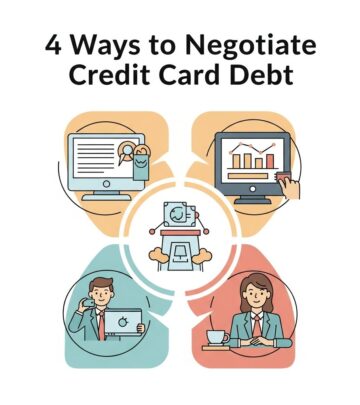
How to Negotiate Credit Card Debt: A 4-Step Guide
Master credit card debt negotiation with our comprehensive 4-step guide to lower payments and interest rates.

Credit card debt can feel overwhelming, but the good news is that negotiating with your creditors is not only possible—it’s often encouraged. By taking a proactive approach to negotiate your debt, you can achieve better terms that make your financial obligations more manageable. Whether you’re looking to lower your monthly payment, reduce your interest rate, or settle for less than you owe, understanding the negotiation process is essential to regaining control of your finances.
According to experts in the credit industry, creditors are generally willing to work with borrowers who are experiencing financial challenges. As Rod Griffin, senior director of public education and advocacy for credit bureau Experian, states: “You can always negotiate with the lender. Every lender wants to get paid, and if you’ve experienced some financial challenges, most will work with you.” This perspective highlights that credit card companies have a vested interest in reaching agreements that allow them to recover at least some portion of the debt.
Step 1: Confirm Your Total Balance Owed
Before entering into any negotiation with your credit card issuer, you must have a complete and accurate understanding of your financial situation. This foundational step sets the stage for all subsequent negotiations and helps you approach creditors with confidence and credibility.
Start by gathering information on each of your credit cards, noting the current balance, interest rates, and your payment history. Organize this information in a spreadsheet or document that clearly shows:
- Current outstanding balance on each card
- Annual percentage rate (APR) for each account
- Minimum monthly payment amounts
- Your payment history, including any late or missed payments
- Account opening dates and customer tenure
If you can demonstrate a history of on-time payments, you enter negotiations from a position of strength. Creditors view borrowers with good payment histories as lower-risk customers and may be more willing to offer concessions. Conversely, if your payment history is less than perfect, understanding this reality allows you to develop a more realistic negotiation strategy.
Step 2: Determine Your Negotiation Goals and Options
Once you understand your debt situation, you need to decide what type of relief you’re seeking. There are several negotiation pathways available, each with different benefits and requirements. Understanding these options helps you pursue the most realistic and beneficial outcome for your specific circumstances.
Lump-Sum Settlement
A lump-sum settlement is a one-time payment of a reduced amount that the creditor agrees to accept as full settlement of your debt. For example, if you owe $10,000, your credit card company might accept an immediate payment of $7,000 and consider the debt completely paid.
When creditors agree to lump-sum settlements, they typically accept between 30% and 80% of the total amount owed. The actual percentage depends on several factors, including:
- The creditor’s willingness to settle
- The total amount of debt involved
- Your demonstrated financial hardship
- Your payment history and customer relationship
- The creditor’s assessment of collection likelihood
Companies are typically more willing to accept lump-sum settlements if you can demonstrate genuine financial hardship. This might include job loss, medical emergency, unexpected major expense, or other circumstances beyond your control that have impacted your ability to pay.
Principal Reduction
Another negotiation option involves reducing the principal balance without requiring an immediate large payment. Using the same example, if you owe $10,000, you might negotiate with the company to reduce that amount to $7,000. This approach provides immediate debt relief without requiring a substantial upfront payment.
However, it’s important to understand that the reduced principal amount will still be subject to interest and fees. If you only make minimum payments, your debt could continue growing. This option works best when combined with a commitment to pay more than the minimum monthly payment.
Workout Agreement
A workout agreement is a formal renegotiation of your debt terms between you and the creditor. Rather than reducing the amount you owe, the creditor agrees to modify the repayment terms to make your debt more manageable. This typically involves:
- Reduced interest rates for a set period
- Waived late fees and penalty charges
- Lower minimum monthly payments
- Extended payment timelines
- Suspension or reduction of interest accrual
Workout arrangements are usually most effective for people with good credit who have a history of making most or all of their payments on time. Once the agreed-upon period expires, the company’s regular terms and fees typically come back into effect, so these agreements work best for temporary financial difficulties.
Hardship Programs and Forbearance
For those facing temporary financial setbacks such as job loss or unexpected illness, forbearance or hardship programs may be ideal. In these arrangements, the credit card company reduces or suspends your minimum payment, interest, or other fees for a limited time—typically six months to a year—while you recover from your financial emergency.
Step 3: Contact Your Credit Card Issuer’s Debt Settlement Department
With your information gathered and your negotiation goals clearly defined, you’re ready to initiate contact with your credit card company. The approach and timing of this contact significantly impact your success.
Call your credit card company’s customer service line and specifically ask to speak with the debt settlement, loss mitigation, or hardship department. These specialized departments have the authority to negotiate terms and approve settlements, unlike general customer service representatives. If you prefer a written record of your communications, you can send a formal letter to your credit card company’s debt settlement department, though this approach typically takes longer to resolve.
The timing of your contact is critical. Start negotiations before your debt is sold to a collection agency. Creditors typically send delinquent debt to collections when it’s 120 to 180 days late—roughly four to six months. Once your debt enters collections, negotiating becomes significantly more difficult. Collection agencies often pursue repayment more aggressively and may even file lawsuits to recoup their money.
Your credit card company is most receptive to negotiation when you’re showing signs of financial trouble but before you’ve become severely delinquent. If you previously had an excellent history of on-time payments, mention this explicitly—it strengthens your position considerably.
Step 4: Explain Your Situation and Desired Resolution
The final and most important step is clearly communicating your situation and proposed settlement to your creditor. This conversation determines whether your negotiation succeeds or fails.
Presenting Your Financial Hardship
Explain your financial situation using factual, concrete evidence rather than vague statements. Specific information is more persuasive and demonstrates that you’ve thought carefully about your circumstances. Include:
- Quantifiable income reduction (specific dollar amounts and percentages)
- Job loss or employment changes with effective dates
- Medical emergencies or unexpected health expenses
- Death in the family or other life emergencies
- Divorce or other major life changes
- Unexpected major expenses (home or vehicle repairs, essential replacements)
Avoid emotional appeals or vague references to hardship. Creditors respond to documented financial reality, not emotional narratives. The more specific your explanation, the more credible you appear.
Stating Your Proposed Settlement
Be very clear about the exact settlement terms you’re proposing. Your proposal should include:
- The specific amount you’re willing to pay (as a lump sum or monthly payments)
- The exact payment date or schedule
- The specific concessions you’re requesting (reduced interest, waived fees, lower payments)
- How long you need the modified terms
- Your plan for managing payments after the negotiation period ends
Having a prepared proposal demonstrates seriousness and professionalism. It also keeps the conversation focused and productive, reducing the likelihood that the discussion will become derailed by irrelevant details.
When to Negotiate vs. Other Debt Relief Options
While negotiating directly with your creditors is cost-effective and keeps you in control, other options exist for those seeking professional assistance.
Non-Profit Credit Counseling Organizations
Non-profit credit counseling organizations can help you negotiate lower interest rates and establish payment plans for a modest fee. These organizations are typically less expensive than debt settlement companies and can provide valuable guidance on overall financial management.
Debt Relief Companies
Credit card debt relief companies specialize in negotiating settlements with creditors. When you work with a debt relief company, you typically save funds in a dedicated account that the company uses to negotiate settlements. Once a settlement is negotiated and you approve it, you pay the company a fee based on a portion of the debt reduced or settled. While this professional assistance can be valuable, it’s important to research companies carefully and understand all fees before enrolling.
Important Considerations and Potential Downsides
Before pursuing credit card debt negotiation, understand that there are potential downsides alongside the benefits. Getting creditors to forgive part of your debt or alter repayment terms can result in:
- Temporary or lasting damage to your credit score
- Increased tax liability (forgiven debt may be considered taxable income)
- Difficulty obtaining future credit
- Potential impact on employment or housing applications
However, these potential downsides must be weighed against the benefits of managing your debt and avoiding collection accounts, lawsuits, or bankruptcy.
Key Takeaways for Successful Negotiation
Successful credit card debt negotiation requires preparation, realistic expectations, and clear communication. Remember these essential points:
- Creditors want to recover at least some portion of what you owe—they have incentive to negotiate
- Start negotiations before your debt becomes severely delinquent
- Document your payment history and demonstrate financial hardship with specific facts
- Be clear about what you’re requesting and what you can offer
- Get any agreement in writing before making payments
- Consider professional help if direct negotiation proves unsuccessful
Frequently Asked Questions
Q: What percentage of my debt can I typically negotiate away?
A: Creditors typically accept between 30% and 80% of the total debt owed in settlement agreements. The exact percentage depends on your creditor’s willingness to settle, your financial hardship, and your payment history.
Q: Will negotiating my credit card debt hurt my credit score?
A: Yes, negotiating credit card debt can temporarily or permanently impact your credit score. However, allowing debt to go to collections or facing bankruptcy typically causes more significant credit damage than negotiated settlements.
Q: When is the best time to negotiate with my credit card company?
A: The best time is when you’re experiencing financial difficulty but before your debt becomes severely delinquent (before 120-180 days late). If you have a history of on-time payments, this actually strengthens your negotiating position.
Q: Can I negotiate if I’m current on my payments?
A: Yes, though credit card companies are less likely to forgive debt or significantly reduce amounts owed. However, they may offer hardship programs with benefits like lower interest rates or waived fees, especially if you have a good payment history.
Q: Should I use a debt relief company or negotiate myself?
A: You can always negotiate yourself and save money on fees. However, if direct negotiation is unsuccessful or you’re overwhelmed by the process, professional debt relief companies or non-profit credit counseling organizations can assist you.
Q: What happens to forgiven debt on my taxes?
A: Forgiven debt above $600 is typically considered taxable income by the IRS. You should consult with a tax professional about potential tax liability from debt forgiveness.
Q: What if my creditor refuses to negotiate?
A: Not all creditors will negotiate, especially if you owe a small amount or have a recent history of making payments. In this case, explore other options like credit counseling, consolidation, or seeking advice from a financial professional.
References
- A 4-Step Guide to Negotiating Credit Card Debt — Money. 2024. https://money.com/how-to-negotiate-credit-card-debt/
- 4 Signs It’s Time to Negotiate Your Credit Card Debt — Money. 2024. https://money.com/negotiate-credit-card-debt-good-idea/
- How to Get Debt Relief — Money. 2024. https://money.com/how-to-get-debt-relief/
- Our Best Strategies for Paying Off Credit Card Debt — Money. 2024. https://money.com/how-to-pay-off-credit-card-debt/
- Consumer Financial Protection Bureau – Debt Collection — CFPB.gov. 2024. https://www.consumerfinance.gov/
Similar Articles








Read full bio of Sneha Tete