Flying with an Infant: Less of a Nightmare
Expert tips and strategies to transform stressful flights with your baby into smooth, manageable journeys for parents and infants alike.
Flying with an infant can feel overwhelming, but with strategic preparation, it becomes manageable and even enjoyable. This guide covers every stage—from pre-flight planning to post-flight recovery—drawing on proven tips to minimize stress for parents and babies.
Before You Book the Flight
Start planning early to align travel with your infant’s routine. Choose flights that match their sleep schedule to maximize nap time in the air. Short-haul flights under 2 hours are ideal for newborns, but for longer trips, select red-eye or midday options when babies are naturally drowsy.
- Age considerations: Avoid flying with newborns under 7 days old; wait until 2-3 months if possible for better immunity and stability.
- Lap infant vs. seat: Infants under 2 fly free as lap children on most airlines, but book a seat for an FAA-approved car seat for safety. Airlines prioritize lap infants for empty adjacent seats.
- Bassinet request: Bulkhead seats on international flights often include bassinets for babies under 10kg; request at booking.
Check airline policies: Some limit two lap infants per row, and international flights may require an infant seatbelt extension.
Packing Essentials for the Flight
Pack light but smart—focus on multiples of flight duration. Use a dedicated diaper bag as your personal item.
| Category | Essentials | Quantity Tip |
|---|---|---|
| Diapering | Diapers, wipes, changing pad, diaper cream, disposal bags | 2-3x flight length + extras |
| Clothing | 2-3 outfits for baby, 1 spare for parent, layers | Breathable fabrics for cabin temp swings |
| Feeding | Bottles/formula/breast milk (TSA-exempt over 3-1-1), snacks for older infants | Pre-measured; notify TSA |
| Comfort | Pacifiers (2+), lovey/blanket, quiet toys/books | No screens under 2 unless desperate |
| Health | Thermometer, infant meds (consult pediatrician), hand sanitizer | Saline drops for congestion |
Skip bulky toys; newborns sleep and eat mostly. Gate-check strollers and car seats in protective bags.
Navigating the Airport with Baby Gear
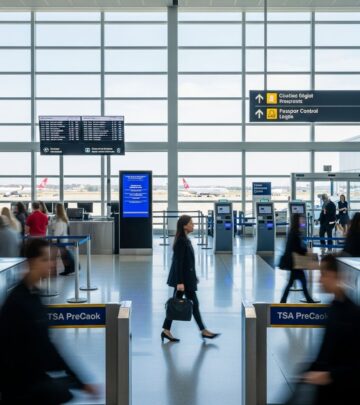
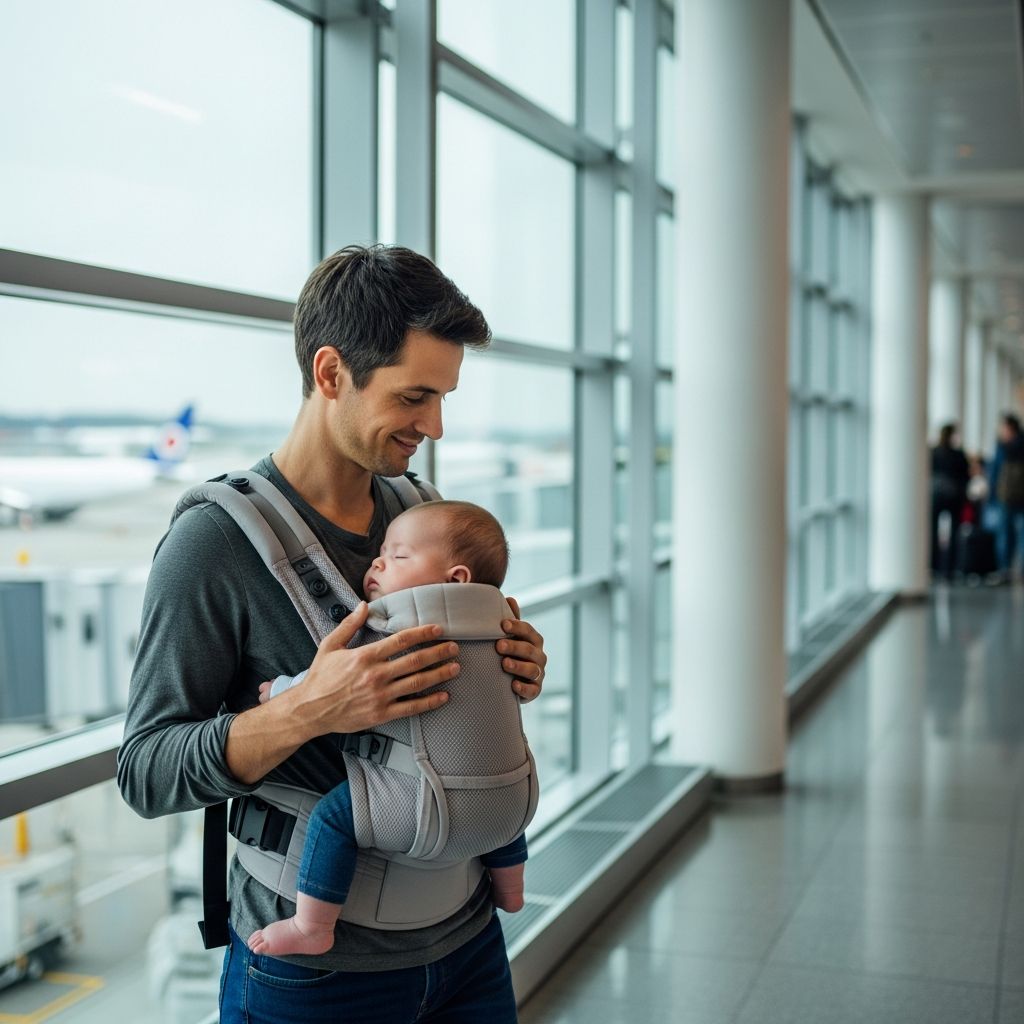
Airports are marathons—gear efficiently. Babywearing is key: carriers like Ergobaby stay on through TSA (hands may be swiped).
- Babywearing through security: Hold sleeping babies in carrier; strollers are scanned separately.
- Gate-checking: Tag strollers/car seats at gate—they arrive at door post-landing, often free.
- Early arrival: Add 30-60 minutes for lines; priority boarding for families on most airlines.
Family restrooms have changing stations. Stay calm—staff are accommodating.
Choosing the Best Seat on the Plane
Seat selection impacts comfort. Bulkhead rows offer legroom and bassinets but no under-seat storage; window for privacy.
- Front of cabin: Quieter, faster deplaning; request bassinet.
- Aisle for access: Easier diaper changes; avoid back near lavatories.
- Ask for empties: Gate agents often block seats for lap infants.
For car seats, ensure FAA-approved and rear-facing properly installed.
Takeoff and Landing: Easing Ear Pressure
Cabin pressure changes cause ear pain—counter with sucking/swallowing.
- Nurse/bottle/pacifier: Start exactly at takeoff roll and descent; time feedings to coincide.
- Upright position: Hold semi-upright during descent for pressure relief and burping.
- If sleeping: Don’t wake unless fussing; many babies tolerate fine.
Pro tip: Delay feeding slightly to ensure hunger peaks with pressure change.
Keeping Baby Comfortable and Quiet In-Flight
Cabins are dry, noisy, and variable temp—adapt. White noise apps mimic womb sounds.
- Temperature: Layers of soft cotton; moisten air with wipes.
- Entertainment: Rotate 2-3 quiet toys, books; skin-to-skin calms.
- 5 S’s technique: Swaddle, side/stomach position (held), shush, swing, suck.
- Hygiene: Wipe trays/arms with sanitizer; frequent handwashing.
Maintain routines: Feed/sleep on schedule to signal normalcy.
Health and Safety Precautions
Infants’ immune systems are vulnerable in recycled air.
- Illness check: Consult pediatrician pre-flight if congested/feverish; monitor post-trip.
- COVID/flu season: Babywear to limit contact; avoid peak illness times.
- No sedatives: Skip Benadryl unless prescribed—ineffective and risky.
- Restraints: CARES harness for toddlers 22-44lbs; car seats best.
Vaccination status up-to-date; saline drops for ears/nose.
Managing Diaper Changes and Messes
Lavatories are tight—prep. Changing table provided; extra wipes essential.
- Timing: Change pre-boarding and post-landing; use seat for quick mid-flight if calm.
- Supplies: Disposal bags contain odors; spare outfits nearby.
- Parent prep: Your change of clothes—spills happen.
Pro: Lap infants mean no assigned seat mess worries.
Dealing with Fellow Passengers
Expect smiles more than glares—most adore babies. Relax; tension transfers.
- Communicate: Smile, explain if needed; offers of help common.
- Privacy: Window seat or blanket shields cuddles.
- Fuss response: Walk aisle if permitted; crew assists.
Bonus: Strangers coo, easing solo travel.
International Flights with Infants
Longer hauls amplify needs. Bassinets, extra belts standard.
- Customs: Passport for lap infant; declare milk/formula.
- Time zones: Adjust schedule gradually pre-trip.
- Documentation: Birth certificate if required.
Post-Flight Recovery
Jet lag hits hard—hydrate, nap, routine reset. Watch for ear infections.
Frequently Asked Questions (FAQs)
Q: When is the best time to fly with a newborn?
A: After 7 days minimum, ideally 2-3 months; align with sleep schedule.
Q: Can I use a car seat on the plane?
A: Yes, if FAA-approved and you buy a seat; install correctly.
Q: How do I handle ear pressure?
A: Nurse/bottle/pacifier during takeoff/landing; hold upright.
Q: Is babywearing allowed through security?
A: Yes, carriers stay on; notify TSA.
Q: What if my baby cries the whole flight?
A: Use 5 S’s, walk if possible; most flights have understanding passengers.
Q: Are there bassinets on planes?
A: Yes, bulkhead on many international flights; request early.
References
- Flying with Baby: Parent FAQs — American Academy of Pediatrics (healthychildren.org). 2023-10-15. https://www.healthychildren.org/English/safety-prevention/on-the-go/Pages/Flying-with-Baby.aspx
- Travelling with a Baby: 18 tips for Flying with an Infant — VancityWild. 2023-05-20. https://vancitywild.com/travelling-with-a-baby-18-tips-for-flying-with-an-infant/
- Flying with a Baby: Tips for a Smoother Trip — Capital Area Pediatrics. 2024-02-12. https://www.capitalareapediatrics.com/blog/flying-with-a-baby-tips-for-a-smoother-trip
- 10 Tips for Flying with a Baby — Big Brave Nomad. 2022-11-08. https://www.bigbravenomad.com/blog/10-tips-for-flying-with-a-baby
- 8 Tips That’ll Take the Stress Out of Flying With a Baby — Happiest Baby. 2024-01-10. https://www.happiestbaby.com/blogs/baby/flying-with-baby
Similar Articles








Read full bio of Sneha Tete