Legally Sell Your Body: 8 Safe Ways To Earn Cash
Discover legitimate ways to earn cash by selling hair, plasma, eggs, sperm, breast milk, and more while understanding risks and requirements.

In times of financial strain, many people seek creative ways to generate extra income. Surprisingly, your body offers several legal avenues to earn cash through donations or sales of renewable or non-vital components. From selling hair to donating gametes or plasma, these methods can provide quick money but come with health screenings, time commitments, and potential risks. This guide covers all major options, including eligibility, earnings potential, processes, and considerations to help you decide if they’re right for you.
Sell Your Hair
One of the simplest and least invasive ways to profit from your body is by selling your hair. Long, healthy, untreated hair is in high demand for wigs, extensions, and hairpieces, particularly for medical patients or fashion uses. Hair must typically be at least 10-12 inches long, unprocessed (no dyes, perms, or chemicals), and in excellent condition.
- Where to Sell: Reputable buyers include OnlineHairAffair.com, BuyandSellHair.com, and HairSellon.com. Local salons or wig makers may also purchase.
- Earnings: $100 to $4,000+ depending on length, thickness, color, and texture. Virgin (uncut) hair fetches the highest prices—up to $1,000 per 12 inches.
- Process: Cut hair professionally, photograph it, ship samples if requested, and receive payment upon approval. Growth takes 6-12 months to regrow to sellable length.
- Tips: Avoid heat styling or coloring to maximize value. Blonde or gray hair often pays more due to rarity.
While painless, this method requires patience for regrowth. Always research buyers to avoid scams.
Sell Your Cells
Your cells, particularly stem cells or bone marrow, can save lives and pay well. Peripheral blood stem cell (PBSC) donation is the most common, where drugs stimulate stem cell release into the bloodstream for collection.
- Eligibility: Ages 18-44, healthy, matching a patient via the National Marrow Donor Program (NMMBP).
- Process: 4-5 days of filgrastim injections to boost stem cells, followed by 4-8 hours of apheresis (like plasma donation). Side effects include bone pain, fatigue.
- Compensation: Up to $7,500-$8,000 for travel, lodging, and lost wages, not direct payment (illegal in the US for organs/tissues).
- Risks: Flu-like symptoms lasting days; full recovery in weeks.
Join BeTheMatch.org to register. It’s altruistic but financially rewarding for matches.
Donate Breast Milk
New or nursing mothers can sell excess breast milk to parents needing it for preemies, adoptees, or supplementation. Demand is high via screened milk banks or peer-to-peer sales.
- Platforms: Human Milk 4 Human Babies (Facebook groups), OnlyTheBreast.com, MothersMilkBank.org (non-profit pays screening fees).
- Payout: $1.50-$3 per ounce. A baby consumes 13-42 oz/day, so dedicated pumpers earn $500-$2,000/month.
- Requirements: Healthy diet, no smoking/drugs, pump 8-12x/day, ship frozen on dry ice. Non-profits screen rigorously for diseases.
- Considerations: Time-intensive; ensure buyer legitimacy to avoid health risks.
Pumping and shipping on ice is straightforward but requires commitment.
Poop for Pay
Donating stool for fecal microbiota transplants (FMT) treats C. difficile infections. Healthy donors provide samples for processing into treatments.
- Programs: OpenBiome (US leader), Australia’s Life Saving Donations.
- Eligibility: Ages 18-50, BMI 19-30, healthy gut (no antibiotics 6 months prior), pass extensive pathogen screening.
- Process: Weekly collections for 60 days; provide ~250g poops in kits.
- Pay: $250-$500 per approved donation, up to $13,000 for full cycle.
- Risks: Minimal, but strict hygiene and screening prevent transmission.
It’s oddly lucrative for healthy bowels.
Participate in Clinical Trials
Pharmaceutical companies pay for testing new drugs/devices on healthy volunteers or patients. Compensation covers time/risk.
- Find Trials: ClinicalTrials.gov, CenterWatch.com, local universities.
- Earnings: $100-$10,000+ per study (e.g., $5,000 for Phase I drug trial over weeks).
- Types: Healthy volunteer (sleep studies: $200/night), patient-specific (up to $20,000).
- Risks: Side effects, confinement; disclose medical history fully.
- Duration: Days to months; inpatient pays more.
| Trial Type | Avg Pay | Duration | Risk Level |
|---|---|---|---|
| Healthy Volunteer | $1,000-$5,000 | 1-4 weeks | Low-Medium |
| Patient-Specific | $5,000-$20,000 | 1-6 months | Medium-High |
| Sleep Studies | $200-$1,000/night | 1-7 nights | Low |
Vet sponsors; never pay to participate.
Donate Sperm
Men with desirable traits (height, education, health) can donate sperm repeatedly.
- Eligibility: 18-39, healthy, pass genetic/STD screens, often college-educated.
- Process: First 1-2 donations free for testing; then masturbate in clinic 1-3x/week.
- Pay: $30-$200 per donation; $400-$1,200/month for contracts (6-24 months).
- Commitment: Abstain 2-5 days between; lifestyle restrictions (no smoking).
Quick and easy for qualifiers.
Donate Eggs
Women 21-35 donate eggs for IVF, a more involved process with higher pay.
- Eligibility: Healthy, non-smoking, family history screened; ethnic diversity prized.
- Process: 2 weeks hormone shots, ultrasound monitoring, surgical retrieval under sedation (30 min).
- Side Effects: Bloating, mood swings, rare ovarian hyperstimulation.
- Compensation: $5,000-$10,000+ per cycle (1-2/year max); premiums for Ivy League or ethnicity.
Lucrative but physically demanding; multiple cycles risky long-term.
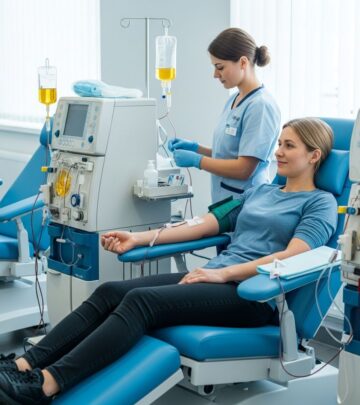
Donate Plasma
The easiest renewable donation: Plasma for therapies (clotting disorders, burns).
- Centers: CSL Plasma, Octapharma, Grifols.
- Eligibility: 18+, 110lbs+, pass health quiz (no recent tattoos, travel).
- Process: 1-hour apheresis 2x/week; blood out, plasma separated, rest returned.
- Pay: $20-$50 first month bonuses; $200-$400/month ongoing.
- Freq: Up to 104x/year.
Nearly painless; hydrate well.
Frequently Asked Questions (FAQs)
Q: Is it legal to sell organs like kidneys in the US?
A: No, organ sales are illegal under the National Organ Transplant Act. Compensation is only for expenses in stem cells/bone marrow.
Q: What are the health risks of egg donation?
A: Short-term: bloating, pain. Long-term: possible fertility issues, though rare. Clinics monitor closely.
Q: How often can I donate plasma?
A: Twice weekly, with 48 hours between, per FDA rules.
Q: Can anyone sell their hair?
A: No, must be long, healthy, untreated. Check buyer specs.
Q: Are clinical trials safe?
A: IRB-approved ones follow strict ethics; risks disclosed upfront. Start with low-risk Phase IV.
Final Considerations
Before participating, consult a doctor, read contracts, and weigh earnings vs. health/time. These are legitimate but prioritize safety. Track earnings for taxes (donations over $600 reportable).
References
- Plasma Donation Guidelines — U.S. Food and Drug Administration (FDA). 2024-01-15. https://www.fda.gov/vaccines-blood-biologics/safety-availability-biologics/plasma-donation
- Be The Match Donor Guide — National Marrow Donor Program (NMMBP). 2025-06-20. https://bethematch.org/support-the-cause/donate-bone-marrow/how-to-become-a-donor/
- Clinical Trials Participation — National Institutes of Health (NIH). 2025-03-10. https://clinicaltrials.gov/
- Fecal Microbiota Transplant Donor Criteria — OpenBiome. 2024-11-05. https://openbiome.org/donor-screening/
- Human Cells, Tissues, and Cellular and Tissue-Based Products — FDA. 2023-09-28. https://www.fda.gov/vaccines-blood-biologics/biologics-guidance-documents/human-cells-tissues-and-cellular-and-tissue-based-products-establishment-registration
Similar Articles








Read full bio of medha deb