How to Keep Your Sanity When Shopping for a Cell Phone Plan
Navigate the overwhelming world of cell phone plans with practical tips to find the best deal without losing your mind.

Shopping for a cell phone plan can feel like navigating a maze filled with confusing jargon, endless options, and aggressive sales tactics. With major carriers like Verizon, AT&T, and T-Mobile offering dozens of plans, plus MVNOs (Mobile Virtual Network Operators) like Visible, Mint Mobile, and US Mobile providing budget-friendly alternatives, it’s easy to get overwhelmed. The good news? A systematic approach can help you find the perfect plan that matches your needs and budget, potentially saving you hundreds of dollars each year.
This guide breaks down the process into manageable steps: assessing your actual usage, researching providers, leveraging comparison tools, understanding hidden fees, negotiating better rates, and knowing when to switch. By following these strategies, you’ll make informed decisions without the stress.
Step 1: Assess Your Actual Usage
Before diving into plan options, take a hard look at your current bill and usage patterns. Most people overpay because they stick with default plans that include far more minutes, texts, or data than they need.
- Review your bill: Check the last 3-6 months for unused minutes, texts, and data. For example, if you have 1,000 unused minutes monthly, downgrade to a lower tier.
- Track data consumption: Use your phone’s built-in tracker or apps like GlassWire to monitor high-speed data usage. Average users need 5-10GB; heavy streamers may require unlimited.
- Family considerations: For multi-line plans, tally total needs across all lines. Teens might need unlimited data, while adults use minimal voice.
Pro tip: Adjust for seasonal changes, like higher summer data from travel. This step alone can reveal 20-50% savings opportunities.
Step 2: Understand Carrier Types and Networks
Not all carriers are equal. Major carriers (postpaid) offer premium perks but higher prices. MVNOs use the same towers at a discount.
| Carrier Type | Examples | Pros | Cons | Avg. Cost (Single Line) |
|---|---|---|---|---|
| Postpaid Majors | Verizon, AT&T, T-Mobile | Best coverage, priority data, perks | Expensive ($60-90/mo) | $70+ |
| Prepaid Majors | Boost, Cricket | Good coverage, no contract | De-prioritized data | $40-60 |
| MVNOs | Visible, Mint, US Mobile | Cheap ($15-40/mo), flexible | Slower during congestion | $25 avg |
Check coverage with tools like the FCC’s map or CoverageMap app. Prioritize your area: urban users have more MVNO options; rural needs majors.
Step 3: Use Comparison Tools Effectively
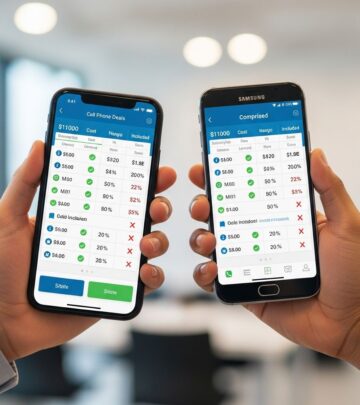
Manual comparison is tedious. Tools simplify it by inputting lines, minutes, texts, and data to generate side-by-side estimates.
- Recommended tools: SmartAsset’s calculator, BestPhonePlans.net, WhistleOut. Enter exact usage for precise quotes including taxes.
- How to use: Input current plan first to benchmark. Tweak data down 20% and see savings. Tools reveal plan names like ‘AT&T Unlimited Starter SL’ for easy shopping.
- Accuracy check: Users report near-exact matches to real bills (pre-discounts/taxes). One tester saved enough for a Disney trip by switching families.
Recent 2025-2026 promos: US Mobile Unlimited Starter at $19/mo annual; Visible Base $25/mo unlimited on Verizon/AT&T.
Step 4: Decode Plan Features and Fine Print
Plans look similar but differ in speed caps, hotspot data, and throttling.
- Data priority: Postpaid gets precedence; MVNOs deprioritize after 20-50GB in congestion.
- Hotspot allowances: Varies 5-60GB. Unlimited often throttles to 600Kbps after.
- Taxes/fees: Some include (Visible), others add 20-30%.
- International: US Mobile Premium excels for travel.
Read terms: ‘Unlimited’ high-speed often caps at 22-100GB before 5Mbps slowdown.
Step 5: Look for Discounts and Promotions
Loyalty pays—sometimes.
- Auto-pay/paperless: Saves $5-10/line.
- Military/teacher/senior: 15-25% off majors.
- Bundle with internet: $10-20/line savings.
- Current deals (2026): Mint $15/mo unlimited intro; US Mobile $229 annual starter.
Porting numbers often unlocks credits ($100-540/line).
Step 6: Negotiate Like a Pro
Call retention: ‘I’m switching due to better deals elsewhere.’ Mention competitor offers. Success rate: 60-80% get matches or credits.
- Prep script: Usage details, competitor quotes.
- Escalate: Ask for loyalty/supervisor.
- Timing: End/beginning of billing cycle.
Step 7: Know When and How to Switch
Switching costs $0-30, but saves $20+/mo.
- Unlock phone: Free after 60 days on majors.
- Port number: 5-10 mins via app.
- Timing: Avoid mid-cycle to minimize overlap fees.
- eSIM: Instant activation on iPhone/Google Pixel.
Family switches: Add/remove lines seamlessly on MVNOs.
Best Plans for Common Needs (2026)
| Need | Top Pick | Price | Network |
|---|---|---|---|
| Budget Unlimited | Visible Base | $25/mo | Verizon |
| Family | AT&T Unlimited Starter SL | $35+/line | AT&T |
| Light User | US Mobile 2GB | $10/mo | Any |
| Premium | US Mobile Unlimited Premium | $35/mo promo | Any |
Frequently Asked Questions
What if my usage changes after switching?
Most MVNOs allow monthly adjustments. Monitor first month and tweak.
Are MVNOs reliable for coverage?
Yes, same towers as majors. Test with CoverageMap app in your area.
How accurate are comparison tools?
Very—match bills closely before taxes. Adjust inputs to real usage.
Can I keep my number when switching?
Yes, 99% success via porting. Backup account first.
What’s the best family plan?
AT&T Starter SL or US Mobile for flexibility; check multi-line discounts.
Are There Other Ways I Can Save On My Wireless Bill?
Beyond plans:
- Resist upgrades: Phones every 3 years max.
- WiFi calling/data: Offload cellular.
- Group plans: Share with trusted family.
- Prepaid annual: Mint/US Mobile save 40%.
Annual savings potential: $300-1,000/family.
References
- Annual Consumer Mobile Spending Report — CTIA (The Wireless Association). 2025-06-15. https://www.ctia.org/the-wireless-industry/infographics-library/annual-wireless-industry-survey
- Wireless Competition Report — Federal Communications Commission (FCC). 2025-11-20. https://www.fcc.gov/reports-research/reports/wireless-competition-reports
- Best Cell Phone Service Buying Guide — Consumer Reports. 2025-09-01. https://www.consumerreports.org/electronics-computers/cell-phones-services/buying-guide/
- Mobile Wireless Competition Report — U.S. Department of Justice. 2024-12-10. https://www.justice.gov/atr/mobile-wireless-competition-report
- Telecommunications Industry Revenue — U.S. Census Bureau. 2025-03-15. https://www.census.gov/data/tables/2025/econ/2025-annual-telecom.html
Similar Articles








Read full bio of Sneha Tete